
Chania Municipal Market: Where It Is and What to Expect

The Municipal Market of Chania is the big cross-shaped hall at the edge of the old town, and it is the one Chania sight where the practical question comes before the historical one: whether you can actually walk in. Reports on its closure and reopening have conflicted in date, so the market is best planned as a stop you confirm rather than assume. This guide separates what is fixed about the building from what changes.
What the Municipal Market of Chania Is and Where It Sits
The market is a roughly 4,000-square-metre building described by the Chania tourism bureau as the heart of the modern commercial centre, and its address is given as Sofokli Venizelou square. That places it on the seam between the newer shopping streets and the old town, within easy walking distance of the harbour side. If you are staying in the old town, you will likely pass it without planning to.
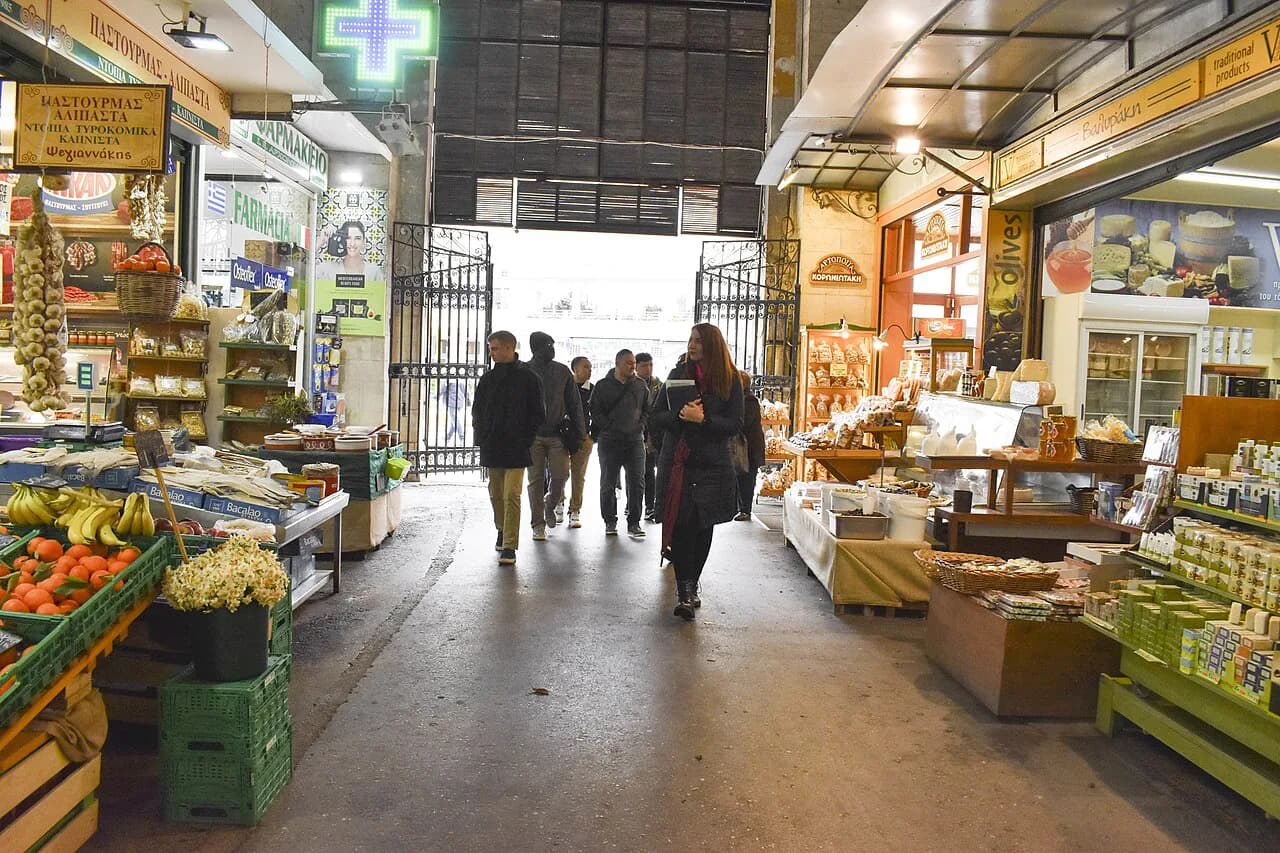
Expect a market hall of many small shops rather than a wholesale produce floor. The tourism bureau describes it as housing small shops selling local products and souvenirs, which is a useful calibration: come for Cretan pantry goods and gifts, not for a fish auction. Treat any specific vendor list as something to confirm on the spot, because the city has not published one in the sources available.
How to Get There and Find the Entrances
Because the building sits in the central commercial district, the simplest approach is on foot from wherever you are in central Chania; the city's compact core makes a taxi unnecessary for most visitors based in or near the old town. Aim for Sofokli Venizelou square rather than a street number, since the square is the landmark the city itself uses.
The cross-shaped plan means four entrances, one in each arm, so you can arrive from different sides of the surrounding streets instead of doubling back to a single door. If one side looks shut or is fenced for works, walk around the block before concluding the whole building is inaccessible. This matters most during any renovation period, when access may be partial or suspended.
For orientation, the market is close to the old town's northern edge, where the Venetian harbour and its lanes begin. If you are coming from the waterfront, the walk inland is short and mostly flat.
The Building: Cross Shape, Four Entrances and a Venetian Footprint
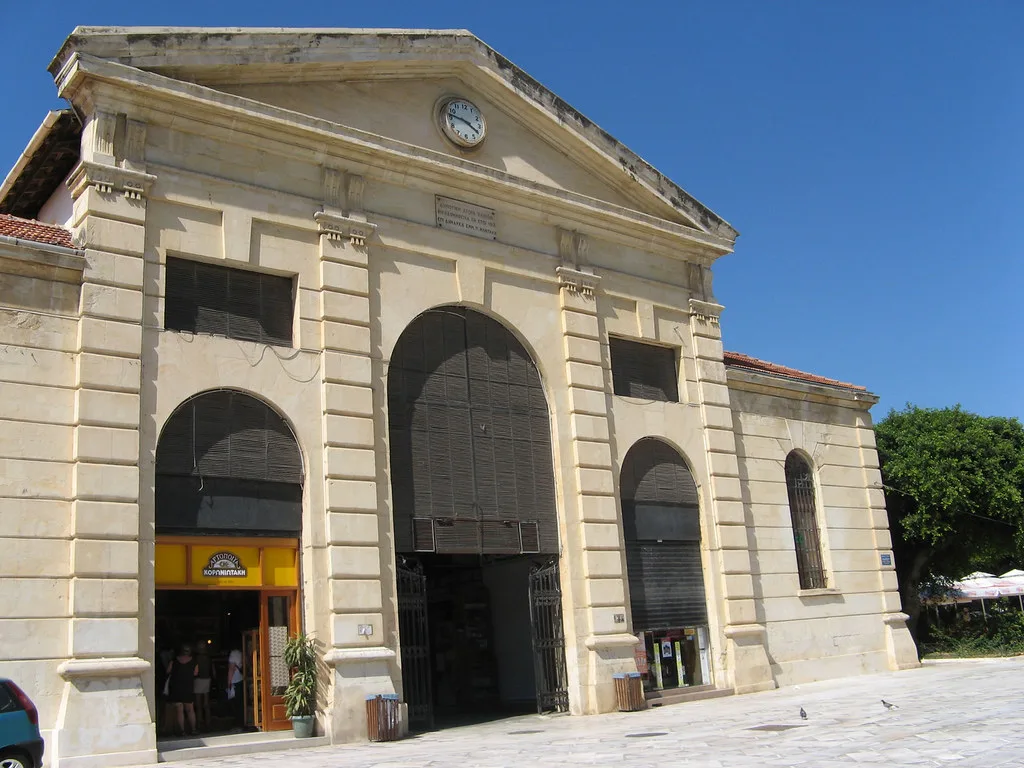
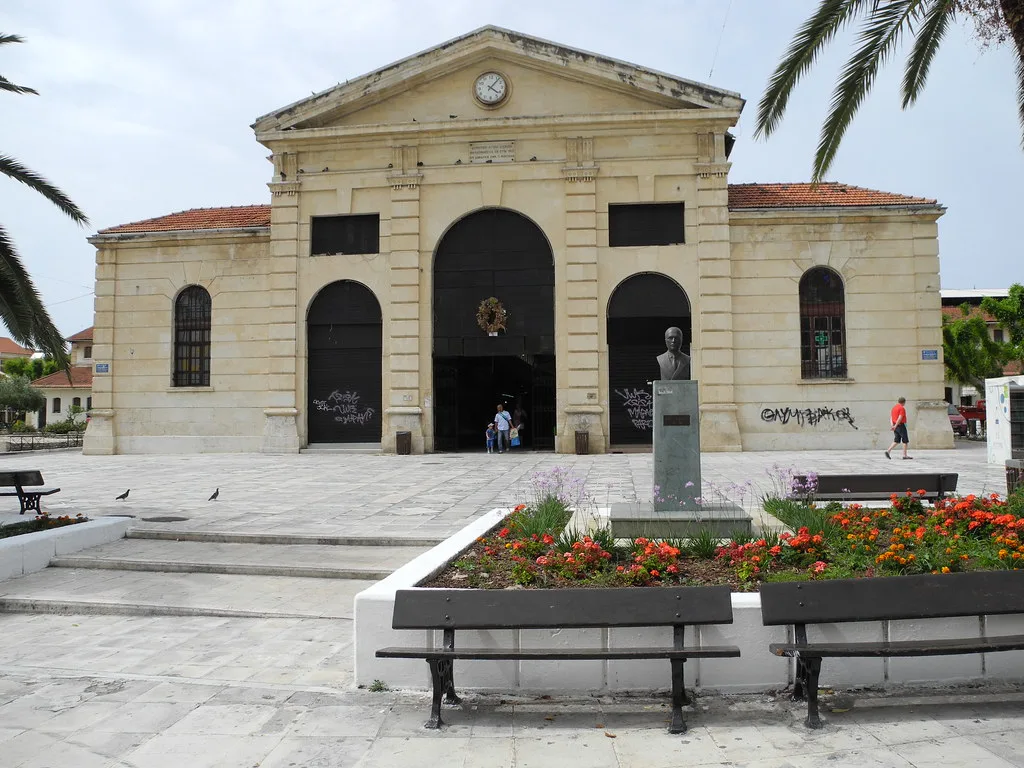
Construction began on 14 August 1911 on the spot where the main rampart of the Venetian fortification once stood, and the building was finished in the second half of 1913. That layered site is part of the appeal: the market hall sits on the line of the city's older defences. Knowing this makes the building worth a look even from outside if the interior is closed.
The official opening was led by Prime Minister Eleftherios Venizelos on 4 December 1913, three days after Crete's unification with Greece, which is why the date carries weight in local memory. The Chania tourism bureau calls the result one of the most impressive markets in the Balkans and an architectural jewel for the city. Whether you agree is a matter for your own eyes, but the cross plan and four entrances are the features to notice.
Practical consequence: the building is a landmark in its own right, so a short exterior circuit past the four arms takes only a few minutes and does not depend on the shops being open.
What the Market Has Traditionally Housed
The documented picture is of many small shops under one roof offering local products and souvenirs, which in Crete generally means pantry staples, olive oil, herbs, cheese and gift items rather than fresh produce alone. That makes it a reasonable single stop if you want edible souvenirs without touring separate shops across town. It is not, on this description, a farmers' market with a set market day. If you are weighing a food-focused stop against a bigger market city, our Rhodes food guide shows how another Greek destination handles the same shopping-and-eating decision.
What the packet does not name is any individual shop, vendor, cafe or restaurant inside or beside the hall, so treat specific recommendations you find elsewhere as unverified until you see them. If a particular stall is the reason for your visit, ask the city's tourism office or your accommodation whether it is trading before you set out.
Opening Status: Why the Closure Question Comes First
The market's operating status is the least stable fact about it. Traveller reviews on Tripadvisor have carried notices saying the market was closed and not permanently so, with a note of closure extending into 2024, while a local events listing reports a planned reopening date of 4 December 2026 announced by the city. These are not the same kind of claim, and neither is a live confirmation for today.
Read the 2026 date as a target the city has announced, not a guarantee, and expect it to move if works run late. The honest planning move is to check the Chania municipality or the Chania tourism bureau in the days before your visit, and to have a fallback in the old town if the doors are shut. No source gives current daily opening hours, so do not rely on any figure you see quoted without a date attached.
This is a case where a five-minute phone call or a look at the city's own channels beats any third-party listing. The Chania tourism bureau publishes contact details on its site, and the municipality is the body that would announce any reopening.
How Much Time to Allow
If the hall is trading normally, budget around half an hour to browse the small shops, longer if you are comparing olive oil, herbs or gifts in detail. The building is large but the stalls are compact, so the visit is short by design. If it is closed, allow ten minutes for the exterior, the cross plan and the four entrances, then move on.
The bigger time decision is sequencing. Because the market sits at the edge of the old town, it works best as a first or last stop on a walking loop rather than a destination in itself, which keeps a closed hall from ruining a morning. Pair it with the lanes and harbour rather than treating it as a standalone outing.
Nearby Sights to Pair With the Market
The old town's core is a short walk away, and the Venetian harbour with its lighthouse and shipyards is the obvious add-on if you have not yet seen it. Those are separate places with their own opening arrangements, so check each one's hours before you go rather than assuming a single ticket covers them.
For a wet or very hot hour, the city's museums are the practical indoor alternatives, and both are in the central area rather than out of town. The Maritime Museum of Crete sits by the harbour side, and the archaeological museum has its own collection and hours to check.
Two religious sites round out a short walking circuit: the cathedral in the old town and the Etz Hayyim Synagogue, both small stops rather than half-day visits. Keep expectations modest and you can fit several of these around the market in an afternoon.
Practical Checks Before You Set Out
Confirm the market's status through the municipality or the Chania tourism bureau a day or two before you go, and keep the old town as your fallback so a closed hall costs you nothing. Approach from Sofokli Venizelou square, walk the four sides if the doors are shut, and treat the 1913 building as worth the detour on its own.
For the rest of your day, the harbour, the museums and the old-town churches are all within walking distance, and the wider list of Chania sights will help you sequence them without crossing the city twice.
Explore more Chania sauna guides
Frequently Asked Questions
Is the Municipal Market of Chania open right now?
That cannot be confirmed from published sources alone, because closure notices and a planned reopening date have both circulated for different periods. Check the Chania municipality or the Chania tourism bureau shortly before your visit rather than relying on a listing without a date.
Why is the Old Chania market closed?
The sources available describe the closure without giving a full technical explanation. What is clear is that the building has been closed for an extended period and that the city has announced a planned reopening, so the reason is best confirmed directly with the municipality.
When is the Municipal Market of Chania expected to reopen?
A local listings site reports a planned reopening date of 4 December 2026, described as the latest announcement from the city. Treat it as a target rather than a guarantee, since such dates can shift if works run late.
Where exactly is the Municipal Market in Chania?
It stands at Sofokli Venizelou square, on the edge of the old town and the central commercial district, in a building of about 4,000 square metres. Use the square as your landmark rather than a street number.
What is sold inside the Municipal Market of Chania?
The city's tourism bureau describes many small shops selling local products and souvenirs. It is not documented as a produce-only market or as having a set market day, so treat it as a hall of small retailers.
How long does a visit to the market take?
Allow around half an hour if the shops are trading, or about ten minutes for the exterior if the building is closed. Either way it works as a short stop within a longer walk through the old town.
What else can I see near the Municipal Market?
The old town, the Venetian harbour with its lighthouse and shipyards, the cathedral, the Etz Hayyim Synagogue and the city's museums are all within walking distance. Check each one's own opening arrangements separately.
Do I need tickets or a booking?
No ticket price or booking rule is published for the market in the sources available, so don't budget for an entry fee and don't assume a reservation is possible. The municipality or tourism bureau can give current details if it matters for your plans.