
Ancient Agora of Kos: A Practical Guide to the Kos Town Ruins
The Ancient Agora of Kos is not a fenced-off monument on the edge of town. It lies under and beside central Kos Town, a short walk from the port, which means most visitors pass it without planning to stop. That is a mistake worth correcting: the site is one of the biggest excavated marketplaces in Greece, according to the municipality's tourism site, and it costs nothing to walk in.
This guide covers the one site only: where the entrances are, what survives above ground, how the ruins are laid out, and how much time to give them. Other Kos Town sights appear only as nearby options for the same half-day.
What the Ancient Agora of Kos Actually Was
An agora was the commercial and social heart of a Greek city, part market, part meeting ground. Kos had one from the fourth century BC, when the city was consolidating as an administrative centre, and it sat within easy reach of the harbour so that traders and shippers could use it. The official island tourism site describes workshops, shops and altars arranged like a typical ancient market, which is a useful way to picture the open ground you will walk across.
Dating is less tidy than headline descriptions suggest. The municipal tourism site says the market was originally built in the 4th century BC, while History Hit dates the agora to the 3rd century BC and notes that the visible ruins span the 4th century BC to the 6th century AD. Both are consistent with a site rebuilt and extended over many centuries, including Roman additions and a fifth-century Christian basilica.
Treat the disagreement as part of the story rather than a problem to resolve. What you see is a layered site: Greek market foundations, later Roman work, places of worship, and the remains of a city that was repeatedly knocked down and rebuilt.
Where It Sits in Kos Town
The excavation occupies a large block in the middle of Kos Town, close to the port and immediately south of the castle. The official tourism site gives the visible archaeological zone as roughly 152 metres long and 82 metres wide, with the complex restored to about 300 metres in length. Those numbers matter: this is a proper archaeological area to walk through, not a single fenced ruin you glance at from a railing.
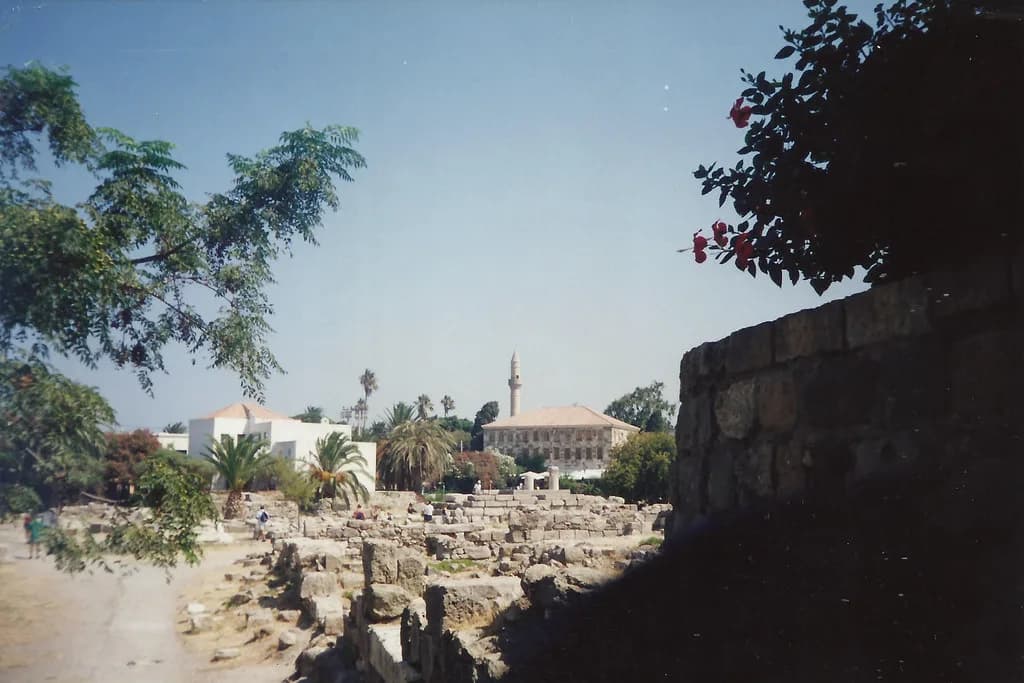
The site is also part of a wider harbour archaeological zone. Within the same area you can see stretches of the city fortification, the sanctuaries of Aphrodite and Hercules, blocks of ancient house remains, and part of the old port. Most of the agora still lies beneath the modern town, which is why the ruins feel woven into the streets rather than isolated from them.
For orientation, the site is central enough to reach on foot from most of Kos Town's waterfront hotels and from the ferry quay. If you are basing yourself in town rather than in a resort outside it, the ruins will likely be on your route more than once.
How to Get There on Foot
There are two practical approaches. The municipal site says you can walk into the ancient Agora from central Ippokratous Street, or from the bar street of Kos, which it places about two minutes from Kos harbour. History Hit gives a landmark route: find Eleftherias Square, pass through the archway covered in pink flowers, and take the side road on the right to reach the entrance.
For mapping, the coordinates published by the municipal tourism site are 36.8933062, 27.2905621. Dropping those into a maps app is more reliable than searching for a street address, since the site is open ground rather than a building with a numbered door.
Because the ruins are spread through the block, the entrance you use shapes what you meet first. Arriving from Ippokratous Street drops you into the commercial side of town and the site's central axis; coming from the harbour or bar street brings you in from the port edge, which suits anyone arriving by ferry or heading to the waterfront afterwards.
What to See Inside
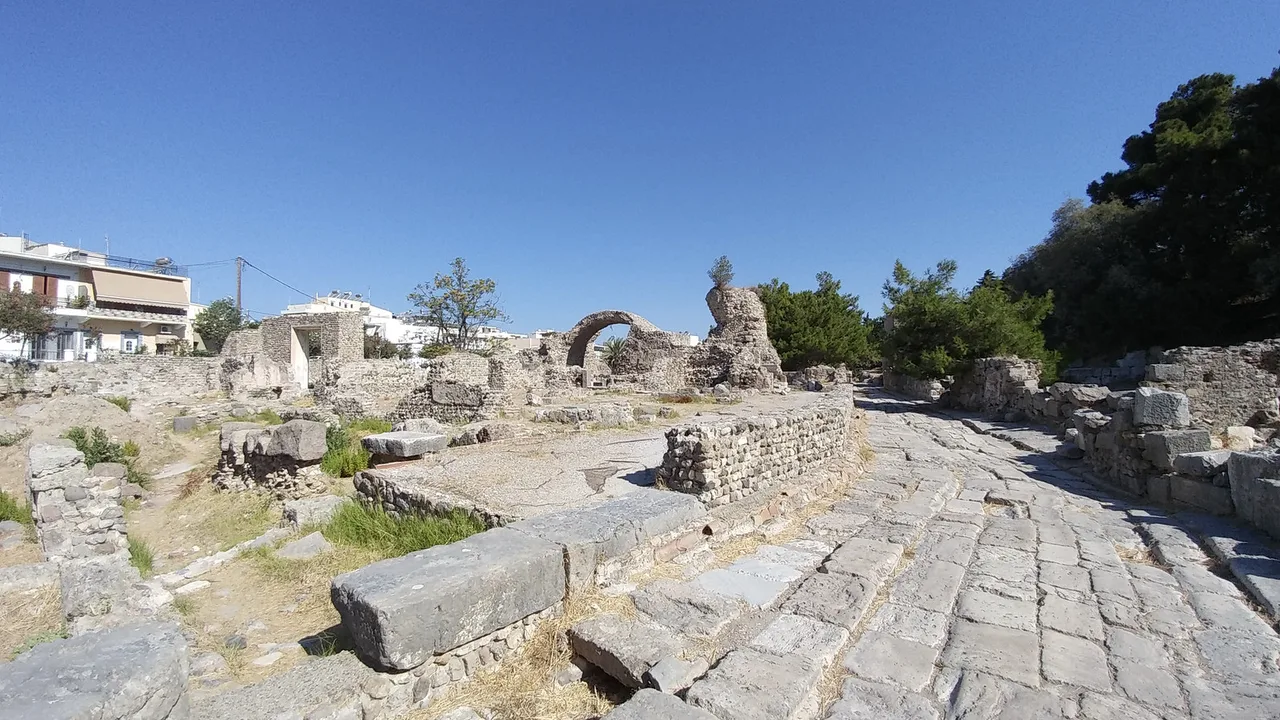
The core layout is a large open courtyard framed by three covered walkways, known as stoas, on the north, west and east sides. The north stoa ran alongside the city walls, while the eastern side, and possibly the western one, held rows of small trading shops. Walking the perimeter gives you the clearest sense of how the market worked: stalls and workshops facing inward, a wall at the city's edge behind them.
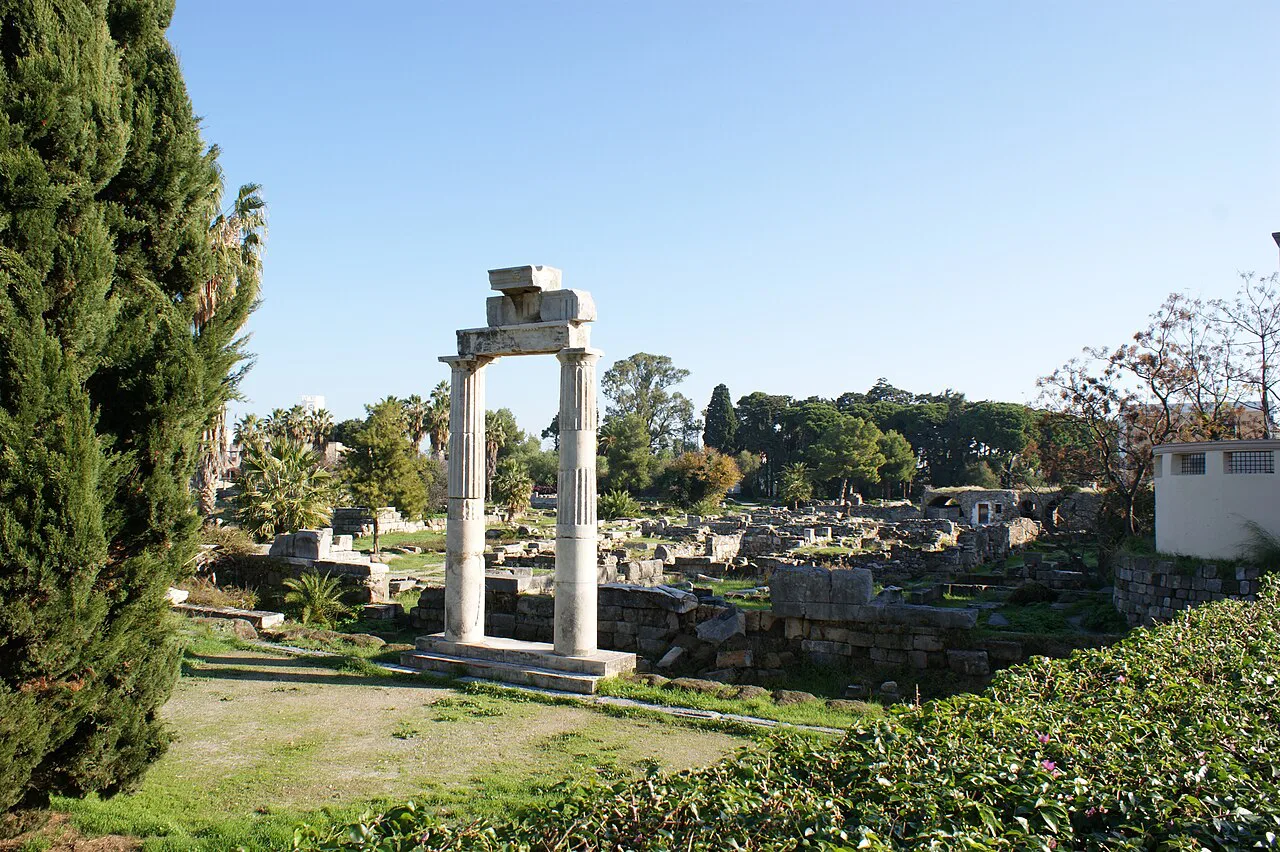
Look for the sanctuaries of Aphrodite and Hercules, both named in the municipal description of the zone, along with stretches of fortification wall and blocks of ancient housing. History Hit singles out a temple probably dedicated to Hercules, a shrine to Aphrodite, and columns of a third-century BC stoa. The columns are among the easiest features to identify without a plan in hand.
The southern end was excavated separately by the Hellenic Archaeological Service, and recent digging opposite the altar of Dionysus uncovered further market remains and allowed two columns to be re-erected. The altar of Dionysus sits in the same central zone, so the southern edge is worth a deliberate look rather than a passing glance.
Visible masonry changes as you move through the site, and that variation is the interpretive key. Earthquakes forced repeated rebuilding, and the different stone and brick materials mark distinct construction phases; the earthquake of 469 AD is treated as the decisive break that ended the ancient city and began the early Christian period.
Tickets, Hours and What Is Published
The municipal tourism site lists the ancient Agora as free to enter as a walk-in site, with last entrance at 19:30. That is the access detail published in the sources for this page, so plan your day around it rather than around an assumed full-day opening.
Opening arrangements at Greek archaeological sites can change with the season, staffing and maintenance, so confirm current times on the official Kos tourism site or at the entrance before making the site the anchor of your day.
Reviews describe it as an archaeological market site in Kos Town, a short walk from the harbour. That is a fair summary of its scale and position, but it is not a substitute for official access information.
How Long to Allow
A quick walk-through takes about twenty minutes if you follow the main courtyard and glance at the standing columns. That pace suits anyone squeezing the Agora between the harbour and lunch, and it is enough to get the shape of the place.
A slower archaeology stop of an hour or more is justified if you want to trace the stoas, find the sanctuaries, and read the masonry phases. The size of the zone, roughly 152 by 82 metres, means there is more ground than a single courtyard suggests.
The trade-off is heat versus light. The site is largely open, with little shade, so midday in summer is punishing; late afternoon gives softer light and cooler ground, and the 19:30 last entrance allows an early-evening visit. If you want the ruins without the glare, build the day around the later slot.
The View and the Setting
History Hit notes that the site offers a good panoramic outlook, and it also points out that the ruins sit south of the castle of Kos. The elevated ground and the castle walls together make the Agora a natural viewpoint over the town's rooftops and harbour side, not only a field of stones.
After dark the setting changes character: the bar street runs beside the site, so the neighbourhood becomes the town's nightlife strip. If you want quiet, come earlier; if you are staying central, the evening crowd is hard to avoid and easy to use as a route marker.

Nearby Places That Pair Naturally
Neratzia Castle is the obvious companion, sitting just north of the Agora across the same central block. History Hit recommends fitting the castle and the Hippocrates tree into the same time in Kos Town. Both are within walking distance, so a single loop can cover all three without transport.
The Tree of Hippocrates is a short walk away and makes an easy pair with the ruins, since both sit in the historic core around the harbour. Eleftherias Square is the landmark to aim for if you are navigating between them on foot.
If you want more archaeology in the same day, the Roman Odeon and the Casa Romana are both in Kos Town, and the Asklepieion of Kos lies outside the centre on its own hillside and needs separate transport or a longer walk. Choose one, not all, if you also want a proper meal and a swim.
Two other central stops suit a slower wander: the Archaeological Museum of Kos for finds from the island's sites, and the Defterdar Mosque for the Ottoman layer of the town. Neither replaces the Agora, but each explains a different period of the same small city.
Trade-offs Before You Go
The Agora's central position and lack of an entry fee are its strengths; thin on-site interpretation is its weakness. Signage is limited compared with a purpose-built museum, so reading a short summary before you arrive makes the stoas, sanctuaries and masonry phases far easier to pick out.
Footwear matters more than it sounds: the ground is uneven stone and gravel, with worn steps and loose surfaces. Carry water, wear shoes with grip, and plan shade breaks if you visit in high summer.
Cruise traffic concentrates in the middle of the day around the harbour, castle and Agora. Arriving early or late in the afternoon gives you the courtyard with fewer groups and better light for photographs of the columns.
Plan Your Visit
The Ancient Agora of Kos rewards a little preparation: know which entrance you want, allow twenty minutes or an hour depending on your interest, and check the published access details before setting out. Then pair it with the castle or the tree and keep the rest of the day light.
For the wider set of sites in and around town, start with the Kos Attractions collection and build a route on foot rather than by car.
Frequently Asked Questions
What was the Ancient Agora of Kos?
It was the commercial and social centre of ancient Kos, with workshops, shops and altars arranged around an open courtyard and three covered walkways. The municipal tourism site says it was originally built in the fourth century BC, while History Hit dates the agora to the third century BC, with visible ruins spanning the fourth century BC to the sixth century AD.
Is the Ancient Agora of Kos worth visiting?
Yes, if you are already in Kos Town. It is a large excavated market in the town centre, close to the harbour and the castle, so it costs little in time to add to a walk. Visitors who want detailed labels should read up beforehand, because on-site interpretation is limited.
Where is the Ancient Agora of Kos and how do I get there?
It sits in central Kos Town, just south of the castle and a short walk from the port. You can enter from central Ippokratous Street or from the bar street near the harbour, and the published coordinates are 36.8933062, 27.2905621.
How much time do you need at the Ancient Agora of Kos?
Twenty minutes covers the main courtyard and standing columns. An hour or more lets you trace the stoas, find the sanctuaries of Aphrodite and Hercules, and look at the changing masonry from the rebuilding phases.
Is entry to the Ancient Agora of Kos free?
The municipal tourism site lists the Ancient Agora of Kos as a free walk-in site with last entrance at 19:30. Check current details on the official Kos tourism site or at the entrance.
What can you see at the Ancient Agora of Kos?
Expect three covered walkways around a courtyard, the sanctuaries of Aphrodite and Hercules, stretches of city fortification, blocks of ancient housing and part of the old port. The southern end was excavated by the Hellenic Archaeological Service and includes re-erected columns.
What is near the Ancient Agora of Kos in Kos Town?
Neratzia Castle sits just to the north, and the Tree of Hippocrates and Eleftherias Square are within a short walk. The Roman Odeon, Casa Romana and the Archaeological Museum of Kos are also in town; the Asklepieion of Kos lies outside the centre.