
Defterdar Mosque in Kos Town: What to See and How to Visit
The Defterdar Mosque is an Ottoman-era monument on Eleftherias Square, the square Greeks also call Freedom Square, at the point where Kos Town's pedestrianised Old Town begins. It works best as a short stop folded into a walking loop rather than a stand-alone outing. This guide covers how to find it, what to look at from outside, how much time to give it and what sits within a few minutes' walk.
What the Defterdar Mosque is
The building is an Ottoman mosque in Kos Town, and its name carries a job title rather than a personal name. A defterdar was an Ottoman treasury official, roughly the officer responsible for state finances in a province, so the name identifies the mosque with that office or its holder. Some sources give the fuller form Defterdar Ibrahim Pasha Mosque, which points to the same building and is useful when searching locally.
Treat the mosque as one element of Kos Town's layered history: ancient Greek and Roman remains, the medieval castle of the Knights, and Ottoman-era structures all sit within the same compact centre. That density is why a single square can hold several periods at once, and why a short stop here fits naturally into an Old Town walk rather than requiring a separate trip.
Where it is: Eleftherias Square
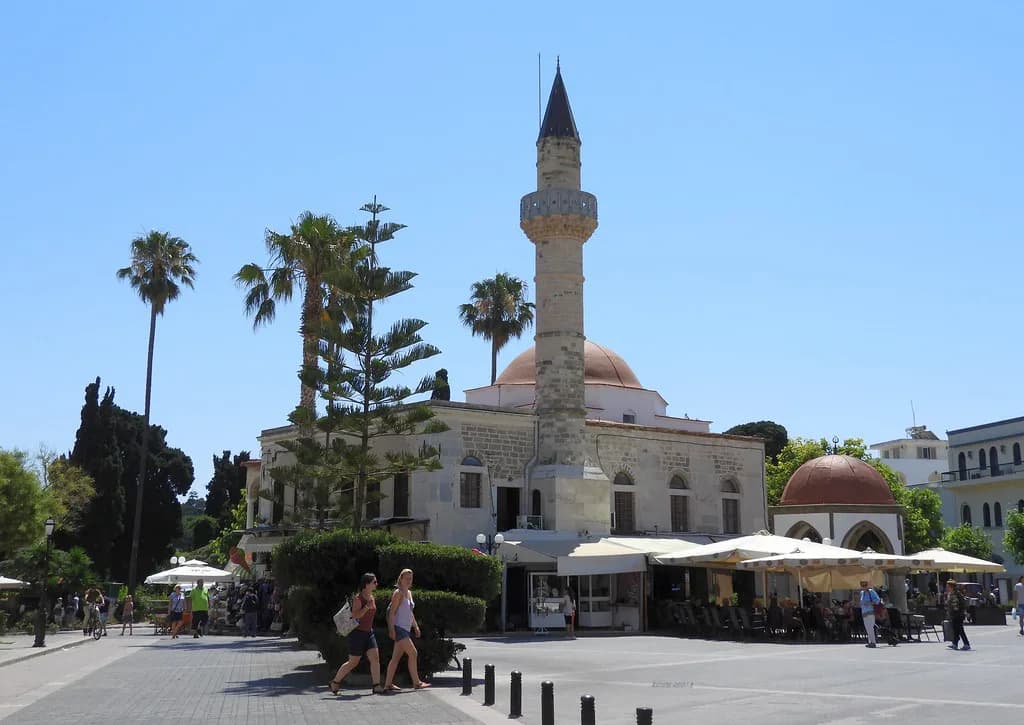
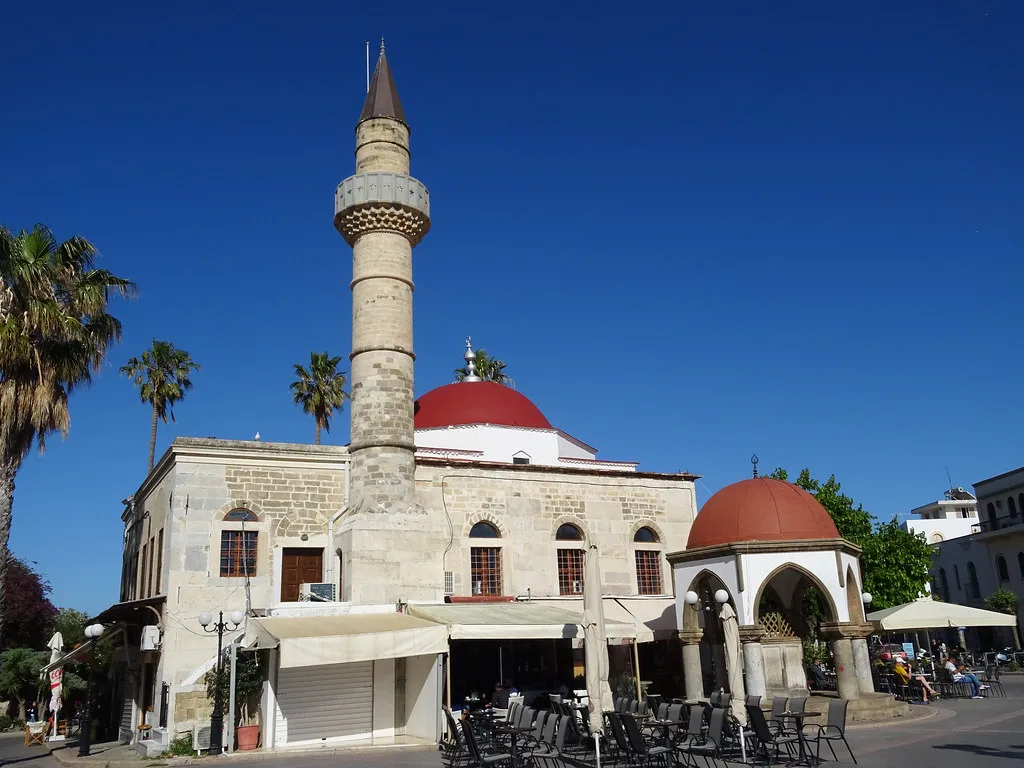
The mosque is listed at Eleftherias Square in Kos Town, and photo records place it directly on that square, so the square itself is your landmark rather than a street number. Eleftherias Square is also known as Freedom Square and marks the start of the pedestrianised Old Town. If you can find the square, you have found the mosque; look for the minaret and the domed Ottoman profile among the surrounding buildings.
Kos Town's pedestrianised centre runs from Freedom Square to Diagoras Square, and the mosque sits at the Freedom Square end of that route. Approaching from the harbour side, you reach the square before the shopping lanes begin, which makes the mosque a sensible first stop rather than a detour mid-route. Note that the same name is used for Ottoman monuments elsewhere, including a Defterdar Mosque in Istanbul, so check you are looking at the Kos listing when planning.
How to get there
On foot is the practical way to arrive. From the harbour front, walk inland to Eleftherias Square; from the Old Town lanes, walk back toward the square until the minaret comes into view. Because the centre is pedestrianised, a car is a liability once you are close, so plan to park outside the core and finish the last stretch on foot.
If you are coming from elsewhere on the island, bus and parking arrangements change with the season and are not set out here. Check the current municipal or regional transport information, or ask at your accommodation, before relying on a particular service. The visitor guides in Kos Attractions cover the town's main monuments in similar practical terms and are worth scanning before you fix a route.
What to see from outside
The evidence supports the mosque's presence on the square and its Ottoman character, plus its minaret as a visible feature of the townscape; it does not describe the interior, so plan around the exterior view. Look at the massing of the building, the relationship between the prayer hall and the minaret, and the way the mosque sits among shops, cafes and later buildings on a busy square. That juxtaposition, a place of worship framed by commercial frontage, is what makes the location distinctive.
Whether non-Muslim visitors may go inside, and whether the building is in active prayer use, is not established here. Do not assume access. Ask on site if the doors are open, and accept a closed door as the answer; a respectful look from the square is a complete visit in itself.
How long to allow
Budget roughly the time you would give any single monument on a square: a short pause to look at the facade and the minaret, a few photographs, and then onward. Fifteen to twenty minutes is realistic for the outside alone, and it stretches if you sit at a square-side cafe afterward. The value of stopping here comes from position on a route, not from a long engagement with a single building.
Build the stop into a larger walk instead of treating it as a destination. Start at the square, take in the mosque, then move into the pedestrianised lanes toward Diagoras Square, adding one or two of the sights listed below along the way.
Opening hours, tickets and access
No reliable opening hours, ticket price or closure information is published for this mosque, and none is stated here. If you need certainty before travelling, check with the Municipality of Kos or the local tourist information office in Kos Town, and confirm access on the day rather than assuming the building will be open. Crowd and access arrangements on the square are also worth confirming locally.
This is the one point in the visit where a quick check pays for itself, so make it before you set out rather than at the door. If the mosque is closed, the square and the Old Town route remain unchanged, so the day does not depend on the building being open.
What is nearby on the same walk
Several named sights sit within the same compact centre and can be threaded into one loop. Neratzia Castle, the fortress of the Knights on the harbour side, is a natural pairing with the mosque, and the Tree of Hippocrates and its square lie close to the Old Town route. Each is covered in its own guide:
Also within the centre are Casa Romana, a restored Roman house, the Archaeological Museum of Kos, and the Turkish Bath House, a compact Ottoman-era bath structure that complements the mosque thematically. Add the Agia Paraskevi Church, the Ancient Agora and the Roman Odeon if you want a fuller day, and see Kos Neighborhoods for how the districts relate to one another on the ground.
Seasonal timing and quiet hours
Kos Old Town fills with visitors from April to October, when the island's tourist season is at its peak, according to local descriptions of the district. That applies to the Old Town's general rhythm, not to any published opening calendar for the mosque itself. For a calmer look at the square, go early in the morning or late in the afternoon, when tour groups thin out and the light on the facade is better anyway.
In shoulder months the streets are quieter but some businesses reduce their hours, so treat published seasonal patterns as a guide to crowds rather than a guarantee of what will be open. Outside peak season, confirm the state of the square and nearby cafes locally if a specific stop matters to your plan.
Etiquette at a place of worship
Approach the building as a place of worship first and a monument second, even if you only look from outside. Keep voices low near the entrance, avoid blocking doorways while photographing, and do not photograph people at prayer. If you do step inside when it is open, cover shoulders and knees as a baseline, remove shoes if that is the local instruction, and follow any signage over your own assumptions.
If a service or prayer is in progress, wait or skip the interior; the square view is reason enough to have come. Treat signage and instructions from anyone present as the authority on behaviour, since visitor rules can change.
Pairing the visit with food
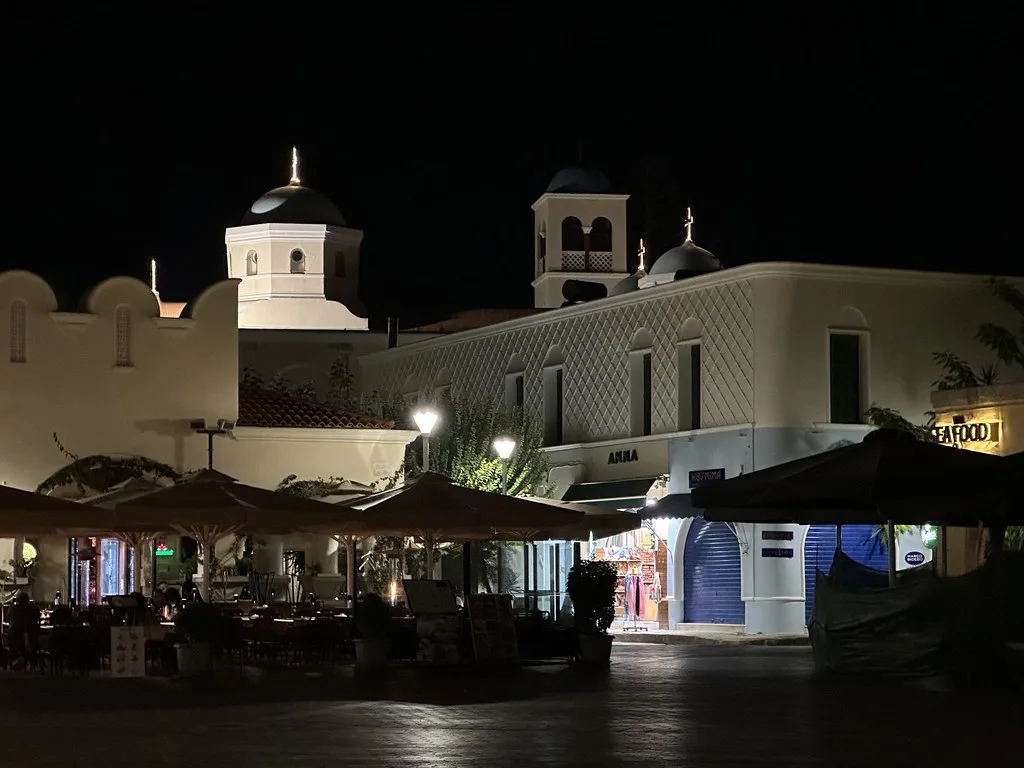
The Old Town around the mosque holds cafes, bars and tavernas, including tables that face the square and others tucked into the lanes behind. Square-facing seats buy the view and the passing scene, but back-street tables in the same neighbourhood tend to offer a quieter, more local setting. Neither is automatically better; decide whether you are paying for position or for atmosphere on that particular evening.
If you want a market stop, the Kos Municipal Market is in the town centre and works as a daylight pairing before or after the mosque. For wider budget context, Kos prices covers what things generally cost on the island, and it is a sensible read before committing to a square-side table.
Plan Your Visit
Treat the Defterdar Mosque as a fifteen-minute anchor at the start of a Kos Town walk. Find Eleftherias Square, look at the facade and minaret from outside, confirm access locally if it matters to you, then head into the pedestrianised lanes toward Diagoras Square with Neratzia Castle or the Tree of Hippocrates as your next stop.
Go early or late to dodge the April-to-October crush, keep the visit brief and respectful, and choose your table afterward based on whether you want the square's view or the quieter lanes behind it.
Frequently Asked Questions
Where is the Defterdar Mosque in Kos?
It is on Eleftherias Square, also called Freedom Square, in Kos Town, at the start of the pedestrianised Old Town that runs toward Diagoras Square. Photo records place the building directly on the square, so the square is the landmark to navigate to; look for the minaret.
Is the Defterdar Mosque free to visit?
No ticket price or entry policy is published for the mosque, so nothing should be assumed. The Municipality of Kos or the local tourist information office can advise on access, and it is worth checking on the day, since the building may be closed.
How long does it take to see the Defterdar Mosque?
Plan on fifteen to twenty minutes for the exterior, the minaret and a few photographs, longer if you stop at a cafe on the square. It is best used as one stop on a walking route through the Old Town rather than a stand-alone destination.
Can non-Muslims go inside the Defterdar Mosque?
The available information does not confirm whether visitors may enter or how the building is currently used. Ask on site if the doors are open, follow any instructions given, dress modestly and keep quiet. If it is closed, viewing from the square is a complete visit.
What else is near the Defterdar Mosque in Kos Town?
Neratzia Castle on the harbour side, the Tree of Hippocrates and its square, Casa Romana, the Archaeological Museum of Kos, the Turkish Bath House and the Agia Paraskevi Church all sit within the compact centre. The Ancient Agora and Roman Odeon extend the walk if you have more time.
When is the quietest time to visit Kos Old Town?
The district is busiest from April to October, when the island's tourist season peaks. Early morning and late afternoon are generally calmer than midday, and outside peak season the lanes are quieter, though some nearby businesses may reduce their hours.
What should I wear when visiting the mosque?
Treat it as a place of worship: cover shoulders and knees, remove shoes if instructed, keep voices low and avoid photographing people at prayer. Follow posted signs and any instructions from staff or worshippers rather than relying on general assumptions.