
Mykonos Windmills (Kato Mili): How to Visit, When to Go and What's Nearby
The windmills of Kato Mili, the whitewashed row on the low hill above Mykonos Town, are the island's most recognisable landmark and one of the easiest to visit: they sit between the old harbour and the Alefkandra quarter, a few minutes on foot from the centre. There is no gate, no ticket desk and no closing time to plan around, because the hill is open outdoor ground. That changes how you should treat them: not as a museum stop but as a fixed point at the start or end of an evening.
What the Kato Mili Windmills Are
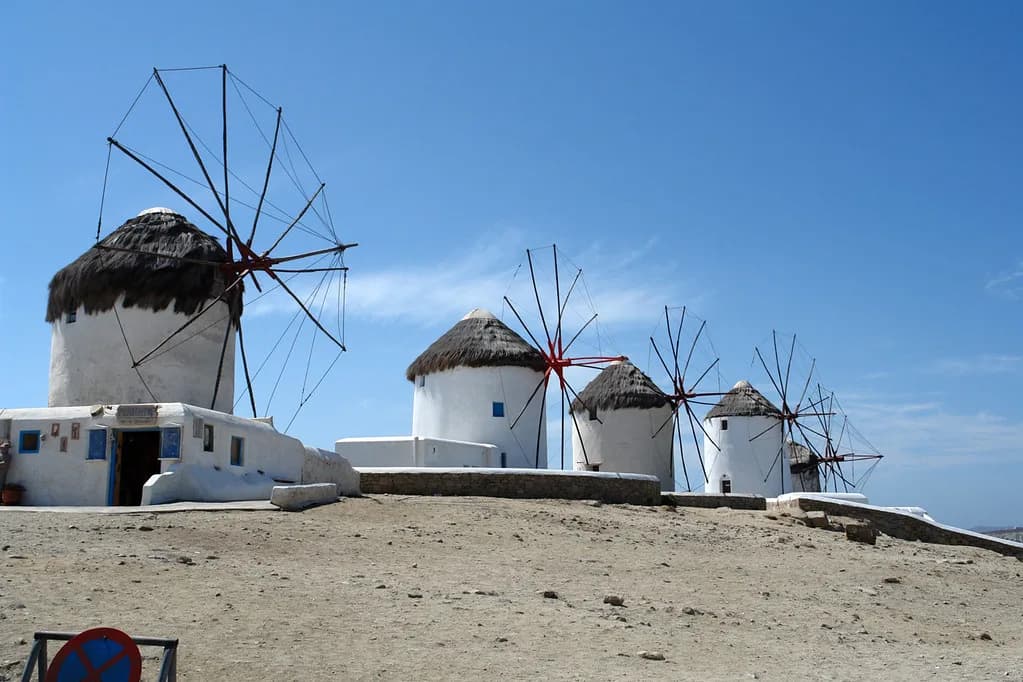
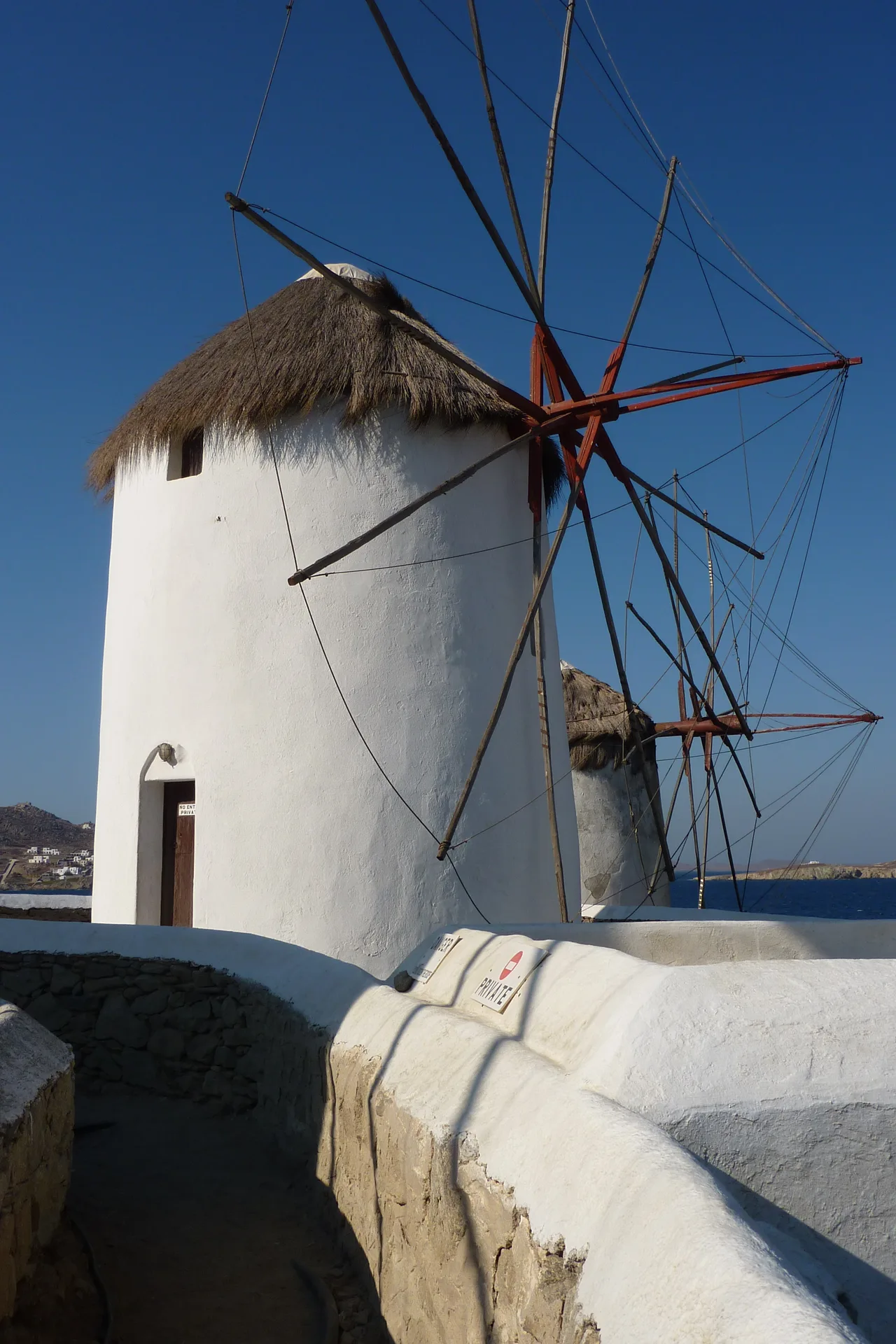
These are traditional Cycladic tower mills: round stone towers, whitewashed outside, with pointed roofs and long wooden sails that were positioned to catch the north wind. Small windows and thick curved walls let them stand up to the same gusts that powered them. Inside, millstones turned wheat and barley into flour. The sails no longer turn, but the shape of the buildings is unchanged, which is why the silhouette is used so heavily on postcards and labels.
Why the Mills Were Built Here
Mykonos sat on busy sailing routes across the Aegean, and passing ships needed provisions, above all flour and the twice-baked rusk bread that survived long voyages. The island's reliable meltemi, the strong summer wind that sweeps the Cyclades, provided free power, so milling became one of the island's important trades. The mills above the harbour kept working into the early 20th century, when steam and industrial milling gradually made them obsolete. That is the whole story in brief: infrastructure first, heritage later.
If a count of surviving mills matters to you, treat any number you see online with caution: published figures vary, and the safest approach is to describe the site as a surviving cluster or row rather than a fixed total. Likewise, sources agree the mills have stood for several centuries without pinning a construction date. Read the information panels on site for the version the island itself presents.
Where Exactly They Stand
The mills occupy a small rise directly above Little Venice, the strip of old captains' houses at Alefkandra whose painted balconies hang over the water. From the old harbour, follow the waterfront through Alefkandra and the row appears on the slope ahead within a few minutes. From almost anywhere in Mykonos Town (Chora) you can simply steer by the silhouette. That position is why the site works so well as a link between the harbour, the water's-edge quarter and the lanes of the old town.
Getting There on Foot
Walking is the sensible way to arrive; the approach through Alefkandra is short and flat until the final rise. Wear shoes with grip, because the polished flagstones of Chora are handsome but slick, especially where they are worn smooth or damp. There is no entrance fee and no ticket to buy, since the hill is open ground rather than a ticketed site. Carry a light layer for the evening, as the wind that once turned the sails still cuts across the hill after the sun drops.
Arriving by cruise ship takes an extra step: the cruise port sits outside the centre, so you need a taxi or bus into Mykonos Town before starting the walk from the old harbour. Allow slack for that transfer in your port time so you aren't caught out stepping off the ship with too little of it left. For transport options and current schedules, ask at the port authority desk or your cruise line before you set out.
When to Go: Morning Quiet vs Sunset Crowds
The trade-off is simple. Early morning gives soft light, an almost empty hill and photographs without strangers in the frame; midday is hot and busy with people passing through town. Late afternoon into sunset delivers the classic golden view, when the row lights up and much of Mykonos seems to gather on the slope. Choose based on whether you value the picture or the atmosphere more.
In summer, plan to reach the hill at least half an hour before sunset, because the best vantage points fill quickly. That buffer also covers the slippery descent in failing light, which is worth thinking about if anyone in your group is unsteady on their feet. Sunset clock times shift through the season, so check a local sunset table for your dates rather than relying on a figure from another month.
What to See Once You Are Up There
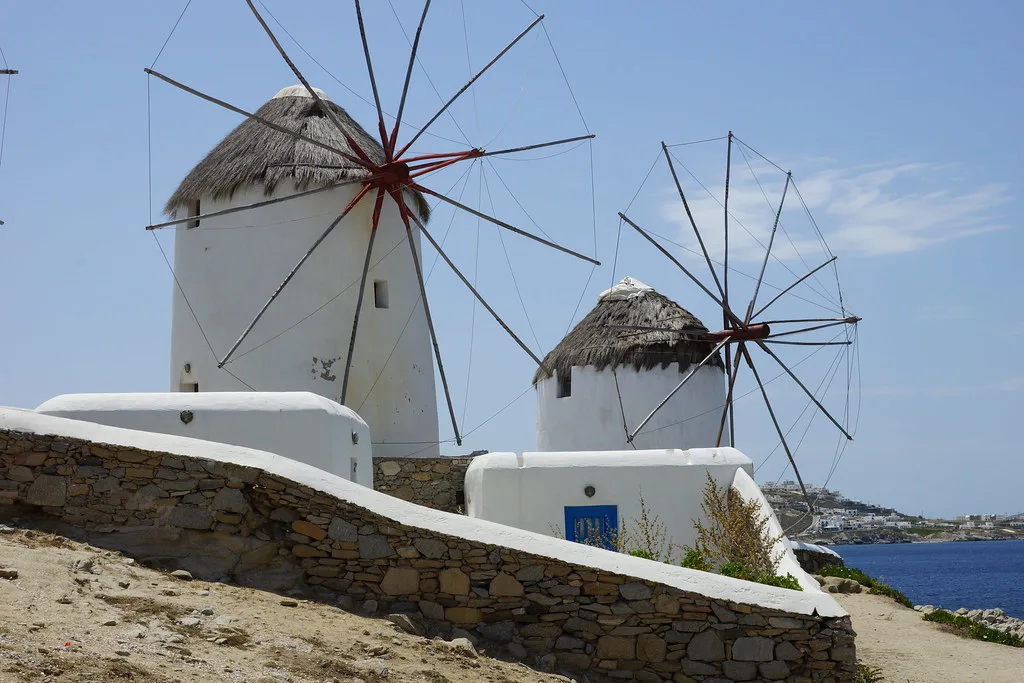
Walk around the row rather than planting yourself in one spot. Two angles are worth the extra minutes: from the hill itself you get the open view over the water toward the sunset, while from the Alefkandra waterfront below you look back up at the mills rising above the rooftops. The second angle is the postcard composition, and it costs nothing but a short walk down and back.
Photographers should note that the mills face the north wind, so the light on the sails and whitewash changes through the afternoon; the pointed straw-capped roofs read best against a clear sky. A view of the row from the shoreline also shows how many towers stand in line, though published counts differ.
Allow roughly half an hour to an hour on the hill: enough for both angles, a slow circuit of the row and a few minutes sitting out of the wind. There are no facilities, cafés or toilets on the open ground, so treat it as a viewpoint rather than a place to settle for the afternoon. If you want a longer stop, plan it around the lanes below.
What Is Nearby
Directly below the mills, Alefkandra's old houses drop straight into the sea, their painted balconies overhanging the water, which makes the shoreline an obvious second stop. Behind the hill, the lanes of Mykonos Town lead to chapels, galleries and boutiques, and the small Paraportiani Church is a short walk along the waterfront. These are separate visits, not part of the windmill hill itself, so budget time accordingly.
For a fuller picture of how the mills sit within the old town's layout, the neighbourhood guides are more useful than trying to see everything in one pass. If you're weighing where to base yourself for the walk down to the hill, these Mykonos Neighborhoods: 4 Area Guides break down the areas around Chora.
Dinner After the Sunset
The natural sequence is golden hour on the hill, a wander through the lanes of Chora, then dinner in town. One option is Nautilus in the Lakka quarter, by the old post office, whose kitchen runs from 19:00 to 24:00 and whose bar stays open until 02:00; hours can change with the season, so confirm before you rely on them. In high season, book a table ahead rather than hoping to walk in after sunset, when the whole hill empties into the same restaurants at once.
If you would rather eat with the sea in view, restaurants with caldera-style or harbour-facing tables in Mykonos Town fill first; decide whether you want the view or the value, because the two rarely come together at sunset.
Plan Your Visit
Treat the Kato Mili windmills as the opening act of an evening rather than a standalone sight. Walk up from the old harbour through Alefkandra, arrive early enough to claim a spot in summer, circle the row for both angles, then descend into Chora for dinner with a table booked in advance. The whole outing costs you a short walk and a little planning, which is a good return for the island's defining image.
Explore more Mykonos sauna guides
Frequently Asked Questions
Are the Mykonos windmills free to visit?
Yes. The Kato Mili hill is open outdoor ground with no entrance gate or ticket desk, so there is nothing to buy to walk among the mills. Because there are no facilities on the hill, plan any food, drink or toilets for Mykonos Town below.
Can you walk to the windmills from Mykonos Town?
Yes. From the old harbour, follow the waterfront through the Alefkandra quarter and the mills appear on the rise ahead within a few minutes. Wear shoes with grip, as the polished flagstones of Chora can be slippery.
When is the best time to see the Mykonos windmills?
Early morning is quiet with soft light for photographs; late afternoon into sunset gives the classic golden view but draws the biggest crowd. In summer, arrive at least half an hour before sunset to secure a good vantage point, and check a local sunset time for your date.
How do I get from the Mykonos cruise port to the windmills?
The cruise port is outside the centre, so take a taxi or bus into Mykonos Town first, then walk from the old harbour through Alefkandra. Allow slack for the transfer, and check current transport options and schedules with the port or your cruise line.
How old are the Mykonos windmills and why were they built?
They stood for several centuries and worked into the early 20th century, grinding grain for the island and for ships on Aegean routes; steam milling eventually made them obsolete. Sources do not agree on an exact construction date, so rely on on-site information panels rather than a figure from a blog.
How many windmills are left on Mykonos?
Published counts vary: one source says sixteen remain of an original twenty-eight, while others describe only a row or cluster. Treat any specific number with caution and describe the site as a surviving group of mills.
Is the windmill hill crowded at sunset?
Yes, the hour before sunset is the busiest time on the hill in summer, especially during high season. Arriving at least thirty minutes early helps, and early morning is the alternative if you want the hill nearly to yourself.
What is there to see near the Mykonos windmills?
Below the hill, the Alefkandra waterfront and Little Venice are an easy add-on, and the lanes of Chora lead to chapels, galleries and boutiques. Restaurants in town are a short walk away and worth booking ahead in high season.