
Heraklion Archaeological Museum: A Practical Guide to Crete's Minoan Collection

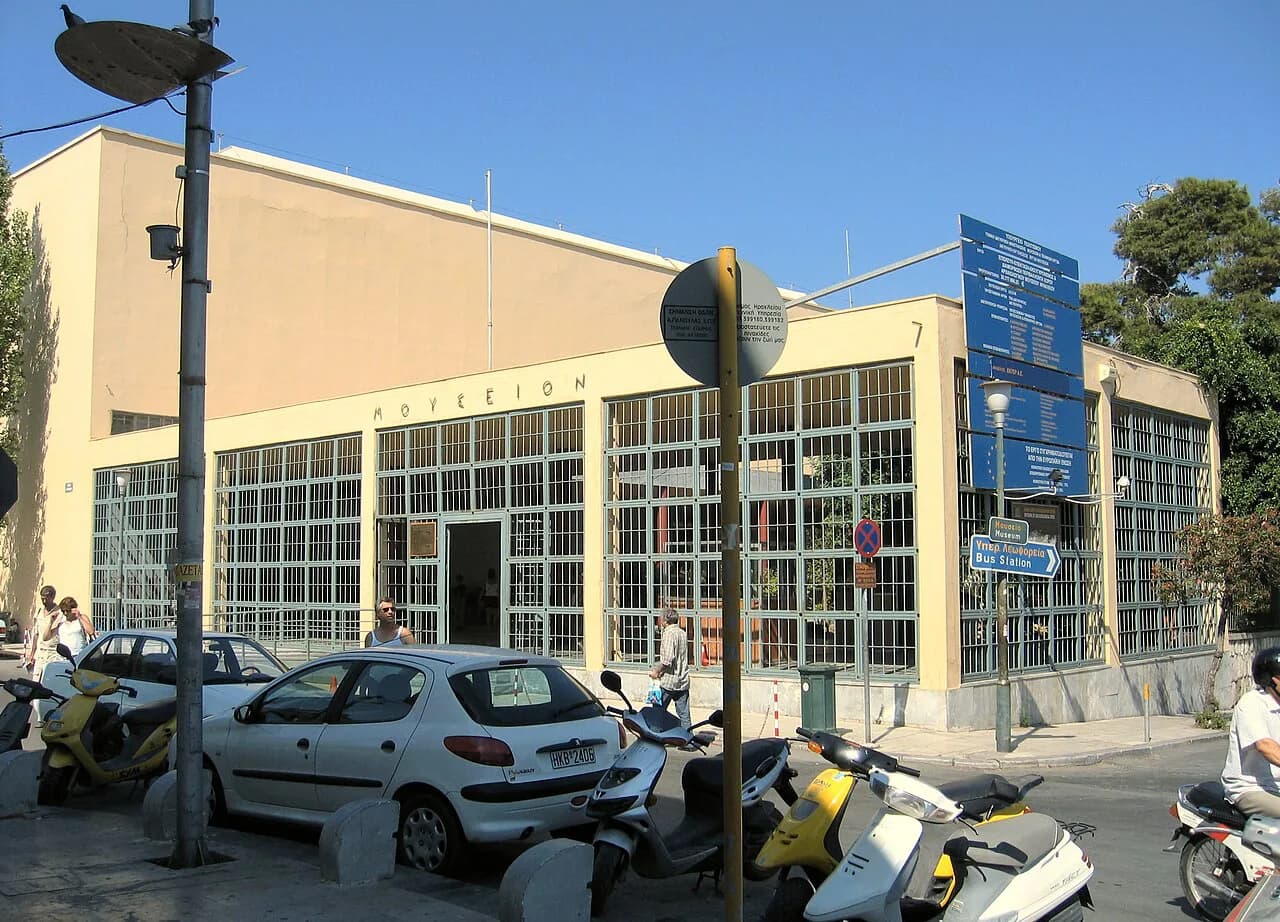
The Heraklion Archaeological Museum is the museum of Minoan Crete, the Bronze Age civilisation that built the palaces at Knossos, Phaistos and Malia. It sits in the centre of Heraklion, the island's capital, and gathers finds excavated across central and eastern Crete into one chronological sequence.
Visiting well depends on two decisions: how you route yourself through the galleries, and whether you see the museum before or after the palace sites. This guide handles both, plus the practical matter of getting there, time to allow, and where to eat afterwards in central Heraklion.
What the Museum Is and Why It Matters
The collection spans roughly 5,500 years, from the Neolithic period to the Late Roman period, and most objects belong to the prehistoric and Minoan eras. That makes it the reference collection for Minoan art worldwide rather than a general antiquities museum.
The building itself is part of the story: architect Patroklos Karantinos designed it in the late 1930s in a modernist idiom, with skylights that carry daylight into the display rooms. Restoration work from the 2000s reopened those skylights and added modern services.
If you only have time for one indoor sight in Crete, this is the one that explains what you saw at the palaces. Treat it as context, not a warm-up act.
Where the Museum Is in Heraklion
The museum stands at the corner of Xanthoudidis and Chatzidaki streets in the town centre, a short walk from the main squares and the bus routes that serve them. The address is published as Chatzidaki 1, Iraklio 712 02.
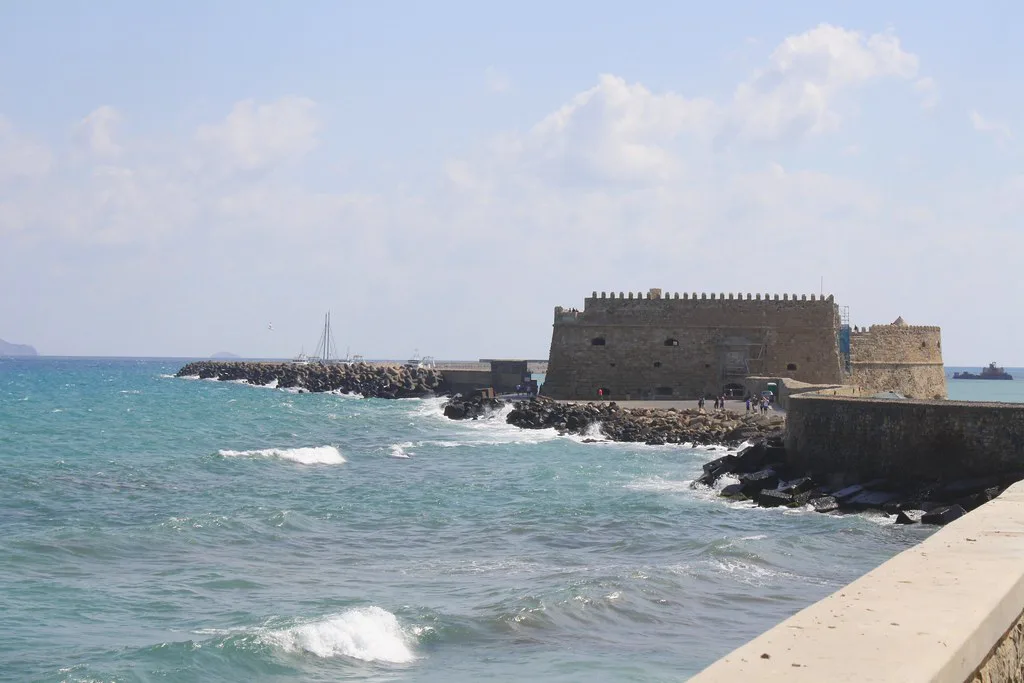
It is close to two easy landmarks: the Morosini Fountain, known locally as Liontaria, is roughly 360 metres away, and the Koules fortress on the Venetian harbour is about 627 metres. Both make useful orientation points if you are walking from a hotel.
How to Get There and Combining It with Knossos
Most visitors reach the centre on foot or by city bus, since the museum sits inside the compact core. If you are coming from the port or the airport, take a taxi or the local bus into the centre and walk from there rather than trying to park in the middle of town.
Knossos Palace lies about 5.1 km from the museum, reachable by taxi or the regular city bus from the centre. Many travellers pair the two in one day, since the palace provides the ruins and the museum provides the objects found in them.
The trade-off is stamina and heat. Knossos is largely open and exposed, while the museum is air-conditioned and shaded, so doing the palace first and the museum second usually works better in summer than the reverse.
Tickets and Opening Hours
The museum's own opening hours vary by season and can change around public holidays, so check the official Ministry of Culture listing or the museum's own page before you set out. Reseller listings show times and prices too, but they are commercial pages and can lag behind official changes.
If you are quoting a price before you travel, treat reseller figures as indicative only; the official site is where the current ticket price and any reduced-rate rules are stated. The museum's ticket inquiry line is published as +30 281 0279000, which is a direct way to confirm hours and pricing.
Booking ahead matters most in high summer and on cruise-ship days, when the entrance hall fills quickly. Outside those windows, a same-day ticket is usually straightforward, but do not assume that during July and August.
Layout: How the Rooms Are Organised
The permanent exhibition occupies twenty rooms, thirteen on the ground floor and seven on the first floor, arranged in chronological order. Objects are grouped by find-place as well as period, which means you can follow one site's material or one era's development, depending on what interests you.
Some units break out of the timeline: the Minoan wall paintings, the Minoan sarcophagi, and the Giamalakis collection each have their own presentation. Recognising that early stops you from doubling back and losing the thread of the visit.
What to See First: The Knossos Frescoes
Start with the wall paintings from Knossos, which are the museum's most reproduced images. The bull-leaper fresco shows acrobats vaulting over a bull, a scene tied to Minoan ritual; the Prince of the Lilies is a relief figure in a lily meadow, reconstructed from fragments found at the palace's south entrance and dated to roughly 1600–1500 BC.
La Parisienne, a female figure likely depicting a priestess at a ritual banquet, and fragments from the Campstool Fresco come from the same Knossos cycle. Look at them together and the palace's painted programme becomes readable rather than a set of isolated panels.
Beyond the Frescoes: The Signature Objects
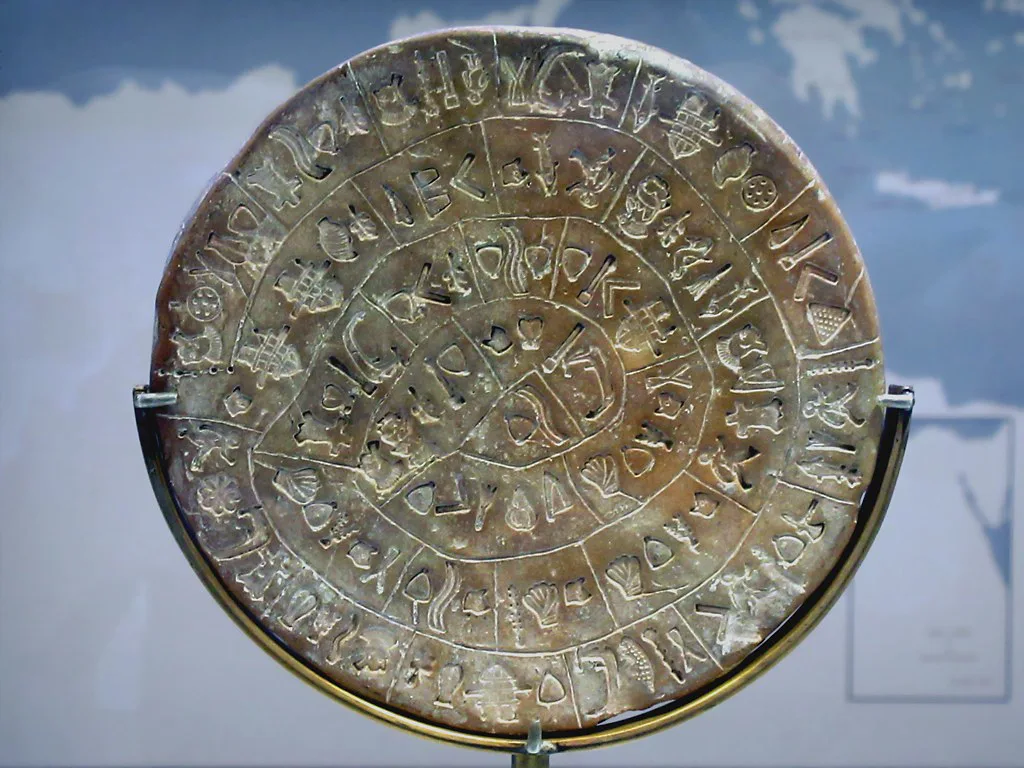
The Phaistos Disc is a clay disc impressed on both sides with hieroglyphic symbols arranged in a spiral from the rim to the centre, dated to the New Palace period of roughly 1600–1450 BC. The script remains undeciphered, which is part of why it draws a crowd.
Also worth seeking out are the ivory and crystal gaming board from Knossos, inlaid with glass paste and precious materials, and the small Snake Goddess figurine with raised hands holding snakes. The Ayia Triada sarcophagus, a painted limestone coffin from about 1300 BC, is housed separately because of its scale and condition.
How Long to Allow
A recommended sightseeing time of two to four hours is a sensible planning figure for most visitors, and it fits a museum of this size without a rushed pace. If you read every label thoroughly, a longer half-day is realistic.
For a shorter stop, concentrate on the ground-floor frescoes, then go straight to the Phaistos Disc and the Ayia Triada sarcophagus, and skip the chronological sections you can return to later. Shorter visits work best when you have already seen Knossos and need only the objects that explain it.
Making Sense of What You See
Explanatory texts, photographs, drawings and models of monuments accompany the objects, which is what makes the exhibition navigable without a guidebook. Models of Minoan buildings, for example, show how light wells, upper storeys and ramps worked in the palaces you may have walked through.
A guided tour or audio guide pays off most if you are a first-time visitor with limited time, because the room sequence rewards explanation. If you prefer to read, arrive early and work through the wall-painting galleries before the group tours arrive.
Museum Before or After Knossos: The Trade-Off
Seeing the museum first gives you a mental model of Minoan pottery, seals and frescoes before you stand on the site, but it can blur together with the ruins if the two visits are too close. Seeing Knossos first gives the objects a location and a scale. The same before-or-after decision applies at the Delphi archaeological museum, where the finds are likewise best understood alongside the Sanctuary of Apollo.
A workable sequence is palace in the morning, a long lunch in the centre, and museum in the afternoon, when tour groups thin out. That also keeps you out of the hottest part of the day at the exposed site.
Food After the Museum: Central Heraklion
The museum sits within easy walking distance of the central market and the taverna streets running down toward the old port. For a quick plate before or after your visit, the market area is where to buy cheese, olives, rusks and honey to take away.
In a central taverna, order dakos, a barley rusk topped with grated tomato and myzithra cheese; kalitsounia, small cheese or herb pastries; and a plate of grilled octopus if you want something more substantial. Ask for raki, the local grape spirit, at the end of the meal rather than the start.
For a view with your meal, walk toward the harbour near Koules fortress, where the tables face the water and prices are usually a little higher than on a back street two blocks in. The trade-off is straightforward: you pay for the setting, not always the cooking.
Nearby After the Museum
Walking distance from the museum, the Morosini Fountain area is the historic heart of the city and a natural place to sit with a coffee before heading back. The Koules fortress on the Venetian harbour is a short walk further on and pairs well with an evening stroll.
If you have another indoor slot to fill, the Historical Museum of Crete on Sofokli Venizelou Avenue covers the island's later history and the work of Nikos Kazantzakis, while the Natural History Museum of Crete sits nearby. Families with children and a car may prefer the Cretaquarium, but it is outside the centre.
Common Mistakes to Avoid
The most frequent one is treating the museum as a rain plan and giving it forty minutes. The first floor, with the Giamalakis collection and the later periods, is regularly skipped, and it holds the material that explains the transition out of the Minoan world.
Others rush the sarcophagus gallery or miss it entirely because it sits outside the main chronological run. Check the floor plan at the entrance and mark it before you begin, along with your other priority objects.
Where to Check Before You Go
Opening hours, ticket prices and any booking rules for the Heraklion Archaeological Museum are published by the museum and the Ministry of Culture, and those are the sources to trust on the day. Confirm them there before you travel, particularly outside the main summer season.
Once you have your museum slot fixed, build the rest of the day around it: Knossos in the cooler hours, lunch in the centre, and the harbour in the evening. For more on what else the city offers, see things to do in heraklion.
Explore more Heraklion sauna guides
Frequently Asked Questions
How long does the Heraklion Archaeological Museum take?
A recommended sightseeing time of two to four hours suits most visitors who want to see the frescoes, the Phaistos Disc and the Ayia Triada sarcophagus without rushing. If you read labels carefully or add the first-floor galleries properly, plan a half-day.
What are the most important things to see at the Heraklion Archaeological Museum?
Start with the Knossos wall paintings, including the bull-leaper, the Prince of the Lilies, La Parisienne and the Campstool Fresco fragments. Then look for the Phaistos Disc, the Knossos gaming board, the Snake Goddess figurine and the Ayia Triada sarcophagus, which is displayed outside the main chronological sequence.
Is the Heraklion Archaeological Museum worth visiting?
Yes, if you are interested in Minoan Crete. The museum holds the objects excavated from the palaces, including the frescoes that Knossos has lost to time and weather, and it is the clearest place to understand the civilisation as a whole.
Should I visit the museum before or after Knossos?
Knossos first and museum second usually works better: the site is exposed and better seen in cooler hours, and the objects make more sense once you have walked the palace. The two are about 5.1 km apart, so plan the transfer between them.
Do I need to book Heraklion Archaeological Museum tickets in advance?
In high summer and on cruise-ship days, booking ahead saves time at the entrance. At quieter times, a same-day ticket is usually straightforward. Check the museum or Ministry of Culture site for current booking rules before you rely on that.
Where can I eat near the Heraklion Archaeological Museum?
The central market area and the streets toward the old port are within walking distance. Look for dakos, kalitsounia and grilled seafood in the tavernas there, and expect harbour-front tables near Koules fortress to cost more than a back-street option.
Can I see the museum in a short stop or on a rainy day?
It works well as an indoor stop in poor weather, but a short visit should be prioritised: the ground-floor frescoes, then the Phaistos Disc and the sarcophagus. Give it at least an hour and a half, or save it for a return visit with more time.