
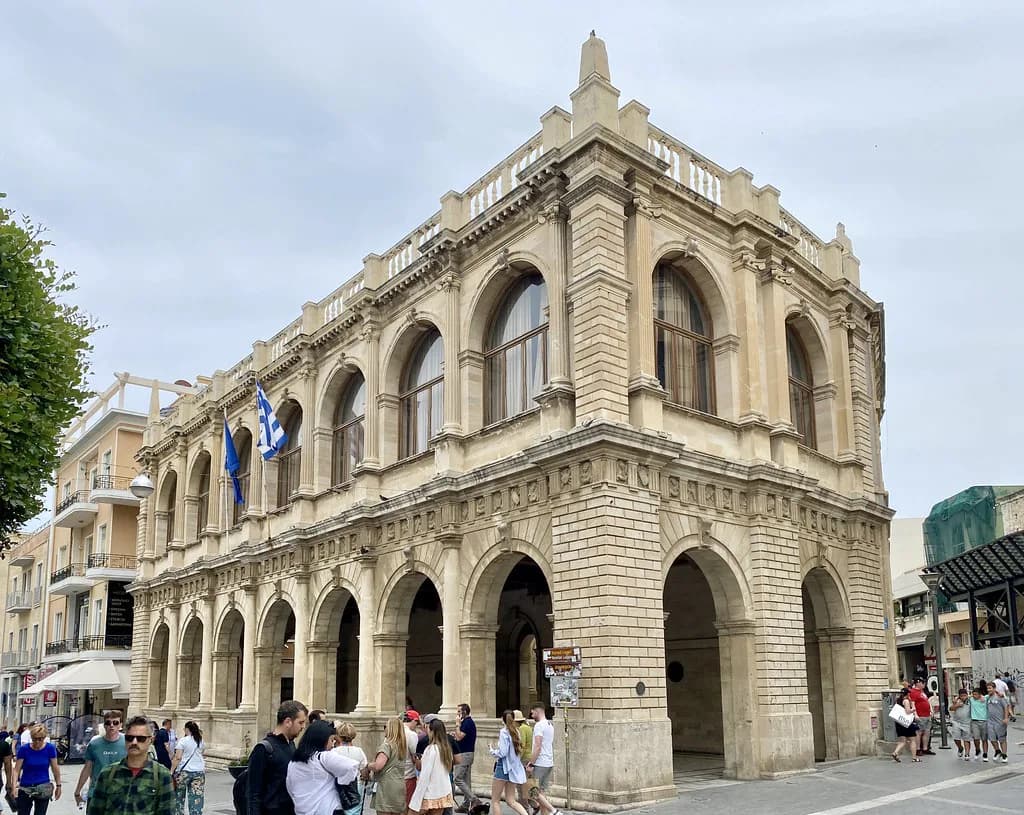
Natural History Museum of Crete: What to See and How to Plan a Visit
The Natural History Museum of Crete is the museum to choose when you want Crete's animals, plants, rocks and earthquakes rather than its Bronze Age treasures. It sits on Sofokli Venizelou Avenue on the Heraklion waterfront, a short walk from the port and the old centre. This guide sticks to that one building: what is inside, how much time it takes, and how to fit it into a Heraklion day.
Quick Orientation: Who This Museum Suits
Treat the Natural History Museum as a two-hour indoor stop rather than a half-day excursion. That makes it a strong option for a hot afternoon, a rainy morning, or a mixed group where not everyone wants another room of ancient pottery. Families with children usually find more to touch and watch here than in a traditional antiquities gallery.
The trade-off is straightforward. If your Heraklion time is short and your priority is Minoan civilisation, the archaeological collection should come first and this museum second. If you have a spare half-day, or you are travelling with children or in unsettled weather, the natural history displays fill that slot well and are a genuine change of subject.
Where It Is and How to Get There
The museum's exhibition halls are on Sofokli Venizelou Avenue in Heraklion, on the sea side of the city and within walking distance of the port area and the eastern edge of the historic centre. The museum's published listing gives that avenue address along with telephone numbers and an email address for enquiries. If you are coming from the central squares, the walk is flat and follows the waterfront road, so it works well on foot.
Because the address sits on the coastal avenue, it pairs naturally with a waterfront stroll rather than a detour inland. If you are arriving by bus or taxi, give the driver the street name rather than the museum's Greek initials, which are easy to mishear. Confirm the exact entrance on the museum's own site before setting out, since the building is part of a larger university-linked complex rather than a standalone monument.
What Kind of Museum It Is
This is a University of Crete institution, founded in December 1980 and run under the university's School of Sciences. That academic base explains the tone: it is a research and teaching museum with scientific collections running into millions of specimens, not a privately staged attraction. Visitors see a curated slice of that work rather than the storerooms.
The museum is organised into five departments: zoological, botanical, anthropological, palaeontological-geological and mineralogical. In plain terms, that covers animals, plants, human remains and culture, fossils and geology, and minerals. Knowing this helps you decide what to prioritise, because the exhibition area is large enough that a rushed lap will blur together.
The Exhibition Space: What the Halls Cover
The exhibition area runs to about 5,500 square metres, which is why a quick in-and-out visit rarely does it justice. Within that space the museum lists the Megadioramas, the Living Museum, the Seismic Table, the NATURA 2000 Hall, a temporary RACCE exhibition and the Stavros Niarchos Discovery Centre.
The Megadioramas are large walk-through habitat reconstructions showing the natural environments of Crete and the wider eastern Mediterranean, which is where the museum's focus on the region becomes concrete. The NATURA 2000 Hall covers the European network of protected natural areas, so it is the section to linger in if you plan to walk or drive through Cretan countryside later in your trip.
The Living Museum displays live animals, a detail worth knowing if you are deciding between this and a purely static collection. The Stavros Niarchos Discovery Centre is the more hands-on, family-facing part of the exhibition, while the temporary exhibition rotates and may not be running in the form described when you arrive.
Highlights to Prioritise if Time Is Short
The Seismic Table is the exhibit most often singled out in visitor accounts and it is the one to seek out first if you have an hour or less. It simulates earthquake motion, which connects directly to Crete's position on an active fault system and gives the museum a hook that antiquities galleries cannot match. Ask at the desk where it is located on the day, since exhibition layouts shift.
After the Seismic Table, head for the Megadioramas for the regional habitat overview, then the Living Museum if you are with children. The mineralogical and palaeontological material rewards anyone with a specific interest but is easier to skim. Deciding this order before you enter prevents the common pattern of spending forty minutes in the first hall and racing through the rest.
How Long to Allow and When to Go
Budget roughly two hours for a comfortable visit that includes the Seismic Table, the dioramas and the Discovery Centre, and allow longer if you read labels in full or have children who want to stay with the interactive displays. One recent visitor report describes spending around two hours inside, which is a useful benchmark rather than a rule.
For timing, this museum is best used as a heat-of-the-day or wet-weather slot, with the waterfront or the old town saved for cooler hours. Mornings are generally quieter in Heraklion's museums, but the museum publishes its own schedule and that is the version to trust. Do not build a tight transfer around your visit without confirming the day's closing time first.
Tickets, Hours and Booking
Opening hours, admission prices and any reduced-rate categories are set by the museum and can change with the season, so check the museum's own website or telephone before you travel rather than relying on older blog posts. Third-party listings and reviews often show figures that are out of date.
One widely repeated review figure for admission should not be treated as the current price; it reflects what a single visitor paid on one date and may not match the ticket desk today. Check the museum's official information for the current charge before you budget, since reductions for students, children or groups are not published in the sources summarised here.
For individual travellers, turning up during published opening hours is the normal approach; there is no indication that timed entry is required for general admission. Large groups, school parties and guided tours are a different matter and should arrange things in advance through the museum. If you are visiting on a public holiday or in the shoulder season, confirm by phone that the halls are open that day.
Nearby: Pairing It With Other Heraklion Sights
The Heraklion Archaeological Museum is a separate institution with a separate ticket, and it holds the Minoan antiquities that people most often associate with the city. Combining the two in one day is possible but demanding, because each rewards a couple of hours and the subjects do not overlap. A better split is natural history in the morning and antiquities the following day.
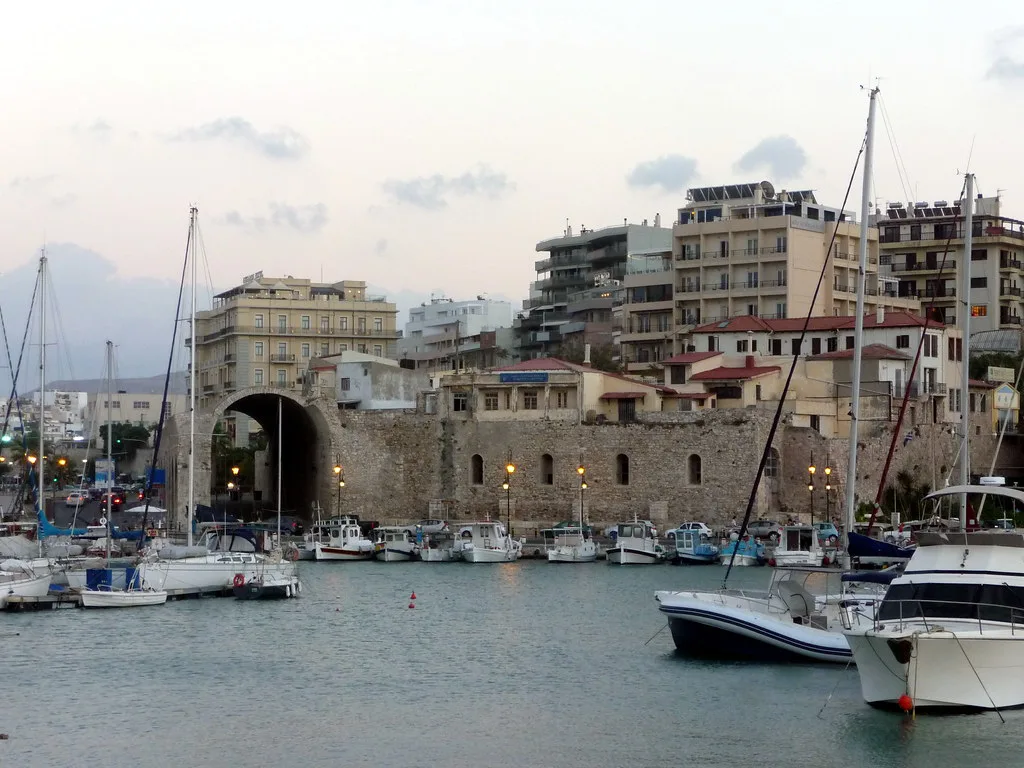
Down at the port, the Venetian Koules Fortress guards the harbour entrance and makes an easy add-on to a waterfront walk after the museum. Closer to the centre, the Morosini Fountain is the landmark most people use to orient themselves in the old town. Both are open-air stops that suit the cooler ends of the day.
If you are building a longer Heraklion stay, the palace at Knossos is the major Minoan site outside the city and needs its own half-day, with transport and heat both worth planning around. Families sometimes prefer the Cretaquarium for a marine-themed alternative to the natural history halls, though it sits well outside the centre. Beyond these named options, choosing a base in the city is easier once you know the neighbourhoods, and our Heraklion Neighborhoods guide breaks the city into four areas.
Common Planning Mistakes
The most frequent error is assuming this is the museum with the Minoan frescoes and gold. The Natural History Museum of Crete covers the island's living and geological world; the archaeological museum holds the ancient artefacts, and they are not in the same building. Checking which one you have booked before setting out saves a wasted walk.
The second is arriving without checking hours, particularly off-season or around public holidays, when museum schedules in Heraklion can differ from the summer pattern. The third is under-budgeting time: the exhibition area is genuinely large, and a fifteen-minute stop will cover little more than the entrance hall.
Plan Your Visit
The Natural History Museum of Crete earns its place in a Heraklion itinerary when you want the island's nature, geology and earthquakes explained rather than its Bronze Age past. Give it about two hours, head for the Seismic Table and the Megadioramas first, and treat the waterfront address as part of a walk rather than a detour.
Before you go, confirm the day's opening hours and ticket price with the museum itself using the contact details it publishes, since reviews and third-party listings drift out of date. With that checked, the visit needs no further planning beyond deciding whether it replaces or supplements your time at the archaeological museum.
Explore more Heraklion sauna guides
Frequently Asked Questions
Where is the Natural History Museum of Crete?
Its exhibition halls are on Sofokli Venizelou Avenue in Heraklion, on the waterfront side of the city, within walking distance of the port area and the eastern edge of the historic centre. The museum publishes its telephone numbers and email address for anyone who needs the exact entrance before arriving.
How long does a visit to the Natural History Museum of Crete take?
Most visitors should allow around two hours to cover the Seismic Table, the Megadioramas and the Stavros Niarchos Discovery Centre at an unhurried pace. Add time if you read labels in full or are visiting with children who want to stay with the interactive displays.
Can you just turn up at the Natural History Museum of Crete?
Yes, individual travellers normally turn up during published opening hours and buy admission on the spot, with no indication that timed entry is needed for general admission. Large groups, school parties and guided tours should contact the museum in advance instead.
What is there to see inside the Natural History Museum of Crete?
The roughly 5,500 square metre exhibition area includes the Megadioramas habitat reconstructions, the Living Museum with live animals, the Seismic Table, the NATURA 2000 Hall and the Stavros Niarchos Discovery Centre. A temporary exhibition also rotates, so its content may differ from what earlier visitors described.
Is the Natural History Museum of Crete the same as the Heraklion Archaeological Museum?
No. The Natural History Museum is a University of Crete institution covering the island's animals, plants, fossils, minerals and seismology, while the Archaeological Museum holds the Minoan and other ancient artefacts. They are separate buildings with separate admission, so check which one you mean before setting out.
Is the Natural History Museum of Crete a good option with children?
It is generally the easier museum choice for families, because the Living Museum displays live animals and the Stavros Niarchos Discovery Centre is designed for hands-on engagement. The Seismic Table, which simulates earthquake motion, is the exhibit most often singled out in visitor accounts.