
Koules Fortress: A Practical Guide to Heraklion's Venetian Harbour Fort
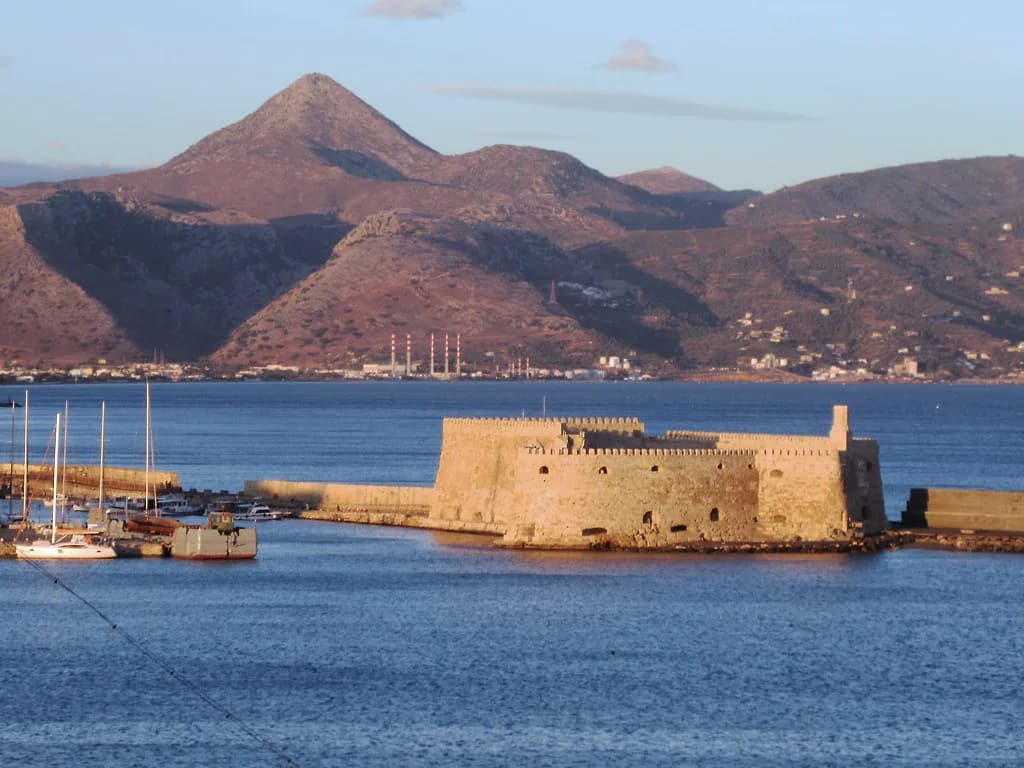
Koules Fortress is the squat, low-slung stone fort that sits right at the water's edge on the western side of Heraklion's modern port. It is small enough to see in under an hour and central enough to fold into a morning of harbour walking, which makes it one of the easiest historic stops in the city to fit around other plans.
This guide sticks to the fort itself: the name on the gate, the walk from the centre, what the structure actually contains, and the honest time budget. Ticket prices come from the official culture ministry page, and anything the site itself does not publish is flagged so you know to check on arrival rather than trust a stale number.
What Koules Fortress Actually Is
The fortress was built by the Venetians, who knew it as Rocca al Mare, meaning the rock by the sea, and it stands on the western side of the modern port of Heraklion. That name is the key to reading the building: it is a sea fort, designed to control the entrance to the harbour rather than to house a court or a garrison town.
That origin explains its shape. Expect thick walls, low vaulted chambers and a flat upper terrace rather than towers and turrets, with the sea pressing against one side and the working port against the other. It is a piece of harbour infrastructure that happens to be a monument, not a castle on a hill.
Because it belongs to the Venetian harbour rather than to a separate archaeological site, you can see it from the quay without paying anything at all. The trade-off is straightforward: the exterior and the setting cost nothing, while the interior and terrace require a ticket, so decide up front whether you want to go in or just walk the harbour around it.
Where It Is and How to Get There
Koules sits at the old Venetian harbour on the western edge of Heraklion's port, a short, mostly flat walk from the city centre and the waterfront streets. If you are coming from the central square area around the Morosini Fountain in Heraklion, the route runs downhill toward the sea and is easy to follow on foot, with the fort visible as you approach the water.
For anyone arriving by bus or taxi, ask for the old harbour or the Venetian port rather than the ferry terminal, since the passenger port serves a different stretch of quay. The port is also a working harbour, so keep to the pedestrian edges and watch for vehicles on the quay roads, particularly when cruise traffic is in.
Public transport timetables and taxi availability change with the season, and the fortress does not publish a shuttle service of its own. Confirm bus routes through the local operator or your accommodation before setting out, and treat any walking time quoted online as an estimate rather than a schedule.
Tickets, Hours and What to Confirm
The official culture ministry listing for the Venetian fortress at the harbour of Heraklion gives a full ticket at ten euros and a reduced ticket at five euros, along with a contact telephone number and email for the site. Those are the figures to plan around, but confirm them on the official page before you travel, since state-run sites can revise pricing.
Opening hours, closing days and any seasonal shutdown are not something to take from a blog post or an old guidebook. The site's own listing and the signage at the entrance are the places that count, so build your harbour walk around a flexible slot rather than a fixed appointment, and check the day before if the fort is the main reason for the trip.
Reduced rates normally depend on eligibility that the ticket desk verifies, and the official page is where the qualifying categories are set out. Bring identification if you think you qualify, and do not assume a student card from one country works the same as another; ask at the window instead of arguing at the turnstile.
A Short History of the Harbour Fort
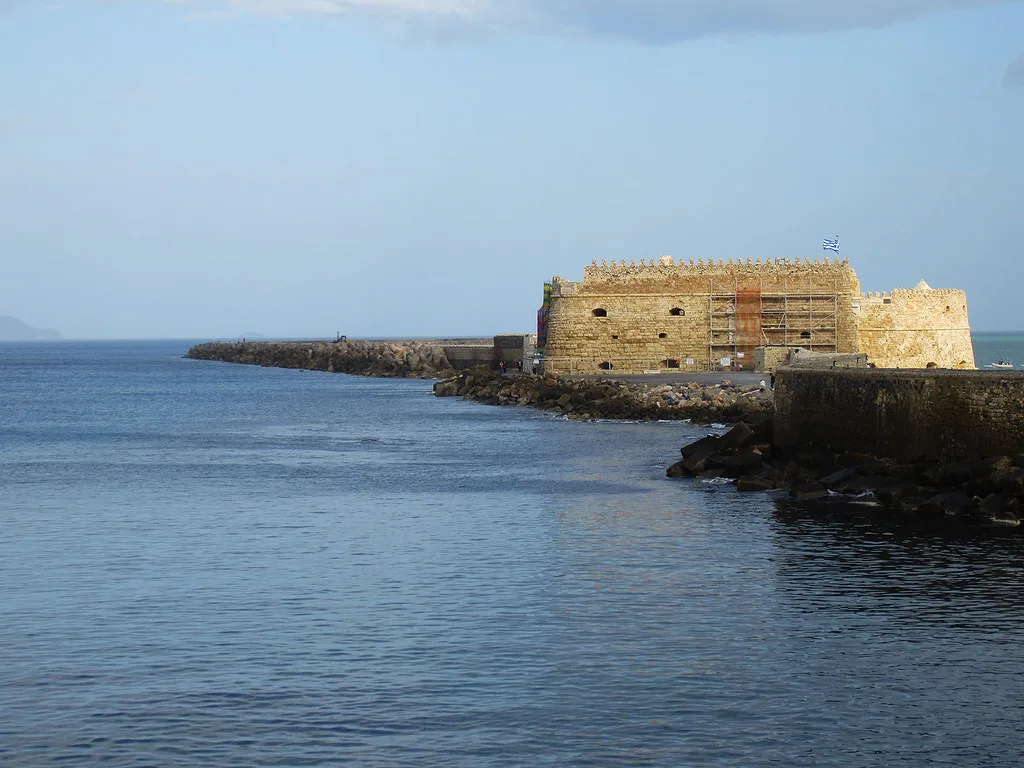
The Venetians ruled Crete for centuries and fortified Heraklion heavily, and Koules was the seaward piece of that system, controlling the approach to the harbour from the water. Its Greek name today is simply the one locals used, while Rocca al Mare preserves the original Venetian designation and the memory of a rock built out into the sea.
Harbour defences of this kind were working buildings, repaired and reworked as weapons and threats changed, so the masonry you see is a palimpsest rather than a single moment of construction. Read the walls with that in mind: patches, blocked openings and different stone courses are the record of that long use, not imperfections.
If you want the wider Venetian and Ottoman story of the city to sit alongside the fort, the archaeological museum in Heraklion and the Palace of Knossos cover far earlier periods and complement rather than duplicate it. Plan the fort as the short harbour stop and give the museum its own half day, since the collection rewards unhurried time. The same choice between a short harbour monument and a half-day site comes up when you weigh the things to do in Heraklion more broadly.
What to See Inside and Around the Fort
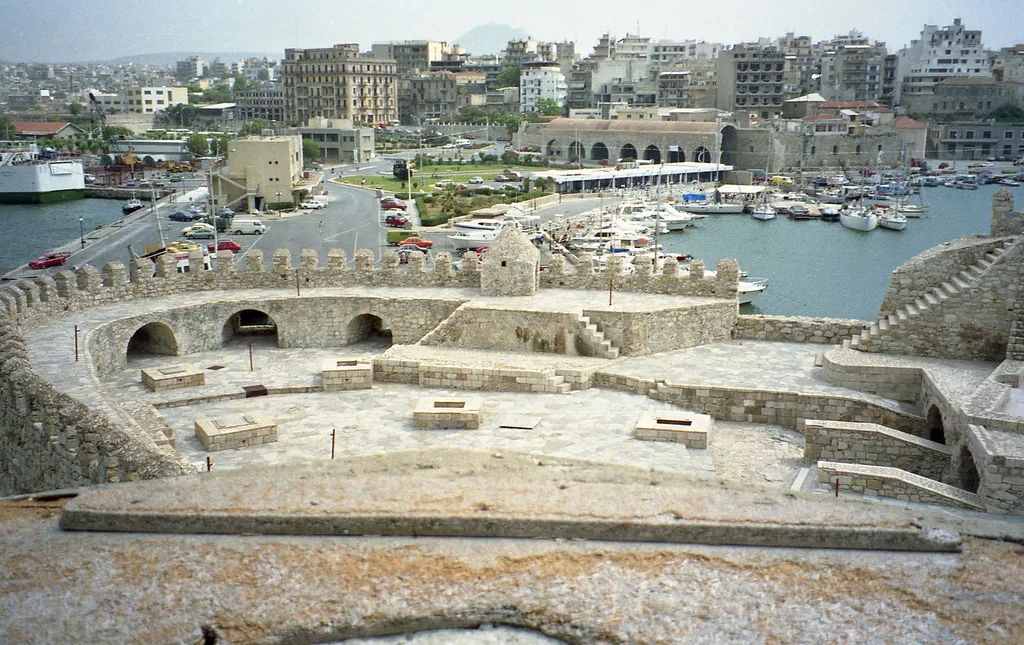
Inside, the visit is mostly about the structure itself: the vaulted chambers at ground level, the thick walls, and the upper level where the harbour opens out on one side and the city on the other. There is little in the way of labels and display cases, so the experience depends on how much you enjoy reading a building from its fabric.
The upper terrace is the payoff, with views across the Venetian harbour, the fishing boats and the long waterfront. If you are choosing between paying to go in and spending the same time walking the harbour arm, the terrace is what tips the decision toward a ticket; the exterior alone is impressive but quick.
Outside, the old harbour itself is the attraction, with the waterfront promenade, moored boats and the line of cafés and tavernas that face the water. Lighthouse and quay views are free, and a slow loop of the harbour makes a natural companion to the fort without requiring another ticket.
How Long to Allow and When to Go
Most visitors need somewhere between thirty minutes and an hour inside the fortress, with extra time on the harbour if they want photographs or a drink by the water. The site is compact and there is no long route to follow, so a generous half day covering the fort, the harbour and a walk into the centre is realistic rather than rushed.
Crete's harbour front offers little shade at midday, and the stone surfaces inside the fort hold the heat, so early morning or late afternoon is the more comfortable window for walking and standing on the terrace. Footwear matters more than you might expect: the ground is uneven stone and worn steps, so flat shoes with grip are a better choice than sandals with smooth soles.
Cruise arrivals and summer weekends concentrate people along the quay, and the fort's small interior fills quickly when a group comes through. If quiet is the priority, aim for the first slot after opening or the last hour before closing, and confirm those times on the official page rather than assuming them.
Nearby Sights for a Combined Half Day
The city centre is close enough to combine with the fort on foot, and the Morosini Fountain in Heraklion makes a useful landmark for orienting yourself before or after the harbour walk. From there you can reach the shopping streets, the food shops and the waterfront without needing transport between stops.
For a fuller day, the Palace of Knossos sits outside the centre and needs its own transport and time, so pair it with the fort only if you are treating them as two separate outings. The archaeological museum in Heraklion is the closer and more logical companion for a morning or afternoon in the city itself.
Eating near the harbour is convenient rather than cheap, and the waterfront tables charge for the view that the back streets do not. If value matters, walk a few blocks inland from the quay before choosing a table, and use the area guides to see which parts of Heraklion suit a meal stop. Our Heraklion Neighborhoods guide breaks the city into four distinct areas, which makes it easier to judge where a meal stop fits your day.
Practical Tips Before You Go
Keep the visit simple: walk the harbour first to see the fort from the water, then decide whether the interior and terrace justify a ticket for your group. Bring water, wear shoes that handle worn stone, and leave room for a slow loop of the quay rather than treating the fort as a box to tick.
Before you set out, confirm the current ticket price and opening hours on the official culture ministry page, since those are the details most likely to change between seasons. Everything else, from the walk down from the centre to the view from the terrace, you can plan with confidence.
Explore more Heraklion sauna guides
Frequently Asked Questions
Where is Koules Fortress in Heraklion?
It stands on the western side of Heraklion's modern port, at the old Venetian harbour, a short flat walk from the city centre. Ask for the old harbour rather than the ferry terminal, since the passenger port is a different stretch of quay.
How much does it cost to enter Koules Fortress?
The official culture ministry listing sets a full ticket and a reduced ticket, with eligibility checked at the desk. Confirm the current rates on that page before you travel, since state-run sites can revise pricing.
How long do you need at Koules Fortress?
Most visitors spend roughly thirty minutes to an hour inside, plus time on the harbour around it. The site is compact, with vaulted chambers at ground level and an upper terrace, so it fits easily into a half day with the waterfront and city centre.
What is the history of Koules Fortress?
It is a Venetian sea fort, originally called Rocca al Mare, meaning the rock by the sea, built to control the approach to Heraklion's harbour. The structure was repaired and reworked over centuries, so the masonry shows layers of use rather than a single build.
Is Koules Fortress worth visiting?
It is worth it if you want a short, central historic stop with harbour views from the upper terrace, and it costs little time. Travelers who prefer museum collections or extensive displays may find the interior sparse, so weigh the terrace view against the ticket.
Do I need to book Koules Fortress in advance?
No advance booking system is described on the official listing, which gives a telephone number and email for the site instead. If you are visiting with a group or on a tight schedule, contact the site directly to check how entry is handled that day.
What should I wear to visit Koules Fortress?
Flat shoes with grip are the practical choice, because the interior has uneven stone floors and worn steps. The harbour front has little shade, so a hat and water make the walk and the terrace more comfortable in warm months.
What else is near Koules Fortress?
The old harbour promenade, the waterfront cafés and the city centre are all within walking distance, with the Morosini Fountain a useful landmark inland. The Palace of Knossos and the archaeological museum are separate outings that need their own transport and time.