
Heraklion Venetian Walls: A Practical Guide to the Old Fortifications

The Heraklion Venetian Walls are not a single gated monument with one ticket booth; they are a continuous ring of ramparts and bastions that still shapes how the modern city is laid out. Visitors who expect a fortress entrance often walk past the most rewarding stretches without noticing them, while those who treat the walls as a walking route get far more out of them.
This guide stays on the fortifications themselves: where the line runs, how to reach it on foot from the centre and the port, what to look for along the way, and how the seaward end ties into the harbour. It also flags the one thing the official visitor material does not settle, which is which sections are open to walkers on any given day.
What the Heraklion Venetian Walls Are
The Venetians ruled Crete from Chandax, the old name for Heraklion, and ringed the settlement with a system of walls, bastions and gates. That circuit is what travellers now call the Venetian Walls, and it explains the teardrop shape of the Old Town and the ring road that traces roughly the same outline. The fortifications are the reason the historic core feels enclosed and walkable rather than sprawling.
It helps to separate the walls from the harbour works, because the two are often conflated. The harbour-side fortifications and the sea fort belong to the same defensive story but are described separately, and the harbour itself took its final form between 1523 and 1540 after earlier constructions were destroyed by earthquakes and other causes, according to the municipality's visitor site. Exact construction dates for individual bastions on the landward circuit are not set out there, so treat specific dates you see elsewhere with care.
Where the Walls Run
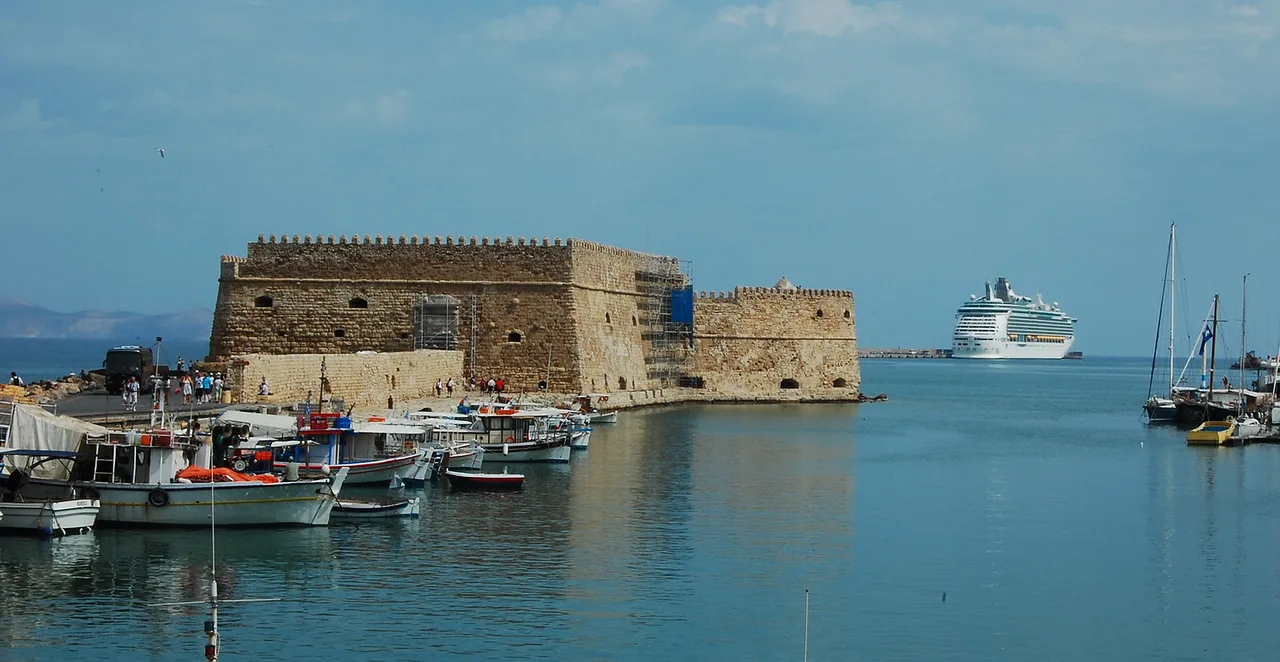
Think of the walls as a ring rather than a site. The circuit wraps the Old Town on the landward sides and runs down to the sea at the harbour entrance, where the sea fort known as Koules, also called Castello del Molo or Rocca a Mare, stands over the jetty. The harbour-side stretch is the easiest reference point for first-time visitors because the waterfront is obvious and the fort is visible from the quay.
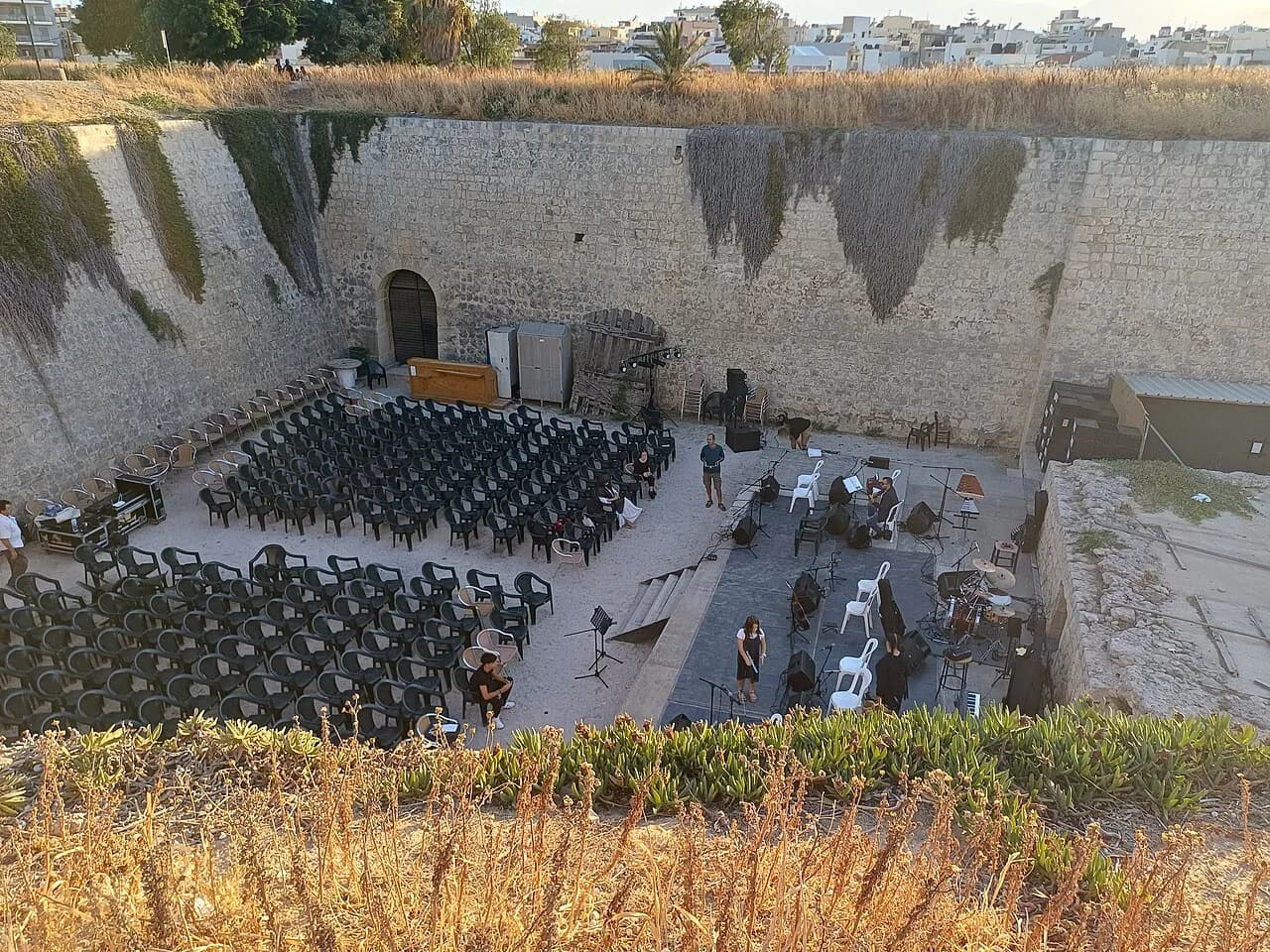
On the landward sides, the ramparts and bastions appear as raised green banks and stone revetments between the city and the modern streets beyond. Several of the old gates no longer exist, and the municipality notes that the Dockyards Gate has not survived, so you should not plan a route around named gates that may only exist on historical maps. Use the visible bastions and the ring road as your landmarks instead.
How to Get There on Foot
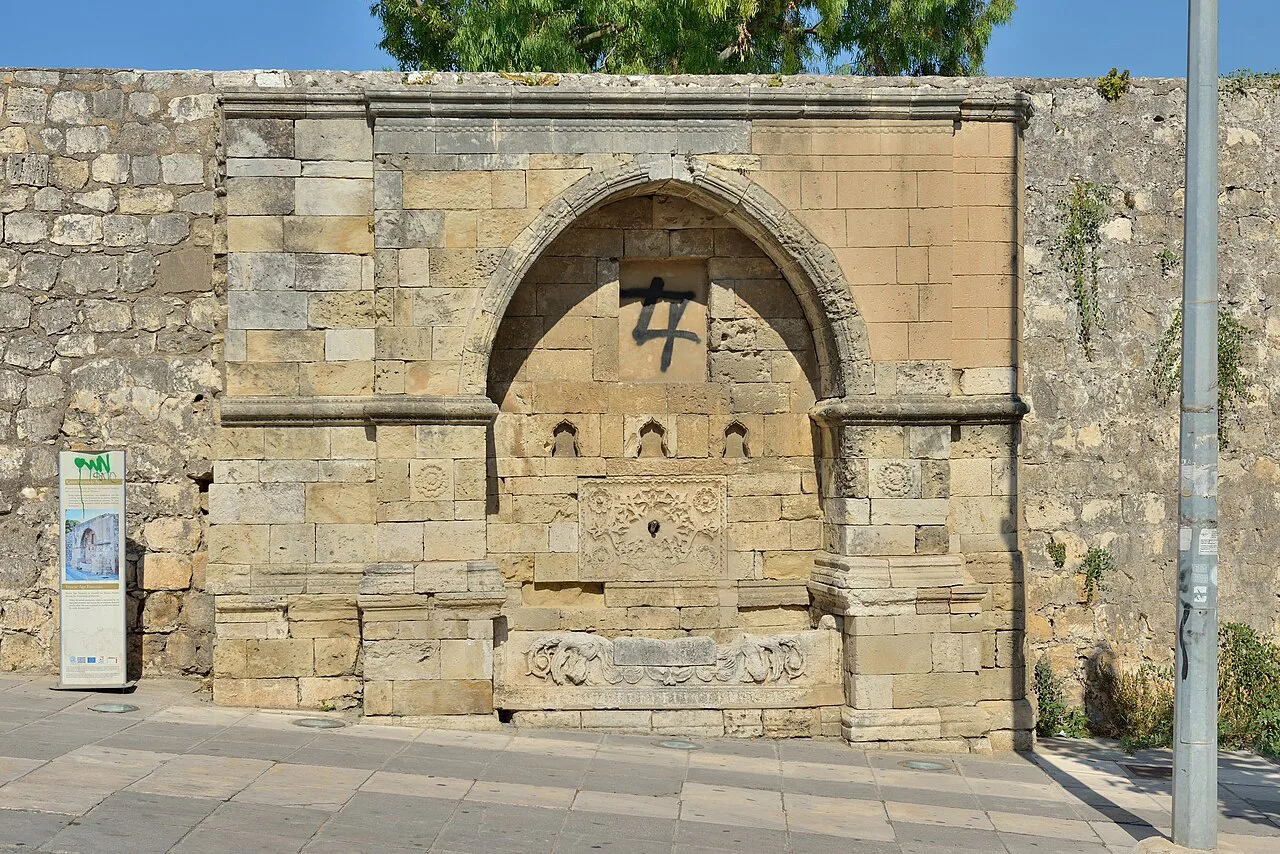
Most visitors reach the walls without any transport at all. From the central squares around the Morosini Fountain, the Old Town is compact enough that you will meet the wall line within a relatively short walk in almost any direction, and the harbour end is a straightforward stroll downhill from the centre. Wear shoes you can walk in for an hour or two, because the useful stretches are long rather than concentrated. If you would rather split the city into shorter walks, the Heraklion Neighborhoods guide breaks the historic core into four areas you can cover one at a time.
From the port area, the harbour entrance is the obvious starting point. Walk the quay toward the sea fort and you are effectively standing where the fortifications meet the water, which makes a sensible place to begin a partial circuit. If you are arriving by ferry, this is the most efficient way to see a meaningful piece of the walls before heading into town.
What to See Along the Walls
Look for three things: the mass of the ramparts, the shape of the bastions projecting outward, and the surviving stonework where the wall meets the sea. The bastions are the angular platforms that let defenders fire along the face of the wall, and spotting them makes the geometry of the circuit much easier to read. Many sections now double as public open ground, so the walls are often something you walk beside or over rather than through.
The seaward end is the most legible stretch for a short visit. The harbour fort is built on two storeys and occupies about 3,600 square metres, with store rooms and prison cells on the ground floor and officers' quarters above, and the outer walls carry marble reliefs of the winged lion of Venice that are partly visible today, per the municipal visitor site. Those details belong to the fort rather than the full circuit, so read them as a feature of the harbour end.

How Much Time to Allow
A single section near the harbour, combined with a look at the sea fort from outside, fits comfortably into an hour and works well as an addition to a harbour walk. A fuller loop of the Old Town takes considerably longer, because the circuit is a real urban ring rather than a short promenade, and you will be crossing roads and detouring around buildings.
For planning purposes, treat a half day as enough to walk a good stretch of the walls and still see one substantial sight in the Old Town. Trying to combine a complete circuit with a museum visit tends to produce a rushed day, particularly in warm weather when the exposed ramparts offer little shade. Choosing one long walk or one short section plus an indoor sight is the more realistic split, and the same balance of outdoor walking and indoor stops runs through other things to do in Heraklion.
Access, Hours and Tickets
The official visitor material for Heraklion describes the history and fabric of the harbour fortifications but does not publish opening hours, ticket prices or closure dates for the wall circuit or the sea fort. That means any figure you see quoted as definite should be checked against the current listing before you rely on it, especially outside the main season. Where a section is fenced, gated or under restoration, the practical answer is simply to walk on to the next accessible stretch rather than assume a uniform rule.
For the sea fort specifically, check the Visit Heraklion municipal pages close to your visit date rather than trusting older guidebook entries. If Fort Koules turns out to be closed on the day you plan to be there, the exterior and the harbour walls still justify the walk, so build the outing around the circuit rather than around one building.
The Harbour Side: Walls, Quay and Sea Fort
The Venetian Harbour is where the fortifications, the quay and the sea fort read as one piece of infrastructure. The Venetians needed the harbour for both strategy and trade, and the fort was built to protect the jetty and the harbour itself; shipyards known as tarsanades were constructed on the north and eastern parts, where warships and merchant vessels were built and fitted out. Walking the quay with that in mind turns a pleasant waterfront stroll into a lesson in how a port was defended.
Combining the harbour and the walls in one outing makes sense: start at the seaward end, look at the fort from the outside, then follow the wall line inland as far as your time allows. The trade-off is that the harbourfront is the busiest and most cafe-oriented part of the route, while the landward ramparts are quieter but less obviously signposted. Doing the harbour first means you can retreat to the waterfront when you have had enough walking.
Nearby Options in the Old Town
The wall circuit sits within easy walking distance of the Old Town's main sights, which makes it a natural addition rather than a separate trip. The central fountain square is a good orientation point and a place to pause between sections, while the archaeological museum lies inside the ring and pairs well with a morning on the walls. Distances are short enough that you can link two or three of these on foot without transport, and the area layout is set out in these Heraklion Neighborhoods guides if you want to plan the walking order in advance.
If your interest is Minoan Crete rather than Venetian engineering, the Palace of Knossos is outside the city and needs its own half day, so do not try to fold it into a wall walk. Keep the walls as an urban, on-foot experience and treat the archaeological sites as separate outings. That split keeps both visits unhurried.
Self-Guided Walk or a Paid Tour
Walking the walls yourself costs nothing beyond your time and gives you the freedom to start and stop where you like, which matters because access is uneven. A guided or vehicle tour adds interpretation and transport but commits you to a fixed route and schedule. The Viator listing for Venetian Walls in Heraklion advertises tours with prices shown per booking, illustrating how wide the range is; check the current listing for what is actually included before comparing it with a free walk.
A middle option is a self-guided audio commentary on your phone, which lets you keep your own pace while getting some of the historical context. If you go that route, download it before you set out so you are not depending on mobile data at the ramparts, and pair it with your own map of the bastions so you know what you are looking at.
Practical Trade-Offs and Common Mistakes
The biggest mistake is expecting an enclosed ticketed monument. There is no single entrance, no ticket window and no fixed route, so arrive with the mindset of a city walk and let the visible ramparts guide you. A second common error is underestimating distance: the ring is long, and walking one side to the other takes considerably more time than the map suggests.
Heat and shade matter more than most guides admit. The exposed ramparts and the quay offer little cover at midday, so an early start or a late-afternoon walk is more comfortable, and the harbour end is a sensible place to finish with a drink. Carry water and plan a short section rather than a forced march if the weather is against you.
Finally, do not build a day around a specific gate or staircase you have read about. Some historic gates are gone and others may be closed for works, so keep a flexible plan and check locally on the day for which stretches are walkable. If you want a wider menu of options to fill the rest of the day, the Heraklion Attractions: 10 Visitor Guides collection covers the sights inside and outside the wall line.
Plan Your Visit
Treat the Heraklion Venetian Walls as a ring to walk rather than a monument to enter. Start at the harbour end for the clearest orientation, choose either a short seaward stretch or a longer loop depending on your time, and keep a flexible route because access points vary along the circuit. If the walls leave you wanting more of the historic core, the same on-foot approach works well for the rest of the things to do in Heraklion.
Before you set out, confirm whether the sea fort and any gated sections are open that day, since official visitor material does not publish hours or prices for the walls. Then go with comfortable shoes, water and a willingness to double back, and the fortifications will reward you with the clearest reading of how Heraklion was built.
Explore more Heraklion sauna guides
Frequently Asked Questions
Where are the Heraklion Venetian Walls?
They form a ring around the Old Town of Heraklion, running inland across the city and down to the sea at the Venetian Harbour. The clearest landmark for the seaward end is the harbour entrance, where the sea fort known as Koules stands over the jetty.
Can you walk on the Venetian Walls in Heraklion?
You can walk along and beside many stretches, but the walls are an urban ring rather than a managed trail with one entrance. Some sections are open ground, others are fenced or interrupted by roads and buildings, so check locally for which parts are accessible on the day you visit.
How long does it take to see the Heraklion Venetian Walls?
A short stretch near the harbour and a look at the sea fort from outside fit into about an hour, while a fuller loop of the Old Town takes considerably longer. Many travellers give it a half day and pair it with one indoor sight rather than attempting the whole circuit.
Are there tickets for the Heraklion Venetian Walls?
No ticket information for the wall circuit is published in the official Heraklion visitor material, and there is no single entrance. If a sea fort or museum building is part of your plan, check its current listing for admission details and hours before you go.
Are the Venetian Walls near the Venetian Harbour in Heraklion?
Yes. The fortifications reach the sea at the harbour entrance, where the sea fort and quay sit, so the two are best seen in one walk. Start at the water, then follow the wall line inland as far as your time allows.
Who built the Venetian Walls of Heraklion?
The Venetians built the fortifications around Chandax, the old name for Heraklion, during their rule of Crete, and they still define the shape of the modern Old Town. The harbour works described by the municipal visitor site took their final form between 1523 and 1540.
How do you get to the Heraklion Venetian Walls?
Walk. The Old Town is compact, so from the central squares you will reach the wall line within a relatively short walk, and the harbour end is a straightforward stroll downhill from the centre. If you arrive by ferry, begin at the quay by the harbour entrance.
Is a guided tour of the Venetian Walls worth it?
It depends on how much interpretation you want. A self-guided walk is free and flexible but offers little explanation, while tours add context and transport at a cost shown on the operator's current listing. An audio guide at your own pace is a middle option.