
Heraklion Central Market: A Visitor's Guide to 1866 Street
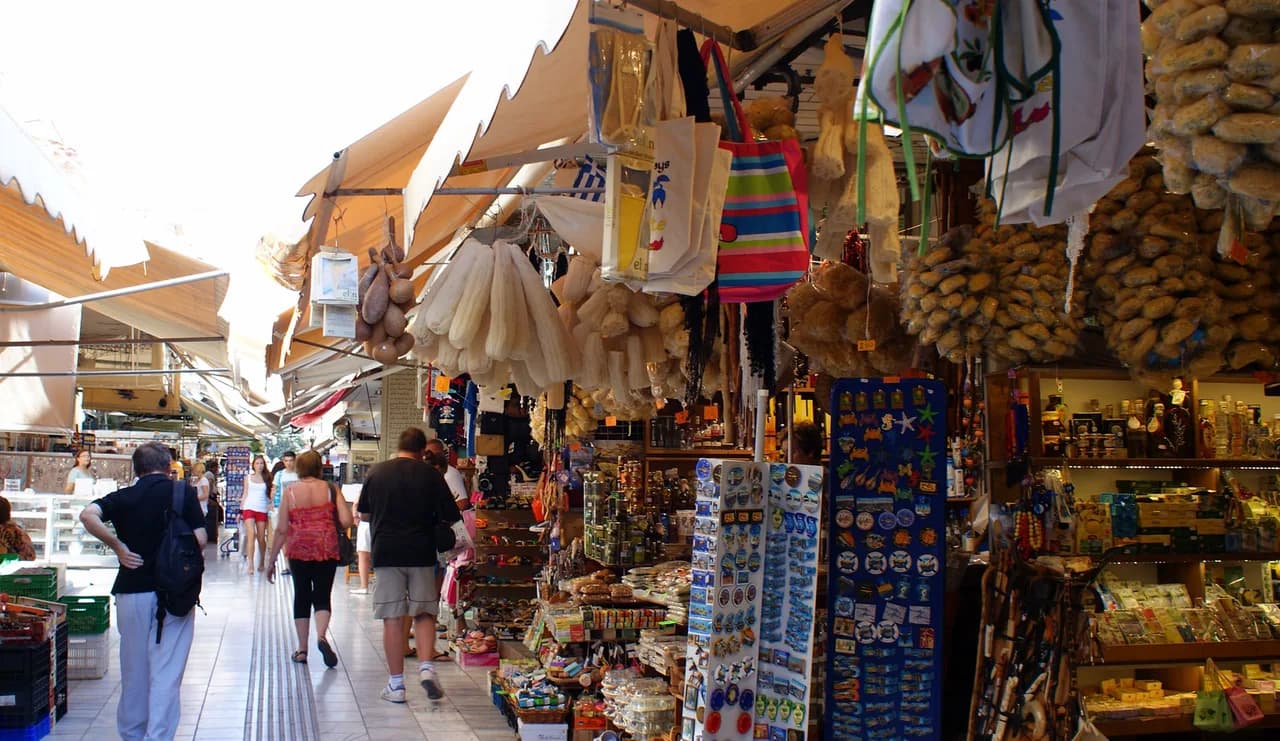
Heraklion's central market is not a single roofed hall you enter and leave. It is a market street, Odos 1866, lined with food shops and stalls, and it sits just a short walk up from Lions Square in the middle of the city.
Visitors often meet two names for roughly the same ground: 1866 Street and Heraklion Central Market. This guide keeps them together, explains what the street actually holds, and points out where to confirm the details that change, such as shop hours and weekly produce markets.
Where the Market Is and How to Reach It
The market occupies 1866 Street, also written Odos 1866, in central Heraklion. The clearest landmark is Lions Square, the city square with the Morosini Fountain, and the market street begins a short walk uphill from it according to local listings.
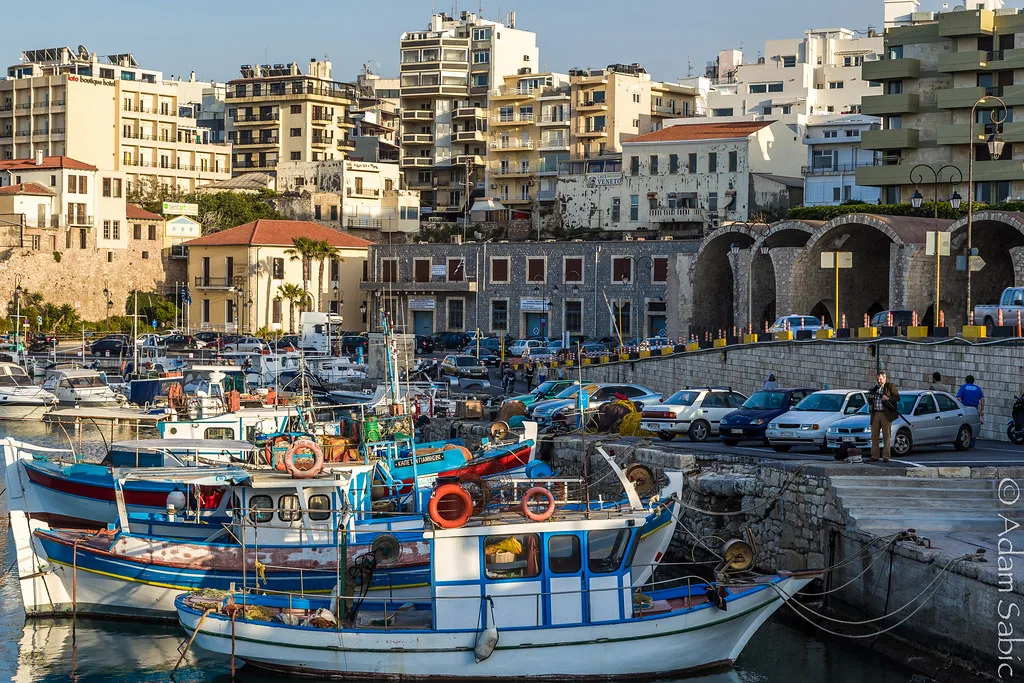
If you arrive from the port side, walk up 25th August Street from the old harbour to Lions Square, then continue to the market. That route strings together the waterfront, the main tourist shopping street and the market in one continuous walk, so you can leave a purchase-heavy stop for the end.
The street sits inside the compact old centre, so walking is the practical way in. Drivers should plan to park outside the immediate core rather than on the market street itself, since the centre is dense and traffic-restricted in places, and bus or taxi drops near the centre leave only a short walk.
What Is Sold Along 1866 Street
The shops and stalls along 1866 Street are stocked with Cretan island produce: olive oil, local wines, a range of cheeses, fragrant herbs and other products of the Cretan land. Cretan olive oil is the island's staple cooking and dressing oil, and local wine here usually means bottles from Cretan producers rather than mainland labels.
Cheese is one of the recurring purchases, and graviera is the name to know: a firm, aged Cretan cheese, often made from sheep's or goat's milk, that appears on taverna menus and in market displays. Herbs, honey and packaged local products are the easy things to carry away, while olive oil in tins or bottles needs a plan for the flight home.
Food is not the whole street. Woven baskets in many sizes are sold alongside clothing, shoes, handbags and even toys, which makes the market a mixed shopping street rather than a pure produce hall. That variety matters if you are travelling with people who do not want to spend an hour on cheese and oil.
Cafés and Snack Stops on the Walk
Traditional cafés sit among the food vendors along the street, offering a natural midpoint break during a market walk. Use one for a coffee between the food section and the clothing shops rather than treating the street as a there-and-back errand.
For a proper sit-down meal, the market's position means you can eat before or after the walk instead of on the street itself. Search around the old centre for tavernas serving Cretan dishes, and preview the wider eating and sight options with our guide to things to do in Heraklion.
1866 Street or Heraklion Central Market?
Descriptions of this spot blur the two names: 1866 Street is treated as the traditional market street, and the Heraklion Central Market is described as located on 1866 Street. Neither name appears with an official boundary, so treat them as the same general stretch of shops and stalls.
Practical reading: expect an open-air street of shops with market-stall fronts rather than a ticket-gated building with an entrance fee. That also means there is no single published schedule for the whole street, since each shop sets its own hours and closure days.
Market Street Versus the Modern Shopping Streets
The trade-off is traditional versus convenient. Dedalou Street, a pedestrianised shopping street, carries international brands alongside local boutiques, and Dikeosinis Street near Eleftherias Square has been pedestrianised and mixes clothing stores with a route into the rest of the shopping district. If you need a specific item or brand, those streets beat the market.
Choose 1866 Street when the point is Cretan products, gifts with a local origin and the atmosphere of a working market. Choose the modern streets when the point is speed, sizing, air conditioning or a fixed-price purchase, and skip the market without guilt if your luggage is already full. If your shopping list is tied to a specific area of the city, our Heraklion Neighborhoods guide shows which district you will be browsing in.
Weekly Laiki Markets as an Alternative
Heraklion also runs laiki markets, weekly neighbourhood produce markets that local shoppers use for fruit, vegetables and other fresh goods. They are held in different neighbourhoods on different days, and published sources do not fix the current schedule, so ask at your accommodation or check locally before setting out; our Heraklion Neighborhoods guide is a useful way to work out which area you will be staying in.
The division of labour is simple. Use 1866 Street for oil, cheese, wine, herbs and gifts; use a laiki market if you want loose seasonal produce and are staying somewhere you can cook. Both are open-access and cost nothing to walk through, so the only real cost is time.
How Long to Allow and When to Go
Budget about an hour for the market itself if you are browsing, and longer if you plan to compare olive oil and cheese or buy gifts. A stop of roughly half a day covers the market plus Lions Square and 25th August Street on the same loop.
Mornings are the more practical window: food shops tend to be busy earlier in the day and some retailers keep shorter hours, though no source sets a common timetable for the street. Confirm the current hours of any specific shop before making a special trip, and remember that individual closures are not published in one place.

Nearby Sights to Combine with the Market
Lions Square with its Morosini Fountain is the immediate anchor, and the old port lies downhill at the end of 25th August Street. Koules Fortress, the Venetian sea fortress guarding the harbour entrance, is the natural extension of that walk if you still have energy after shopping.
For a deeper half-day, the Heraklion Archaeological Museum holds the Minoan collections that make the region's archaeology legible. If you plan to visit the Palace of Knossos outside the city, see that museum first or afterwards, because the finds and the site are best read together.
Closer options include the Historical Museum of Crete on Sofokli Venizelou Avenue and Agios Minas Cathedral, one of the largest churches in Greece. The wider Heraklion Attractions: 10 Visitor Guides collection helps you slot these into a day that starts at the market.
Practical Planning Notes
There is no ticket to buy for the street, and no source lists an entry fee or gate hours for the market as a whole. Treat it as a public shopping street: free to walk, with each shop deciding its own timetable, which is why a fixed opening time cannot be quoted reliably.
Two checks are worth making before you go: look up current opening days for the shops you care about, and see whether a laiki market is running in a neighbourhood near your accommodation during your stay. Both are local, changing details rather than fixed features of the city.
Bring a bag for purchases and a plan for liquids, since olive oil and wine are the heavy, fragile buys. If you are flying soon after, ask the vendor about packaging and check airline rules on liquids in hand luggage before committing to a bottle.
Plan Your Visit
1866 Street is a compact, free-to-walk market street a short climb from Lions Square, best used in the morning for Cretan oil, wine, graviera and herbs before the clothing and souvenir shops take over your attention.
Pair it with the fountain square, 25th August Street and the old port for a half-day loop, and use the wider Heraklion guide to add a museum or fortress without turning the market into a rushed stop.
Explore more Heraklion sauna guides
Frequently Asked Questions
Where is the Heraklion central market?
It is on 1866 Street, also called Odos 1866, in the centre of Heraklion, a short walk uphill from Lions Square. Walking up 25th August Street from the old port to Lions Square and then continuing to the market is the simplest route.
Does Heraklion have a market?
Yes. 1866 Street functions as the central market street, with shops and stall-fronted vendors selling Cretan produce and other goods, and the city also has weekly laiki neighbourhood markets for fresh produce on days that change, so check locally.
What can you buy at Heraklion central market?
Expect Cretan olive oil, local wines, cheeses including graviera, herbs and other island products, plus woven baskets, clothing, shoes, handbags and toys. Individual shops vary, so the mix changes street by street.
Is Heraklion central market open on Sundays?
No common timetable is published for the street as a whole, and each shop sets its own hours and closure days. Check the specific shops you want to visit before travelling on a Sunday or public holiday.
What is the difference between 1866 Street and Heraklion Central Market?
The names are used loosely for the same stretch. Published descriptions treat 1866 Street as the traditional market street and place the Heraklion Central Market on it, so it is best understood as one open-air shopping street rather than a separate building.
How long do you need at Heraklion central market?
Allow around an hour to browse the street, and more if you plan to compare olive oil and cheese or shop for gifts. Combining it with Lions Square and the old port easily fills half a day on foot.
What else is near Heraklion central market?
Lions Square and the Morosini Fountain are the closest landmarks, with 25th August Street running down to the old port and Koules Fortress. The Heraklion Archaeological Museum, Agios Minas Cathedral and the Historical Museum of Crete are also within the centre.