
Historical Museum of Crete: What to See in Heraklion
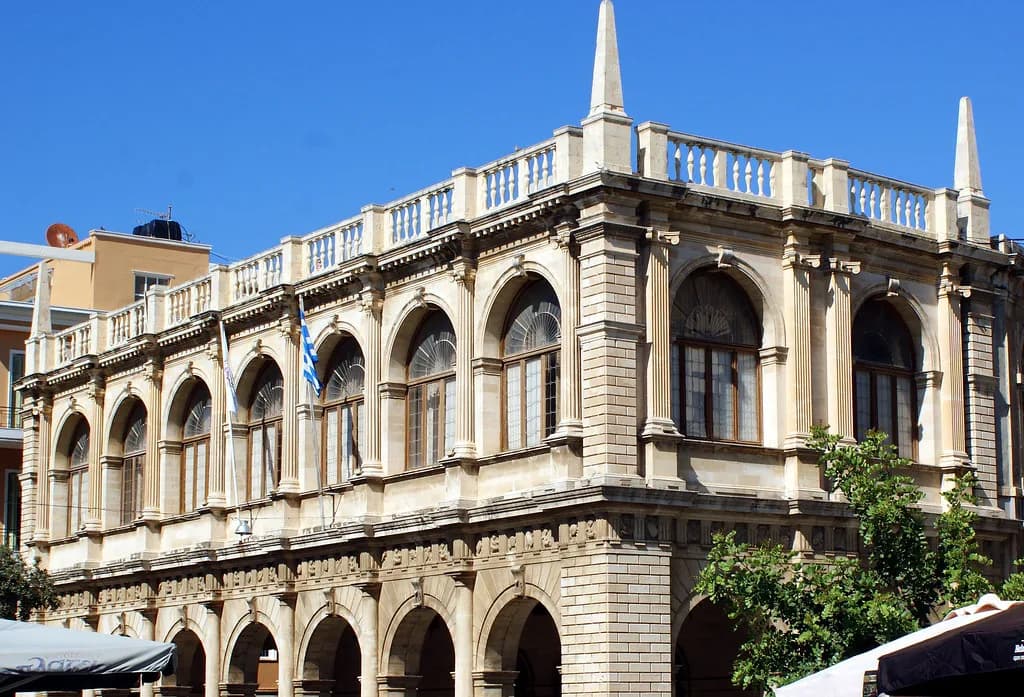
Most visitors to Heraklion give their museum hours to the Minoan gold and frescoes, then wonder what happened on Crete afterwards. The Historical Museum of Crete answers that question in a 1903 neoclassical mansion on Sofokli Venizelou Avenue, the coastal road that runs above the old harbour. Its 22 halls move from early Byzantine relics through Venetian and Ottoman rule to the Battle of Crete, with two El Greco paintings and a giant city model along the way.
This guide sticks to the one building: where it sits, what the collections actually contain, which objects deserve your time, and how to sequence a two-to-three-hour visit. Opening hours and ticket prices are not confirmed by the museum's own website here, so treat any figure you read elsewhere as provisional and confirm before you set out.
What the Historical Museum of Crete Is
The museum occupies the A. and M. Kalokerinos House, a neoclassical building of 1903 belonging to the charitable institutions of Andreas and Maria Kalokerinou, the family of Minoas Kalokerinos, who made an early attempt at systematic excavation at Knossos in 1878. The Society of Cretan Historical Studies received the building in 1952 and converted it into a museum the following year.
Its scope is broad rather than deep in any single field: history displays, an art gallery and a folklore collection share the same 22 halls. If you arrive expecting a tidy chronological march, you will instead meet Byzantine pottery, icons, coins, paintings, weapons and a reconstructed house interior in close succession. That mix is the museum's character, and planning around three or four anchor objects keeps it from feeling scattered.
Where It Is and How to Get There
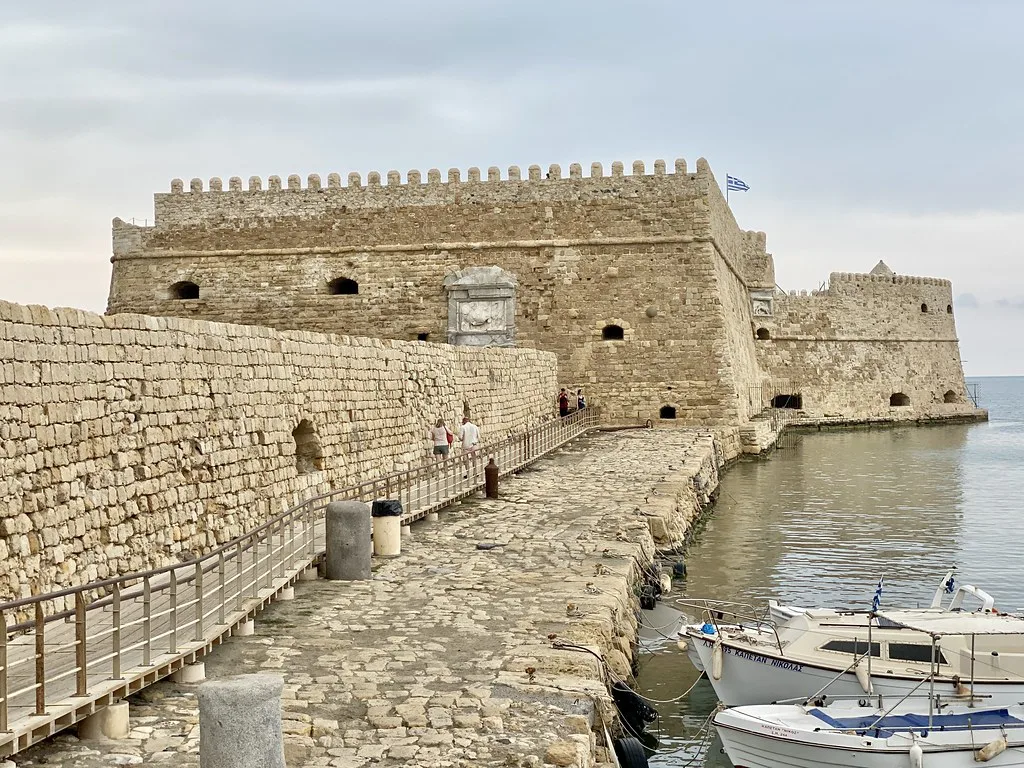
The address is 27 Sofokli Venizelou Avenue, with a second entrance at 7 Lysimachou Kalokerinou Street, in the centre of Heraklion. The avenue is the main coastal road, which puts the museum within an easy walk of the old harbour and the fortress at its mouth. Coming from the waterfront, you approach on foot rather than by car, which suits the location well.
Parking is the weak point of this part of town: the museum has no dedicated car park, so you rely on paid street spaces or a public lot a few blocks away. If you are driving in from a hotel outside the centre, budget extra time for circling and consider leaving the car once and walking between sights. Buses and taxis drop you closer to the entrance than any parking spot will.
The El Greco Paintings
The museum holds the only works by Domenikos Theotokopoulos, known as El Greco, on public display on his home island: The Baptism of Christ, painted in 1567, and View of Mt. Sinai and the Monastery of St. Catherine, from about 1570. Both date from his Cretan and early Venetian years, before the elongated figures that made him famous in Spain. They hang in a dimly lit room of their own, and the low light is deliberate.
For anyone who has seen El Greco in Toledo or Madrid, these two panels show a different painter learning his craft, with firmer modelling and a Byzantine icon heritage still visible. Give them ten or fifteen minutes rather than a glance, because the room is small and the crowds here are usually lighter than at the city's archaeological collection.
The Model of Venetian Candia
The single most useful object for understanding Heraklion is a four-by-four-metre model of the city as it stood in the mid-seventeenth century, at the height of Venetian rule, when it was called Chandax or Candia. It shows the circuit of fortifications, the harbour and the street pattern in three dimensions, which makes the surviving walls around the modern city far easier to read afterwards.
Plan to spend time here before you walk the walls or the harbour, not after. Seeing the model first turns a pleasant waterfront stroll into a legible one, since you can place the fortress, the bastions and the filled-in moat in relation to each other.
The Nikos Kazantzakis Room
A dedicated section holds the library and study of Nikos Kazantzakis, the Cretan author best known for Zorba the Greek, transferred from his home in Antibes in France. Personal items, manuscripts and early editions round out the display, which suits readers more than casual browsers.
If the room leaves you wanting more, the writer's connection runs deeper than this one gallery: a separate museum in Myrtia, a village inland from Heraklion, covers his life in greater detail. Treat that as a half-day trip of its own rather than an add-on to a city day.
Other Collections Worth Prioritising
Beyond the headline pieces, the ceramics and sculpture collections and a rich numismatic collection trace Cretan economic history from early Christian times to the twentieth century. The Byzantine and post-Byzantine collection shows how painting developed while Orthodox, Venetian and Ottoman populations coexisted on the island.
A separate group of 65 portable icons from the fifteenth to the twentieth century, donated by Zacarias Portalakis to the Society of Cretan Historical Studies, covers a wide geographic and thematic range. If icons interest you, go here before the city's church collections, since the labels give the painted tradition context that a single church interior cannot.
Modern History and the Battle of Crete
The modern galleries carry the story from Ottoman rule, dated here from 1645 to 1897, through the Balkan Wars to the Greek-Italian War of 1940 to 1941, the Battle of Crete and the Resistance. Objects are personal: letters, fragments and documents rather than only uniforms and maps. Audiovisual displays represent the battles and bombings, which makes this section heavier going than the art rooms.
Families with young children may want to move through these rooms briskly, while readers of twentieth-century history will likely linger. Either way, leaving this section until the end of your visit works well, because it is the emotional close to the chronological story rather than a warm-up.
The Ethnographic Collection
The final strand is ethnographic: olive, vine and wheat cultivation, animal husbandry, folk architecture and a reconstruction of the interior of a traditional Cretan house. It explains the rural economy behind the food you will meet in tavernas around the island, from olive oil to wine, though the museum makes no claims about diet or health.
Pair this section with a walk through the central market afterwards to see the same produce in circulation. It is a short walk inland and turns an abstract display of agricultural life into something you can buy, smell and cook with.
How Long to Allow and a Sensible Order
Allow at least two to three hours for a full visit, because the building is large and the collections dense. A tighter ninety minutes is realistic only if you decide in advance to skip either the modern history galleries or the ethnographic rooms.
A workable sequence: start with the Candia model to fix the city's geography, move to the El Greco room while you are fresh, then take the ceramics, coins and icons before finishing with the Kazantzakis study and the modern galleries. This order front-loads the objects most people come for and leaves the heaviest material for the end, when you can leave without feeling you have missed something.
Hours, Tickets and Booking
One third-party guide states that the museum is usually open Monday to Saturday from 09:00 to 17:00, closed on Sundays, and that a standard adult ticket costs around five euros, while noting that visitors should check the museum's official site for the latest times and prices. Treat those figures as provisional rather than confirmed by the museum itself. The museum's own telephone contacts are published as part of its address listing, and a call settles the question quickly.
The same guide reports that e-tickets are not typically available, so arriving with a confirmed time or buying on the door may be the only route. Check opening days around Greek public holidays before you build a day around the museum, since national holidays can interrupt normal schedules.
Accessibility and the Building Itself
For a building of this age, access is reasonably good: there is a lift and ramps, and the museum advises calling ahead to confirm that equipment is working on the day of your visit. The neoclassical rooms are the museum's charm and its constraint, so allow a little extra time to move between floors.
The 1903 mansion dates from the period the museum now interprets, which is part of why the setting works. Look at the staircase and façade details on your way in; they cost nothing extra and frame the twentieth-century rooms upstairs.
Nearby After Your Visit
The Heraklion Archaeological Museum, which holds the Minoan material, sits inland in the city centre and pairs naturally with this one for a two-museum day. Do the archaeological collection first if you are tackling both, so the historical galleries can carry the story forward in the order they were designed for.
The old harbour and the fortress at its entrance are a short walk from the museum's door, and the Venetian walls are close enough to combine with the Candia model in the same afternoon. For a different indoor stop, the natural history museum is also in the city centre. Beyond the centre, the Minoan palace at Knossos needs its own half day.
For meals, the streets around the Morosini Fountain and the market district inland from the waterfront give the widest choice, and the coffee-and-meze strip along the harbour serves views rather than value. Exploring the neighbourhoods gives you more range than staying on the coastal road, so it is worth reading up on the different Heraklion Neighborhoods before deciding where to base yourself for meals.
Who Should Skip It and Who Should Not
Skip it if you have one day in Heraklion and want Minoan archaeology above all else; the archaeological collection and Knossos will absorb that day. Choose it, or add it, if you have already seen the prehistoric material and want to know what happened on Crete from the Byzantine centuries onward.
It also rewards travelers on a repeat visit, literature fans drawn by Kazantzakis, and anyone interested in how a city's fortifications shape its growth. Visitors with limited stamina should pick three anchor rooms and stop, since the mix of collections can overwhelm on a hot afternoon.
Plan Your Visit
The Historical Museum of Crete works best as the second half of a Heraklion museum day, after the Minoan collections, or as a stand-alone stop when you want Venetian and modern history rather than prehistory. Anchor your route on the El Greco room, the Candia model and the Kazantzakis study, then let the ceramics, icons and war galleries fill the remaining time.
Before you go, confirm the day's opening hours and the ticket price through the museum directly, since published third-party figures may lag behind the current schedule. Arriving on foot from the waterfront avoids the parking problem entirely and puts the old harbour, the walls and a market lunch within easy reach.
Explore more Heraklion sauna guides
Frequently Asked Questions
What can you see at the Historical Museum of Crete?
The museum covers Cretan history from early Byzantine times to the Second World War across 22 halls. Highlights include two El Greco paintings, a large model of Venetian Candia, the library and study of Nikos Kazantzakis, ceramics and sculpture, a coin collection, Byzantine and post-Byzantine icons, galleries on Ottoman rule and the Battle of Crete, and an ethnographic display of rural life and a traditional house interior.
Does the Historical Museum of Crete have El Greco paintings?
Yes. It holds The Baptism of Christ, dated 1567, and View of Mt. Sinai and the Monastery of St. Catherine, from about 1570, described as the only works by Domenikos Theotokopoulos on public display on Crete. They hang in a separate, dimly lit room.
How long does it take to visit the Historical Museum of Crete?
Allow two to three hours for the full collection. A shorter visit of about ninety minutes is possible if you decide in advance to concentrate on the El Greco room, the model of Venetian Candia and either the modern history galleries or the ethnographic rooms.
Where is the Historical Museum of Crete in Heraklion?
It occupies the Kalokerinos House at 27 Sofokli Venizelou Avenue, with a second entrance on Lysimachou Kalokerinou Street. The avenue is Heraklion's main coastal road, and the museum is an easy walk from the old harbour and the fortress at its entrance.
What are the opening hours and ticket price of the Historical Museum of Crete?
One third-party guide reports Monday to Saturday opening from 09:00 to 17:00, closure on Sundays, and an adult ticket of around five euros, but advises checking the museum's official site for the latest figures. Confirm hours and price directly with the museum before you travel.
Is the Historical Museum of Crete worth visiting?
It is the natural follow-on to Heraklion's archaeological collection, explaining what happened on Crete after the Minoan period through Venetian rule, Ottoman rule and the Second World War. Go if you have already seen the prehistoric material or want a quieter museum than the city's main archaeological attraction; skip it on a one-day visit focused on Knossos.
Can you park at the Historical Museum of Crete?
There is no dedicated car park. Drivers depend on paid street parking or a public lot a few blocks away, so allow extra time or leave the car and walk from the centre.
Is the museum accessible for visitors with limited mobility?
The building has a lift and ramps, and the museum recommends calling ahead to confirm that equipment is working on the day. It is an older neoclassical building, so some areas are easier to navigate than others.