
Temple of Apollo at Delphi: Visiting the Sanctuary of the Oracle
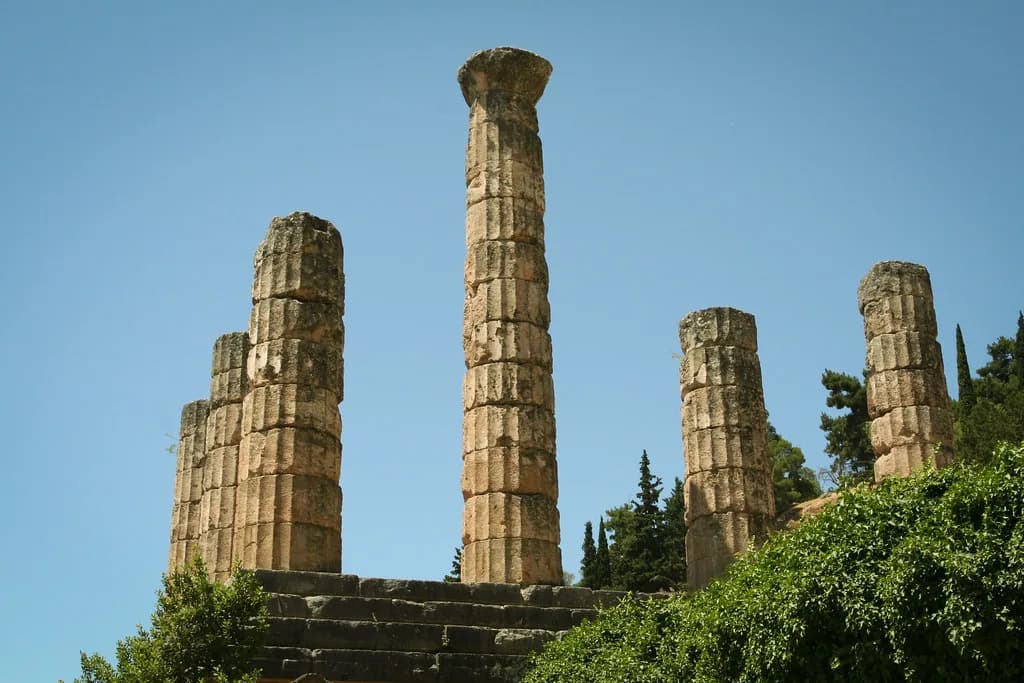
The Temple of Apollo is the central ruin of the Delphi archaeological site, set on the slopes of Mount Parnassus in central Greece above the Gulf of Corinth. Most visitors arrive expecting standing columns and find instead a platform, a handful of reassembled shafts and a long foundation outline; understanding what that footprint represents is what turns a quick photo stop into the highlight of the day.
This guide covers one place only: the temple itself, its position inside the fenced zone, the ground plan worth reading, the uphill walk to the theatre and stadium, and how to pair it with the museum collection in the same visit. Hours, ticket prices and closures are not fixed in this guide because they change; the official listing and the ticket office are where to confirm them before you travel.
Where the Temple of Apollo Stands
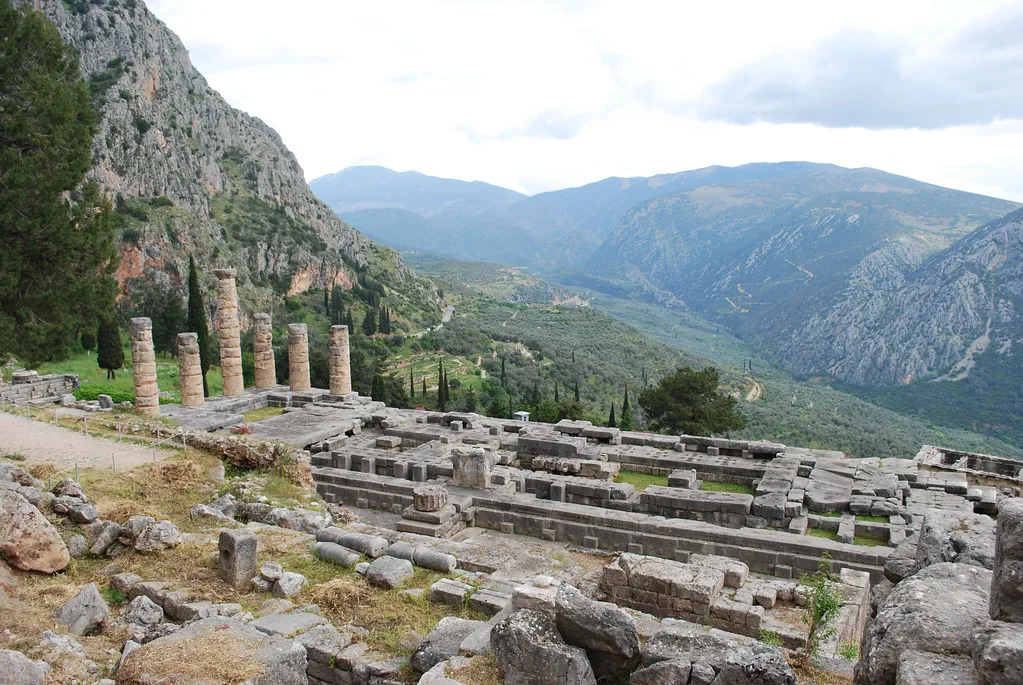
The temple sits within the fenced archaeological zone of Delphi, on terraces cut into the mountainside a short distance from the modern village that shares the site's name. The ruins face south across the Pleistos valley toward the Gulf of Corinth, which is why the site feels exposed to sun and wind rather than shaded.
Because the temple is inside the ticketed zone rather than in the village, you cannot see it from the road; you enter through the site entrance and walk up the Sacred Way to reach it. The Delphi Archaeological Museum, which holds the sculpture and votive offerings recovered from the sanctuary, lies just along the same road and is normally combined with the ruins on one visit.
How to Get There
Delphi is reached by road from Athens or from the towns of central Greece, with access to the site entrance and to the village of Delphi by car or coach. Bus routes, departure times and parking arrangements are not published here; check the current schedules with the regional bus operator and confirm parking with your accommodation before setting out.
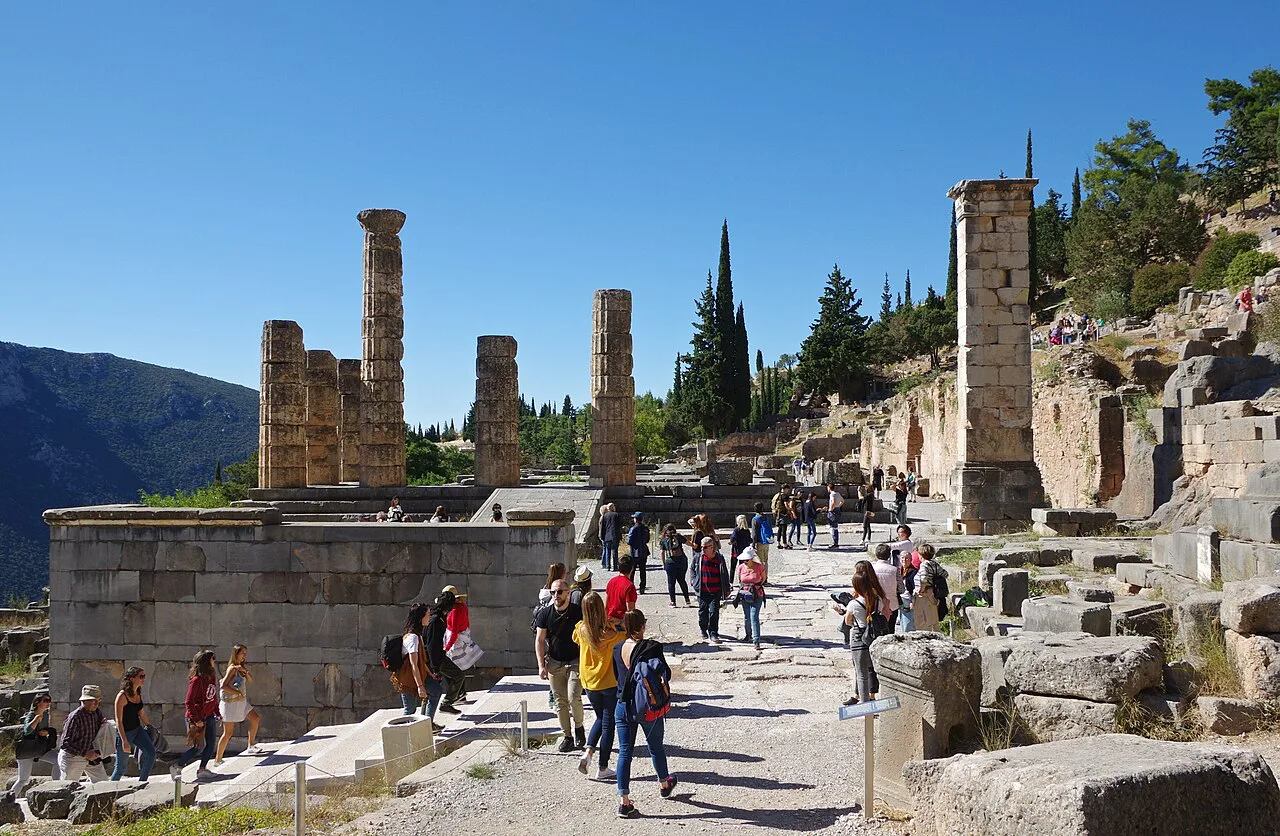
Once you are at the site, everything is on foot and uphill: the entrance leads onto the Sacred Way, which climbs past the treasuries and dedications toward the temple platform. Wear shoes with grip, since the paths are stone and uneven, and carry water because shade on the terraces is limited.
Layers of Building Behind the Ruins
What you see is not the first temple. The sanctuary was built and rebuilt over centuries, and the version whose platform survives is the 4th-century BCE Doric temple associated with the architect Spintharus of Corinth. Doric here means the sturdy, fluted column style with plain capitals, the same order you meet at many ancient sites in Greece.
The temple's end was gradual rather than a single collapse: fires, earthquakes and looting took their toll, and the sanctuary lost its role as pagan worship declined in the Roman Empire. The site was largely forgotten until excavations in the 19th century uncovered the platform and the objects now displayed in the museum.
Why the Sanctuary Mattered
The temple housed the Oracle of Delphi, whose priestess was called the Pythia. She was believed to speak for Apollo, the god of prophecy, and city-states and individuals consulted her before founding colonies, going to war or making personal decisions. Explaining her role helps make sense of why so many treasuries and statues crowded the approach to a single building.
Delphi was also called the omphalos, meaning navel, the point the ancient Greeks treated as the centre of the world. The Pythian Games, a festival of music and later athletics, were managed from the sanctuary and gave the shrine a Panhellenic, all-Greek character alongside its oracular role.
Reading the Ground Plan
Treat the temple as a plan rather than a facade. The surviving platform marks the full footprint of a large building, while the reassembled column stumps show where the outer colonnade stood; mentally filling in the missing roof and walls is the point of the visit.
Two Greek terms make the layout legible. The cella was the inner chamber that housed the cult statue of Apollo, and the pronaos was the front porch in front of it. Once you can place those two spaces, the position of the entrance, the columns and the altar area outside all fall into order.

What Is Written on the Temple
The famous maxims associated with Delphi, such as the injunction to know yourself, belong to the wider sanctuary tradition rather than to a readable inscription on the temple platform today. The surviving stonework carries little legible text for a casual visitor, so do not expect to read aphorisms off the columns.
If inscriptions interest you, look instead at the pedestals, statue bases and treasury dedications along the Sacred Way, where the evidence of who dedicated what is concentrated. For a clear picture of what was found and where it sat, the museum labels and the site plan are more useful than the bare stones.
Walking Outward from the Temple
The Sacred Way is the paved approach that winds uphill past the treasuries, the small temple-like buildings that individual city-states built to hold their offerings. These were statements of civic pride as much as religious dedications, and reading them as a row of competing cities makes the climb more interesting.
Above the temple the path continues to the theatre and then, for those willing to keep climbing, to the stadium where the athletic contests were held. The gradient is steady rather than steep, but the upper levels take time and effort; decide at the theatre whether to continue.
Below the road, the Castalian Spring is where visitors to the sanctuary were required to purify themselves before consulting the Oracle. It sits apart from the main sanctuary terraces, so plan it as a separate stop either before or after the temple rather than a detour mid-climb.
Nearby Within the Same Visit
The Sanctuary of Athena Pronaia lies downhill from the main site, at the Marmaria area, and holds the distinctive circular building known as the tholos. Reaching Marmaria means descending and then climbing back, so budget energy for it rather than tacking it on at the end of a hot afternoon.
Just past the site entrance, the Roman Agora is a compact area of later, Roman-era structures that many visitors walk straight past on the way to the temple. It is a short stop and a useful reminder that Delphi stayed occupied long after the Oracle's political peak.
Tickets, Hours and Access
Opening hours, ticket prices and any closure days for the Delphi archaeological site change with the season, and the temple has no separate admission of its own. Confirm current details on the Ministry of Culture and Sports listing for the site and at the ticket office before you travel, especially outside the main summer months.
The Ministry of Culture and Sports records that visitors with restricted mobility may reach the level of the Temple of Apollo by special vehicle, free of charge. If you need this provision, contact the site in advance so the arrangement can be made on the day you visit.
How Long to Allow
A realistic half day covers the Sacred Way, the temple platform, the theatre and the museum without rushing, and a full day lets you add the stadium and Marmaria. If you move quickly through ruins, the temple alone takes far less, but skipping the museum leaves the sculpture and votive offerings without context.
Go early in the day if you can: the terraces have little shade, and coach groups tend to cluster around the middle of the morning. Late afternoon light is better for reading the platform's shape, but check the closing time before planning a late entry.
Combining the Temple with the Village
The modern village of Delphi sits a short distance from the site and has places to eat and stay, making it a sensible base if you want to see the sanctuary without a long drive in the same day. This guide does not recommend specific tavernas; choose based on what is open when you visit, since village restaurants keep their own seasonal hours.
Keep the day focused: temple, museum and one lower site such as Marmaria is a satisfying plan, and adding more risks turning the visit into a checklist. The wider Delphi attractions guide is the place to look if you want to compare the other stops in the area.
Plan Your Visit
The Temple of Apollo rewards preparation more than most ruins: know that you are reading a platform and a colonnade footprint, learn the two terms cella and pronaos, and the visit makes sense within minutes. Pair it with the museum so the objects that once stood here have somewhere to belong, and leave time for the uphill walk to the theatre and stadium.
Before you go, confirm hours and tickets on the official Ministry of Culture and Sports listing and ask about the special-vehicle access if anyone in your group needs it. Everything else, from the Sacred Way to the Castalian Spring, you can plan from this page.
Frequently Asked Questions
Where is the Temple of Apollo at Delphi?
It stands inside the fenced archaeological zone of Delphi in central Greece, on the slopes of Mount Parnassus above the Gulf of Corinth. You enter through the site entrance and walk up the Sacred Way to reach the temple platform; the Museum of Delphi is on the same road.
What is left of the Temple of Apollo today?
A large surviving platform, reassembled column stumps and the foundation outline of the building, rather than a standing temple. The 4th-century BCE Doric version associated with the architect Spintharus is the one whose footprint you see.
What was written on the Temple of Apollo at Delphi?
Not the maxims people often associate with Delphi; those belong to the sanctuary's wider tradition, and the surviving stonework offers little legible text to a casual visitor. Look instead at the dedications and statue bases along the Sacred Way and at the museum labels.
Why did people consult the Oracle of Delphi?
The Pythia, the priestess of Apollo, was believed to speak for the god, and city-states and individuals sought her guidance on founding colonies, wars and personal matters. Delphi was also treated as the omphalos, the navel or centre of the world.
How long should you spend at the temple and the Delphi site?
Allow about half a day for the Sacred Way, the temple platform, the theatre and the museum, or a full day if you add the stadium and the Marmaria sanctuary. The climb is uphill and exposed, so pace yourself.
Do you need tickets and are opening hours fixed?
The temple has no separate admission; it is covered by the site ticket. Hours and prices change with the season, so confirm them on the Ministry of Culture and Sports listing and at the ticket office rather than relying on older guides.
Can visitors with restricted mobility reach the temple?
The Ministry of Culture and Sports records that visitors with restricted mobility may reach the level of the Temple of Apollo by special vehicle, free of charge. Contact the site in advance to arrange it.