
Stadium of Delphi: How to Visit the Ancient Pythian Stadium
The Stadium of Delphi is the highest monument on the archaeological site, built into the slope above the theatre and northwest of the Temple of Apollo. Most visitors meet it at the end of a steady climb through the sanctuary, which makes the approach the main planning decision rather than the stadium itself.
This guide covers where the stadium sits, how the path works, what survives of the track and seating, and how to fold it into a walk through Delphi on one site ticket. Hours and ticket terms change with the season, so the article notes what the official pages publish and where to confirm the rest.
Where the Stadium of Delphi Sits on the Site
The stadium occupies the highest ground in the archaeological area, just above the theatre and between the Phaedriads and the hill of Agios Ilias, to the northwest of the Temple of Apollo. One commercial guide puts it roughly half a kilometre northwest of the main temple complex, which is a useful approximation for judging the climb rather than a measured distance.
Because it is the top stop, the stadium rewards those who keep going after the temple and the theatre. Treating it as the final point of an upward walk means the return is downhill, which matters on hot afternoons when the paths hold little shade.
How You Reach It: The Climb from the Temple of Apollo
The route runs up through the sanctuary, past the Temple of Apollo and the theatre, following the marked path that continues to the stadium. The climb is steep in places and the ground uneven, so allow more time than the distance alone suggests, and carry water on warm days.
The terrain makes the stadium difficult for wheelchairs and for anyone who struggles with sustained uphill walking, and published access notes describe the extended climb as strenuous. Visitors with mobility limitations should plan a shorter route through the lower sanctuary rather than pushing to the top.
The Pythian Games in Brief
The stadium was known in inscriptions as the Pythian stadium, and track-and-field contests were held here from the time of its construction. The Pythian Games were one of the great Panhellenic festivals, and the stadium gave the athletic programme a home within the sanctuary of Apollo.
A second-century BC inscription recorded at the site refers to a hymn performed for the god and the Greeks to the sound of the guitar, a reminder that the stadium hosted musical as well as athletic events. Keep that mix in mind as you look at the track: this was a festival venue, not only a running ground.
What You Actually See: Track, Tiers and Starting Line
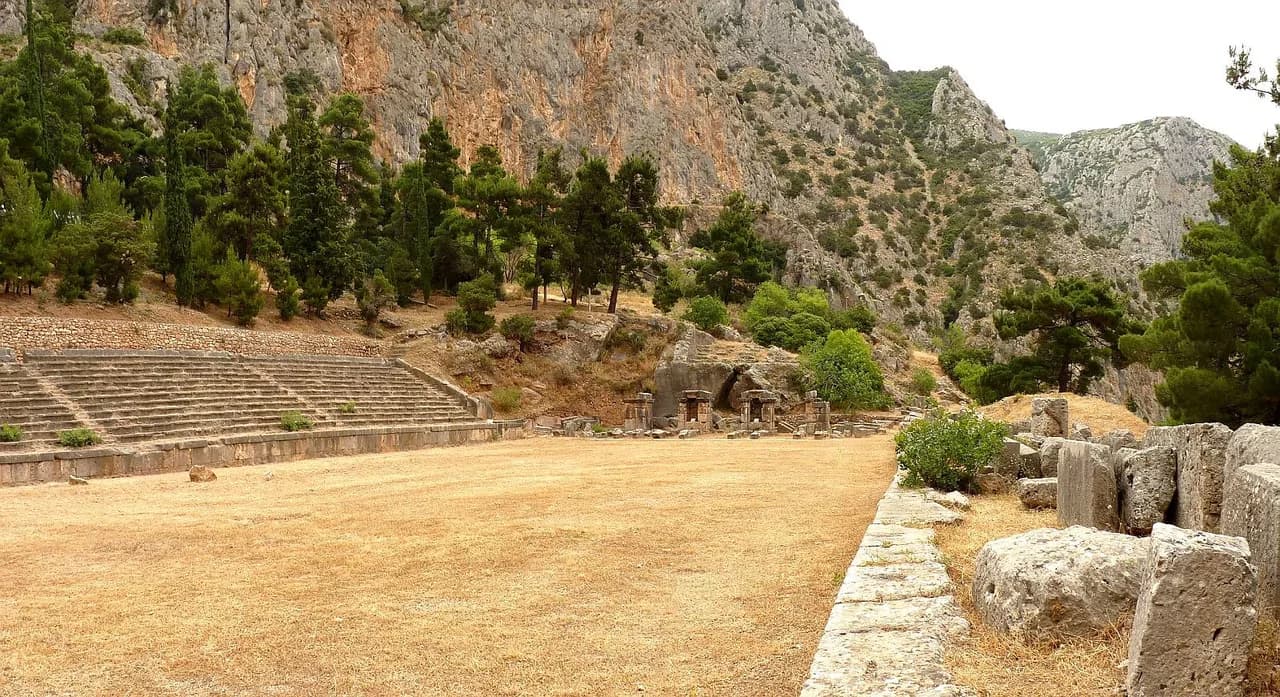
The stadium was about 178 metres long, and the embankments rose on both long sides, meeting at a semicircular end to the west. Today the track and the surviving seating give a clear sense of the shape, even with parts of the southern side collapsed.
On the northern side, which is cut into the slope, twelve rows of seats survive, divided by staircases into tiers; the western end has six rows in four tiers. The best-preserved single element is the starting line at the eastern end, a row of stone slabs with incisions cut for the runners' feet, which is worth seeking out before you turn back down.
Interior access is restricted to protect the monument, so the visit is made from the surrounding paths and the elevated seating rather than by walking the track itself. Plan your photographs and viewing from the tiers, and expect to share the narrow upper paths when a group arrives.
The Phases of the Stadium and Why the Seats Are Limestone
The official site dates construction to the second half of the fourth century BC or slightly later, ties an early phase to the period around the Soteria festival, and traces at least four building phases through to the stone revetment of the seats. Other summaries place the original build in the fifth or fourth century BC, so treat the exact date as a range rather than a fixed year.
Pausanias credits Herodes Atticus with a marble facing for the seats, but what stands today is limestone; the official account suggests a marble revetment was attempted and left unfinished after the sponsor's death. That gap between the written record and the surviving stone is one of the more interesting things to notice while you are up there.
The Eastern End and the Wine Inscription
At the eastern end, near the starting line, four pillars mark the position of a monumental entrance that once framed the athletes' arrival. On the support wall at this end, an inscription forbids removing from the building the wine intended for sacrifices.
The official description notes that the meaning of that inscription is ambiguous and that it may not stand in its original position. Read it as a fragment of the stadium's ritual life rather than a settled rule, and look for it before you leave the eastern end.
The View and What It Adds
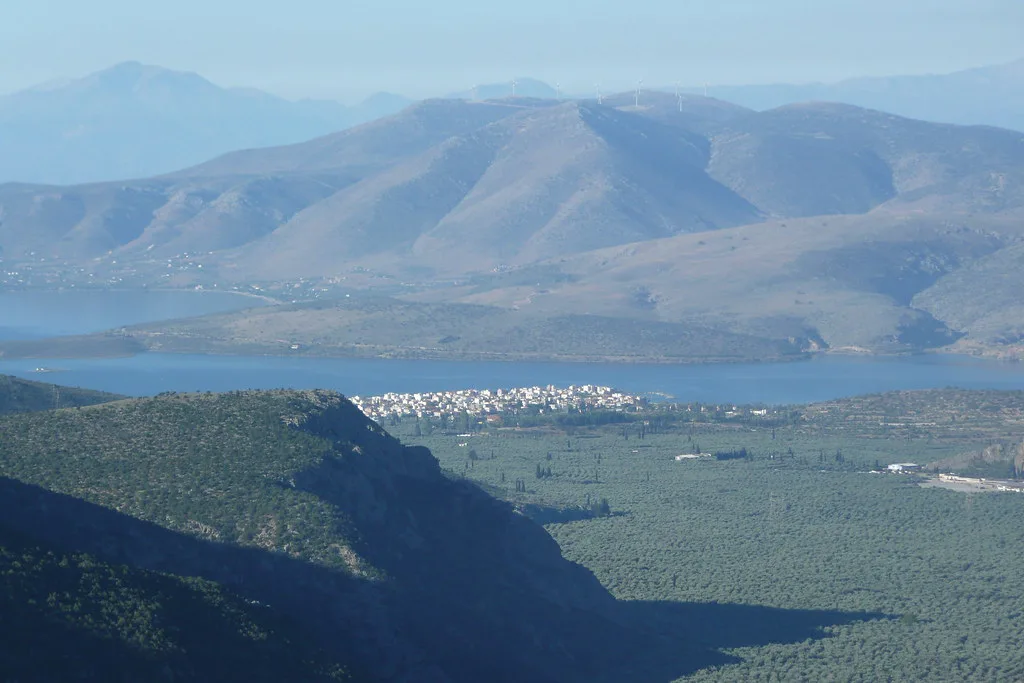
From the top of the stadium the ground falls away toward the Pleistos Valley and the surrounding mountains of Parnassus, and the sanctuary below spreads out in full. The view is the reward for the climb and the reason to keep a little energy for the last stretch rather than rushing the temple.
If you are short on time, the trade-off is between lingering here and covering the lower monuments properly. A short pause on the tiers gives most of the payoff; a long one costs you the museum, which sits separately from the archaeological site.
How Long to Allow and Where It Fits in the Walk
The stadium itself takes perhaps fifteen to thirty minutes to see from the paths and tiers, but the round trip from the temple adds considerably more on a steep gradient. Build the climb into a half-day at the site rather than treating the stadium as a quick add-on.
A sensible sequence is the lower sanctuary first, then the Temple of Apollo, then the theatre, then the stadium at the top, leaving the museum for afterwards if you have the energy. The Sanctuary of Apollo and the museum are separate stops with their own opening arrangements, so check both before fixing your order.

Access and Practical Limits
The stadium has no separate ticket: access comes with admission to the archaeological site, so the climb is included in what you have already paid. Commercial tour providers such as Delphi Tours confirm that stadium entry is covered by Delphi site tickets, while the official pages of the Archaeological Site of Delphi are the place to check current terms.
Summer heat, uneven stone and a steady gradient make this the least forgiving part of the site. Go early if you can, wear shoes with grip, and turn back without regret if the climb is causing trouble; the sanctuary's lower terraces hold plenty without the summit.
Nearby on the Same Visit
The theatre sits just below the stadium on the way up, and the Temple of Apollo anchors the terrace beneath it, so the three form a natural upward sequence. Further down, the Treasury of the Athenians and the Castalian Spring sit along the lower sanctuary route and are easy to add on the way out.
Across the road from the main site, the Sanctuary of Athena Pronaia and its tholos make a short second stop with a very different atmosphere from the crowded upper paths. They are covered by the same site admission and take little time if the climb has not left you spent.
What to Confirm Before You Go
Site opening hours shift with the season; one commercial listing gives 08:00 to 20:00 in high summer and 08:30 to 15:00 from November to March, with a step-down through autumn, while the official Delphi museum page shows a shorter daily schedule for the museum. Check the official site pages close to your date before building a day around fixed times.
Ticket prices, combined tickets and any temporary closures are published by the Hellenic Ministry of Culture rather than fixed in advance here. The official Delphi pages and the museum contact line are the places to confirm before you travel.
Plan Your Visit
The Stadium of Delphi is the summit of a single-ticket archaeological site, so the sensible plan is to climb once, see the temple and theatre on the way, and finish with the track, the starting line and the valley view. Keep the climb in mind when you set your start time, and check the official hours and ticket terms before you lock in a day.
Frequently Asked Questions
Where is the Stadium of Delphi located?
It is the highest monument on the Archaeological Site of Delphi, above the theatre and northwest of the Temple of Apollo, between the Phaedriads and the hill of Agios Ilias. Commercial sources put it roughly half a kilometre northwest of the temple complex, but that is an approximation rather than a measured distance.
How do you reach the Stadium of Delphi from the Temple of Apollo?
Follow the marked path upward through the sanctuary, past the theatre and on to the stadium. The route is steep and uneven in places, so allow more time than the distance suggests and carry water on hot days.
Is the Stadium of Delphi included in the archaeological site ticket?
Yes, the stadium is part of the Delphi archaeological site and access comes with site admission; there is no separate stadium ticket. Ticket types, combined offers and prices are published by the Hellenic Ministry of Culture, so confirm the current terms on the official pages before you travel.
Can you walk on the track of the ancient stadium?
Access to the interior is restricted to protect the monument. Visitors view the track from the surrounding paths and the elevated seating areas, and the starting line with its foot incisions is best seen from the eastern end.
How long does it take to visit the Stadium of Delphi?
Allow roughly fifteen to thirty minutes at the stadium itself, plus time for the climb from the temple and the return. Most visitors fit it into a half-day at the site alongside the lower sanctuary and the Temple of Apollo.
When was the Stadium of Delphi built?
The official site places construction in the second half of the fourth century BC or slightly later and traces at least four building phases. Other summaries say the fifth or fourth century BC, so the safest reading is a range rather than a single year.
How many spectators could the Stadium of Delphi hold?
The official description gives a capacity of about 6,500, while a commercial guide states over 7,000. The figures disagree, so treat the capacity as approximate.
Is the Stadium of Delphi wheelchair accessible?
The steep, uneven uphill route makes the stadium difficult for wheelchair users and for visitors with limited mobility. Those with access needs may prefer to concentrate on the lower sanctuary, where the paths are less demanding.