
Castalian Spring in Delphi: What to See and How to Visit
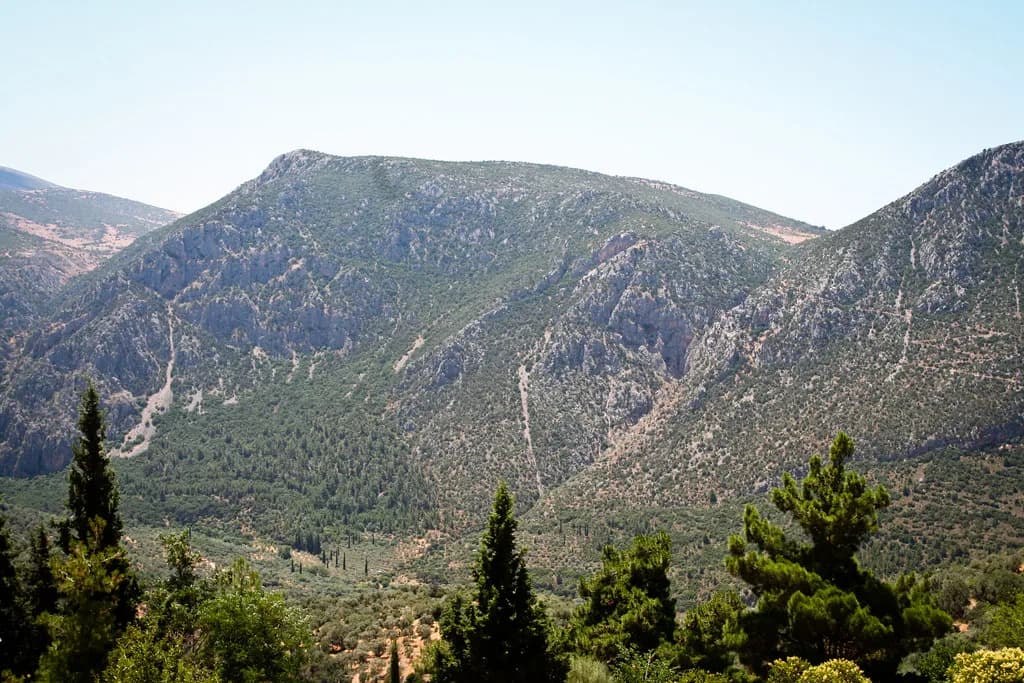
The Castalian Spring is the sacred water source of ancient Delphi, set in the ravine between the Phaedriades cliffs on the road that climbs toward the Sanctuary of Apollo. It is not a museum piece behind glass but a spring site in a rocky gully, which is exactly why it feels different from the marble monuments above it. Visitors usually meet it on the way up or down from the main archaeological area rather than as a destination of its own.
This guide covers the spring as a single place: its position, the myth behind the name, what purification meant for visitors to the Oracle, the walk in, and how much time to give it. Ticket prices, opening hours and any closures are deliberately left out here because they change; the official culture ministry listing and the site noticeboards at Delphi are where to confirm them.
Quick Answer: What the Castalian Spring Is
The Castalian Spring is a spring in a ravine at Delphi, in the prefecture of Phocis in central Greece, on the slopes of Mount Parnassus below the Phaedriades, the twin cliffs that loom over the sanctuary. Ancient sources place it in the general area of the Delphic sanctuary, and the Pleiades gazetteer records the general area of the spring as a mapped ancient place. In practice, travellers encounter it as part of the archaeological landscape rather than as a fenced-off attraction with its own gate.
The spring is one of the most storied water sources in Greece: it is associated with ritual purity, with the nymph Kastalia, and with the workings of the Oracle of Apollo. It is also physically modest, which surprises people who expect a monument. Treat it as a fifteen-minute pause with real atmosphere, not as a half-day sight.
Where Exactly the Spring Sits
The spring lies in the ravine between the Phaedriades cliffs, close to the road that leads up from the modern village of Delphi toward the archaeological site. In the ancient topography it belonged to the approach to the Sanctuary of Apollo: travellers coming up from the plain and pilgrims heading for the temple passed this way. That position, between cliff and road, explains both its drama and its awkwardness for anyone with limited mobility.
Because the spring is tied to the sanctuary area rather than to a separate address, the sensible way to plan is to think in terms of the Delphi archaeological zone as a whole, starting from the Delphi Attractions overview and then narrowing to the spring and its neighbours. The spring is a stop on that route, not a venue you drive to independently.
The Name: Kastalia and the Naiad
In Greek myth the spring carries the name of Kastalia, a naiad, one of the nymphs who preside over springs and streams. The story told at Delphi has her fleeing Apollo's pursuit and being transformed into, or throwing herself into, the water that then took her name. The spring became sacred to Apollo and to the Muses, and drinking or sitting beside its water was linked with inspiration as well as with cleansing.
That double role, purification and poetic inspiration, is why Kastalia turns up in later European literature as a byword for a source of creative renewal. Knowing the myth makes the stop more interesting, but it does not add anything to see: the site is water, rock and retaining walls, and the story is what you bring to it.
Why the Spring Mattered: Purity and the Oracle
The spring's main ancient function was purification. Those who came to consult the Oracle of Apollo, and the Pythia, the priestess who delivered its responses, were expected to be ritually clean, and the Castalian water was used for that cleansing. The same water was associated with the care of the sanctuary's temples, which is why the spring was maintained as sacred infrastructure rather than as a domestic well.
This is the detail that makes the spring worth a pause: the famous oracle depended on this small gorge, and pilgrims arriving from far away were stopped here before they were allowed anywhere near the temple. The accounts of how consultation worked, how often it happened and who had access vary in the sources, so treat dramatic retellings with caution. The purification link is the reliable core.
What You Actually See
Expect a spring site set into the rock, with masonry and water channels around the source and the cliff face rising above. It is an archaeological remnant in a working landscape, not a reconstructed fountain with a pool and benches. The appeal is the setting: the ravine, the rock, the sound of water, and the sudden cool after the exposed walk up through the sanctuary.
There is no substantial sculptural display at the spring itself, so the objects that explain Delphi sit in the Delphi Archaeological Museum, where finds from the sanctuary are displayed. If you want the material culture rather than the topography, give the museum more time and treat the spring as a short atmospheric stop.
How to Get There
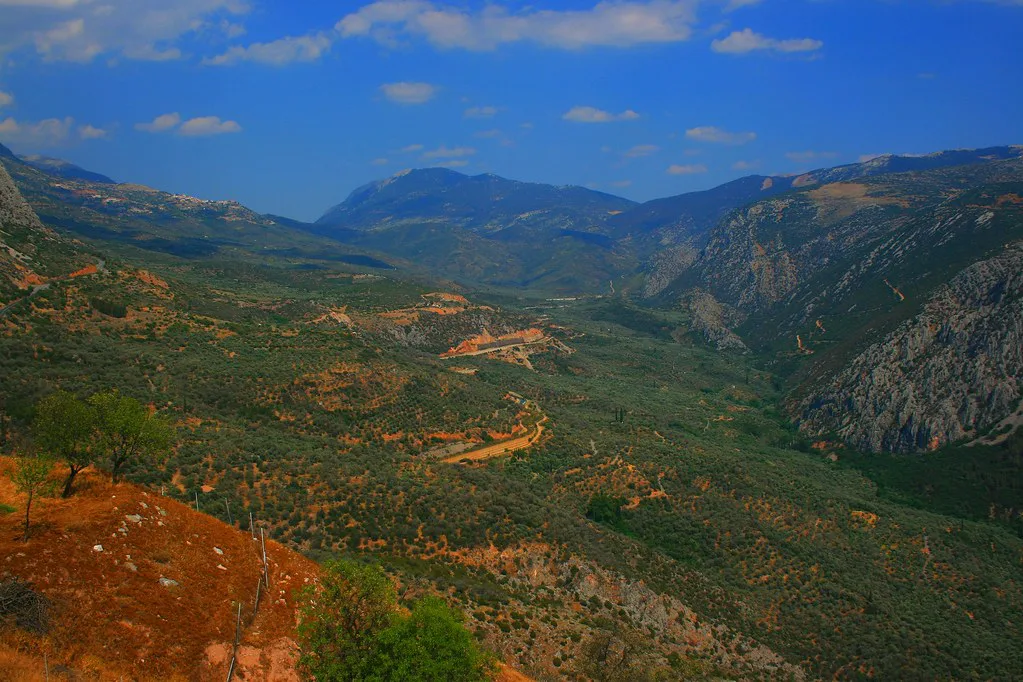
Delphi is reached by road from Athens, usually via Livadeia, and buses run from Athens to the modern village of Delphi; the archaeological area is a short walk or local transfer from the village centre. Once at the site, the spring lies along the approach in the ravine, on the route between the road and the Sanctuary of Apollo. Allow for a climb, because the archaeology of Delphi is laid out on a slope.
The spring is best folded into a walking route through the Delphi Attractions: 9 Visitor Guides rather than attempted as a separate errand, since parking and access are organised around the main site. Check the official culture ministry page for the site before travelling, as it is the authority on hours, admission and access, and it updates those details.
Time to Allow and How It Fits a Delphi Visit
Give the spring ten to twenty minutes. That is enough to look at the site, read the setting and take in the gorge, and it leaves the bulk of your time for the sanctuary above. The mistake is to plan the spring as a morning: it is one stop on a route that runs from the lower sanctuary up to the theatre and stadium.
A workable shape for the day is spring, then the Sanctuary of Apollo with the temple and the Treasury of the Athenians, then the museum, and finally the Sanctuary of Athena Pronaia down the road if legs allow. Save the steep upper reaches for those with energy left.
Hours, Tickets and Access Rules
Admission to the Delphi archaeological area, opening times and any reduced winter hours are set by the Greek Ministry of Culture and change seasonally, so no figures are given here. Check the official culture ministry page for the site, and read the noticeboard at the entrance on the day, before you commit to a route. If you are visiting on a public holiday or in the low season, confirm the hours before you set out.
Rules about touching or drinking the water, and about walking off the marked paths, are posted on site and can be tightened for conservation reasons. Follow the signage rather than older travel accounts, which may describe access that is no longer permitted.
Practical Constraints Near the Cliffs
The ground around the spring is uneven, with steps, loose stone and slopes, and the ravine position means shade and water are limited on hot days. Wear shoes with grip and carry your own water rather than relying on the spring. Anyone with mobility difficulties should ask at the entrance about the easiest approach, since the main site route is steep in places.
The spring also sits inside a wider archaeological zone with its own rules on bags, drones and group guiding. If you are joining a tour, the guide will set the pace and the stops; if you are independent, plan the spring as the first or last thing you do, when the light in the ravine is better and the paths are quieter.
Nearby: Temple, Theatre and Athena Pronaia
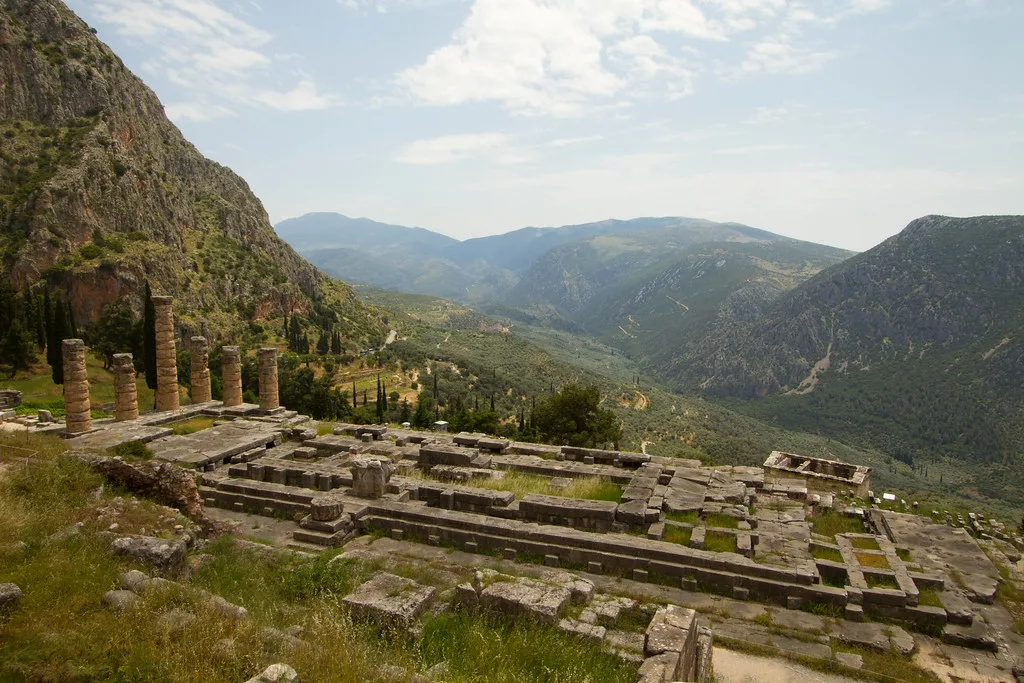
Above the spring, the Temple of Apollo is the centrepiece of the Sanctuary of Apollo, with its platform, altar and the reconstructed Treasury of the Athenians on the sacred way below it. The theatre and the stadium sit higher still, reached by continuing up the path. Each is a stop on the same climb, so the spring's position at the bottom of the sequence makes it a natural beginning.
Down the road from the main site, the Sanctuary of Athena Pronaia holds the Tholos of Delphi, the circular building that is one of the most photographed monuments in Greece, and the Marmaria area around it. It is a separate short walk or drive from the Apollo sanctuary, and closing times can differ, so check on arrival before heading down.
If you are building a fuller Delphi day, the stadium of Delphi at the top of the site and the Treasury of the Athenians on the way up are the two stops most easily combined with the spring, and both are covered in the Delphi Attractions hub.
Eating After the Visit
The modern village of Delphi, a short distance from the archaeological area, is where most visitors eat, with tavernas clustered along the main street and side lanes. Menus lean on grilled meats, pies such as spanakopita, the spinach and feta filo pie, horiatiki salad, and local formaela cheese, a firm sheep's and goat's milk cheese from the surrounding region.
Prices in Delphi village vary with the view, and the tables facing the valley cost more than the back-street rooms a minute away; that trade-off is worth knowing before you sit down. Because restaurant opening days and seasonal closures change, check the posted hours or ask at your accommodation, and book ahead for dinner in high season if you want a terrace table at sunset.
Plan Your Delphi Visit
The Castalian Spring rewards a short, informed stop rather than a dedicated trip: it is the water that made Delphi's oracle work, set in the gorge you have to pass anyway. Go early or late, wear proper shoes, and read the myth before you arrive so the rock and water have something to say.
Before travelling, confirm opening hours, admission and any closures on the official culture ministry page, then build the rest of the day around the Temple of Apollo and the museum. If you want the spring plus the sanctuary without the guesswork, the Delphi Attractions hub maps the stops in walking order.
Explore more Delphi sauna guides
Frequently Asked Questions
Where is the Castalian Spring in Delphi?
It sits in the ravine below the Phaedriades cliffs at Delphi, in the general area of the Sanctuary of Apollo, on the approach from the road up toward the temple. It is part of the Delphi archaeological landscape rather than a separate ticketed attraction, so you reach it on foot as part of a visit to the main site.
Do I need a separate ticket for the Castalian Spring?
No separate ticket is sold for the spring; access is governed by the wider Delphi archaeological area. Admission arrangements and opening times change seasonally, so confirm them on the official Greek culture ministry page or at the site entrance before you go, and check the noticeboard on the day.
How long does it take to see the Castalian Spring?
Ten to twenty minutes is enough to see the spring site and its gorge setting. Most visitors combine it with the Sanctuary of Apollo above, which takes a few hours with the temple, treasury, theatre and stadium, and often the museum as well.
Why was the Castalian Spring important in ancient Greece?
It was the sacred water used for purification, including by those consulting the Oracle of Apollo and by the Pythia before she delivered responses. The spring was also linked to the nymph Kastalia and to the Muses, which gave it a second association with poetic inspiration.
Can I drink the water from the Castalian Spring?
Do not assume so. The site is an archaeological monument and rules on touching or drinking the water are posted locally and may be restricted for conservation. Follow the on-site signage rather than older travel accounts.
What else is near the Castalian Spring?
The Temple of Apollo and the Treasury of the Athenians are just above it on the sacred way, with the theatre and stadium higher up. Down the road, the Sanctuary of Athena Pronaia holds the Tholos of Delphi, a short separate stop from the main sanctuary.
Is the walk to the Castalian Spring difficult?
The ground is uneven, with steps and slopes in a ravine, so good shoes matter and shade is limited in summer. Visitors with mobility difficulties should ask at the entrance about the easiest approach, as the main Delphi route is steep in places.
When is the best time of day to visit the spring?
Early morning or late afternoon gives better light in the gorge and quieter paths, and avoids the strongest heat on the exposed climb. In high season, arrive near opening time if you want the approach to yourself.