
Treasury of the Athenians: Visiting Delphi's Marble Monument

The Treasury of the Athenians is the small Doric marble building that most visitors pass on the climb through the Sanctuary of Apollo at Delphi, usually on the way to the Temple of Apollo. It is compact enough to see in minutes, yet it carries sculpture and a political story that reward a slower look. This guide covers where it stands, what the carved panels show, how the building has been reconstructed, and how to fit it into a site visit.
Expect a building rather than an exhibition: there is no separate entry, no interior collection, and no object labels in front of it. The value lies in the carved metopes, the stonework, and the position along the route up the sanctuary. Anyone planning a fuller day around the site can pair it with the wider set of Delphi Attractions: 9 Visitor Guides.
What the Treasury of the Athenians Is
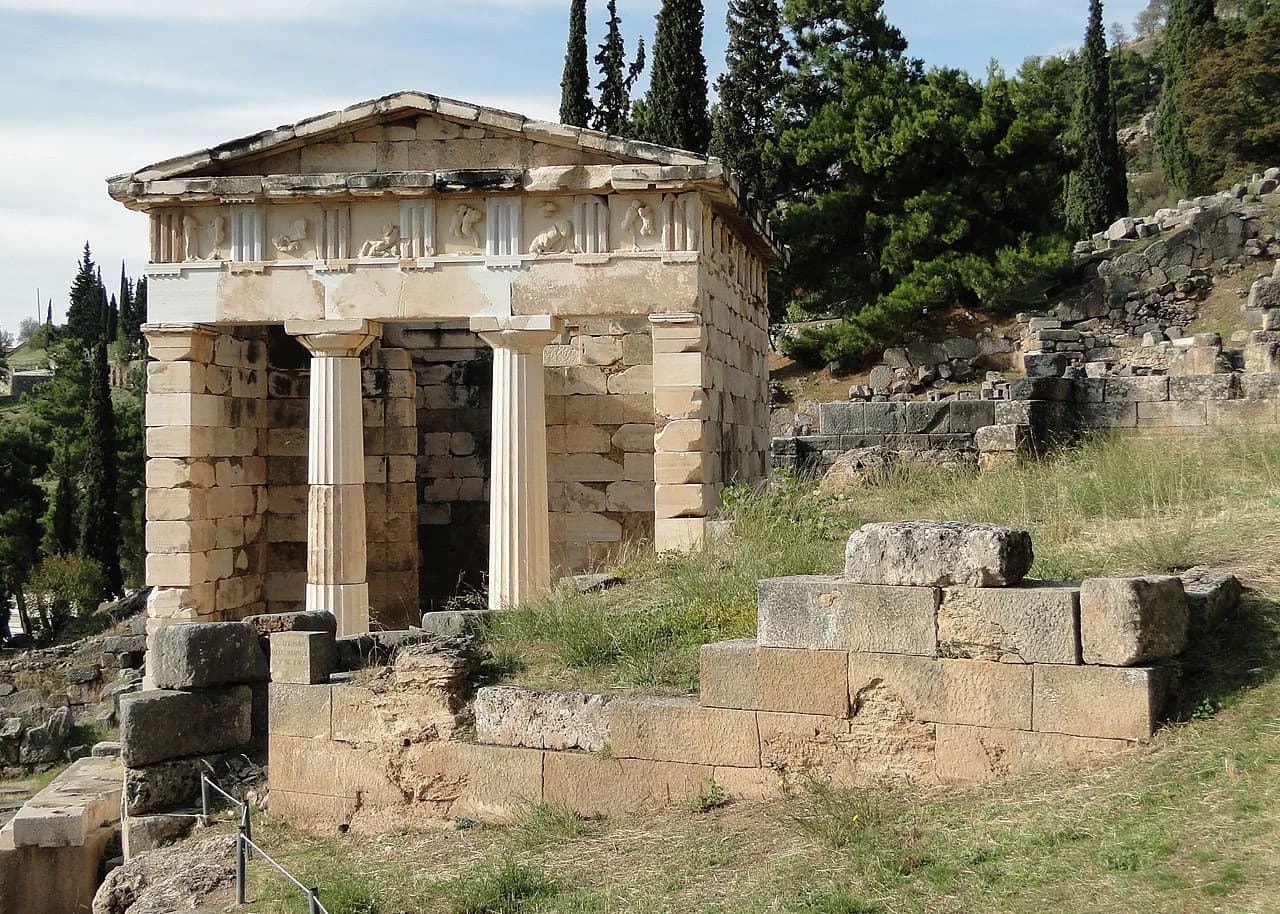
A treasury in the Greek sanctuary sense was a small storehouse, built by a city to hold its votive offerings and dedications to the god. The Athenian example is a Doric building in Parian marble, the fine white stone quarried on the island of Paros, erected inside the Sanctuary of Apollo. In the Doric order, columns are topped by simple block capitals and a plain frieze divided into panels.
The building stands out among the dozens of treasuries once crowded into panhellenic sanctuaries such as Delphi, Olympia and Delos; scholarship treats the Athenian one as unusually well documented and significant. A reference page on the Delphi treasuries describes the building as constructed to house Athenian votive offerings and dedications.
Where It Sits on the Sacred Way
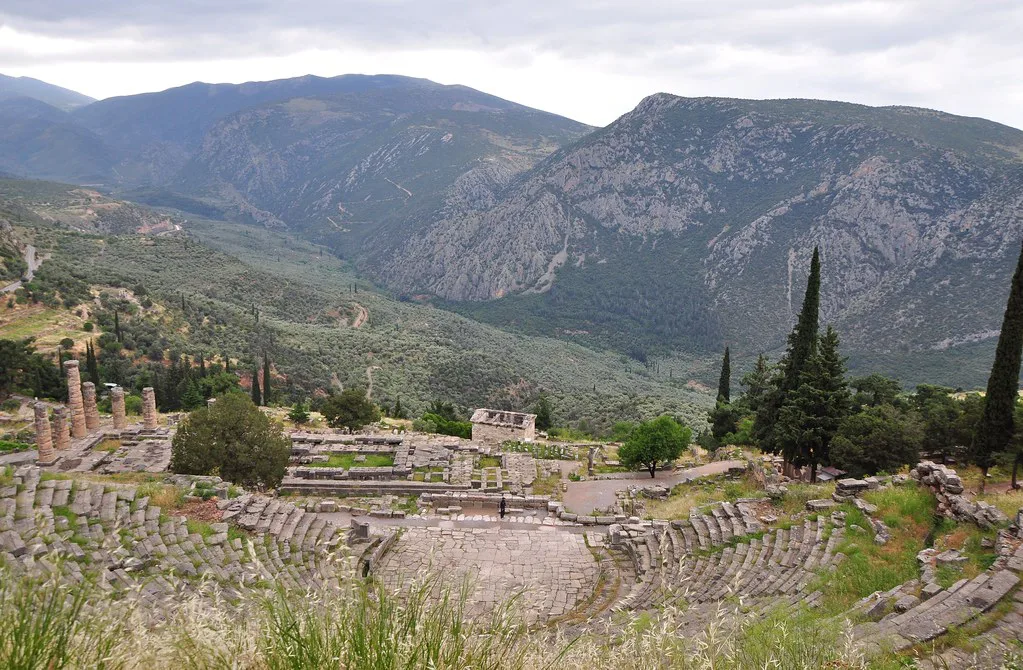
The treasury stands in the Sanctuary of Apollo, the walled upper site at Delphi, along the Sacred Way, the paved processional route that switchbacks uphill past the monuments. Walking up from the entrance, you meet it before the Temple of Apollo and the theatre above, so it is naturally the first substantial building on the climb.
Because it sits low on the slope, it is easy to see on the way up and easy to hurry past on the way down. A practical approach is to pause at it first, when you are fresh, then continue to the Temple of Apollo and the theatre. The sanctuary is an uphill, uneven site with stepped paths, so footwear matters more than any timed schedule.
How to Get There
The archaeological site lies just below the modern village of Delphi on the road from Arachova, and visitors normally arrive by car, taxi or coach and walk in from the ticket area. From the entrance, the treasury is reached on foot along the Sacred Way, a matter of a few minutes of gentle climbing. There is no separate transport or entrance for the treasury itself.
Because the building is inside the ticketed archaeological site, access depends on site opening hours rather than on anything specific to the treasury. The Greek Ministry of Culture publishes the official site page with current opening times, admission and any restrictions; check it before travelling, especially outside the main season.
What to See on the Building
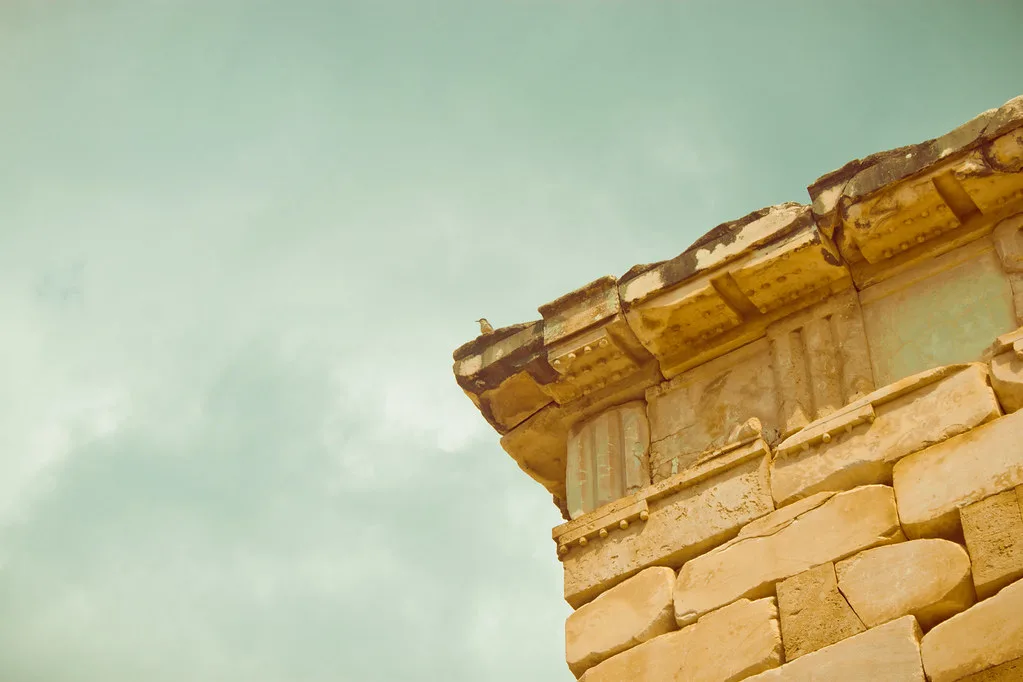
The most rewarding detail is the sculpted frieze of metopes, the square relief panels that run around the building above the columns. Those on the back are described as portraying Herakles, the hero of the twelve labours, while the reliefs elsewhere feature Theseus, the Athenian hero. Knowing which hero you are looking at turns a row of weathered squares into a readable sequence.
Look also at the pediment, the triangular gable above the front, and at the carving of the columns and capitals, which shows how carefully the small building was finished. The sculpture style is described as transitional, mixing the crispness of Archaic art with the restraint of the Early Classical manner. That combination is the reason the treasury is often compared in quality with the temples on the Acropolis at Athens.
The building is a reconstruction rather than a structure surviving intact in place, so treat the visible stonework as a modern rebuilding of the ancient design. What you see is the form and the sculpture, not an untouched ruin. Interpretation panels and the site museum fill in the rest of the story.
Why the Athenians Built It
The traditional account ties the building to an Athenian dedication made after the victory over the Persians at Marathon in 490 BCE, presenting it as a thank-offering to Apollo. That reading gives the treasury a political charge: a small city-state advertising its military success in a sanctuary shared by all Greeks.
The building's dating and political interpretation have attracted a substantial body of scholarly argument, and a study of the treasury engages closely with that discussion. Visitors should therefore treat any single firm date offered on a sign, a tour or a website with caution. The building's meaning is part of an ongoing discussion among historians.
How Much Time to Allow
The treasury itself takes only a few minutes to look at closely, but the pause is worth budgeting fifteen to twenty minutes if you want to read the metopes and take in the position on the Sacred Way. Most of a Delphi visit goes on the rest of the sanctuary: the climb to the Temple of Apollo, the theatre, and the stadium higher up.
A half day is a realistic allowance for the archaeological site, and a further hour or two covers the museum down the road, where the finds from the sanctuary are displayed. If time is short, concentrate on the treasury, the Temple of Apollo and the museum rather than trying to see every monument.
Practical Points to Check Before You Go
Opening hours, ticket prices and seasonal closures for the Delphi archaeological site change with the season, so confirm them on the Ministry of Culture page for the site shortly before your visit. Note that the on-site museum keeps its own timetable, which can differ from the archaeological area.
Summer heat on the exposed slope is the main practical constraint, so plan the uphill walk for the cooler start or end of the day and carry water. The paths are stepped and slippery in places after rain. Guided tours are widely sold in the village, but the treasury is straightforward to understand without one if you know what the panels show.
Nearby Sights
Continuing up the Sacred Way brings you to the Temple of Apollo, the sanctuary's central monument, and then to the theatre cut into the hillside above it. Lower down, near the road and outside the main sanctuary, the Castalian Spring in Delphi is the ancient water source associated with purification before consultation of the oracle.
Across the road and further downhill lies the Sanctuary of Athena Pronaia, home to the circular building known as the Tholos of Delphi, a short detour that many visitors skip. The Delphi Archaeological Museum, on the modern road between the site and the village, holds the sculpture and offerings found across these sanctuaries.
The modern village of Delphi sits just above the archaeological area, with hotels, tavernas and cafes within walking distance of the site entrance, which makes it a convenient base for a morning or afternoon visit. Arachova, further up the mountain, is the larger year-round base for the region.
Plan Your Visit
The Treasury of the Athenians is best treated as a short, high-value stop on the walk up the Sanctuary of Apollo: look at the metopes of Theseus and Herakles, note the reconstructed Doric building, and move on to the Temple of Apollo and the museum. Budget your time for the whole site rather than the treasury alone.
Before you go, confirm current opening hours and admission on the official Ministry of Culture site page, since these are the details most likely to change with the season. Framing the visit around the sculpture and the building's contested history will make the stop memorable even though the structure is small.
Explore more Delphi sauna guides
Frequently Asked Questions
What is the Treasury of the Athenians at Delphi?
It is a small Doric marble building inside the Sanctuary of Apollo at Delphi, built by the Athenians to hold their votive offerings to the god. It is one of the many treasuries that crowded the panhellenic sanctuaries, and it is regarded as a particularly well-documented example.
What do the metopes on the Treasury of the Athenians show?
The square relief panels around the building depict the heroes Theseus and Herakles; those on the back portray Herakles. The carving is described as transitional between Archaic and Early Classical styles.
Is the Treasury of the Athenians original or reconstructed?
The building has been reconstructed, so the visible structure is a modern rebuilding of the ancient design rather than stone surviving intact in place. Its sculptural style and quality are what make it notable.
Where is the Treasury of the Athenians located within the Delphi site?
It stands along the Sacred Way in the Sanctuary of Apollo, below the Temple of Apollo and the theatre, so you reach it early on the uphill walk from the site entrance.
How long does it take to see the Treasury of the Athenians?
The building itself takes only a few minutes, but allow fifteen to twenty minutes to study the metopes and the setting. Most visitors spend half a day on the sanctuary as a whole.
Why did the Athenians build a treasury at Delphi?
The traditional account links it to an Athenian dedication after the victory at Marathon in 490 BCE, presenting it as a thank-offering to Apollo with a political message. Scholars continue to debate the dating and the political reading.
Do I need a separate ticket for the Treasury of the Athenians?
No, it lies inside the ticketed archaeological site, so access is covered by site admission. Check current opening hours, admission and any restrictions with the Greek Ministry of Culture.