
Old Town Chania: A Practical Guide to the Venetian Harbour, Streets and Sights
Old Town Chania is the historic core of Chania, on the northwest coast of Crete, built around a Venetian-era port with the White Mountains rising behind the city. It is compact enough to cross on foot but layered enough that a rushed lap of the harbour misses most of what makes it worth the trip. This guide treats it as one walkable place, organized by quarter, with realistic time budgets and clear notes on what to check before you go.
Expect three kinds of choices to shape your day: whether you sleep inside the old town or drive in, whether you eat on the waterfront or a street back, and how much of the sightseeing you pair with a sit-down meal. Each has a real trade-off, and none requires booking ahead except perhaps a harbour table at sunset.
What and Where Old Town Chania Is
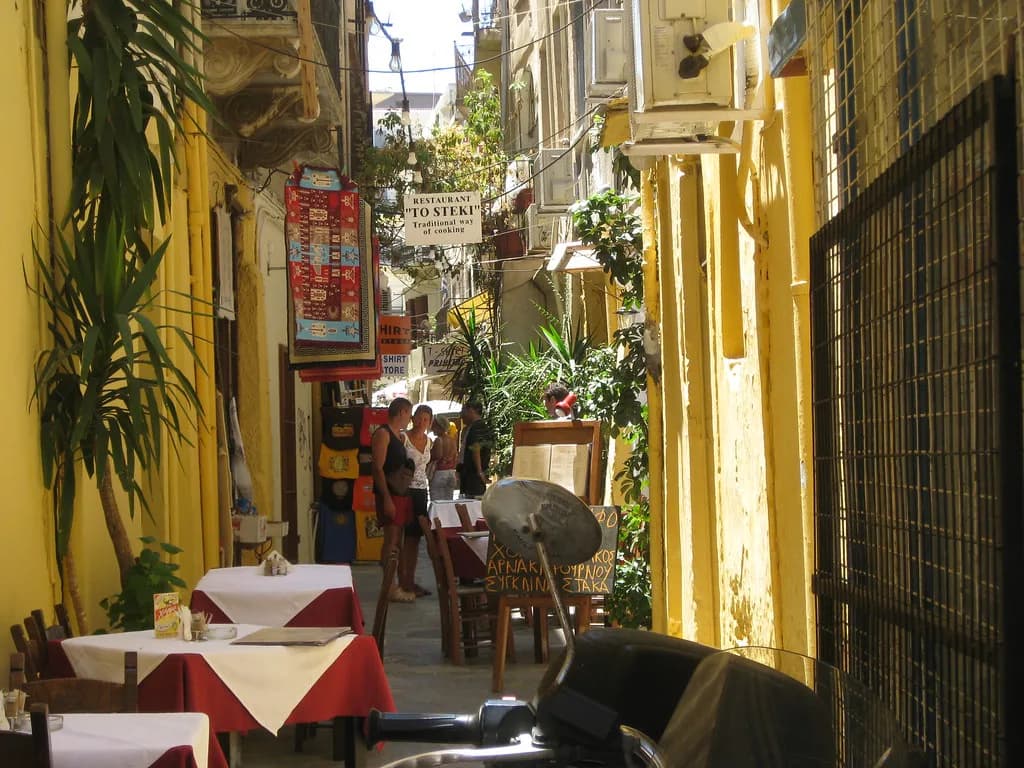
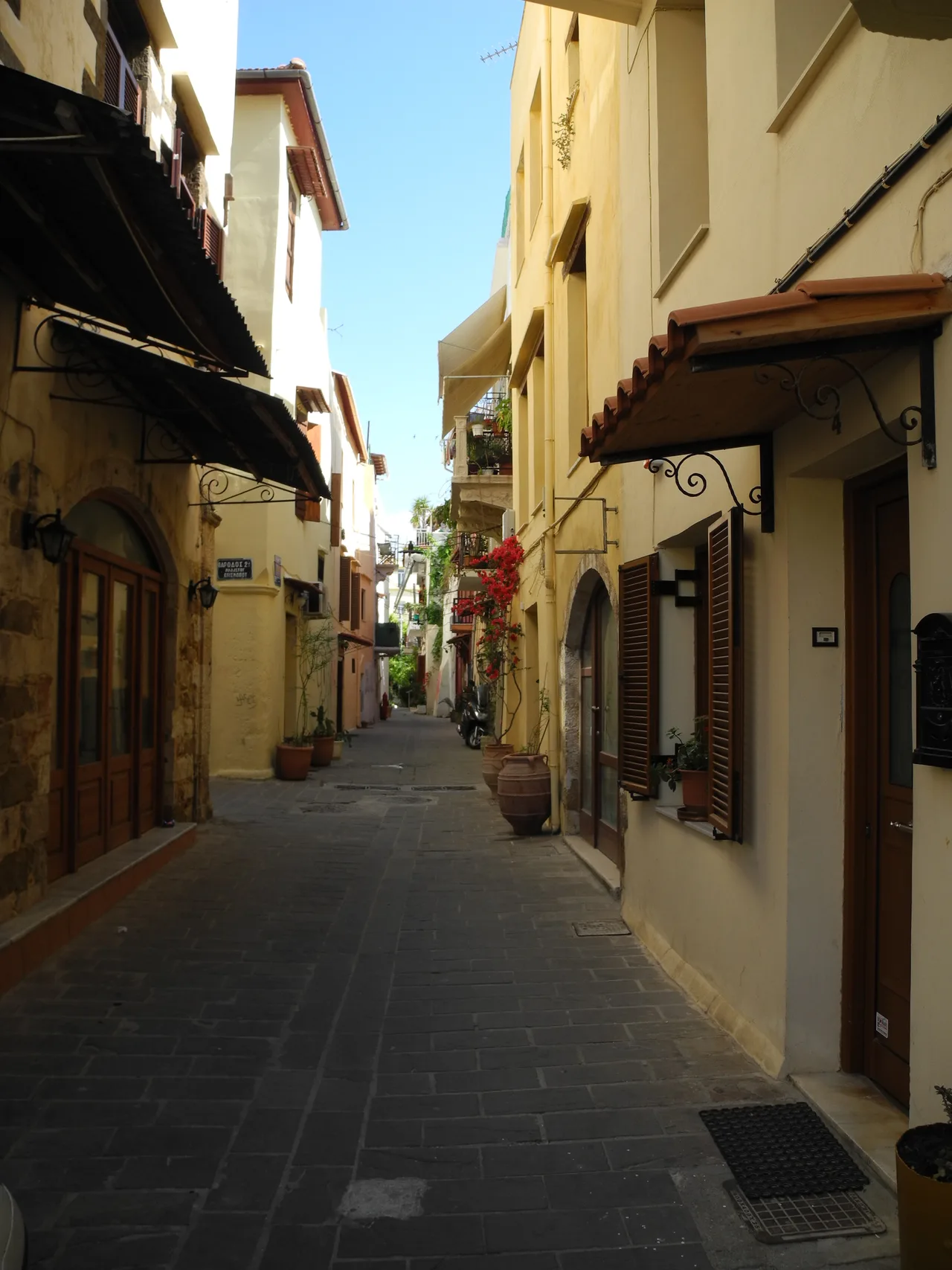
The old town is the walled historic quarter of Chania, wrapped around the Venetian harbour and edged by the modern city on the landward side. Its street plan still reflects Venetian and Ottoman layers: a harbour front of arcaded buildings, a hilltop quarter of narrow lanes, and a grid of lanes behind the port where everyday shops and tavernas sit.
The backdrop matters for planning. The White Mountains sit to the south, and the light on them changes through the afternoon, which is one reason the harbour fills toward evening. If you want the classic view back over the rooftops, plan a separate short trip to a viewpoint above town rather than expecting it from sea level.
Orientation: How the Quarters Fit Together
Think of the old town as a ring around the water. The harbour front and the Egyptian lighthouse anchor the west side, the Venetian shipyards run along the northeast edge, and the lanes behind climb toward Splantzia, the old Turkish quarter, and Topanas, the former Jewish quarter. Most first-time visitors walk the harbour first, then drift inland.
Splantzia is where the layered history is easiest to read: the Church of Agios Nicholas still carries both a bell tower and a minaret, a physical record of the building's passage from Dominican church to mosque and back to Orthodox worship. The square in front of it is a natural pause for coffee before you continue. Topanas, on the other side of the centre, holds the Etz Hayyim Synagogue and lanes that are quieter than the waterfront.
How to Get There: Airport, Ferries and the Last Stretch
Chania International Airport handles daily flights from Athens and seasonal routes from other European cities, and the trip into town is a short road transfer. Ferries arrive at Souda Port rather than in the old town itself, so you need a taxi, bus or pre-arranged transfer for the final leg into the centre. Allow extra time on arrival day if you are coming off an overnight sailing.
The more consequential decision is your base. Sleeping inside the old town puts the harbour and the lanes at your door but limits you to a car-free, luggage-on-cobbles arrival. Staying in the modern town or outside the centre is easier with a rental car and suits day trips to west Crete, at the cost of a walk or bus ride each time you want the port.
Getting Around on Foot, by Bus and With a Car
Walking is the practical way to see the old town: much of the historic centre is closed to cars, and parking in the core is extremely limited. If you drive in, expect to park on the edge and walk, and treat any space you find as luck rather than a plan. A rental car earns its keep for day trips, not for touring the lanes.
Local buses connect neighbourhoods and the wider city, and they are the low-stress option if you are staying outside the centre. For the old town itself, distances are short enough that a bus is rarely needed once you are inside the ring. Wear shoes that handle polished stone and uneven steps, especially after rain.
The Old Port Circuit
Start at the harbour and walk the arc of the waterfront, where the Mosque of the Janissaries with its orange domes sits beside the water and now hosts exhibitions rather than prayer. The Egyptian lighthouse closes the view at the harbour mouth, and the walk between the two is the single most photographed stretch in Chania. Give the circuit an hour at an unhurried pace.
The lighthouse itself sits at the end of a stone breakwater, and walking out to its base gives you the panorama back across the port toward the White Mountains. That exposed position means wind and spray, so it is not the place for a long linger in bad weather. Further along, the boundary between the harbour and the shipyards marks the turn toward the northeast waterfront.
Venetian Shipyards and the Northeast Waterfront
Past the Mosque of the Janissaries, following the water, the old Venetian shipyards form a long arc of stone sheds built during centuries of Venetian control of Crete. They are best read as a working waterfront rather than a monument: you see the scale of the vaults from the walkway, and the harbour edge continues beyond them toward the open sea.
This stretch is where the harbour becomes a promenade rather than a postcard. Cafes and restaurants line the way, with the water on one side and the shipyard walls on the other, and it is a good late-afternoon walk when the day-trippers have thinned. If you want a table with the view, this is a strong candidate; if you want value, keep walking inland.
Churches and Layered History in the Old Town
The Presentation of the Virgin Mary Metropolitan Cathedral, known locally as the Trimartyri, is a three-aisled church a short walk from the harbour with a silver-plated iconostasis, the screen separating the altar from the congregation. Across the street stands the Catholic Cathedral of the Assumption, recognizable by its blue bell tower and holding weekly masses. Both are working churches, so visit respectfully and look for posted opening times at the door.
In Splantzia, the Church of Agios Nicholas rewards a slower look: the red columns inside, the upper balcony reached by a staircase near the exit, and the minaret still standing beside the bell tower. A few steps away, the small double-nave church of St Catherine and St John the Hermit holds framed Byzantine icons with gold-leaf backgrounds in a deliberately plain interior.
Jewish and Muslim Legacy: Topanas, Synagogues and Minarets
Topanas, the old Jewish quarter, held a thriving Jewish community for centuries, and the Etz Hayyim Synagogue sits at its centre as a restored building with a history of damage and revival. It is an active place of worship and remembrance, so check visiting arrangements before you plan a stop, and dress and behave accordingly. The lanes around it are among the quietest in the old town.
Minarets survive across the centre as traces of Ottoman Chania, most visibly on the Church of Agios Nicholas and the Ahmet Aga Minaret, which still rises over its street. The Mosque of the Janissaries on the harbour adds the domed silhouette most visitors recognize. Taken together, these fragments are the clearest way to read the city's succession of communities on foot.
The Municipal Market and Where to Check Before You Go
The Municipal Market of Chania, a cross-shaped covered hall behind the harbour quarter, sells Cretan products and souvenirs and was built on the foundations of an older Venetian fortification. It has undergone restoration work in recent years, so confirm it is open for your dates before making it a planned stop. When it is operating, it is the obvious place to buy olive oil, herbs and honey to take home.
Two other indoor stops pair well with a market visit. The Maritime Museum of Crete, near the harbour fortification, covers the island's seafaring and naval history, and the archaeological museum holds finds from the region's long settlement record. Hours and admission for both change, so check at the door or on their official listings rather than relying on a printed guide.
Where to Eat: Harbour Tables Versus Back Streets
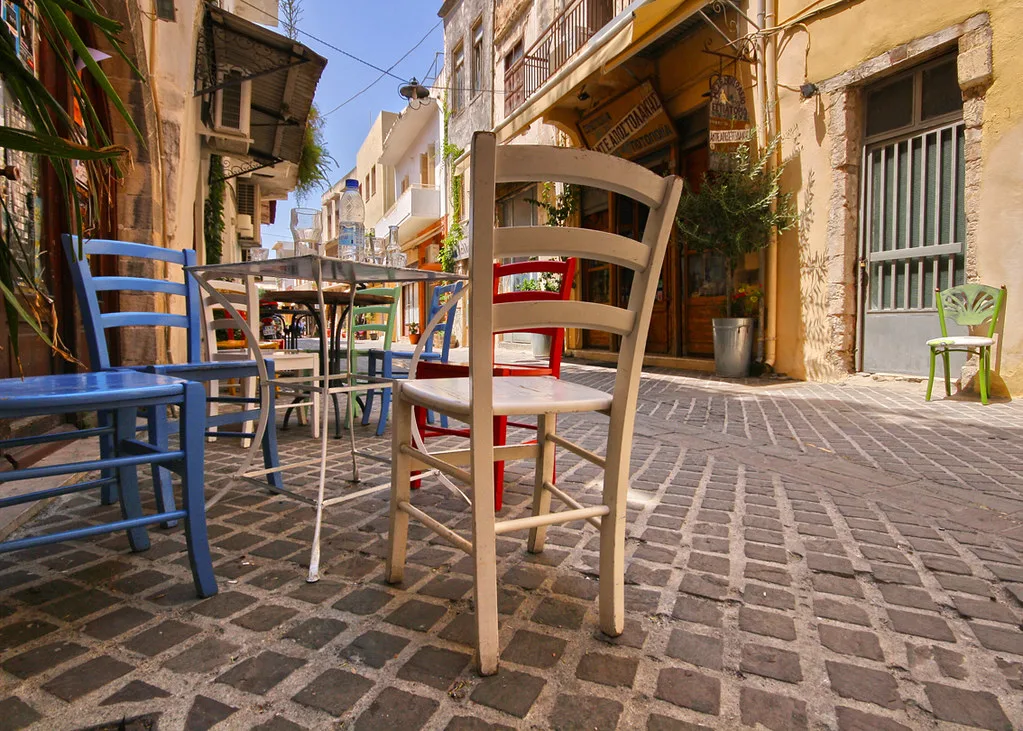
The waterfront restaurants along Akti Kountouriotou sell the view: tables facing the port, the lighthouse and the mosque, priced for the setting and busiest at sunset. A few streets inland, tavernas are plainer and quieter, with a shorter walk from the kitchen to the table and no premium for the scene. Choose deliberately rather than by which menu appears first.
Order with some vocabulary in hand. Dakos is a barley rusk topped with grated tomato, olive oil and myzithra cheese; kalitsounia are small cheese or herb pastries; and apaki is smoked Cretan pork. For a shared table, horta are boiled wild greens dressed with oil and lemon, and raki is the local spirit often poured at the end of a meal.
Guided food and neighbourhood walks exist for visitors who want context, and they typically pair old-town streets with tastings or a visit to a historic residence. They cost more than eating independently, so treat them as a time-saving and interpretive choice rather than the default. If you go, ask what a sunset departure includes before booking.
Venizelos Graves: The View Back Over Town
The Venizelos Graves sit on a hilltop above Chania, the resting place of Eleftherios Venizelos and his son Sofoklis, both former Greek prime ministers. The grounds include a small chapel and a statue of a Cretan independence hero, and the panorama takes in the city, the sea and the mountains behind. It is a short drive or taxi ride out of the old town, not a walk within it.
Treat the graves as a viewpoint excursion rather than an old-town sight. It works best as a late-afternoon add-on before dinner, when the light is good and you are not cutting into your harbour time. Check locally for how the site is accessed, since it is a memorial ground rather than a ticketed attraction.
How Long to Allow
A half day covers the port core comfortably: the waterfront arc, the mosque exterior, the walk toward the lighthouse, and one coffee stop. That is enough to understand why the city is beloved, but it skips the quarters that give the old town its texture. If you only have a few hours, prioritize the harbour and Splantzia over a museum.
A full day stretches the visit to include the cathedral and a second church, a slow walk through Topanas and Splantzia, a proper sit-down lunch and, if they are open, one museum. Adding a meal cooked rather than assembled is what turns a walking tour into a sense of place. A second day is for the day trips beyond the city.
When to Come
July and August bring the heaviest crowds, and the harbour at sunset becomes shoulder-to-shoulder. The shoulder months of late May to early June and September are the better balance, with warm sea and easier tables.
Orthodox Easter is a distinctive and busy period, with processions and services that fill the churches and streets and give the city a different character than in summer. If you come for it, book accommodation early and expect some businesses to keep holiday hours. Confirm service times locally rather than relying on a general timetable.
Nearby Options Beyond the Old Town
The old town is a base as much as a destination. The Akrotiri Peninsula to the northeast holds monasteries and the cove at Seitan Limania, and the archaeological site of Aptera, with its Roman amphitheatre facing the White Mountains, lies outside the city. Beach days at Balos and Elafonissi and the Samaria Gorge walk are separate outings requiring their own transport and an early start.
For a change of old-town architecture within Greece, Corfu Old Town and Mykonos Town offer the same pleasure of aimless lane-walking in very different styles. Keep them as separate trips; they do not belong in a Chania itinerary. Within Crete, use the Chania region as your day-trip radius.
Plan Your Visit
Build your old town day around the water: harbour first, then Splantzia and Topanas, with a meal that is either a view or a bargain rather than an attempt at both. Decide in advance whether you are sleeping inside the car-free core or driving in, because that choice sets your parking and luggage plans.
Check current opening details for the churches, museums, synagogue and market shortly before you go, since these change through the year.
Frequently Asked Questions
What is there to see in Old Town Chania?
The Venetian harbour with the Mosque of the Janissaries and the Egyptian lighthouse, the Venetian shipyards, the Metropolitan Cathedral and the Catholic Cathedral of the Assumption, the Church of Agios Nicholas in Splantzia with its bell tower and minaret, the Etz Hayyim Synagogue in Topanas, the Municipal Market, and the hilltop Venizelos Graves above town.
How long do you need in Chania Old Town?
A half day covers the harbour circuit and one coffee stop. A full day lets you add the churches, a walk through Splantzia and Topanas, a museum if open, and a proper sit-down meal. A second day is better spent on day trips outside the city.
Where exactly is Old Town Chania and how do you get there?
It is the historic core of Chania on Crete's northwest coast, built around the Venetian harbour, with the White Mountains behind the city. Flights land at Chania International Airport and ferries arrive at Souda Port, from where you take a taxi, bus or transfer into the centre.
Can you drive or park in Chania Old Town?
Much of the historic centre is closed to cars and parking in the core is very limited. If you drive in, plan to park on the edge and walk, and treat the car as transport for day trips rather than for touring the lanes.
Where should you eat in Chania Old Town?
Waterfront tables along Akti Kountouriotou sell the harbour view and are busiest at sunset. Tavernas a few streets inland are plainer and better value. Look for dakos, kalitsounia, apaki, horta and raki, and ask about prices before ordering.
Is Chania Old Town expensive?
Harbour-front tables carry a view premium, while back-street tavernas and shops are generally cheaper for the same kind of food. Prices change by season and venue, so check menus on site rather than relying on guidebook figures.
Is Chania Old Town worth visiting in July and August?
It is at its busiest, and the harbour at sunset is crowded. Late May to early June and September give warm sea and easier tables. Orthodox Easter is lively and busy, so book accommodation early if you choose it.
What is nearby to Old Town Chania for a day trip?
The Akrotiri Peninsula with Seitan Limania, the archaeological site of Aptera, Balos and Elafonissi beaches, and the Samaria Gorge walk. Each needs its own transport and an early start, and all are outside the old town itself.