
Archaeological Museum of Chania: A Visitor's Guide to the Halepa Collection
The Archaeological Museum of Chania is the city's main collection of finds from western Crete, displayed in a modern building in the Halepa district rather than beside the harbour. Because it sits outside the compact Old Town, it rewards a little planning: this guide covers what is inside, how to reach it, and how it fits into a day with the rest of Chania.
Readers who remember an older museum near the centre should note that the collection is now presented in Halepa, and that some online reviews still describe the previous premises. Checking the museum's own site before setting out avoids that confusion and confirms what is open on the day you plan to go.
What the Museum Is and Why It Anchors a Half-Day in Halepa
This is a regional archaeology museum, which means its job is to tell the story of one area through objects dug from its soil. The collection traces Cretan life from prehistoric times through the Byzantine era, with the bulk of the material coming from the Chania region rather than from Crete as a whole.
That regional focus is the reason to choose it over a general history stop: the label text connects pots, tools and grave goods to places you may have driven past on the way into town. It also makes the museum a sensible first stop on a Chania trip, because the geography and chronology it lays out make later ruins easier to read.
Allow it to anchor a half-day rather than a single hour. Halepa is a separate neighbourhood with its own streetscape and a second museum, so treating the visit as a small excursion gives the collection the attention it deserves without rushing back to the harbour.
Where It Is: Halepa, Not the Venetian Harbour
The museum stands in Halepa, a district to the east of the centre that grew up as a wealthy suburb and later became associated with modern Greek political history. Its modern building is described as operating on bioclimatic principles, an architectural approach that uses orientation and natural ventilation rather than relying entirely on mechanical cooling.
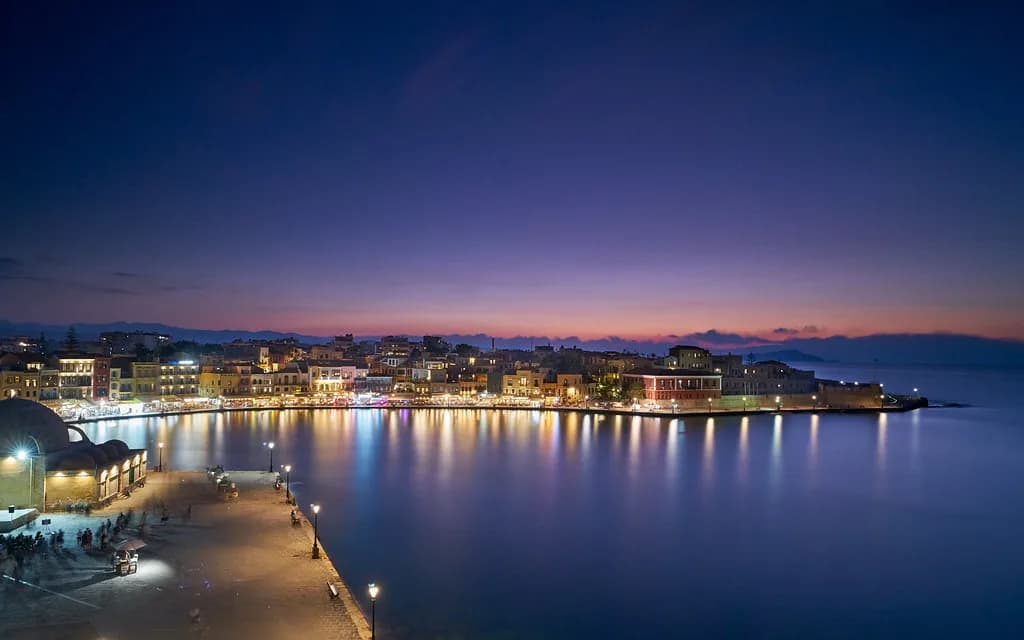
The practical consequence is that you cannot simply wander out of the Venetian Harbour and fall into the galleries. The harbour, with its lighthouse and shipyards, is a different part of the city and a separate outing; the old town chania area is best explored on foot on its own terms rather than as a prelude to the museum.
Set your expectations accordingly: Halepa is quieter and more residential than the tourist core, which is precisely why a museum visit here feels calmer and more focused than one wedged between souvenir shops.
How to Get There from the Centre
Halepa lies east of the centre along the coast road, and the usual approaches are a local bus, a taxi, or a walk for those comfortable with a longer stroll. Because the district spreads out, ask the driver or check the stop name for the museum rather than for Halepa in general, and confirm the return stop before you leave the centre.
If you are driving, expect to park on the surrounding streets and to walk the last stretch; there is no reason to assume a large dedicated car park. Build in a few extra minutes for finding a space, especially if you arrive mid-morning when local errands are still underway.
Walking from the centre is feasible for travellers who already plan a long day on foot, but it adds distance in each direction. A common compromise is to walk one way along the waterfront and take a taxi back, which keeps the day flexible without committing to a return hike.
The Building and How Its Layout Shapes a Visit
The museum occupies a contemporary structure rather than a converted Venetian or Ottoman building, so the experience is closer to a modern gallery than to a historic house. Galleries are arranged by period and theme, which means a straightforward chronological route will carry you from the earliest material forward without much backtracking.
Because the layout is thematic, decide on your priorities before you enter. If you want the broad sweep, follow the sequence as intended; if you have a specific interest such as pottery or burial customs, ask at the desk where those cases sit so you do not spend your energy on the wrong floor.
What the Collection Covers: Prehistory to the Byzantine Era
The museum displays around 3,500 archaeological objects spanning prehistoric through Byzantine times, drawn largely from excavations in the Chania region. The prehistoric and historic periods form the backbone of the presentation, with separate sections devoted to particular research themes.
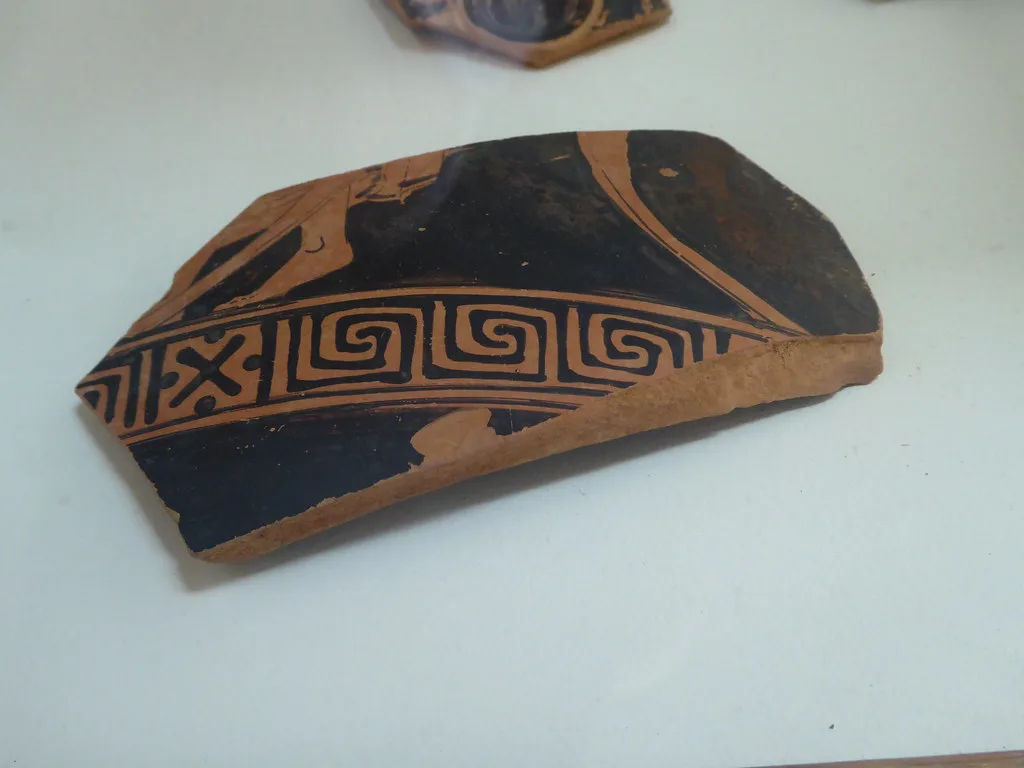
For most visitors the interest lies in the everyday material: coarse and fine pottery, small tools, seals, figurines and jewellery that show how households actually lived rather than how rulers monumentally died. Read the place names on the labels; they turn the collection into a map of the countryside around Chania.
Chania's tourism bureau lists the city's museums together and singles out the archaeological collection as the essential starting point for understanding the area's long history, which is a fair summary of what the galleries are for.
Highlights to Prioritise
One section carries the evocative title "Caves at the Dawn of the Minoan World," focusing on the final phase of cave habitation and on western Crete's connections with the Cycladic islands. It is a compact, well-defined theme that repays slow reading, because it covers a period and a network of sea routes most travellers know little about.
The second priority is material connected with ancient Kydonia, the settlement that occupied Kasteli hill in the heart of modern Chania. Finds from that site, including inscriptions, ceramics and mosaics, give context to the hill you will walk over in the old town later the same day.
If time is short, take these two themes first and let the rest of the galleries be a bonus. That order gives you a prehistoric story and a local urban story, which together explain more about Chania than a hurried pass through every case.
Everyday Life: Fishermen, Farmers and Women in Ancient Crete
Beyond the showcase pieces, the collection is organised to reveal daily life in Crete's ancient city-states, from Minoan fishermen to farmers and women. Look for the objects that imply work: weights for nets, grinding equipment, spindle whorls and storage jars that show how food and cloth were produced.
This is where a museum like this rewards patience over speed. A single well-labelled case about weaving or fishing can tell you more about a coastal Cretan town than a room of monumental sculpture, and the labels here tie such objects to specific sites in the region.
Label Vocabulary in Plain English
A few recurring terms make the labels much easier to follow. "Minoan" refers to the Bronze Age civilisation of Crete, roughly 3000 to 1100 BC, known for its palaces and its trading and naval reach across the Mediterranean.
"Neolithic" means the much earlier period of farming and settled villages before metalworking, when people lived in mud-brick houses and made pottery by hand. "Linear B" is a script used for administrative records in later Bronze Age Crete and mainland Greece, and seeing it on a clay tablet is a reminder that bureaucracy is an old invention. "Byzantine" covers the Christian, Greek-speaking empire centred on Constantinople, whose art and objects close the chronological sequence here.
You do not need to memorise these definitions. Skim the introductory panel in each room, and the objects around it will make sense without further background reading.
How Much Time to Allow, and a Short Route
For a thorough visit, budget around two hours inside the galleries, plus time to reach Halepa and settle in. That allows for the chronological route, the cave-habitation section and a slower look at the Kydonia material without rushing the final rooms.
With only an hour, head straight for the prehistoric galleries and the thematic cave section, then finish with the Kydonia finds. Skip the later periods on this pass; they are easier to absorb from photographs later than the prehistoric material is.
Travellers combining the museum with a harbour afternoon should keep the visit first, while energy is high, and treat the waterfront as a relaxed second half. Doing it the other way round tends to produce a hurried, distracted museum stop.
Tickets, Opening Hours and Closures
The sources used here do not publish ticket prices or opening hours, and they can change with the season. Check the museum's official website or the municipal tourism pages before you travel, and re-check on the morning of your visit, since the Greek museum system sometimes adjusts hours around public holidays.
If you are travelling with a fixed itinerary, buy or reserve what you can in advance and keep a flexible alternative in Halepa for the same slot. That way a change of hours does not cost you the half-day you had set aside.
Practicalities: Bags, Photography and Access
Standard museum rules usually apply to bags and photography, but they vary. The museum's own site is the place to confirm whether large bags must be left at the desk, whether flash is prohibited, and what step-free access and facilities such as toilets or a lift are available.
Mobility matters here because the building is modern and multi-level; ask in advance if anyone in your group uses a wheelchair or struggles with stairs, and note that the surrounding streets in Halepa are on a slope. A short enquiry before the visit avoids an awkward arrival.
Nearby in Halepa
The Eleftherios Venizelos House Museum is the natural companion in Halepa. It occupies the former prime minister's residence, a three-storey house with eighteen points along its visitable route where original objects remain largely in their original positions, and it covers the life of the Chania-born politician who shaped modern Greece.
Outside the museum doors, Halepa's nineteenth-century streetscape is worth a slow walk; the neighbourhood's villas and consular houses recall its period as a prosperous suburb. Pairing the two museums here makes a coherent half-day without a return to the tourist centre.
Nearby in the Old Town
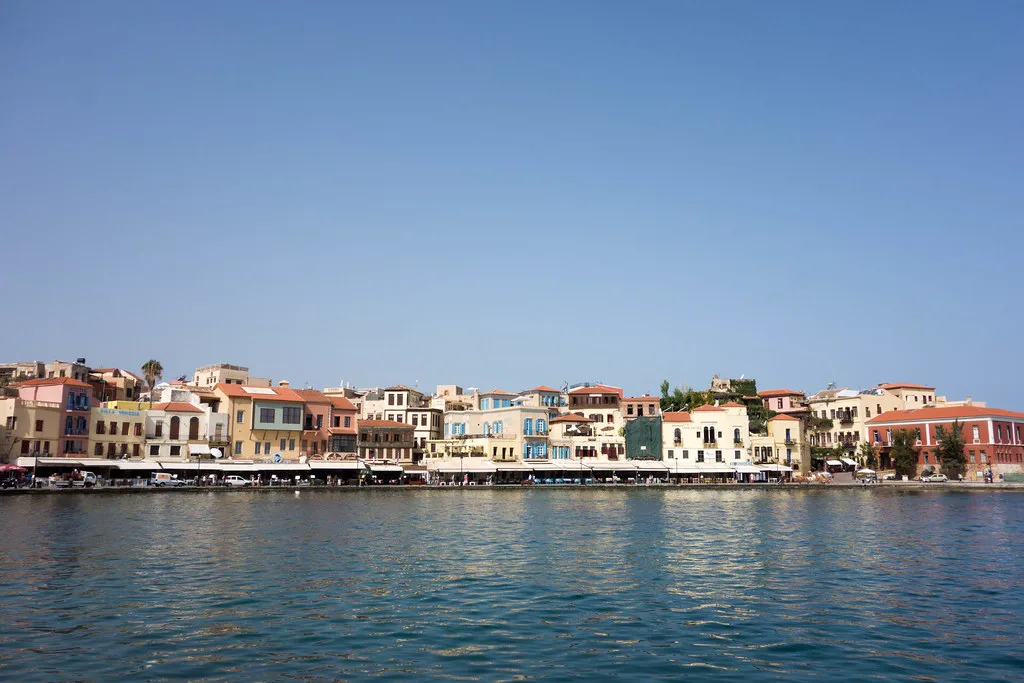
Back towards the harbour, the Maritime Museum of Crete sits at the entrance to Firkas Fortress, the large red building on the side of the Venetian harbour, and holds more than 2,500 items on Cretan and Greek naval history. A separate display in the eastern Neoria, the old Venetian shipyards, houses the Museum of the Minoan Ship.
These are the right additions on a different day or a second half-day, not a package to bolt on to an archaeology visit. For orientation around the harbour, the Akti Kountouriotou waterfront is the main promenade you will use, and the old Venetian shipyards line it on the eastern side.
Pairing the Museum with the Harbour and Kasteli Hill
A sensible split is the museum in the morning and the harbour in the late afternoon, when the light softens and the waterfront is at its best. Walk out to the chania lighthouse on the old Venetian sea wall for the classic view back over the harbour before dinner.
Kasteli hill in the centre is where ancient Kydonia lay, and having seen its finds in the museum the walk up becomes a small act of imagination rather than a detour. Nearby, the Chania Cathedral (Mitropoli) and the Etz Hayyim Synagogue in the old town's Jewish quarter are easily folded into the same walk.
View Versus Value: Fitting It into One Day
The trade-off is straightforward: the harbour offers atmosphere and free wandering, while the museum offers depth and shelter. If you have one full day only, give the museum a focused ninety minutes and leave the rest to the waterfront, the chania municipal market and a slow lunch rather than trying to see every sight in Chania.
Travellers who have already visited the archaeological museum in another Greek city will find the format familiar, since the mykonos archaeological museum follows a similar regional logic. Here the difference is the western Cretan material and the cave and Kydonia sections, which are the parts worth your time.
Common Planning Mistakes
The most frequent error is assuming the museum is still among the harbour-side sights. Reviews describing a small building in the centre refer to the earlier premises; plan for Halepa and check the address on the museum's official site.
The second is arriving without confirming the day's opening. Because the collection sits outside the main tourist circuit, a wasted trip costs more time than it would in the old town, so check the official museum site or the Chania tourism pages the day before and again on the morning of your visit.
Plan Your Visit
Treat the Archaeological Museum of Chania as a deliberate half-day in Halepa: check the official site for hours and tickets, go early, and take the cave and Kydonia sections seriously before anything else. Then let the harbour, the hill and a long lunch fill the rest of the day at a human pace.
Frequently Asked Questions
Where is the Archaeological Museum of Chania located?
It is in the Halepa district, east of the city centre, in a modern bioclimatic building. That is a different neighbourhood from the Venetian Harbour, so allow time to travel there and confirm the address on the museum's official site.
Is the Archaeological Museum of Chania worth visiting?
If you want to understand western Crete's past, it is the city's core collection: around 3,500 objects from prehistoric to Byzantine times, with dedicated sections on cave habitation and on ancient Kydonia. It suits travellers who prefer context before walking the old town.
How long does it take to see the museum?
Allow around two hours for a full chronological pass including the thematic sections. If you have an hour, go straight to the prehistoric galleries and the cave section, then finish with the Kydonia material.
What can you see at the Archaeological Museum of Chania?
Pottery, tools, seals, figurines, jewellery, inscriptions and mosaics from sites across the Chania region, arranged by period and theme. The labels connect objects to places you can visit in and around the city.
How much is entry and what are the opening hours?
Those details are not fixed here and can change by season, so check the museum's official website or the municipal tourism pages before travelling. Re-check on the morning of your visit.
What else is near the museum in Halepa?
The Eleftherios Venizelos House Museum is in the same district and pairs naturally with an archaeology visit. Halepa's nineteenth-century streets are worth a walk between the two.
Is the museum near the Venetian Harbour?
No. It is in Halepa, not on the harbour, so plan transport in each direction. The Maritime Museum of Crete at Firkas Fortress and the Museum of the Minoan Ship in the Neoria are the harbour-side alternatives.
Should I visit the museum before or after the old town?
Visit the museum first. The chronology and the Kydonia finds make the hill and the old town easier to read, and you will have more energy for the galleries than at the end of a walking day.