
Venetian Harbour Chania: A Practical Guide to the Old Port
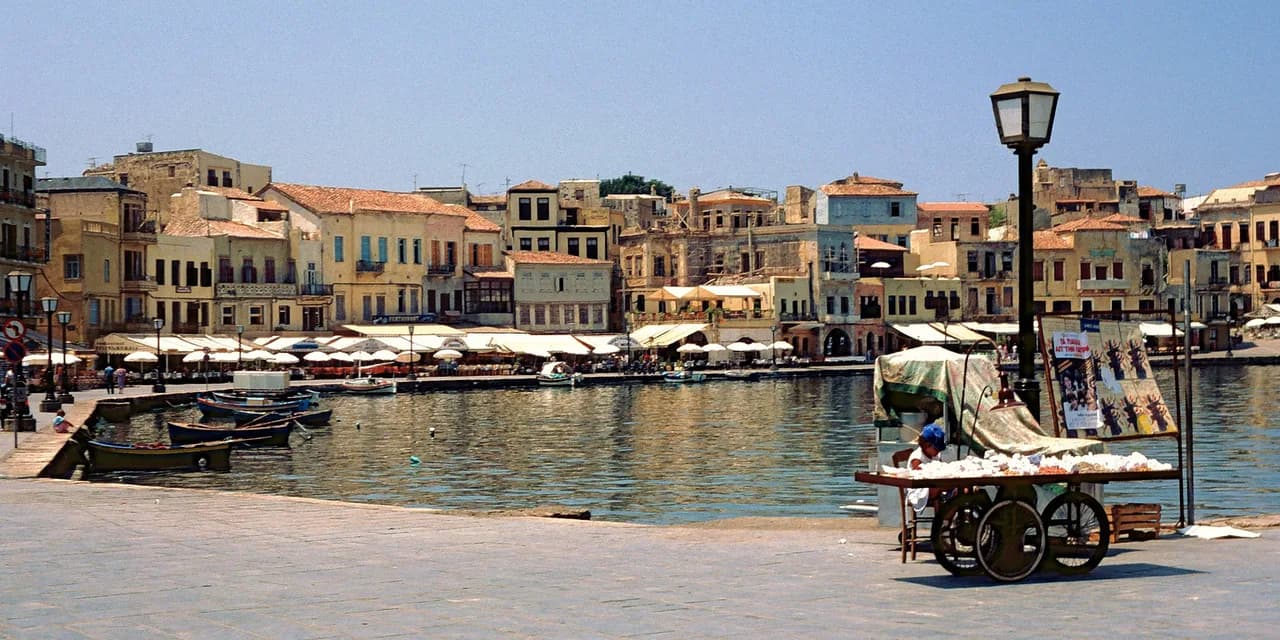
The Venetian Harbour is the old port basin on Chania's north coast, cupped by the lanes of the Old Town, with Akti Kountouriotou running along the waterfront side. It is the same place locals and maps call the Old Port of Chania, so do not go looking for two separate harbours. The site is a free, open waterfront you walk through; the small museums within it are a different matter.
What makes the basin worth an hour or half a day is not one building but the layering: Venetian shipyards, a fortress, an Egyptian-era lighthouse and an Ottoman mosque arranged around the same water. Understanding the layout in advance saves you from doubling back through the busiest café strip. If you're weighing how the harbour fits into a wider day, these things to do around Chania show what else sits within walking distance of the quay.
Where the Venetian Harbour sits
The harbour occupies the northwest edge of the Old Town, and Akti Kountouriotou forms its main waterfront street. From almost anywhere in the historic centre you reach the quay on foot in roughly five to ten minutes, according to the harbour guide that maps the waterfront. That compactness is the appeal: the harbour is not a separate trip but the natural end point of a walk through the Old Town lanes, and it sits easily alongside the other things to do in Chania.
Getting there from the town and the bus stop
Local buses set down at 1866 Square in the centre, from where a walk of about 500 metres through the alleys brings you out at the water. Drivers coming off the national road should follow signs for the Old Town or the port, but the quays themselves are pedestrian-only, so the car stops before the harbour rather than at it.
Aim for the large public car park at Talos Square near Firkas on the west side, or the lots around the marina near Sabbionara Gate on the east. The west option puts you beside the fortress and the museum; the east option drops you close to the shipyards and the start of the breakwater. Neither is a secret, and both fill on summer evenings, so arriving earlier is the simpler trade-off.
Why the harbour has two halves
Venetian engineers began the harbour around 1320 and split it deliberately: a shallow western basin for unloading merchant goods into shoreline warehouses, and an eastern basin given over to shipbuilding and repairs. That division still shapes a walk today. The shipyards line the eastern curve, while the open commercial basin and the mosque front the centre and west.
Trade eventually outgrew the medieval basins, and deep-draft shipping shifted to Souda Bay to the east. What remains is a harbour used by fishing boats, traditional wooden kaïks and yachts, ringed by cafés and restaurants. Knowing this explains why the basin feels intimate rather than industrial, and why the historic structures, not cargo, are the reason to come; if you'd compare this waterfront with other stops, the things to do in chania guide covers the rest of town.
Firkas Fortress and the Maritime Museum
Firkas Fortress anchors the northwest corner, finished just before the Ottoman conquest and named from an Arabic word for barracks. In medieval times a chain could be stretched from its base to the lighthouse to close the port in an emergency, and its corner watchtower is where the Greek flag was raised in 1913 to mark Crete's union with Greece.
The Maritime Museum of Crete sits at the fortress gates, with ship models, nautical charts and material running from the Minoan era to the Battle of Crete, plus a full-size replica of a Bronze Age Minoan ship in an annexe in a restored arsenal. The grounds and exterior cost nothing to see; the museum interior does not, and its hours should be published at the museum entrance and on its own site, so confirm them before you build a day around it. If the museum turns out to be closed, our guide to the things to do in Chania lists other Old Town sights within a short walk of the quay.
The Egyptian Lighthouse at the end of the breakwater
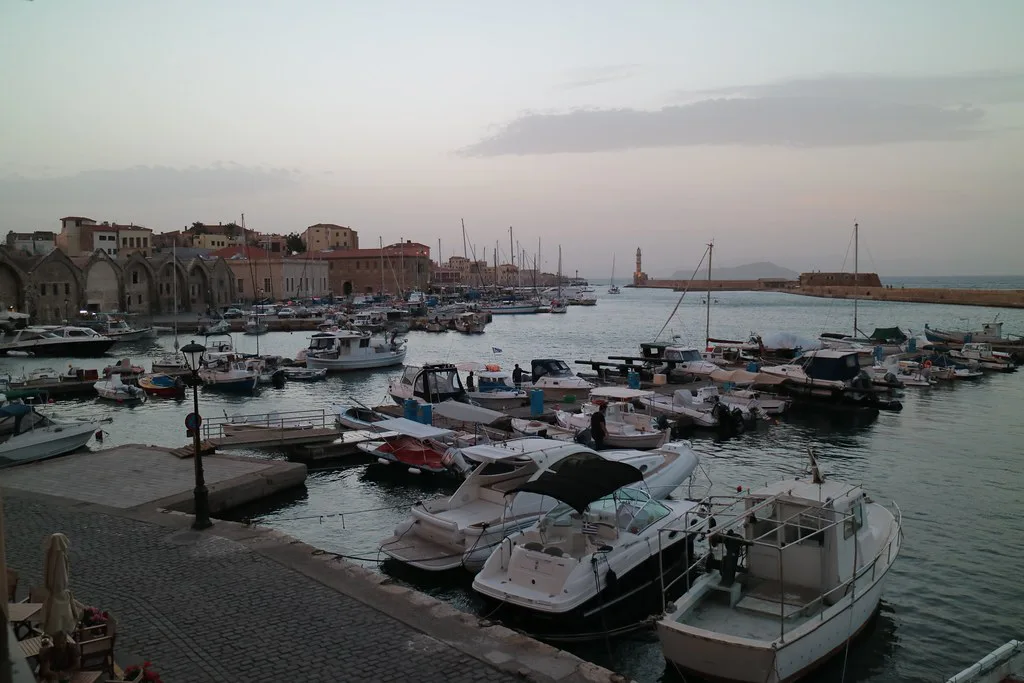
The 21-metre lighthouse, locally called Faros, stands at the tip of the eastern breakwater. Its stone base is Venetian, but Egyptian artisans rebuilt it into its present form around 1830, which is why the top resembles a minaret rather than a conventional lantern. It is the symbol of the harbour and the reason the eastern pier exists as a walk.
You can walk the concrete breakwater to examine the tower from outside; the internal staircase is closed for safety reasons, so do not plan on climbing it. The breakwater is exposed, uneven underfoot and can carry spray when the north wind picks up, which is worth weighing before you set out in sandals or with a coffee in hand.
Mosque of the Janissaries and the Neoria shipyards
The Mosque of the Janissaries, or Yali Tzamisi, fronts the central harbour and is described as the oldest surviving Ottoman building on Crete, erected around 1645. Its dome and cubic base are the most photographed shape on the quay; it stopped functioning as a mosque in the early 20th century and its minaret was later removed. Today it serves as an exhibition hall for art and local crafts, so treat it as a building to look at and step into rather than a religious site.
The Neoria are the arched Venetian shipsheds built between 1467 and 1599 along the eastern waterfront, where war galleys were hauled out for winter maintenance. Several survive in a row, and nine of the original seventeen were demolished under Ottoman rule. The Grand Arsenal, or Megalo Arsenali, is the largest of them, completed in the early 1600s and now home to the Centre for Mediterranean Architecture, which stages exhibitions and events.
At the far end of the row, Neorio Moro houses the Sailing Club of Chania and a small exhibition space on ancient shipbuilding. Whether the inner halls are open varies with the exhibition calendar, so treat the exteriors as the reliable part of the visit and check locally if a specific display matters to you.
A walking order that avoids backtracking
Start at Firkas on the west, look into the Maritime Museum if it is open, then cross the harbour mouth along the quay to the lighthouse breakwater. Walk out to the tower, return, and continue east past the Mosque of the Janissaries to the Neoria and the Grand Arsenal. Ending on the eastern pier keeps the quietest stretch for last instead of pushing back through the busiest café tables. If you want to compare this waterfront walk with other harbour stops in the region, see the things to do in chania guide.
How much time to allow
A brisk loop of the basin, with a look at the fortress, mosque and shipyards and a walk out to the lighthouse, takes roughly an hour to ninety minutes. Add the Maritime Museum and the pace slows toward a half day, especially if you stop on the breakwater or linger over a drink on the quay. The harbour rewards a slower visit, but it is small enough that you never need to allocate a whole day to it.
Best time of day and what to expect
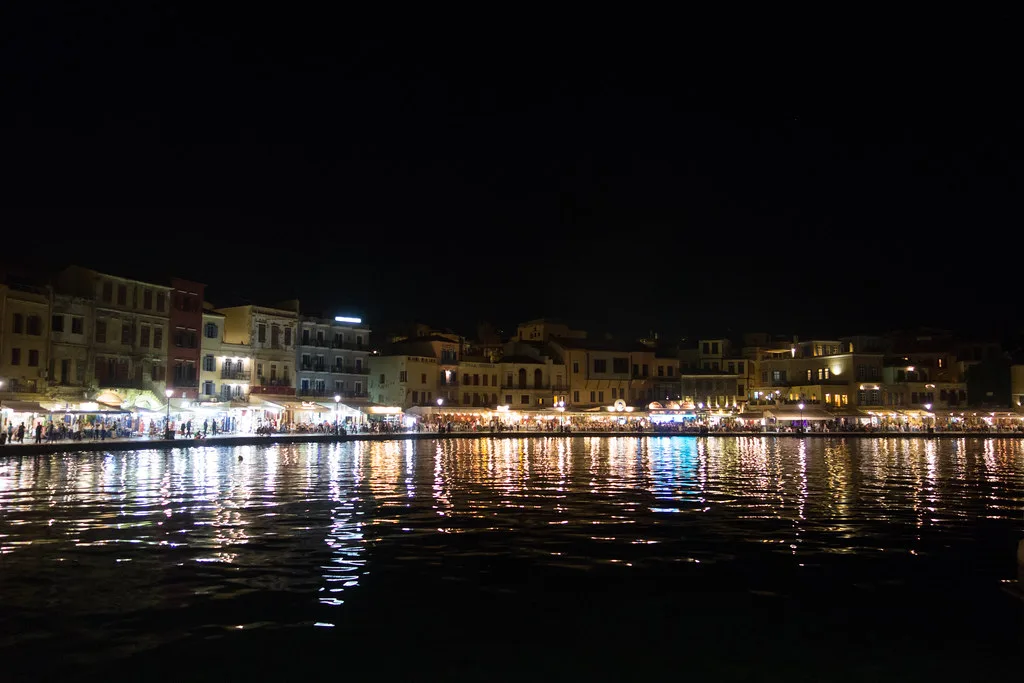
Mornings are the calmest window on the eastern pier, when the water flattens and the fishing boats are still working; summer evenings bring the crowds to the western promenade. The harbour is a sight to walk, not a beach or a swimming spot, even though searches for a harbour beach are common. Views of the White Mountains behind the town are a bonus when the air is clear, not a guarantee.
Nearby after the harbour
The Old Town lanes begin immediately behind the quay, and the covered market and the archaeological museum are short walks inland if you want to extend the day beyond the water. Use the harbour as the anchor of a half day and let the surrounding streets fill the rest rather than treating it as one stop on a checklist. If you want to plan the wider picture beyond the quay, our guide to the things to do in Chania sets the harbour alongside the rest of the town.
Practical notes before you go
The quays are paved with stone that is worn smooth in places, and the breakwater is exposed to wind and spray, so sturdy shoes beat sandals. Restaurants along the waterfront trade view for value, and the back streets of the Old Town are where you find calmer tables. Confirm museum hours and any temporary closures before a museum-focused visit, since the outdoor harbour itself needs no ticket and no booking.
Plan Your Visit
The Venetian Harbour works best as a structured walk: fortress and museum on the west, lighthouse at the end of the breakwater, shipyards on the east. Go early for calm water and space on the pier, and treat the waterfront restaurants as a view-driven choice rather than the only option.
Explore more Chania sauna guides
Frequently Asked Questions
Is the Venetian Harbour the same as the Old Port of Chania?
Yes. The Venetian Harbour and the Old Port of Chania refer to the same old basin on the city's north coast, wrapped by the Old Town. Maps and signs use both names, so you are not looking for two different places.
Can you climb the Chania lighthouse?
No. You can walk the breakwater to the base of the tower and see it from outside, but the internal staircase is closed for safety reasons. The walk out is the point, not the climb.
How long does it take to walk around the Venetian Harbour?
A loop of the basin with a walk out to the lighthouse takes about an hour to ninety minutes. Add the Maritime Museum and it becomes closer to half a day.
How do you get to the Venetian Harbour without a car?
Buses stop at 1866 Square, and from there it is roughly a 500-metre walk through the Old Town lanes to the water. If you are staying in the historic centre, the quay is a five- to ten-minute walk from most addresses.
Is there a beach at the Venetian Harbour?
No. The harbour is a historic port basin, not a swimming spot. For a beach day you need to look elsewhere in Chania, and the harbour is best visited as a walk.
Do you need tickets or reservations for the Venetian Harbour?
No. The harbour and its waterfront are open to walk through without tickets or bookings. The small museums within it have their own entry arrangements, so check their hours before you go.
What is there to see besides restaurants?
Firkas Fortress, the Maritime Museum of Crete, the Egyptian Lighthouse, the Mosque of the Janissaries, the Neoria shipyards and the Grand Arsenal. The restaurants are the backdrop, not the reason the harbour is worth visiting.