
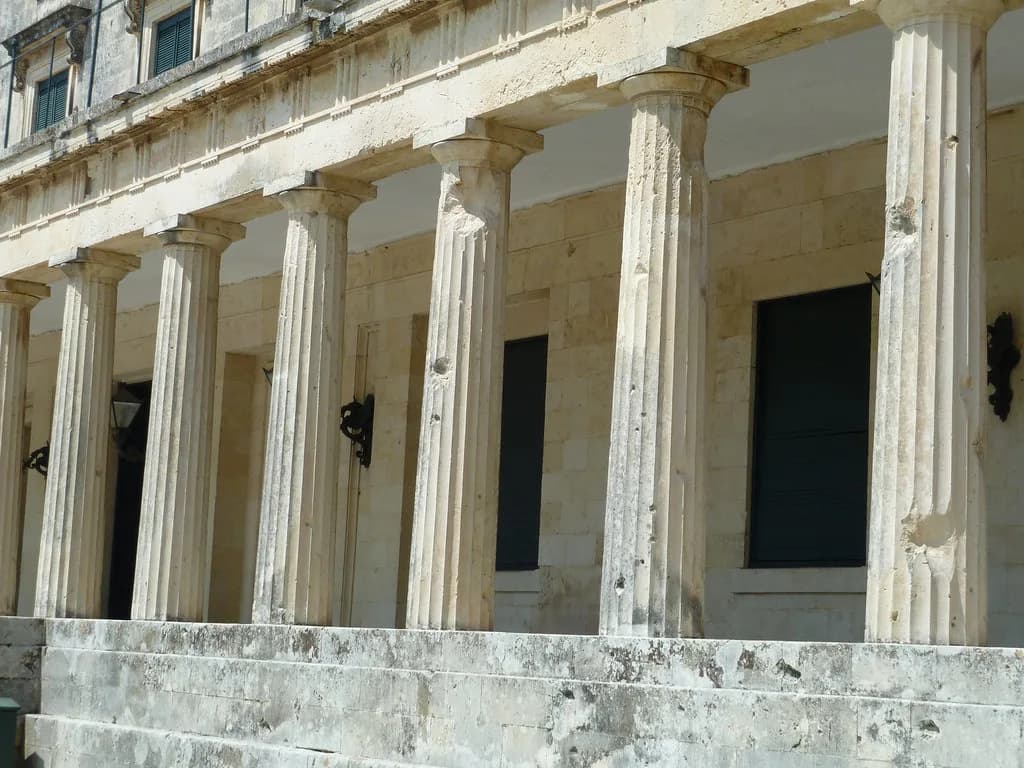
Corfu Old Town: A Practical Guide to What to See and Where to Eat
Corfu Old Town, called Kerkyra in Greek, is the historic centre of Corfu Town and the reason most visitors bother getting off the ferry at all. It layers Venetian, French and British influences onto a Greek island setting, which is why its arcaded squares and shuttered alleys feel different from the whitewashed towns of the Cyclades. The whole quarter is a UNESCO World Heritage site, recognised for the strategic role its fortified town played at the entrance to the Adriatic.
The town is compact and pedestrian-friendly, so walking is genuinely the best way to see it, but that also means a car or taxi often cannot stop at the door of an address inside the centre. Arrive expecting to carry bags over cobbles and up stairs. This guide stays on the Old Town itself and points out nearby options only where they help you plan a route.
Where Corfu Old Town Sits and How You Arrive
The Old Town occupies a fortified peninsula on the east side of Corfu Town, with the port and cruise terminal within walking distance of its edge. If you arrive by ferry you can generally walk in rather than take a taxi, which is worth knowing because short port transfers are where informal pricing creeps in. One traveller reported paying for a very short ride and wishing the fare had been agreed before getting in, so settle the number first if you do take a car.
Blue local buses run by Corfu City Bus connect the centre with the airport, the port and nearby spots such as Kanoni, and they are the cheap option if you are based outside town. Inside the historic core, everything is on foot and many alleys are too narrow for vehicles. Corfu City Bus publishes current timetables and pickup points, so check its own schedule rather than relying on a screenshot.
Luggage is the practical snag on a day visit or a late flight. Left-luggage services exist near the centre and can double as an informal source of local advice, but arrangements and transfer costs change, so message the left-luggage service ahead with your drop-off time. If your accommodation lies deep in the lanes, ask the host which nearest street a car can actually reach when you book the ride.
Orientation: Spianada, Liston, the Fortress End and Campiello
Think of the town in four directions. Spianada Square and the Liston colonnade form the open, ceremonial front facing the sea; the Old Fortress anchors the eastern tip; Campiello is the oldest, tightest quarter of stairways and small squares; and the Jewish Quarter sits toward the New Fortress on the higher side of town. Museums cluster near the Palace of St Michael and St George, just behind the Liston.
That layout lets you choose a first move rather than following a fixed circuit. Starting at the fortress end means you climb in cooler air and finish among cafés; starting at the Liston means an easy coffee first and a hotter climb later. Either way, the distances between these quarters are short enough that you will cross the town several times in a day without noticing.
Campiello deserves a specific warning about etiquette. People live in these lanes, with laundry strung between shutters and cats on the steps, and several walkways look private but are public. Keep your voice down, do not photograph into open doorways, and treat Kremasti Square, with its old Venetian well, as a neighbourhood square you are passing through rather than a sight to tick off.
The Old Fortress: Go Early and Cross the Bridge
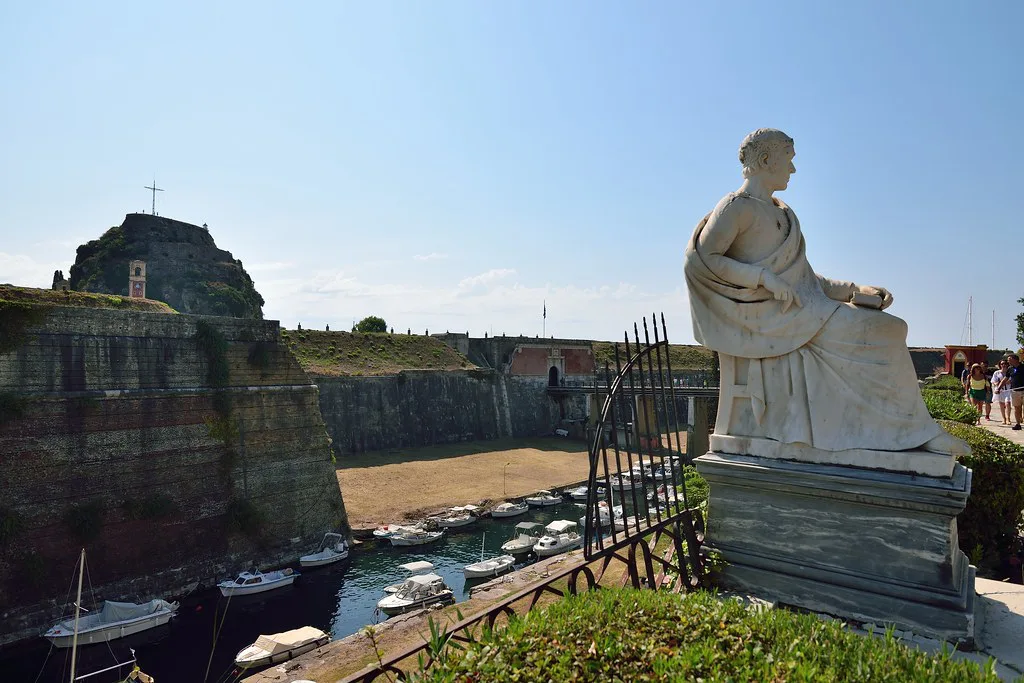
The Old Fortress is the one sight that repays an early alarm. You enter by crossing a short bridge into the complex, then climb for the payoff: terracotta rooftops, the Ionian Sea and, on a clear day, the Albanian coast. Saint George's Church inside the walls is a frequent stop for photographs in low morning light.
The climb is exposed and hot even by mid-morning in summer, so bring water and a hat rather than planning it for midday. The New Fortress, despite the name, dates from the sixteenth century and sits above the Old Town on a hill; it is a separate visit, and a reasonable alternative if you want fortifications without the sea-level crowds. Opening hours and any entry fee for the Old Fortress are not fixed year-round, so check the official site or the ticket desk before you build your morning around it.
Spianada Square and the Liston Promenade
Spianada is the largest square in Greece, an open expanse of palms and fountains that includes a cricket pitch, a legacy of British rule. It works as the town's front garden: benches for a rest, space for children to run, and a clear line of sight back to the fortress. The Liston runs along one side with arched colonnades and café tables spilling onto the walkway.
This is where the view-versus-value trade-off is sharpest. A table on the Liston buys you architecture and people-watching at a premium; the same coffee or juice a few lanes back costs less and comes with more local traffic. A reasonable compromise is a drink on the Liston and a proper meal elsewhere, or a picnic assembled from a bakery and eaten in the Boschetto Garden beside the fortress.
Churches Worth Stepping Into
The Church of Saint Spyridon is the town's landmark, dedicated to the island's patron saint and recognisable by its tall red bell tower, visible across the rooftops. It holds the saint's relics, which local tradition credits with protecting Corfu over the centuries. Dress modestly and keep voices low, as these are working places of worship rather than monuments.
Two cathedrals round out a short church walk. The Catholic Cathedral of Saint James and Saint Christopher stands near the Liston, a reminder of the island's mixed heritage, while the Orthodox Metropolitan Church of Our Lady Spilaiotissa sits in the heart of town. All three are close enough to combine in under an hour of walking.
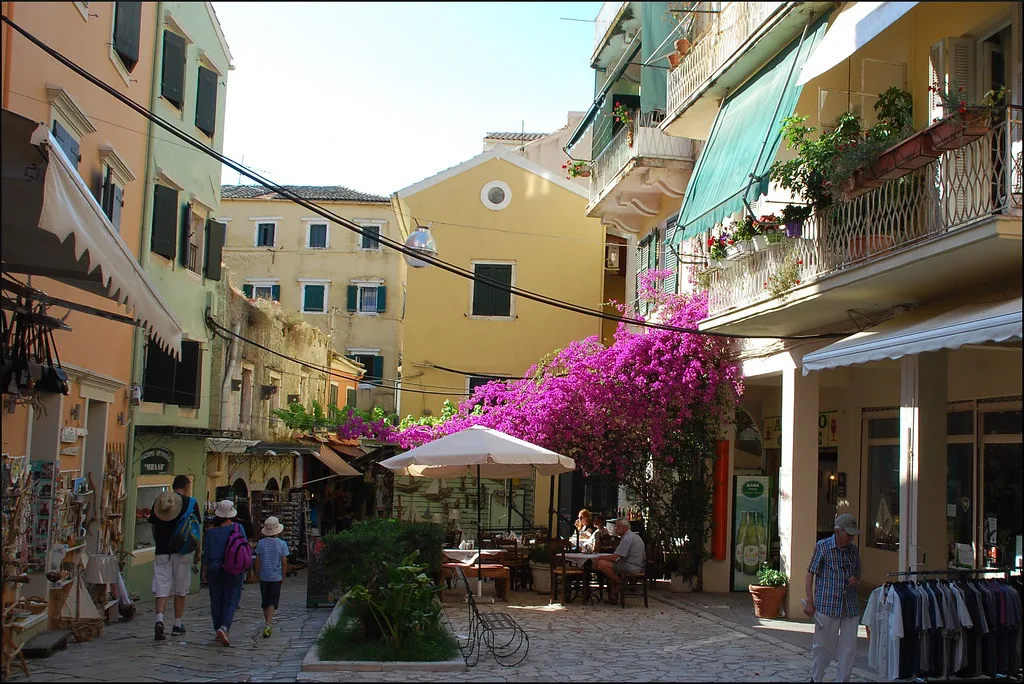
Museums: Asian Art, Archaeology and Byzantine Icons
The Museum of Asian Art occupies the Palace of St Michael and St George, a neoclassical building behind the Liston that is worth a look even from the outside. Its founding collection came from a Corfiot diplomat, Gregorios Manos, who donated more than ten thousand pieces. If you only have time for one museum, choose between this and the archaeology based on whether you prefer Asian decorative art or ancient Greek sculpture.
The Archaeological Museum of Corfu sits just outside the Old Town and holds finds from ancient Corcyra, chief among them the enormous Gorgon pediment from the Temple of Artemis, one of the oldest stone pediments in Greece. It is a modest-sized museum rather than an all-day stop. Current hours and admission prices for both museums vary by season, so confirm them on the official museum sites or at the door before setting out.
The Byzantine Museum is housed inside the old Church of Antivouniotissa, a building that is part of the appeal. Its collection covers religious icons and frescoes spanning several centuries of Orthodox art. Because it is a small, single-space museum, it slots neatly into a rainy hour rather than a whole afternoon.
Green Breathing Spaces
Two gardens give you somewhere to sit without ordering anything. The Boschetto Garden sits right by the Old Fortress entrance, shaded and full of benches facing the water, with semicircular stone seats under a colonnade and busts of poets and writers. The Garden of the People, behind the Palace, is quieter and has views back toward the fortress.
Both gardens are open-air, which makes them the sensible plan when rain interrupts a museum queue or when the Liston is packed. Carry out whatever you carry in; bins are sparse in the older lanes.
Shopping with Local Substance
The lanes mix genuine island produce with generic souvenirs, and the difference is easy to spot once you know what to look for. Kumquat liqueur is a Corfiot speciality made from the small citrus fruit grown locally, and olive oil soap from the Patounis factory has been made by hand with traditional methods since the nineteenth century. Local honey and island-made goods turn up in the smaller family-run shops.
The Patounis soap workshop is worth visiting as much for the working machinery as for the purchase, since it functions as a small living museum of a craft. If you are carrying only hand luggage, remember that liquids such as liqueur need to go in checked bags. For a different kind of town walk after Corfu, Mykonos Town (Chora) and its Little Venice quarter make an interesting comparison of island architecture.
What to Eat in Corfu Old Town
Three dishes define the local table. Pastitsada is a slow-cooked beef stew in a spiced tomato sauce, usually built on cinnamon, cloves and red wine, served over thick pasta. Sofrito is veal braised with garlic and parsley in a white wine sauce, and bourdeto is fish stewed with tomato and hot pepper. Order one of these rather than a generic Greek salad and you are eating what Corfu actually cooks.
For sweets, kumquat ice cream turns the local citrus into a sharp, bright scoop, and loukoumades are small deep-fried dough balls drizzled with honey and dusted with cinnamon or sugar. Both appear on menus across the centre. Varvagianni ouzo, an anise-flavoured spirit, and Corfu Beer are the local drinks to look for if you want to try something beyond the standard brands.
Where to Eat and Drink, by Area
Near the Liston and the shopping lanes, Panetteria is a bakery counter piled with picnic material: sandwiches, cake, pizza slices and brownies. One traveller bought a crispy chicken sandwich, a brownie, two chocolate-topped buns and a large pizza slice there for a total of eleven euros, which gives a sense of the value relative to sit-down Liston tables at the touristy end of town.
For a sit-down meal, Mouragia is a traditional taverna serving bread and dips, Greek salad and pastitsada. Papagiorgis Patiserie-Gelateria has been a patisserie and ice cream shop in the old town since 1924, run by three generations, and is the place to try kumquat ice cream with dark chocolate. Neither place publishes a season in the source material, so check ahead if you are visiting in winter.
For something small and local, the Dairy Shop of Alexis is an old-school dairy selling rice pudding, thick Greek yogurt and Corfiot butter made with local milk. It suits a mid-morning stop rather than a meal. The rooftop café at the Cavalieri Hotel is the pick for a drink with a panorama over the Old Fortress and Spianada, and it is a better choice for a beverage than for a full meal.
How Long to Allow
A half day covers the core: the Old Fortress early, Spianada and the Liston, a wander through Campiello, one church interior and a bakery stop. That is realistic on foot in three to four hours without rushing, and it suits a cruise call or a ferry stopover. Add the Boschetto Garden and the Garden of the People and you have filled the morning comfortably.
A full day lets you add one or two museums, the Jewish Quarter and the Scuola Greca Synagogue near the New Fortress, shopping for soap and liqueur, and a proper taverna lunch. The difference between the two plans is not distance, since the town is compact, but the number of interior stops and how much time you spend sitting down.
Weather sets the shape of the day more than anything else. Corfu is notably green because it rains, and showers are common outside high summer, so keep one indoor option in reserve and treat the gardens as the flexible part of the plan. If you want to see a different Greek old town for comparison, old town Chania has its own harbour and Venetian Shipyards to weigh against Corfu's fortress-and-square layout.
Practical Points for the Lanes
Surfaces are the main physical constraint: cobbles, uneven steps and steep apartment stairways, which is worth factoring in if anyone in your party has limited mobility. Choose ground-floor or lift-served accommodation, and ask before booking whether the final approach involves stairs. The lanes are also poorly lit in places at night, so a phone torch helps.
Beyond the walls, Mon Repos is a different kind of Corfu excursion, a villa estate away from the old-town crowds. It works as a contrast on a second day rather than an addition to a packed first one. Consider the Liston and its surrounding lanes as your final stop so the day ends over a drink rather than a climb.
Plan Your Corfu Old Town Visit
The workable plan is simple: start at the Old Fortress before the heat, walk back through Spianada and the Liston, duck into Campiello for the lanes, then pick one museum and one church depending on your taste. Eat pastitsada or bourdeto at a taverna rather than on the main promenade, and keep a bakery stop for picnic supplies.
Before you go, confirm opening hours, ticket prices and any seasonal closures directly with the fortress, museums and individual restaurants, since these change through the year and are not fixed island-wide. For the wider context of what else the island offers, the Corfu Attractions: 7 Visitor Guides collection sets out the surrounding sights.
Frequently Asked Questions
Is Corfu Old Town worth visiting?
Yes, if you want a compact, walkable historic centre with a fortress, a large arcaded square, several small museums and a dense network of lived-in lanes. It is UNESCO-listed and mixes Venetian, French and British influences, which makes it feel distinct from other Greek island towns. A half day is enough for the core; a full day lets you add museums and a proper lunch.
Can you walk to Corfu Old Town from the cruise port?
Generally yes. The port and cruise terminal sit within walking distance of the old town's edge, and many visitors simply walk in rather than taking a taxi. If you do take a car, agree the fare before getting in, since the ride is short and pricing can be informal.
How long does it take to walk around Corfu Old Town?
The centre is compact, so you can cross it on foot in fifteen to twenty minutes. A core loop covering the Old Fortress, Spianada, the Liston and Campiello takes three to four hours at an unhurried pace. Add museums, churches and a sit-down meal and you have a full day.
What food is Corfu known for?
Look for pastitsada, a slow-cooked beef stew with spiced tomato sauce over pasta; sofrito, veal braised with garlic and parsley; and bourdeto, fish stewed with tomato and pepper. For sweets, try kumquat ice cream and loukoumades, the honey-drenched fried dough balls.
Which part of Corfu Old Town is the oldest?
Campiello is the oldest quarter, a tight grid of alleys, stone stairways and small squares including Kremasti Square with its Venetian well. People still live there, so keep noise down and treat the walkways as public streets rather than a sight.
Do I need to book Corfu Old Town attractions in advance?
Most old-town sights are small and do not require advance booking, but opening hours and entry fees change with the season. Check the official site or ask at the ticket desk on the day for the fortress and the museums rather than relying on older listings.