
Archaeological Museum of Mykonos: A Practical Visitor Guide

Most visitors come to Mykonos for the harbour, the beaches and the evening table, but the island's archaeological collection rewards an hour of anyone passing through Mykonos Town. The museum is small, central and easy to fold into a walk between the Old Port and the back lanes, which makes it a practical stop rather than a separate excursion. This guide sticks to what the museum holds, where it sits, and how to plan the visit around confirmed details rather than guesswork.
Where the Museum Sits in Mykonos Town
The Archaeological Museum of Mykonos stands at the Old Port in Chora, the island's main town, in a building that faces the sea. That position puts it at the northern edge of the waterfront rather than deep inside the shopping lanes, so it works well as a first or last stop on a town walk. If you are exploring the broader tangle of lanes, alleys and squares around it, the Mykonos Town (Chora) guide covers the layout in more detail.
How to Get There on Foot
Chora is a walking town, and the museum is reached on foot from the central lanes and the harbour front. From the bus and taxi area on the edge of town, allow a relaxed walk of roughly ten to fifteen minutes through the pedestrian streets, longer if you stop for photos or lose your bearings in the lanes. Wear shoes that handle polished stone and uneven paving, since the route is largely car-free and slopes gently toward the port.
If you are arriving by sea taxi or ferry at the Old Port, the museum is close enough to visit before or after your crossing. Boats also run from the harbour toward the Delos archaeological site, so a morning sailing and an afternoon in the museum can be paired without any extra transport. Check sailing times with your operator on the day, as weather and season affect schedules.
The Building and Why the Museum Exists
The museum occupies a neoclassical building designed by Alexandros Lykakis and completed in 1902, according to published museum listings. The structure was purpose-built to house a specific group of finds rather than assembled around a private collection. That origin explains the tight, coherent feel of the displays compared with larger national museums.
The museum was created to preserve artefacts from the so-called Purification Pit of 426/5 BC, a deposit linked to Athens' ritual cleansing of Delos, with material excavated on Rhenia Island in 1898. Rhenia is the uninhabited islet next to Delos, and the finds from that excavation anchored the original collection. Understanding this backstory helps make sense of why a small island museum holds such specific material.
What to See Inside
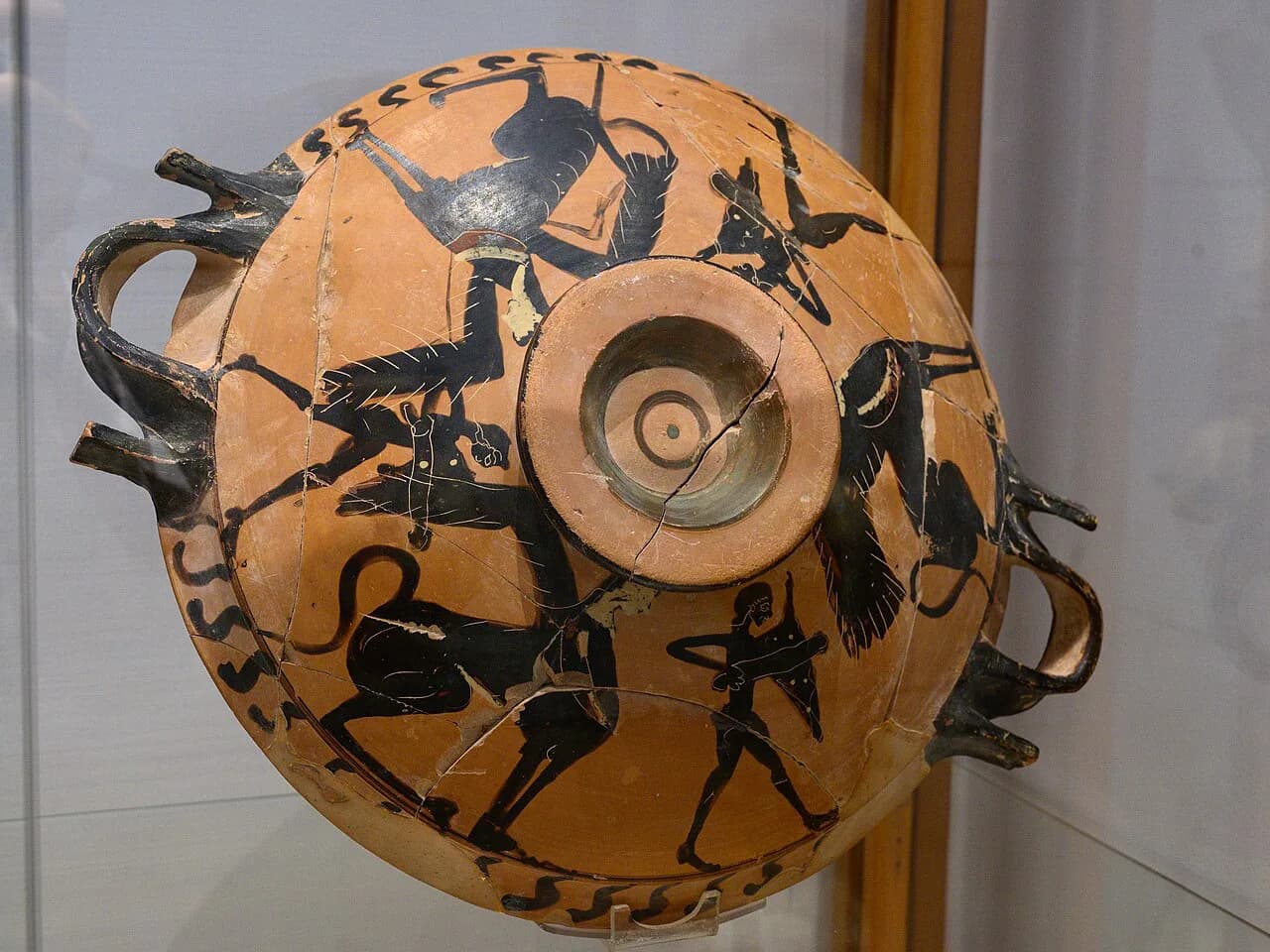
The collection spans pottery and vases from prehistoric through Hellenistic periods, alongside Cycladic figurines and Hellenistic funerary steles, the carved stone slabs that once marked graves. A pithos is a large ceramic storage jar, and the Pithos of Mykonos is the headline piece: a big relief-decorated vessel showing scenes from the Trojan War. Look for the figurines and the steles after the pithos, since they reveal more about daily life and burial practice on the Cyclades.
Visitors who have reviewed the museum often single out the vase collection, which runs from the Iron Age to the Hellenistic period, and the funerary steles, which carry a surprising emotional weight for such a compact display. Labels are generally in Greek and English, but a short printed guide or a few minutes with an online summary before arrival makes the objects easier to follow. Photography rules vary by room, so keep the flash off and follow the posted signs.
How Long to Allow
Published listings suggest between one and two hours for the Archaeological Museum, which covers both a quick pass and a slower read. If you are short on time, a focused forty-five minutes around the pithos, the figurines and the steles works well. If you like to read every label and study the pottery shapes, plan for the upper end of that range and bring water, since the galleries are compact.
Tickets, Hours and What to Confirm
Ticket prices and opening hours for the Archaeological Museum of Mykonos are not consistently published across sources, and the details that do appear vary by listing. Check the Greek Ministry of Culture's official site or the museum's own notice before you go, and confirm on the day at the entrance. Treat any third-party figure you see online as a rough indicator rather than a guarantee.
Seasonal schedules can shift, particularly around Greek public holidays and religious festivals, so a quick call or a check the morning of your visit is worthwhile. Carry cash for small entry fees in case card machines are out of service, and keep bags close in the narrow galleries. This is the one place in your planning where confirming current details really matters.
Nearby Places to Combine with a Visit
A short walk from the museum brings you to the Tria Pigadia area, where Lena's House, a preserved nineteenth-century Mykonian home, and the Folklore Museum sit close together. Both are small and can be seen in under an hour each, making them a natural pairing with the archaeological collection. The Aegean Maritime Museum in the town centre is another compact option if you have time for a third stop.
The Chora waterfront and the windmills at Kato Mili make a good late-afternoon walk after a museum visit, when the light softens over the harbour. If you are heading out in the evening, the Little Venice, Mykonos neighbourhood is a short stroll further along the shore for a drink with a view. Plan the order around opening hours rather than trying to fit everything into a single morning.
Common Mistakes to Avoid
The biggest pitfall is treating the museum as a quick photo stop. The pithos and the steles reward a few minutes of quiet looking, and the building itself is worth a pause. Leave a buffer either side of your visit so you are not rushing through the galleries to catch a ferry or a dinner reservation.
Arriving without checking hours is the second common error, especially outside high season, when some island sights reduce their hours. Confirm before you walk over, and have a backup plan nearby in the lanes or along the waterfront. If you are comparing archaeological museums across Greece, the Archaeological Museum of Chania and the Archaeological Museum of Corfu offer useful parallels for scale and display style.
Combining the Museum with a Chora Walk
A sensible half-day loop starts at the museum, continues to Tria Pigadia for the small house museums, and ends with a walk past Paraportiani Church in Mykonos Town. The church is one of the most photographed corners of Chora and sits close to the waterfront. Keep the loop short so you still have energy for an evening meal in town.
If you prefer a quieter start, visit the museum when doors open and save the shopping lanes on Matogianni Street for later in the day. The things to do in Mykonos guide lists the wider options if you want to plan around a full day. Bring a hat and water in summer, as the walk between stops is mostly unsheltered.
Plan Your Museum Visit
The Archaeological Museum of Mykonos is a compact, central stop that suits an hour between the harbour and the lanes. Go for the pithos, the Cycladic figurines and the Hellenistic steles, and set aside time to read a little beforehand so the objects make sense.
Confirm hours and entry at the door or on the official culture ministry site, then build the rest of your day around the short walk to Tria Pigadia and the waterfront. Done that way, the museum becomes a natural part of a Chora morning rather than a detour.
Explore more Mykonos sauna guides
Frequently Asked Questions
Where is the Archaeological Museum of Mykonos located?
It is at the Old Port in Chora, Mykonos Town, in a neoclassical building facing the sea. It is reached on foot from the central lanes and harbour, roughly a ten to fifteen minute walk from the main bus and taxi drop-off area.
How long does it take to visit the Archaeological Museum of Mykonos?
Published listings suggest between one and two hours. A focused visit around the pithos, the Cycladic figurines and the funerary steles can take under an hour, while reading every label and studying the pottery takes longer.
What can you see inside the museum?
The collection covers pottery and vases from prehistoric through Hellenistic periods, Cycladic figurines, and Hellenistic funerary steles. The Pithos of Mykonos, a large storage jar decorated with Trojan War scenes, is the headline piece.
What is the Pithos of Mykonos?
A pithos is a large ceramic jar used for storage. The Pithos of Mykonos is a big relief-decorated example showing scenes from the Trojan War, and it is the object most visitors come to see.
How much is entry to the Archaeological Museum of Mykonos?
Ticket prices are not consistently published across sources, so confirm the current entry fee on the Greek Ministry of Culture's official site or at the museum entrance. Do not rely on third-party listings for an exact figure.
What are the opening hours of the Archaeological Museum of Mykonos?
Hours vary by listing and season. Check the official culture ministry site or the museum notice the morning of your visit, especially around Greek public holidays and religious festivals.
What else is near the Archaeological Museum of Mykonos in Mykonos Town?
Lena's House and the Folklore Museum are close together in the Tria Pigadia area, and the Aegean Maritime Museum sits in the town centre. The Chora waterfront and the windmills at Kato Mili are a short walk away.