Thessaloniki Churches: A Practical Guide to Byzantine Sites
Plan a walk through Thessaloniki's churches, from the Rotunda to Agia Sophia. Learn what each site is, where it sits, and how to pair visits with meals.
On this page
Thessaloniki packs an unusual concentration of early Christian and Byzantine monuments into a centre you can cross on foot, and several of them sit on the UNESCO World Heritage list. That density is the good news and the planning problem: you can see a lot in a day, but not everything deserves the same slice of it.
This guide groups the churches by where they stand rather than alphabetically, so you can build a route that makes sense on the ground. It also flags the one real physical cost of the itinerary, the climb to the upper town, and where to slot in food between stops.
What Makes Thessaloniki's Churches Different
Few Greek cities let you walk from a fourth-century Roman rotunda to a working Byzantine parish in under an hour. Thessaloniki's churches are layered rather than uniform: some began as Roman structures, others were built as churches and later passed through Ottoman use, and most remain active places of worship rather than museums. If you are weighing this against the capital, the Heraklion churches offer a different, Cretan take on the same Byzantine-to-Ottoman story.
The city's tourism board lists the major monuments together under its churches section, including the Rotunda, Agia Sophia and Ayios Dimitrios, which is the most practical starting point for names and locations. Because these are living churches, the experience changes with the liturgical calendar, so treat any list as a set of addresses rather than a fixed sightseeing circuit.
If you want background on how the city's Roman, Byzantine and Ottoman layers fit together before you start walking, a short read on the city's history pays off once you are standing inside the buildings.
How to Structure a Church Visit Day
The cleanest plan splits the city into two halves. The first is the flat lower centre, where the Rotunda, the Arch of Galerius, Agia Sophia and Ayios Dimitrios sit within a comfortable walking loop. The second is Ano Poli, the upper town, where the streets climb steeply and the reward is quieter churches and long views over the gulf.
Do the upper town first if you are visiting in warm months, when the climb is more pleasant in the morning, or late in the day when the light softens and the temperature drops. Either way, budget the uphill section as real time and energy, not a detour: it is the part of the day most likely to wear you out.
A third option, useful if you have only an afternoon, is to stay entirely on the waterfront axis and skip the hill. You trade the hilltop views for more time inside the central monuments and a relaxed stop for food, which is often the better bargain on a short trip.
The Rotunda (Church of Agios Georgios)
The Rotunda is the monument that confuses first-time visitors, because it does not look Byzantine at all. It was built by the Roman emperor Galerius around 306 AD, and the Greek Reporter describes it as the oldest of Thessaloniki's churches and a UNESCO World Heritage Site, though it began life as a Roman structure before becoming a church.
The tourism board lists the same building as the Church of Agios Georgios (Rotunda), which is how you will see it signed on the street. In practice, plan for a circular interior rather than the long nave you will meet at the other churches, and allow time to walk around the outside, where the brickwork and the surrounding arch complex are part of the visit.
The Arch of Galerius stands a short walk away and belongs to the same Roman complex, so it makes sense to combine them in one stop. If you have an interest in the archaeology, the city's archaeological museum collections add context on the Roman period before you move on to the Byzantine churches.
Agia Sophia: The Best-Known Byzantine Church
Agia Sophia, the Church of the Wisdom of God, is the city's most familiar Byzantine church and sits close to the waterfront promenade. Its name translates simply as Holy Wisdom, a dedication shared with its far larger namesake in Istanbul, and it appears on the tourism board's list under that name.
Because of its central position, Agia Sophia works well as the hinge of a walking day: see it in the morning, continue along the waterfront, and return through the commercial streets in the afternoon. The nearby Tsimiski Street corridor is the city's main shopping spine, useful for coffee and shade between stops.
Ayios Dimitrios, the Patron Saint's Church
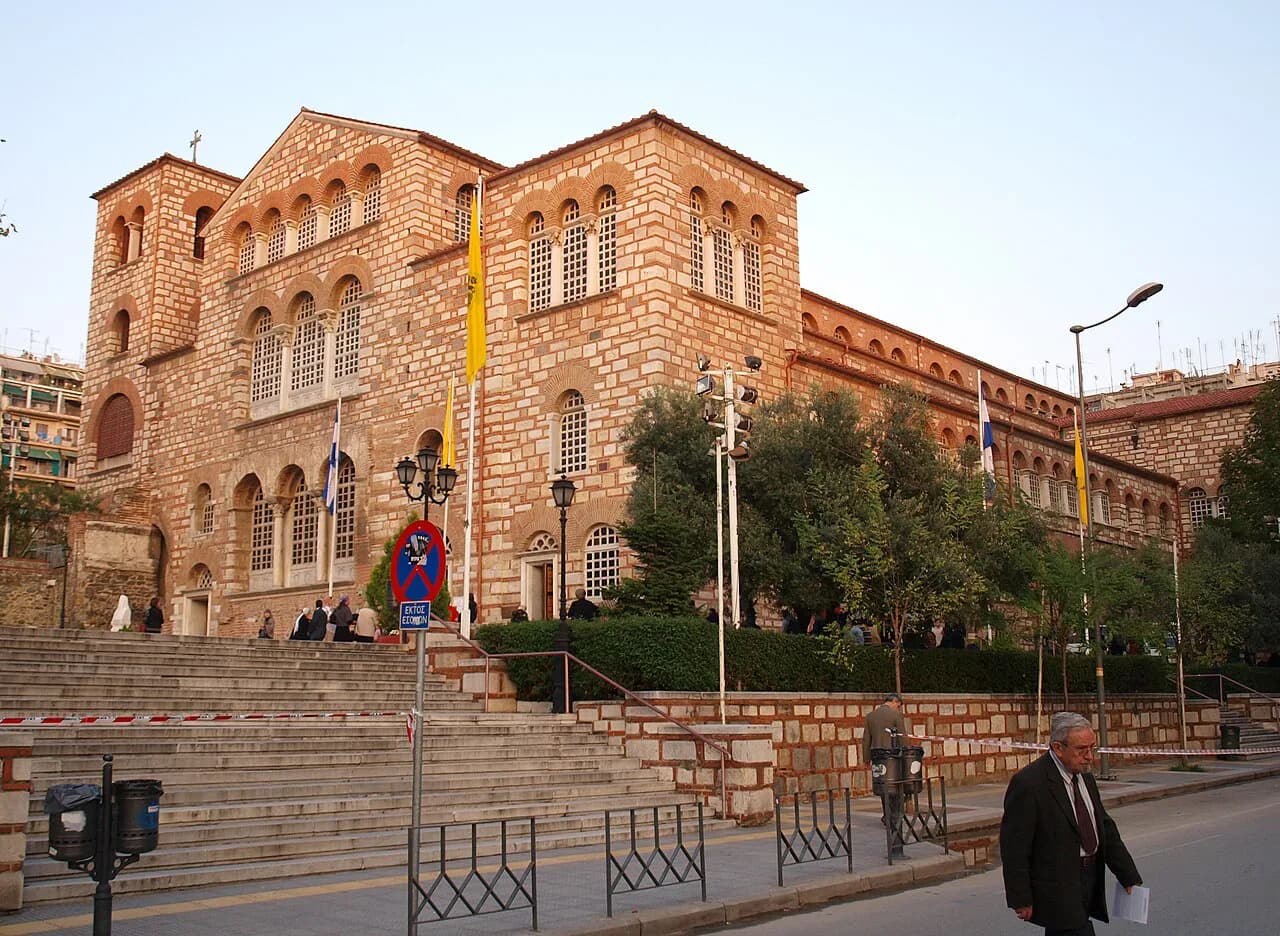
Ayios Dimitrios is dedicated to the city's patron saint and is one of the largest and busiest churches in the centre, which means it behaves more like a working parish than a monument. Visit with that in mind, keep voices low, and expect parts of the interior to be in use during services.
The tourism board lists Ayios Dimitrios among the city's principal churches alongside the other central monuments, so it is easy to fold into the same loop as the Roman forum area. Because it draws worshippers throughout the day, it is the stop where you should be most willing to step back and wait rather than push through.
Acheiropoietos and Other Listed Churches
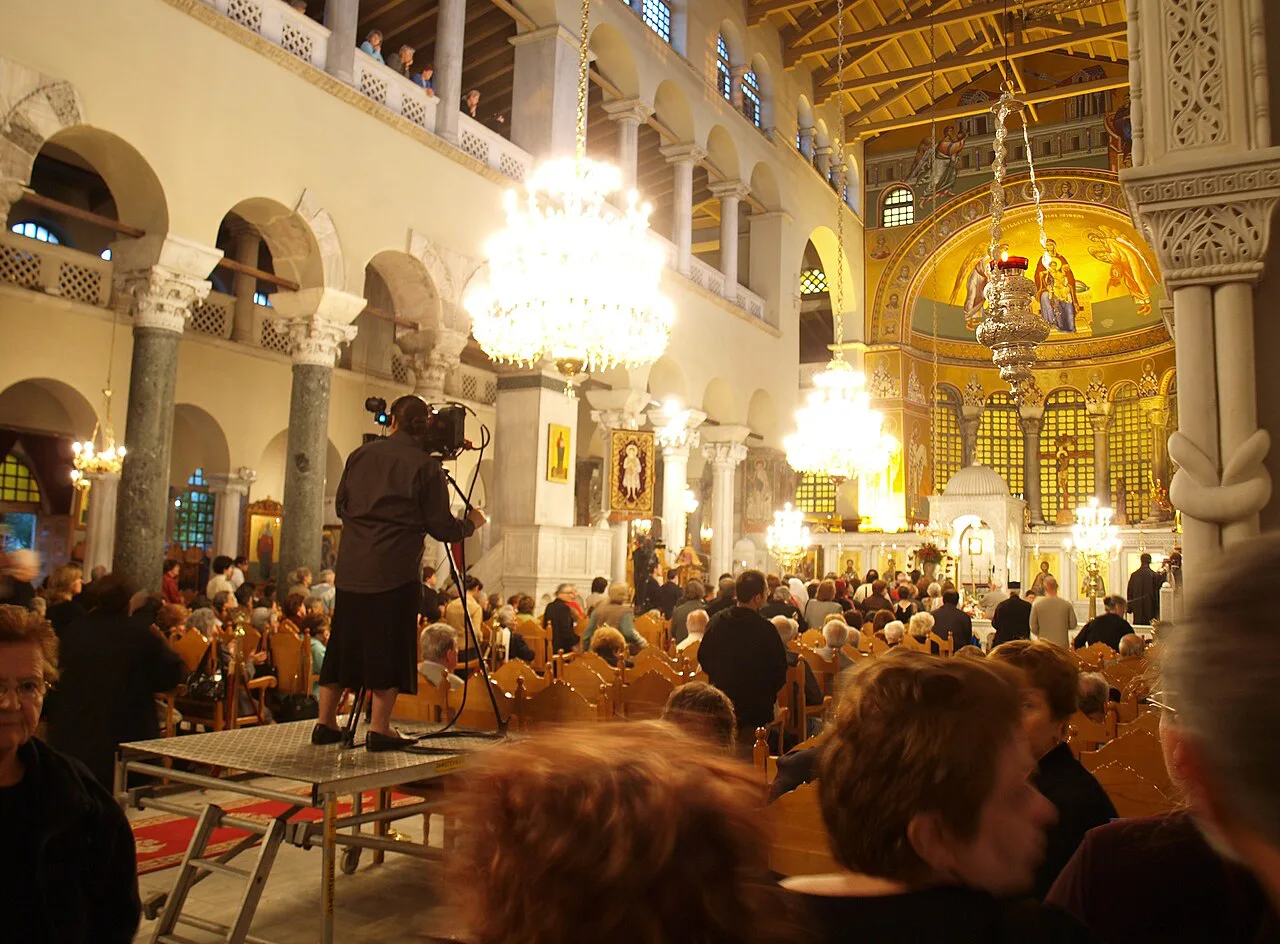
Acheiropoietos is the other early Christian monument most visitors add if they have a second day, and it sits close enough to the centre to combine with the Roman forum and Ayios Dimitrios. If your time is tight, choose between it and the upper town rather than trying to do both properly.
The tourism board's churches index runs to a couple of pages and names parish churches that rarely appear in short itineraries, such as Agia Aikaterini and the Church of Panagia Laodigitria. These are worth a look if you want to see how the Byzantine inheritance sits inside an ordinary neighbourhood rather than a visitor circuit.
Upper-Town Churches and the Walk Uphill
Ano Poli rewards the climb with a very different atmosphere: lower houses, stepped lanes and churches that see far fewer visitors. The Church of Saint Nicholas Orphanos, built high on the slope, is noted for its exterior detail, a peaceful interior and wide views back over the city, with the advice to come near sunset when the light turns golden and the heat eases.
Vlatadon Monastery is the other upper-town stop commonly paired with it, and the same traveler account links the two as a natural combination. Both involve an uphill walk on uneven paving, so wear shoes you can climb in and carry water rather than treating this as a stroll from the waterfront.
The trade-off is straightforward: the upper town costs you an hour or more of walking and returns quiet, views and frescoed interiors that the central churches cannot match. On a short trip with limited energy, the flat centre is the more efficient choice; with a full day, the hill is the better half.
Etiquette Inside Working Churches
These are active places of worship, so dress modestly and cover shoulders and knees, particularly in summer when shorts and vests are tempting. Keep phone calls outside, avoid flash photography, and do not photograph worshippers or services; where photography is restricted, signage inside the church will say so.
If a service is underway, either wait at the back or come back later rather than walking through the congregation. A brief, quiet visit is welcome; a guided commentary delivered at volume is not, and it is the fastest way to make a church feel like a museum exhibit for everyone else in it.
Opening Hours and Closures: What to Confirm
The city's tourism listings give names, addresses and descriptions for the main churches but do not provide dependable daily opening hours, and hours at working churches shift with services and seasons. One traveller account of Saint Nicholas Orphanos, for example, records a particular day when the church was closed and listed a limited midday window the following day, which shows how much the schedule can vary.
Build your day around the outdoor monuments and neighbourhoods first, and treat church interiors as optional bonuses you confirm on arrival. Check current details at the door or with the tourism office before committing a morning to one building, especially outside the main season.
Pairing Church Visits With Food
The central churches sit within easy reach of the city's eating districts, which makes a mid-morning or early-afternoon break natural. Between the Rotunda and the waterfront you can stop for bougatsa, a flaky pastry filled either with sweet semolina custard or with savoury cheese and minced meat, eaten warm and usually with coffee.
For a sit-down meal after the lower-town loop, the Ladadika district near the port has a dense cluster of tavernas, and a plate of grilled octopus or a village salad is a light way to break up a day of walking. For the fuller picture of dishes and where to find them, see the Thessaloniki Food Guide.
If you would rather hand the choosing to someone else, a short guided food walk can cover several stops in an afternoon and free you from route planning. Otherwise, the best restaurants in Thessaloniki guide groups places by area so you can eat near wherever your church walk ends.
Practical Distances and Walking Times
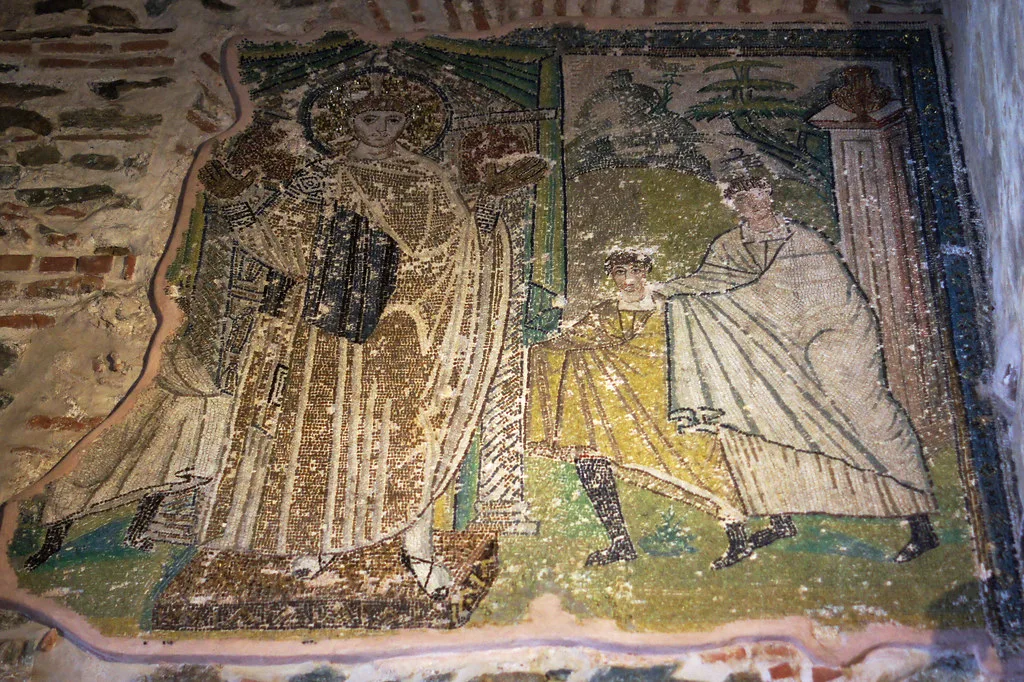
The lower-town cluster is genuinely compact: the Rotunda, the Arch of Galerius and Agia Sophia are all within roughly fifteen to twenty minutes of each other on foot at an unhurried pace. Ayios Dimitrios and Acheiropoietos add another ten to fifteen minutes to the loop, so a half-day covers the flat centre without rushing.
The uphill leg is a different calculation. Reaching Saint Nicholas Orphanos and Vlatadon Monastery from the waterfront involves a sustained climb of roughly half an hour or more depending on your route and pace, and the lanes are steep and uneven in places.
If you want to see the wider set of city attractions in one place before mapping your day, the Thessaloniki Attractions hub collects the guides by theme. It helps you decide whether the hill or the waterfront earns your limited hours.
Common Mistakes to Avoid
The most common error is treating the churches as a checklist and trying to see six or seven in a morning. Each involves a stop, a look, often a wait at the door during services, and the day collapses under the weight of too many short visits. Two or three churches done properly beat a rushed circuit.
Second is forgetting the terrain: Ano Poli is steep, and summer heat makes the climb harder than the map suggests. Plan water, shade and a slower pace, and do not schedule a timed appointment straight after the upper town.
Third is assuming these buildings keep museum hours. They do not, and the tourism board's church pages are a directory rather than a schedule, so confirm at the entrance rather than trusting a printed itinerary.
When to Go
Spring and autumn give the most comfortable walking weather, which matters most for the uphill section where there is little shade in the lanes. Summer visits are still workable if you start early, rest through the hottest part of the afternoon, and return to the upper town in the evening when the light is better anyway.
Winter brings shorter daylight and a quieter city, but some churches and smaller sites keep reduced hours, so build in flexibility and check at the door. Whatever the season, late afternoon is the most comfortable window for the hill and the best light for the views back across the gulf.
Plan Your Visit
Treat Thessaloniki's churches as two walks rather than one list: the flat centre with the Rotunda, Agia Sophia, Ayios Dimitrios and Acheiropoietos, and the uphill route to Saint Nicholas Orphanos and Vlatadon Monastery. Choose between them based on how much climbing your day can take, then fill the gaps with food.
Check hours at the door rather than planning around a printed timetable, dress for a place of worship, and leave room in the schedule for the walk to take longer than expected. The monuments will still be there; the energy is the scarce resource.
Explore more Thessaloniki sauna guides
Frequently Asked Questions
Which churches in Thessaloniki are UNESCO World Heritage Sites?
Thessaloniki's early Christian and Byzantine monuments, including the Rotunda, Agia Sophia and Ayios Dimitrios, belong to the UNESCO World Heritage listing for the city. The Greek Reporter describes the Rotunda specifically as a UNESCO World Heritage Site; for the full list, check the UNESCO entry and the city tourism board's churches directory.
Is the Rotunda in Thessaloniki a church or a Roman building?
Both. It was built by the Roman emperor Galerius around 306 AD and was later converted into a church. Today it is listed by the city's tourism board as the Church of Agios Georgios (Rotunda), so expect a circular Roman interior rather than a standard Byzantine nave.
How long does it take to visit Thessaloniki's main churches?
The flat central group of the Rotunda, Agia Sophia, Ayios Dimitrios and Acheiropoietos fits comfortably into a half day at an unhurried pace, since they are within roughly fifteen to twenty minutes of each other on foot. The uphill churches in Ano Poli need a separate block, because the climb alone takes half an hour or more.
What should I wear when visiting churches in Thessaloniki?
Cover shoulders and knees, and choose shoes you can walk and climb in. Several of the churches sit on steep, uneven lanes in the upper town, and summer heat makes light, modest clothing more practical than anything formal.
Are Thessaloniki's churches open every day?
Not necessarily. These are working churches whose hours shift with services and season, and the tourism board's directory does not publish dependable daily opening times. Confirm at the entrance or with the tourism office before building a morning around one church.
What is the oldest building in Thessaloniki?
The Rotunda, built by Galerius around 306 AD, is described as the oldest of the city's churches and one of its oldest surviving structures. Older archaeological remains exist in the city, but for a standing building tied to the church circuit it is the usual starting point.
Sources
Notes for eating well in Greece
Optional updates to our guides.
You might also like
Continue reading
More guides you'll find useful