Thessaloniki Food Guide: What to Eat and Where to Try It
A practical Thessaloniki food guide to bougatsa, gyros, soutzoukakia, seafood meze and markets, with named places, neighbourhoods and ordering tips.
On this page
Thessaloniki is a city where you can eat well from a bakery counter at breakfast, graze through a covered market at midday and sit down to a long taverna dinner without ever leaving the central grid. The food carries Ottoman, Balkan and Sephardic layers, which is why cinnamon-scented meatballs, syrup-soaked filo and charcoal-grilled seafood all feel equally local. Plan your day around dishes rather than a single restaurant, and you can cover a lot of ground on foot.
This guide works through the foods worth chasing first, then names the specific places reported to serve them and the neighbourhood each sits in. It also separates meal stops from coffee and beer stops, since the gaps between lunch and dinner are exactly when the city's cafés earn their keep. Published opening hours change, so confirm them with each venue before you set out.
Why Thessaloniki Eats Differently
The city's kitchen reflects its history as a port that absorbed Greek, Turkish, Sephardic Jewish and wider Balkan cooking over centuries, and northern Greece's fertile farmland supplies the produce. That combination explains why a single food day can move from a custard-filled filo pie to spice-heavy meatballs to a plate of marinated anchovies without any sense of mismatch. It also means the strongest dishes are often the plainest ones built on good ingredients.
For an independent traveller, the practical consequence is to order broadly and share. Portions at tavernas are usually built for the middle of the table, and meze-style ordering lets you test several dishes in one sitting. If you want the wider context on the city's restaurant scene, the guide to the best restaurants in thessaloniki covers the top end of the range, while this article stays focused on individual dishes and where to find them.
How to Structure a Food Day
Start with a bakery stop before anything else opens properly, because bougatsa is a morning food and the filo is at its best early. Mid-morning suits a market browse, since produce stalls are active but the lunch rush has not started. Book your main meal for a long, late lunch and keep dinner light and late, which matches how tavernas fill up in the evening.
Build in one coffee stop and one beer stop rather than treating them as afterthoughts, and use them to bridge the closed hours between lunch and dinner. The named cafés and taprooms below sit in the centre, so they slot between market and taverna stops without a detour. If you would rather have the logistics handled, a thessaloniki food tour can cover several of the same stops with someone else doing the navigating, though independent eaters will find the centre easy to walk.
Bougatsa: The Morning Filo Pie
Bougatsa is a filo pie made from thin, flaky sheets wrapped around a filling and baked until crisp. Sweet versions use cream custard, sometimes with a chocolate-hazelnut spread, while savoury versions hold cheese or minced meat; the sweet cream one is the classic breakfast order. Order it with a coffee and eat it standing or at a counter, as most customers do.
Three named shops cover different parts of the city, according to third-party reports. Bougatsa Bantis sits in the Faneromeni area and is described as an artisan operation continuing a family business, while Bougatsa Giannis is in the centre on Mitropoleos and is known for cream and Merenda fillings. Bougatsa Ouzounis is the Kalamaria option, a specialist turning out sweet custard, cheese and minced-meat versions, useful if you are staying in that southern district.
If you only try one pastry in the city, make it bougatsa, but leave room for the patisserie counter later. The savoury cheese version makes a better mid-morning stop than a dessert, and splitting one sweet and one savoury between two people is the usual compromise. For a fuller list of bakeries and what each does well, the dedicated bougatsa in Thessaloniki guide goes deeper.
Beyond Bougatsa: Koulouri, Trigona and the Patisserie Counter
Koulouri, the sesame bread ring, is the cheap street breakfast you will see people carrying in the morning, and it costs little enough to be an unplanned snack. Trigona are cone-shaped filo pastries filled with custard cream, associated with Thessaloniki in particular, and they make a good second stop once you have had your bougatsa.
For the patisserie counter, Chatzifotiou is an artisan patisserie and chocolatier reported to have been operating since 1946, in the Agia Sofia area on Pavlou Mela. Its signature is pourakia, wafer cigars stuffed with praline cream, and the dark-chocolate-coated version is the one most often singled out. Mourouzi Patisserie, on Mitropoleos in the centre, is the place for unfussy versions of pastafrola, a jam-filled shortcrust pie, and portokalopita, a syrupy orange filo cake.
Buy pastry to take away rather than sitting down, and you avoid losing an hour of eating time to a café table. A box of pourakia also travels well if you want something sweet later in the day. These shops sit close enough to the centre that they can be combined with a market visit in one loop.
Gyros and Souvlaki: What to Order
Gyros is meat cooked on a vertical rotisserie and shaved into a warm pita with fillings and sauce; souvlaki is skewered meat, and in Thessaloniki the two are often served in the same wrap format. You choose pork or chicken, and the vegetarian option at some shops is worth knowing about if someone in your group does not eat meat. Order at the counter, pay, and eat it wrapped in paper within a few minutes of it being handed over.
The contrast worth understanding is between a dedicated gyros shop and a taverna that also serves it. Mimis, on Ag. Dimitriou in the centre, is reported to have been a local favourite since 1974 and runs on a simple pork-or-chicken formula in a soft pita. Diagonios 1977, on a diagonal street near Fanarioton square, is a full taverna where pork gyros is one of two dishes locals reportedly come for, the other being soutzoukakia.
Pick the gyros shop when you want speed and a low outlay, and the taverna when you want a seated meal with wine and several plates. Both are central, so the decision is about the shape of your evening rather than distance. If gyros is the priority, the best gyros in thessaloniki guide narrows the field further.
Soutzoukakia Smyrneika at Diagonios 1977
Soutzoukakia Smyrneika are oblong, generously herbed and spiced meatballs, pan-fried and served with chilli flakes, and the name points to their Smyrna origins. At Diagonios 1977, a taverna reported to have opened in 1977, the dish is one of the two orders that define a visit, alongside the pork gyros. Order both for a table of two and add a salad and a vegetable plate to balance the meal.
This is the clearest example of the city's layered cooking on a single menu: a spice-forward meatball with a refugee name sitting beside a rotisserie wrap. It also shows why dish-led planning works better than restaurant-led planning here. For more seated options across the city, including the higher end, the best restaurants roundup is the companion read.
Seafood: Marea Sea Spirit and Psi by Mezen
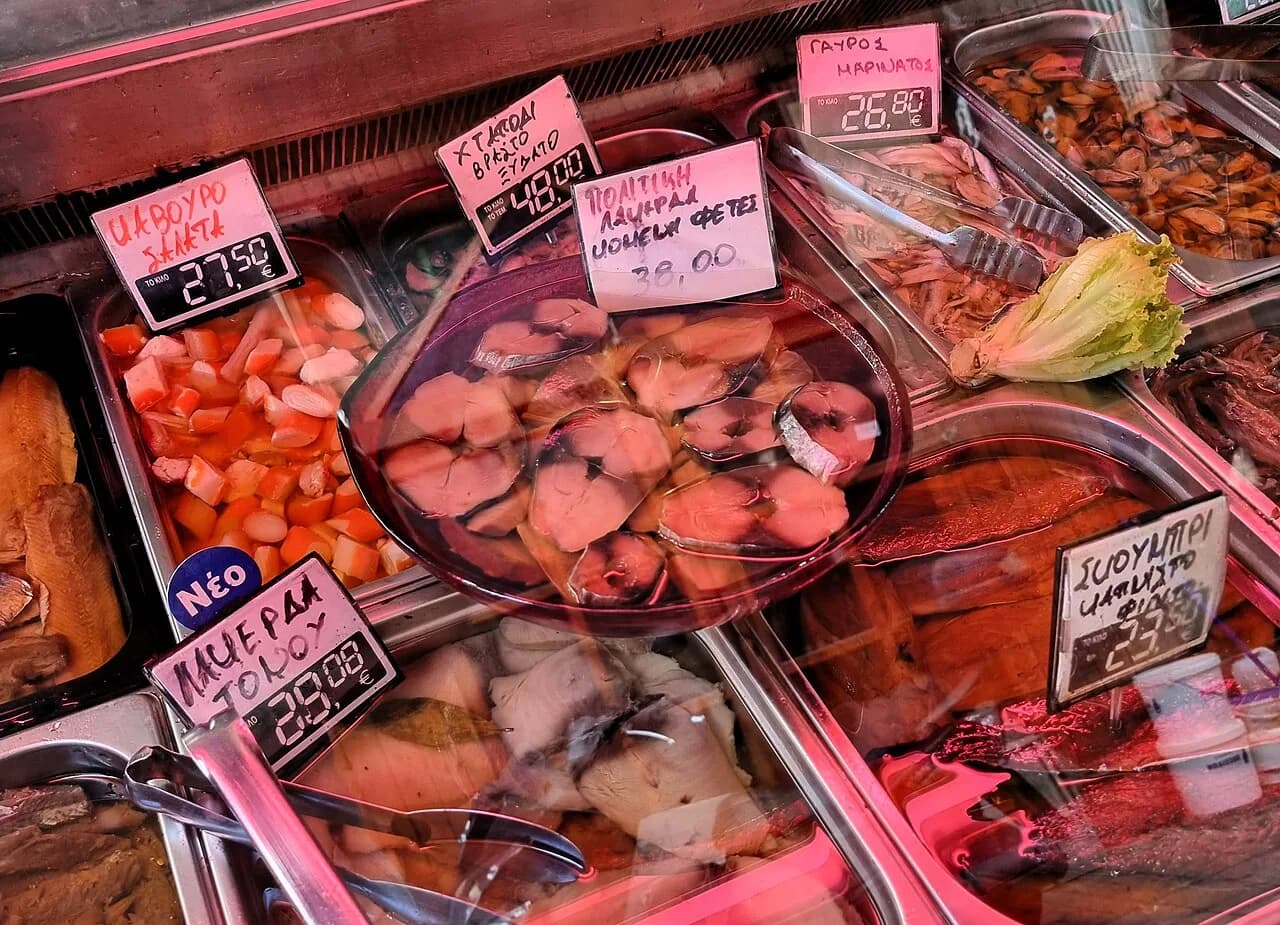
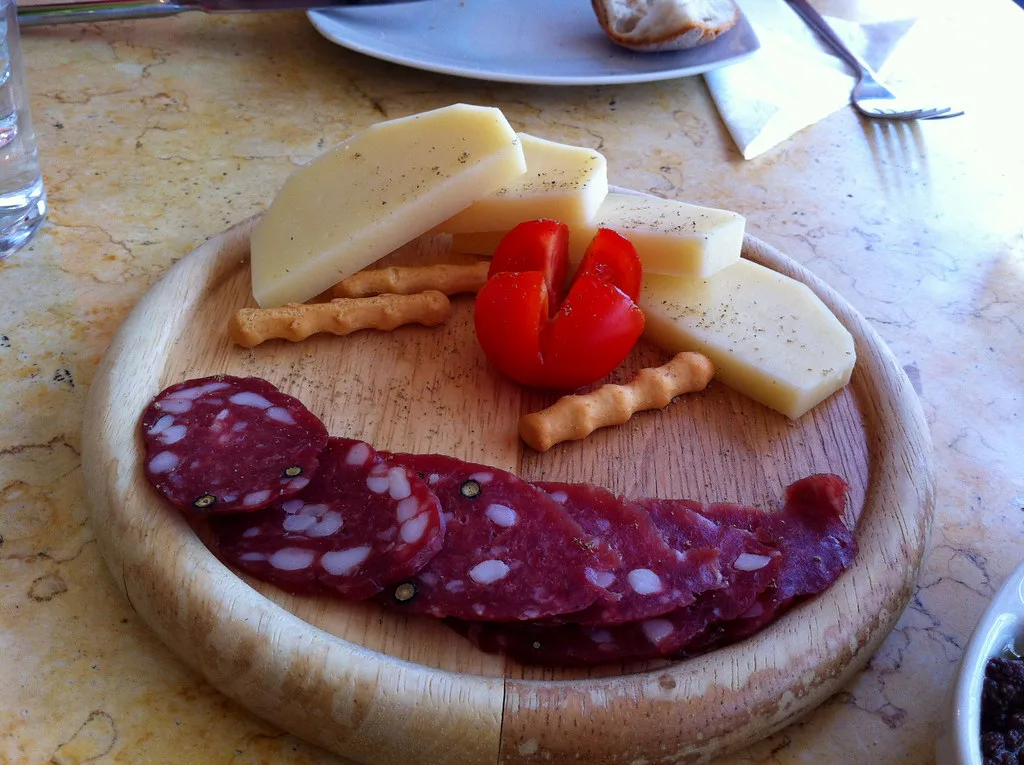
Marea Sea Spirit, on Margariti Lori in the centre, is described as a modern take on classic Greek seafood. The dishes to aim for are handmade marinated gavros, which are anchovies cured in acid and oil and served with rock samphire and herb tarama, a whipped fish roe dip; marinated sea bream carpaccio; and creamy orzo with shrimp. Order the gavros and tarama first with bread, then share a larger fish or the orzo.
Psi by Mezen, on Skra in Ladadika, was opened by Grigoris Helmis and Andreas Diakodimitris and reworks the chasapotaverna, a hybrid butcher-and-taverna format, around seafood. Fish is dry-aged and cut to order into fillets and steaks, with small bites turning squid, shi drum and tuna into souvlaki, and swordfish compressed and crumbed as schnitzel. This is the place to sit at the inventive end of the seafood spectrum rather than the classical one.
The trade-off is straightforward: Marea is the safer choice for a familiar Greek seafood meal, while Psi by Mezen rewards anyone willing to eat outside the standard repertoire. Both sit within walking distance of the centre and Ladadika nightlife. If you want shrimp in a tomato sauce with feta, that is a different dish entirely, and the traditional greek food glossary explains it.
Vegetable- and Fish-Led Menus: Mourga and Deka Trapezia
Mourga, on Christopoulou, was opened in 2017 by chef Ioannis Loukakis and cooks a daily-changing menu built around organic market produce, with no meat, only fish and vegetables. Dishes described include shrimp with soft-boiled eggs and galotyri, a fresh tangy Greek cheese, served sizzling in the pan, and steamed mussels with angel hair pasta in a creamy avgolemono-style broth. Because the menu moves with the market, there is no point planning a specific dish in advance.
Deka Trapezia, on Stratigou Kallari in the centre, is the Cretan option, from chef Manolis Papoutsakis, with small share plates reworked in a contemporary style. Cretan cooking leans on wild greens, cheese and simply grilled meat, so expect a lighter register than the meatball-and-gyros tavernas. Order several small plates rather than a main each, which is how this style of menu is built.
Both places reward flexibility: arrive willing to eat what the kitchen has that day rather than what you read online. That also means these are poor choices for a tightly scheduled trip, since the meal is the point rather than a stop on the way.
The Markets: Kapani and Agora Modiano
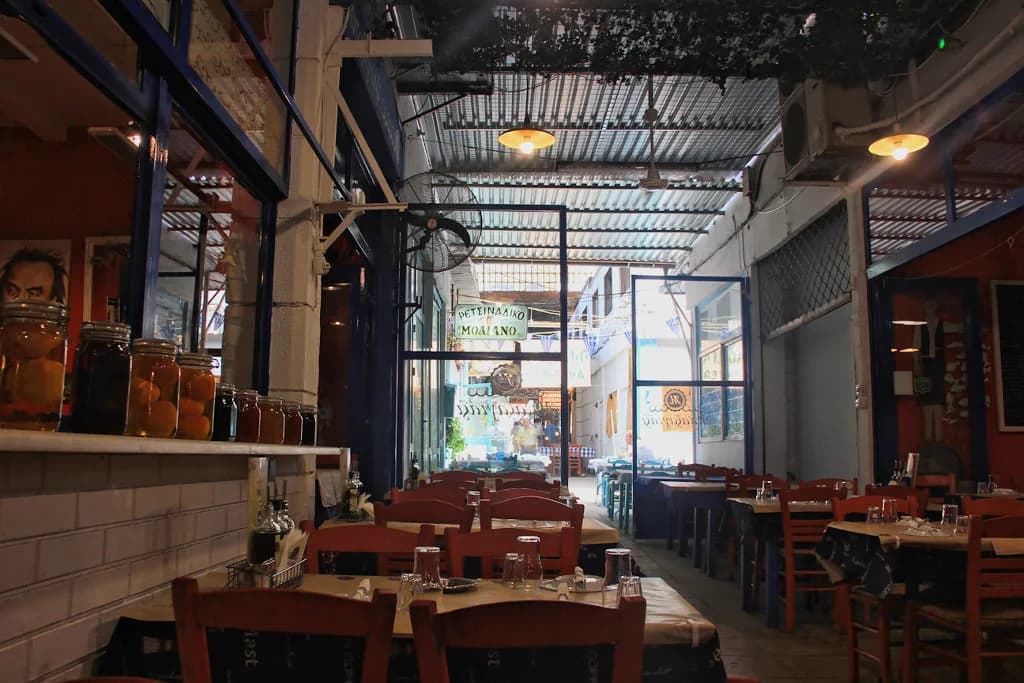
Kapani Market is reported as Thessaloniki's oldest fresh produce market, opening as a flour market in the 15th century during the Ottoman era, and it still sells vegetables, fruit, spices, meat, fish, nuts and olives. Agora Modiano, built between 1922 and 1925 and reopened in 2022 after restoration, is a covered market with more than 75 vendors including produce stalls, butchers, food vendors, tavernas and bars. The distinction matters: Kapani is where you shop and look, Modiano is where you can sit down inside the market.
Use Kapani for the sensory pass and for buying nuts, olives or spices to carry home, and use Modiano for a meal or a drink when the weather is poor. Modiano's address is Vasileos Irakleiou 33, and it sits in the centre within easy reach of the main shopping streets. Eating inside a market rather than at a restaurant around the corner changes the pace of the meal, and that is the reason to choose it.
Charilaos, on Vatikioti in the Kapani area, is the traditional nut and dry-goods shop to know about if you want legumes, flour, semolina, rice, herbs and spices rather than a prepared meal. It is a shopping stop, not a lunch stop. Pair it with a market browse rather than making a separate trip.
Meze, Tsipouradiko and Chasapotaverna: How to Order
Meze are small shared plates, and the format of the venue changes how you order them. A tsipouradiko is built around tsipouro, a clear grape spirit, with small plates arriving alongside the drinks, while a chasapotaverna is a hybrid butcher-and-taverna where meat, or in Psi by Mezen's case seafood, is the organising principle. A standard taverna falls between the two and expects you to build a table of shared dishes.
In practice, order two or three cold plates and one or two hot ones for a table of two, then add more if you are still hungry. Bread is the constant, and tarama, olives and cheese are the usual openers. Keep an eye on the pace: plates arrive as they are ready rather than in courses, so a table fills up quickly if you order everything at once.
Ano Poli: Eating Uphill at Ouzeri Tsinari
Ouzeri Tsinari, on Alexandrou Papadopoulou, is reported to have been operating since 1865, with an interior and exterior largely unchanged and an original wood-fired oven still in use. The menu is traditional taverna fare: Greek salad, pan-fried halloumi, dolmadakia, souvlaki and seafood grilled to order over charcoal. Order a spread of cold and grilled plates and let the setting do the rest.
The trade-off is the climb. Ano Poli is the upper town, and walking up is part of the experience but adds time and effort, especially in heat. Pair the meal with the neighbourhood's lanes and views rather than treating it as a dinner-only destination, and allow more time than the distance alone suggests. The best restaurants in thessaloniki guide covers more options in this part of town.
This is the stop that most justifies eating uphill: the format is a slow ouzeri meal rather than a quick plate. It also works best as a late lunch, leaving the evening free for a central taverna.
Coffee and Beer Between Meals
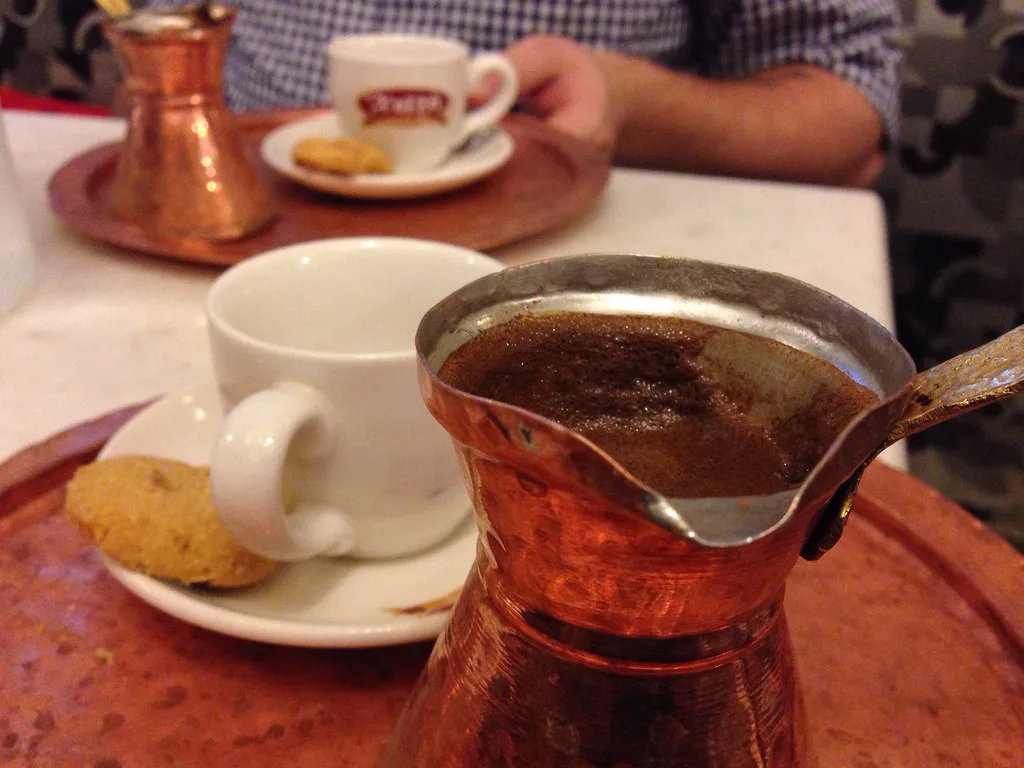
For coffee, three central options cover different moods. Valenio, on Iktinou, is described as the venue of a highly regarded coffee expert, serving a contemporary take on Greek coffee with equipment and masterclasses available. 17 Dekaepta, on Al. Svolou, is a modern specialty shop with locally roasted beans, cocktails and a small rotating food menu, while Hue Roastery on Filippou is a dedicated roastery and espresso bar.
For beer, Love Craft Beers on Aristotelous serves a rotating selection of independent local and international brews, and Utopia Taproom on Gladstonos, opened by the city's Utopia brewery, runs 13 taps of its own beers plus selections from Balkan breweries with regular tap takeovers. Choose the taproom for range and events, and Love Craft Beers for a central stop on the way elsewhere.
These are the stops that make a food day work, because they fill the hours when kitchens are closed. Treat them as part of the plan rather than a fallback. Travellers comparing Greek cities before heading west will find a useful parallel in the Corfu food guide, though the two cities eat quite differently.
Neighbourhood Logic: Centre, Ladadika, Ano Poli, Kalamaria
Most of the named places sit in the centre, which means market, patisserie, bakery, gyros and a seated dinner can all be done on foot. Ladadika, the former commercial quarter near the port, is where Psi by Mezen adds a seafood dinner option to a night out, and the wider guide to ladadika restaurants covers the rest of that district. Ano Poli is the uphill counterpart, best grouped with a walk through the old town rather than a dedicated trip.
Kalamaria is the outlier, south of the centre along the coast, and it earns a trip only if you have a reason to be there, such as Bougatsa Ouzounis or the coffee bar Ekei. Grouping stops by neighbourhood will save you more time than any other planning decision. The Thessaloniki Attractions: 8 Visitor Guides page helps line up sights with these eating stops.
Ordering Glossary
Bougatsa: filo pie with custard, cheese or minced meat. Soutzoukakia Smyrneika: oblong spiced meatballs with chilli flakes. Gavros: small anchovies, here marinated rather than fried. Tarama: whipped fish roe dip. Galotyri: a fresh tangy Greek cheese. Portokalopita: syrupy orange filo cake. Trigona: cone-shaped custard filo pastries. Koulouri: sesame bread ring. Say the dish name and the shop or taverna will know what you mean, and pointing at a neighbouring table is normal practice.
Useful phrases are basic: meze for small plates, pita for the wrap, and tsipouro for the clear grape spirit that drives the tsipouradiko format. If you want a broader glossary of Greek dishes before you arrive, the traditional greek food article covers the national repertoire, while Horiatiki salata, the Greek salad, is the safe table anchor anywhere in the city.
Practical Notes: Portions, Sharing and Booking
Assume portions are generous, and order for the table rather than individually. Two people can usually share three or four plates and still be comfortable. Bakeries and gyros shops are pay-at-the-counter, while tavernas expect you to settle at the end.
This guide does not quote prices or opening hours for the venues named. Check menus and hours directly with each venue before planning a day around it, and confirm whether a seated dinner table needs reserving. For a wider selection of restaurants across price ranges, the best restaurants list is the place to start.
A workable two-day plan: day one, bougatsa at a central bakery, Kapani and Modiano markets, a Mimis gyros lunch, coffee at Valenio or 17 Dekaepta, and a seafood dinner at Marea or Psi by Mezen. Day two, a pastry stop at Chatzifotiou or Mourouzi, a walk in Ano Poli ending at Ouzeri Tsinari for a late lunch, beer at Utopia Taproom, and soutzoukakia at Diagonios 1977 or a vegetable-led meal at Mourga. Save Kalamaria for a third day or a coastal walk.
Plan Your Visit
Thessaloniki rewards an eater who plans by dish: bougatsa in the morning, market browsing before lunch, a long taverna meal, and a late table for meze or seafood. The centre holds most of the named places, with Ladadika, Ano Poli and Kalamaria adding distinct reasons to move beyond it.
Before you build a day around any single venue, confirm its current opening hours and whether it takes bookings, since schedules and details change. Then let the neighbourhoods do the rest of the planning for you, and keep one coffee stop and one beer stop in reserve for the hours when kitchens are closed.
Explore more Thessaloniki sauna guides
Frequently Asked Questions
What food is Thessaloniki known for?
The city's signature foods include bougatsa, the filo pie with cream custard, cheese or minced meat; soutzoukakia Smyrneika, oblong spiced meatballs served with chilli flakes; gyros and souvlaki; and seafood dishes such as marinated gavros, the small cured anchovies. Pastries like trigona and portokalopita round out the picture, and the covered markets are where much of the produce behind these dishes is sold.
Where can I try bougatsa in Thessaloniki?
Three bakeries are commonly named across different neighbourhoods: Bougatsa Bantis in the Faneromeni area, Bougatsa Giannis in the centre on Mitropoleos, and Bougatsa Ouzounis in Kalamaria to the south. Go in the morning, when the filo is freshest, and order both a sweet cream version and a savoury cheese or minced-meat one to compare. Check current opening days with each shop.
What is the difference between Kapani Market and Agora Modiano?
Kapani is the city's oldest produce market, a working hall of vegetables, spices, meat, fish and olives where you shop and look rather than sit. Agora Modiano is a restored covered market with dozens of vendors plus tavernas and bars, so it works for a meal or a drink inside the building. Use Kapani for buying and browsing, and Modiano when you want to eat under the same roof as the stalls.
What is soutzoukakia Smyrneika?
It is a dish of oblong meatballs, heavily seasoned with herbs and spices, pan-fried and served with chilli flakes, and the name refers to Smyrna, now Izmir. In Thessaloniki it anchors a traditional taverna meal, and Diagonios 1977 is one of the places reported to serve it alongside pork gyros. Order it with bread, a salad and a vegetable plate to build a shared table.
Where should I eat gyros in Thessaloniki?
For a quick counter meal, Mimis in the centre is a long-running gyros shop with a simple pork-or-chicken choice in a soft pita. For a seated taverna version, Diagonios 1977 pairs pork gyros with soutzoukakia on the same menu. Decide by the shape of your meal rather than distance, since both are central, and check their current hours first.
What is a tsipouradiko or chasapotaverna?
A tsipouradiko is a venue built around tsipouro, a clear grape spirit, with small plates arriving alongside the drinks. A chasapotaverna is a hybrid butcher-and-taverna where the meat, or in one Ladadika case the seafood, drives the menu. Both change how you order: you build a table of shared plates rather than choosing a single main each.
Which Thessaloniki restaurants are good for seafood?
Marea Sea Spirit in the centre serves a modern take on classic Greek seafood, with marinated gavros, tarama, sea bream carpaccio and shrimp orzo among the dishes to order. Psi by Mezen in Ladadika takes a more inventive line, dry-ageing fish and cutting it to order. Mourga also runs a fish-and-vegetable menu that changes daily with the market.
How do I order meze for a group in Greece?
Order two or three cold plates and one or two hot ones for a table of two, then add more as the table empties rather than ordering everything at once. Bread, tarama, olives and cheese are the usual openers, and plates arrive as they are ready rather than in courses. Sharing is the norm, so portions stretch further than the number of dishes suggests.
Sources
Notes for eating well in Greece
Optional updates to our guides.
You might also like
Continue reading
More guides you'll find useful