Trigona Panoramatos: Thessaloniki Pastry Guide
Trigona Panoramatos are syrup-soaked phyllo cones filled with custard, a Thessaloniki specialty. Learn what they are, how they are made, and how to order them.
On this page
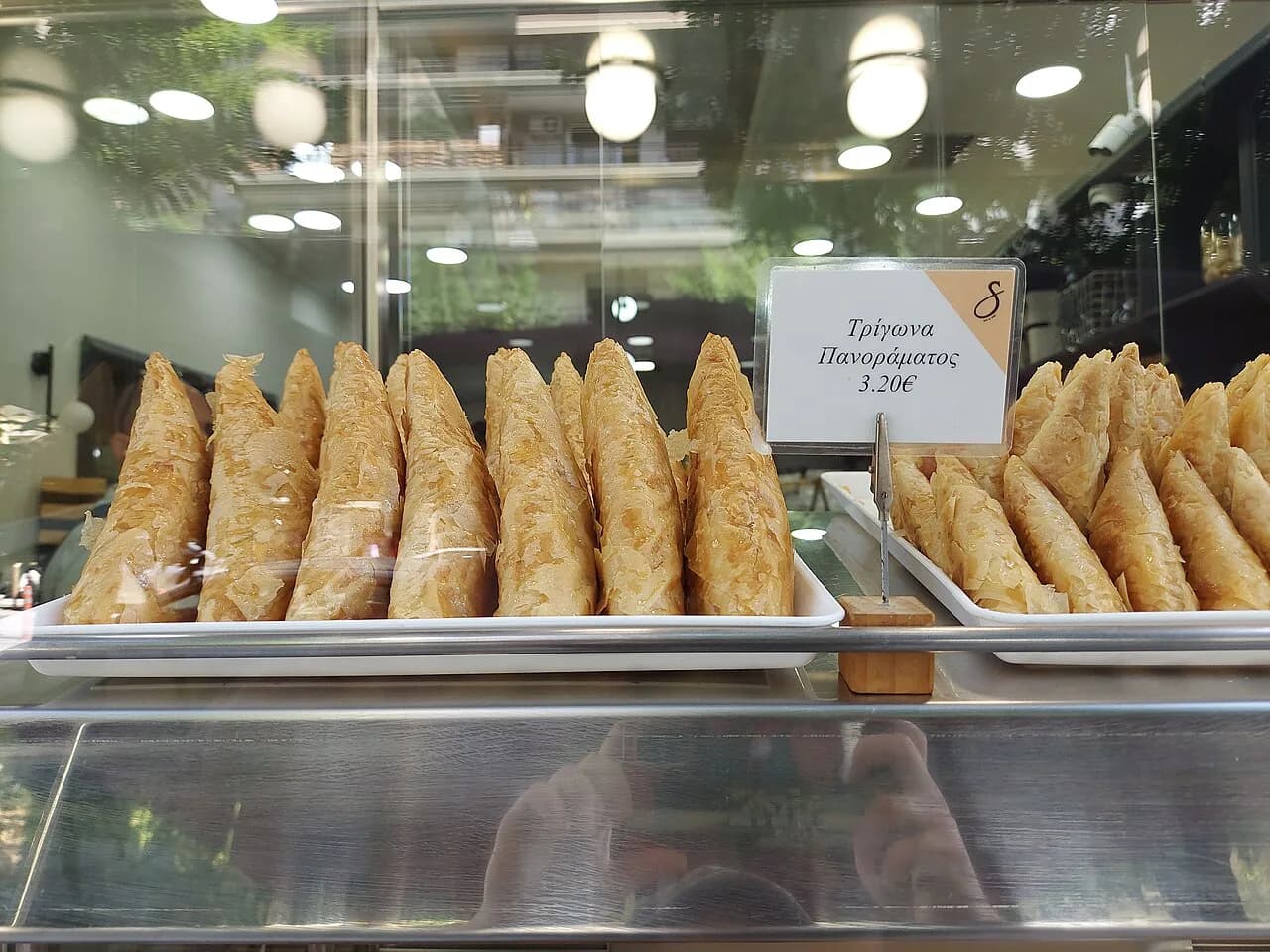
Trigona Panoramatos is the dessert most closely associated with Thessaloniki, and it is unlike most Greek sweets you will meet elsewhere. Instead of a flat piece of syrup-soaked pastry, it is a crisp cone built from phyllo, dipped in cold sugar syrup and filled with cold custard cream. This guide explains the name, the construction, the filling options and the practical business of buying and carrying them.
What Trigona Panoramatos Actually Is
The name breaks down neatly: trigona means triangles, and Panoramatos points to Panorama, the district on the northern outskirts of Thessaloniki where the pastry is traditionally placed. On the plate you get a small cone of thin phyllo, baked until it turns golden and brittle, then briefly submerged in cold sugar syrup so the shell softens at the edges while keeping some snap. The hollow centre is filled with a thick custard cream and the top is scattered with chopped nuts. Thessaloniki's tourism office describes them as crispy, buttery triangular phyllo pastries soaked in syrup and filled with creamy custard, garnished with chopped nuts.
The tourism board also notes that the international food catalogue Taste Atlas placed Trigona Panoramatos at the top of a list of the world's best syrupy desserts. Treat that as a nice piece of local pride rather than a reason to queue: the pastry was already the sweet Thessalonians buy to carry to friends and relatives. If you want the wider picture of what else belongs on a savoury eating plan in the city, the best restaurants in thessaloniki guide covers the tavernas and ouzeries that come before dessert.
Why the Pastry Belongs to Panorama
Panorama sits uphill from the city centre, a residential area that Thessalonians reach by car or bus rather than on a walking loop from Aristotelous Square. The association matters for visitors because it explains why the pastry is sold all over the city but named after a suburb: it began as a local specialty of that area and spread inward. The tourism source consistently ties the dessert to the outskirts of Thessaloniki rather than to a single inventor or one historic shop, so treat origin stories you hear about a specific founder with a degree of caution.
Practically, you do not need to travel to Panorama to eat one. Bakeries and pastry shops across the centre stock them, and the dessert travels well enough that it appears in shop windows far from its home district. If you are building a day around the upper city, the Ano Poli walk described in the same restaurant guide puts you on the high ground north of the centre, which is the right direction if you later decide to continue up towards Panorama.
How They Are Made, Step by Step
The shell starts as thin sheets of phyllo brushed with butter and wrapped around a metal cone mould, which gives the pastry its tapering shape and its layered, flaky wall. The moulds go into a hot oven until the phyllo is golden brown and crisp, then the cones are slipped off and set aside. The next step is the one that defines the texture: while the shells are still brittle, they are dipped into cold syrup made from sugar and water, so the syrup clings to the outside instead of boiling through the layers.
The custard is made separately, from egg yolks, flour, butter, milk, sugar, vanilla and cream, cooked until thick and then chilled. Only when both parts are ready does the filling happen: the cold custard is piped into the syruped shell, and chopped nuts go on top. The temperature contrast is the whole point of the construction, so a shop that fills its cones in advance and leaves them sitting loses the effect.
Custard or Chocolate: Choosing Your Filling
The classic version is the custard one described above: a vanilla-scented cream, dense enough to hold its shape, with a cool, eggy richness against the syrup. The chocolate variation replaces that custard with a chocolate cream, which reads sweeter and heavier and tends to mask the buttery phyllo underneath. Home cooks who want to try the chocolate route can follow a published recipe for phyllo cones filled with chocolate cream, which walks through the moulding, baking and syruping stages in order.
Order them as two different things rather than assuming one is a variant of the other. If you want to compare, buy one of each and eat the custard version first, because the chocolate cream dulls the palate for the subtler filling. The custard is also the version most closely tied to the city's own tradition, so it is the one to try if you are only buying once. For a broader sweep of the city's sweets and savoury staples, the Thessaloniki Food Guide sets trigona alongside bougatsa, koulouri and the rest. If you are comparing Greek island desserts too, our Corfu food guide covers where to eat in Corfu between the sweets and the tavernas.
How to Order, Carry and Eat One
Trigona are sold by piece, usually from a tray or display case, and packed in a small paper bag or a flat box if you are buying several. One or two per person is a sensible starting order: the pastry is small but the syrup and custard make it filling, and it does not improve with a second helping. Ask for the nuts on top if the shop offers a choice, and check that the shells look dry and crisp rather than collapsed and wet before you pay. For scale, the thessaloniki food tour operators who walk visitors through the market and pastry shops usually include a sweet stop of this kind.
Eating one cleanly takes a little technique. Hold the cone upright by its base, bite from the wide top where the custard sits, and keep the paper bag underneath to catch drips; tipping it sideways sends syrup down your wrist. A glass of cold water or a plain Greek coffee, served without sugar, cuts through the sweetness far better than a dessert wine would. If you are already planning a coffee stop, the bougatsa thessaloniki guide covers the morning pastry shops where a similar coffee-and-sweet rhythm applies.
Where to Buy Them in Thessaloniki
Pastry shops and bakeries across the centre carry trigona, and the ones near the Modiano and Aristotelous area are the easiest for a visitor on foot to reach. Judging quality is mostly about freshness: a good cone has a shell that still resists slightly, a custard that tastes of vanilla rather than only sugar, and a thin, even coat of syrup. A shell that sags when you lift it, or custard that has soaked into the phyllo, means it has been sitting too long.
For a sit-down meal before the sweet, the ladadika restaurants cluster near the port puts you within walking distance of the centre's pastry shops, and the old Egyptian market neighbourhood nearby has its own bakery traffic. Prices vary by shop and by how many you buy, and no reliable published figure covers the city as a whole, so check the counter price before ordering a box. If you want a savoury counterpoint in the same outing, the best gyros in thessaloniki guide covers the grill shops that locals pair with a sweet afterwards.
Taking Trigona Home as a Gift
Trigona travel better than most cream-filled pastries, but they are not indestructible. Ask the shop to pack them in a single layer in a rigid box rather than a bag, keep the box flat and upright in your luggage, and accept that the syrup will make the phyllo soften within a day or so. They are a reasonable short-haul gift for friends and relatives, which is exactly the role the tourism board describes Thessalonians giving them. For a longer journey home, a dried or packaged sweet is the safer choice.
If you are assembling a food-themed trip rather than a single purchase, the Thessaloniki Attractions: 8 Visitor Guides hub connects the markets, neighbourhoods and sights that sit around the eating, so you can plan a route that ends at a pastry counter.
Timing and Availability
Trigona are an everyday shop product rather than a festival food, so availability depends on the individual bakery's production rather than on a season. Some shops make them fresh in the morning and sell out, while others keep a tray through the afternoon. Nothing in the published material gives reliable opening hours or a citywide schedule, so check current details with the shop you plan to visit, especially on Sundays and public holidays.
Plan Your Visit
Treat trigona panoramatos as a small, specific stop rather than a destination in itself: buy one custard cone from a busy shop, eat it upright over the paper bag, and follow it with an unsweetened coffee. If you like it, buy a second box packed flat for the trip home. Everything else about the city's food, from the tavernas to the morning pastry counters, is covered in the Thessaloniki Food Guide and the restaurant pages linked above.
Frequently Asked Questions
What is trigona panoramatos?
It is a Thessaloniki pastry made from thin phyllo wrapped around a cone mould, baked until golden, dipped in cold sugar syrup and filled with chilled custard cream. Chopped nuts are scattered on top. The result is a crisp shell with a soft, cool centre, and it is eaten by hand.
Why is it called trigona panoramatos?
Trigona means triangles, referring to the cone shape, and Panoramatos points to the Panorama district on the northern outskirts of Thessaloniki. Published local material ties the pastry to that area rather than to a single named inventor or shop.
What is trigona panoramatos filled with?
The classic filling is a custard made from egg yolks, flour, butter, milk, sugar, vanilla and cream, cooked thick and chilled before piping into the syruped shell. A chocolate cream version also exists and is ordered as a separate choice.
Is trigona panoramatos the same as a filo cone?
Broadly yes: the shape is a phyllo cone, and some recipes describe it that way. The specific Thessaloniki version is defined by the cold syrup dip and the cold custard filling, which is what gives it its texture.
How do you eat trigona panoramatos?
Hold it upright by the base, bite from the wide top where the custard sits, and keep the paper bag underneath to catch syrup. A glass of water or an unsweetened Greek coffee works better alongside it than a sweet drink.
Can you take trigona panoramatos home from Thessaloniki?
Yes, for short journeys. Ask for a rigid box packed in a single layer, keep it flat and upright, and expect the phyllo to soften within a day or so as the syrup soaks in. For longer trips, a dried or packaged sweet travels better.
Sources
Notes for eating well in Greece
Optional updates to our guides.
You might also like

Continue reading
More guides you'll find useful