Naxos Churches: Which Byzantine Chapels to Visit First
A practical guide to Naxos churches, from Byzantine chapels in Halki and Koronos to Panagia Kera, with village locations and respectful visiting advice.
On this page
Naxos churches are spread from the harbour of Chora up through the marble villages under Mt Zas, which is exactly why they work better as part of a village day than as a standalone church crawl. The island's inland settlements sit close together on the map, but the mountain roads between them are slow and winding, so a realistic plan covers a handful of stops rather than a long list. Treat each church as one anchor for a morning or afternoon, then build the taverna lunch and the walk around it.
The buildings themselves range from small frescoed Byzantine chapels in olive groves to parish churches still at the centre of village life, and the detail worth seeking out is often architectural: an unusual double aisle, a stone facade, a date that reaches back a thousand years. For the wider picture of how the inland villages fit with the coast, see this guide to things to do in Naxos.
Why Naxos Churches Are Scattered Across Villages
Naxos is the largest island in the Cyclades, and its historic churches follow the old settlement pattern rather than clustering in the port. Many of the Byzantine chapels stand just outside village edges, among olive groves and citrus orchards, which is why a car or a patient bus plan matters more than a walking route. Chora holds its own share, but the rewarding stops tend to sit an hour or more inland by road, up in the marble villages.
That geography shapes the day. A morning in Chora and an afternoon in the mountains do not combine comfortably, because the drive between them eats the middle of the day and the inland heat peaks then. Pick one side of the island per day, and let the churches you visit be the ones that sit naturally along that road.
Agios Georgios Diasoritis Near Halki: An 11th-Century Chapel
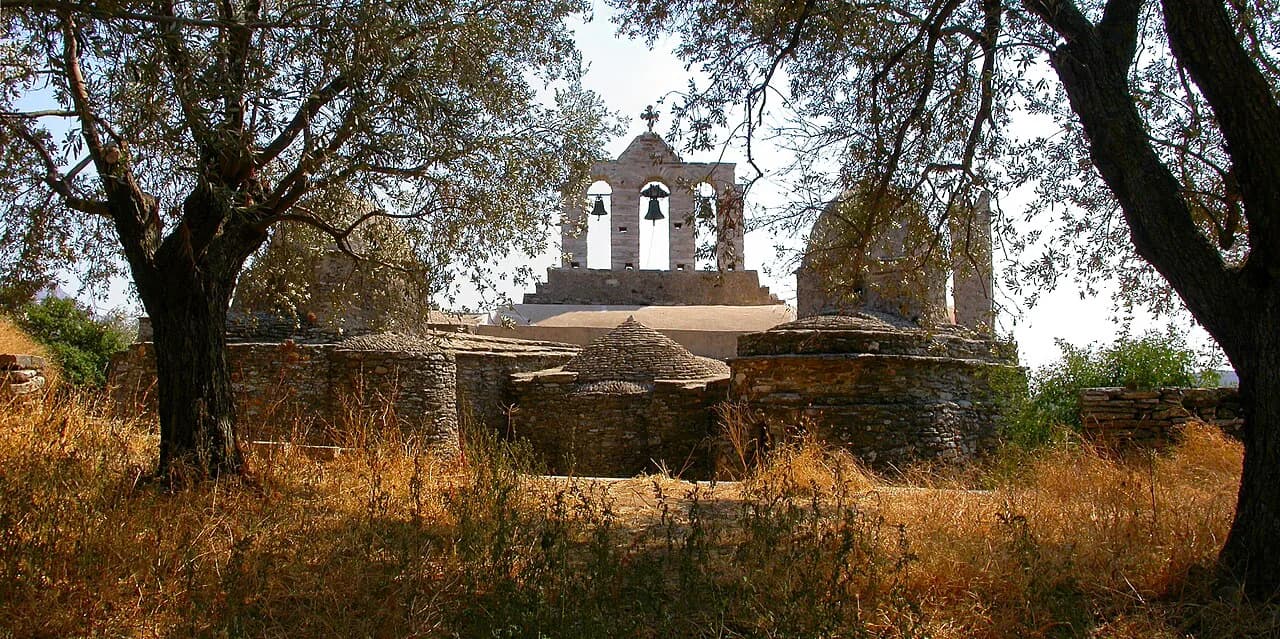
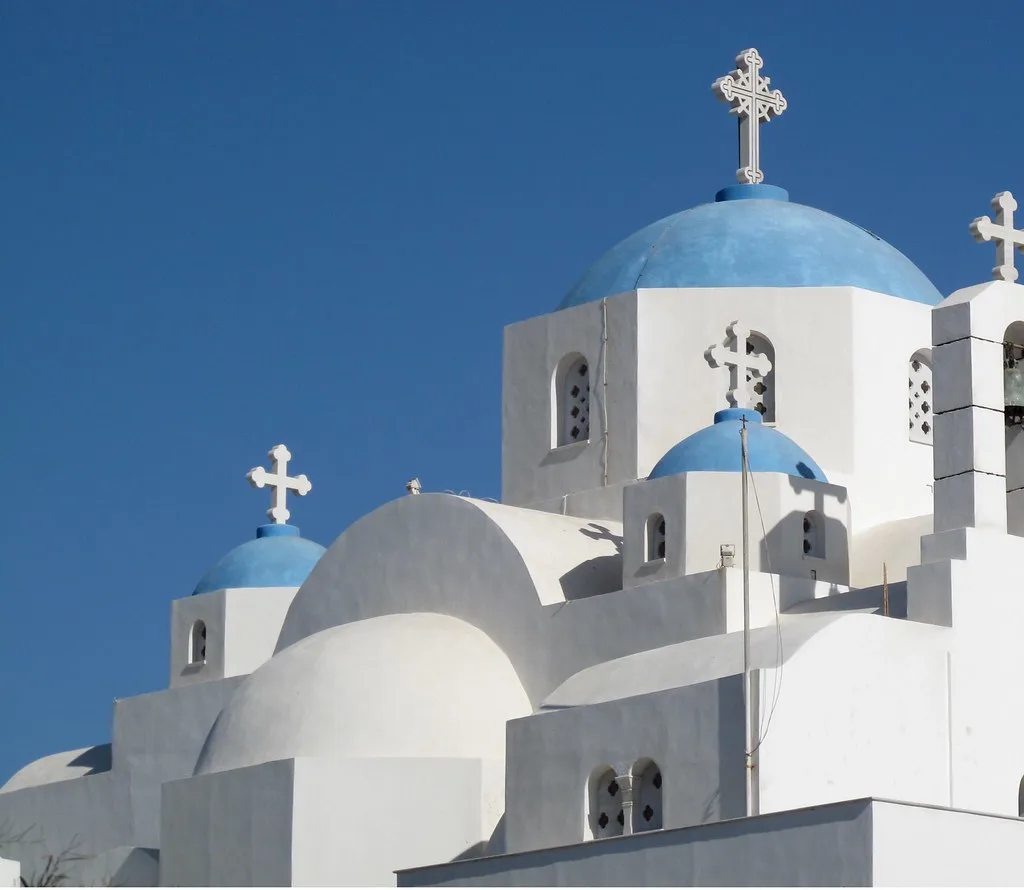
The Church of Agios Georgios Diasoritis, also written Chalkio for the village of Halki, is an 11th-century Byzantine church set roughly 600 metres from the village, about a ten-minute walk. That short approach through the olive groves is part of the visit, and it makes the chapel a natural first stop before Halki's shaded square fills for lunch.
Halki itself was once the island's capital, and its neo-classical houses and marble lanes now shelter a main square that rewards a long lunch. Pair the church with a stop at the Vallindras Kitron Distillery if you want to understand the local citron liqueur, and walk out to the chapel early or after five in the afternoon, when the midday heat has eased.
Do not assume you will see the interior frescoes on any given day; a small village chapel may be locked outside services, and no published schedule confirms otherwise. Ask in the village, at a taverna or the nearest shop, whether the key is available, and accept a no without pressing. Treat the exterior, the setting and the walk as the guaranteed part of the visit.
Agia Marina in Koronos: The Village Church With Two Aisles
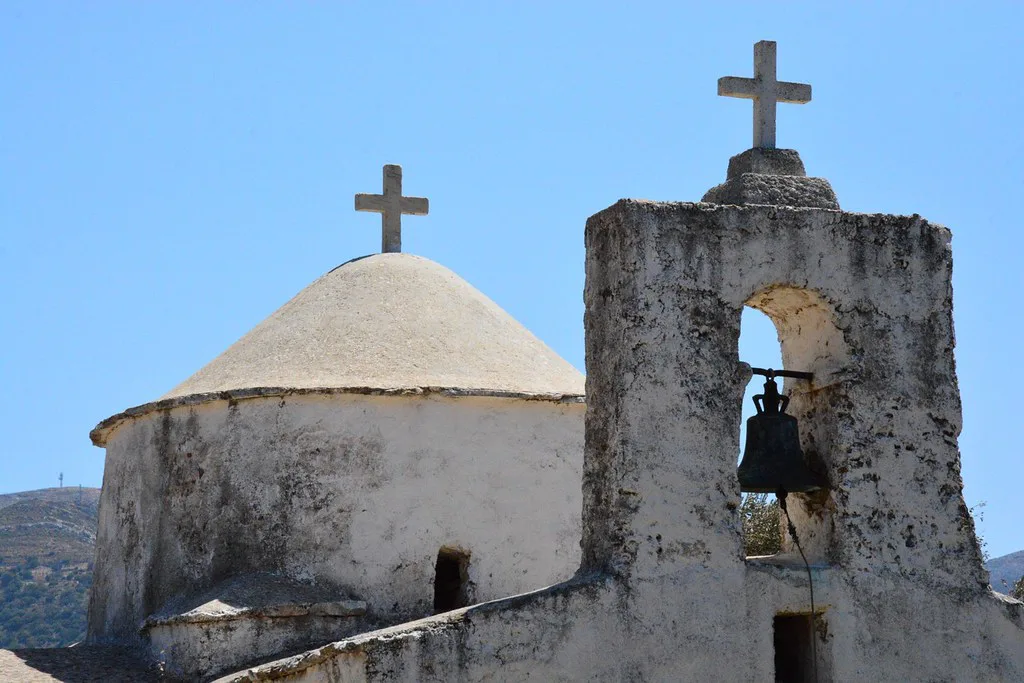
Agia Marina is the main church of Koronos, high in the northern mountains, and is described as a small Byzantine church with two aisles, well-preserved frescoes and traditional stone architecture in a rural setting. The double aisle is the detail to look for in the plan, since it is unusual enough to justify the climb to this sleepier village on its own.
Koronos is the quietest of the mountain villages and the least adjusted to visitors, so services and opening are best confirmed locally rather than assumed. The square is the place to sit, and the tavernas there serve home-style Greek food at prices that are not published online, so ask before ordering if budget matters. The drive up from the coast is slow and steep, and the reward is a village where very little happens at speed.
For a sense of what a village lunch looks like on this side of the island, our guide to the best restaurants in Naxos covers the mountain tavernas alongside the coastal ones.
Panagia Kera: What the Evidence Says and What to Confirm
Panagia Kera is presented by one travel source as a ninth-century Byzantine church and a striking example of the style on Naxos. Treat that dating as the figure given by that source rather than as certain, and check locally or with the parish before you build a day around the specific claim. What the published material does not settle is when the church is open, whether the interior can be entered, or whether any notice or fee applies.
The practical approach is to confirm before setting out: phone the parish, ask at your accommodation, or check the municipality's pages for the current situation. If access turns out to be limited, the village around the church usually still justifies the detour, and you can shift the church stop to the exterior and spend the saved time on the lane walk.
Naxos Town (Chora): The Metropolis and the Kastro Above
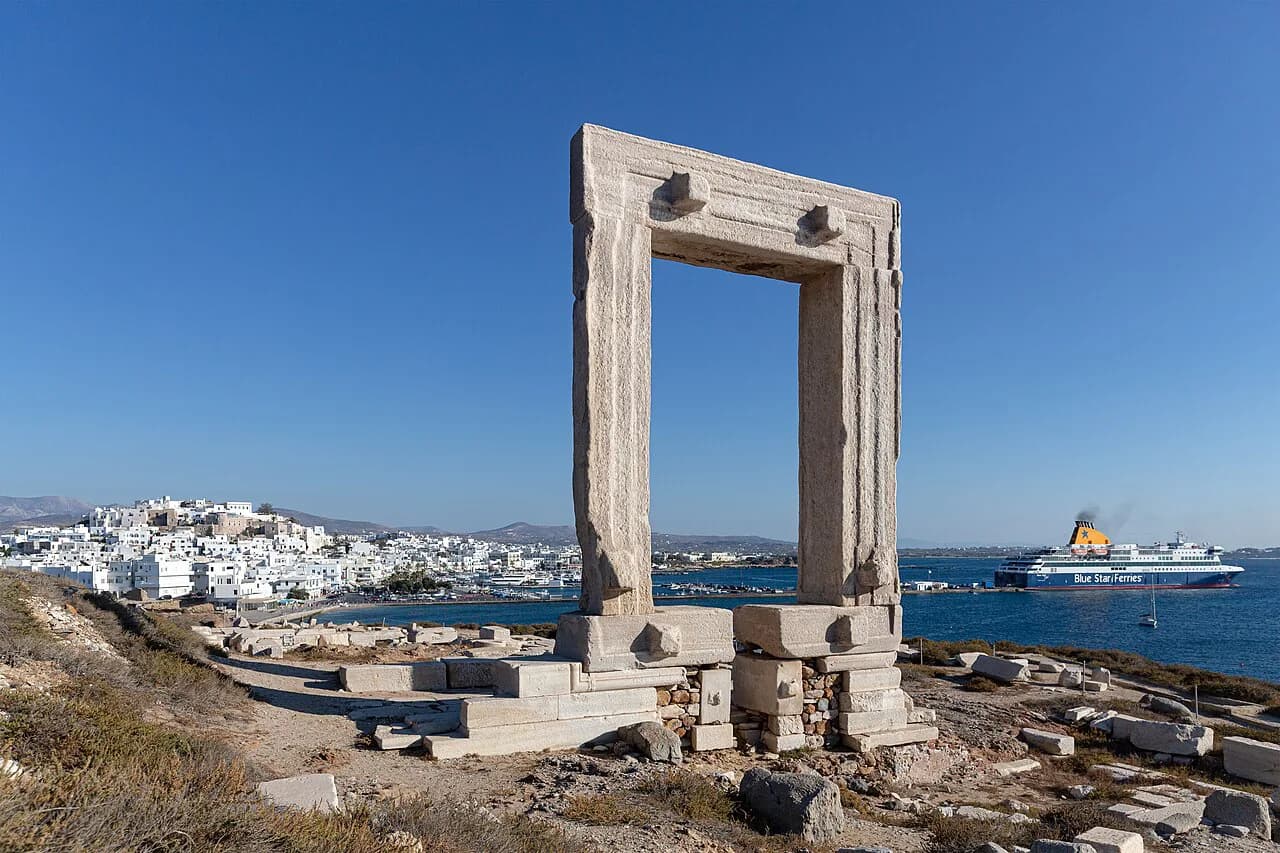
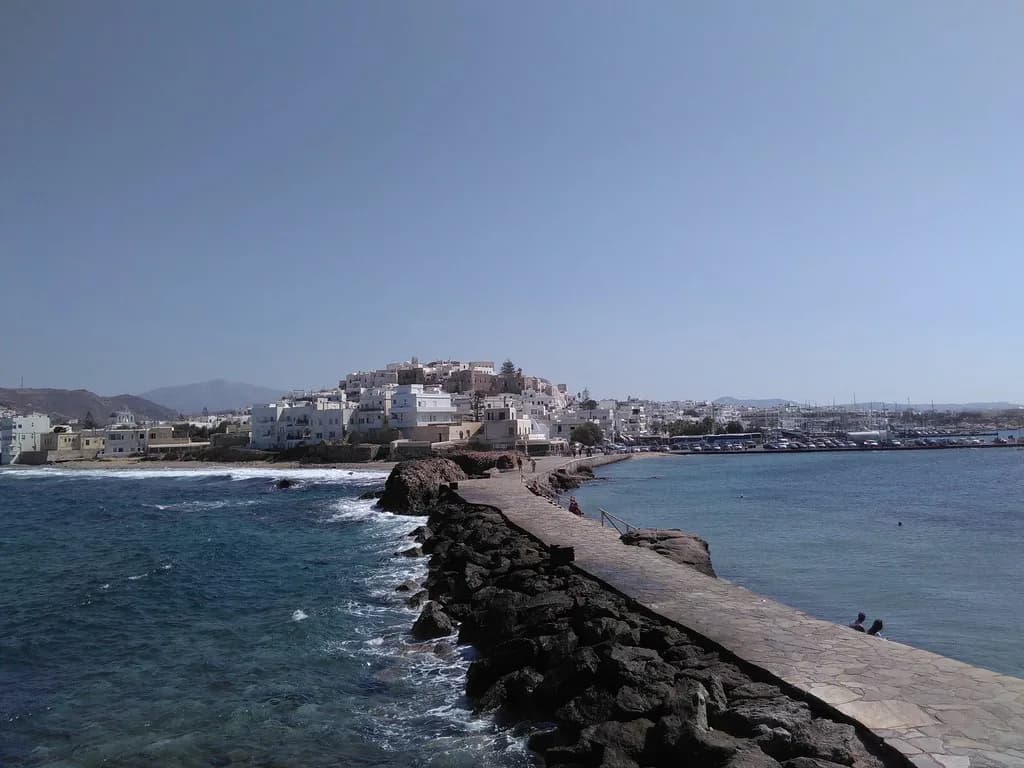
In Chora, the Metropolis sits near Mitropoleos Square, and the lanes climb from there to the Kastro, the Venetian castle hill built in 1207 and inhabited ever since. The archaeology below the square belongs to the Mycenaean-era capital of around 1300 BC, part of the ancient agora and settlement found on the northern side of the harbour. Walking the two together takes an hour or so and gives you the town's layered history in one loop.
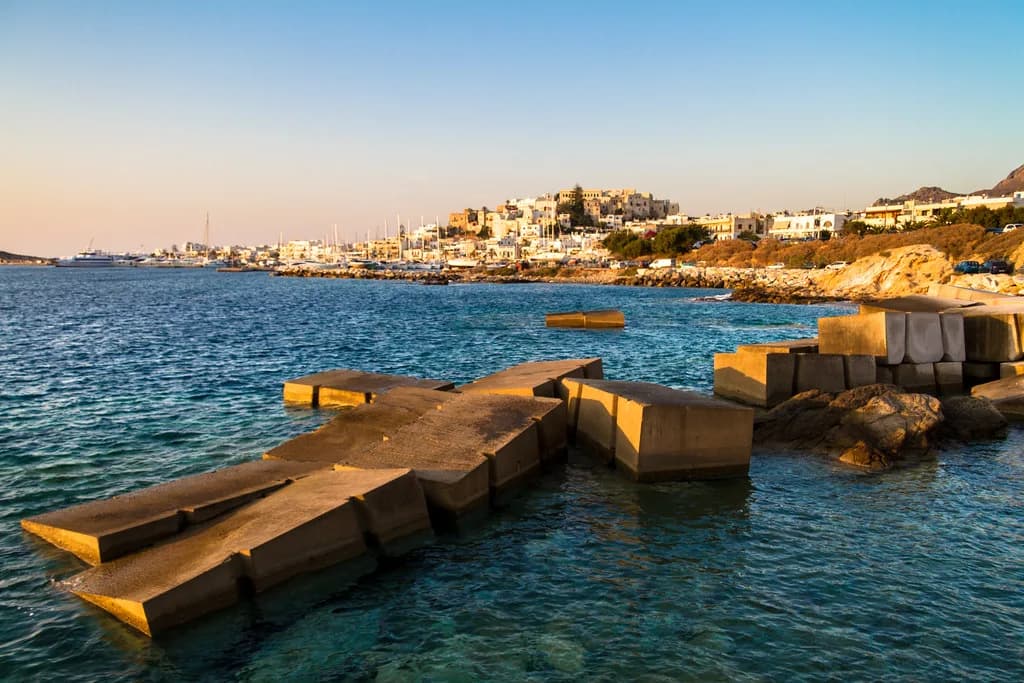
The Grotta site has been developed as a visitor attraction, and some ancient constructions are visible submerged in the sea nearby. The old town closes down for siesta in the summer heat, so come early or after five in the afternoon if you want the lanes and the church surroundings at their most usable. That timing also puts you near the harbour as the light softens.
For the wider context of the island's history, our Naxos history guide sets the Byzantine churches alongside the Venetian and earlier layers you will see on the Kastro hill.
Building a Church-and-Village Loop by Car: Halki, Filoti, Koronos, Apeiranthos
The classic inland loop runs from Chora north through Melanes, where the unfinished Kouros statues lie in the olive groves, then on to Halki, Filoti, Apeiranthos and Koronos. Doing it in one day is feasible only with your own car, and even then the mountain roads are slow, so plan fewer stops than the map suggests and give each village real time. Halki and Koronos are the church anchors; Filoti and Apeiranthos are the lunch and lane-walking stops.
Filoti sits just below the trailhead for Mt Zas, the highest peak in the Cyclades at 1,003 metres, and its main square has a produce stall and tavernas that make a natural midday break. Apeiranthos is the marble village, with an archaeological museum, a natural history museum and a folklore museum, and enough lanes to fill an hour. End at Koronos for Agia Marina, then take the long road back down to the coast.
If you would rather let someone else drive, a Naxos food tour can supply the village-to-village logistics while you focus on the stops.
Timing the Day: Afternoon Closures and Midday Heat
Many village restaurants close in the afternoon, and the midday heat in summer is relentless, which shapes the day more than any opening hour. In Halki, for example, the advice is to visit early morning or after five, when the restaurants reopen and the lanes are walkable. Build your church visits into those two windows and use the middle of the day for a shaded lunch or a drive with the air conditioning on.
Outside high summer the pattern loosens, but the general rule holds: churches and village squares are more comfortable before eleven and after five, and the light on stone is better then too. Carry water, wear shoes that handle marble and gravel, and keep the driving between stops short. If a village feels shut, that is usually the siesta rather than a permanent closure.
Dress and Behaviour: Shoulders, Knees and Quiet Inside
These are working churches, not museums, and the basic courtesy is the same across Greece: cover shoulders and knees, keep voices low, and do not use a flash where it is not wanted. A light scarf and trousers or a long skirt in your bag solve the dress question without a special outfit. Step aside for anyone lighting a candle or praying, and ask before photographing people or the interior.
If a chapel is locked, do not force a door or climb a fence; ask in the village whether it can be opened, and if the answer is no, accept it. Small chapels are often maintained by a family or a parish with no staff on site, and the neighbouring taverna or shop usually knows who holds the key. The same etiquette applies whether you are in a mountain chapel or a town church.
If you are comparing church etiquette across Crete as well, our guide to Heraklion churches makes a useful companion for the wider Greek pattern.
What These Buildings Are Not
No source consulted for this guide promises concerts, guided tours or timed entry at any of these churches, and none gives opening hours or entrance fees. Treat any such offer you encounter as something to sort out on the spot rather than expect. The visit is essentially a walk to a building, a look at the architecture and setting, and a return to the village.
That is part of the appeal: the reward is the approach through the olives, the stone facade, the double aisle or the frescoes if you are lucky enough to find the church open. Plan the day around the landscape and the village, and let the interior be a bonus. A short stop still fits neatly between two longer meals.
Pairing Churches With Food: Long Village Lunch vs a Quick Stop
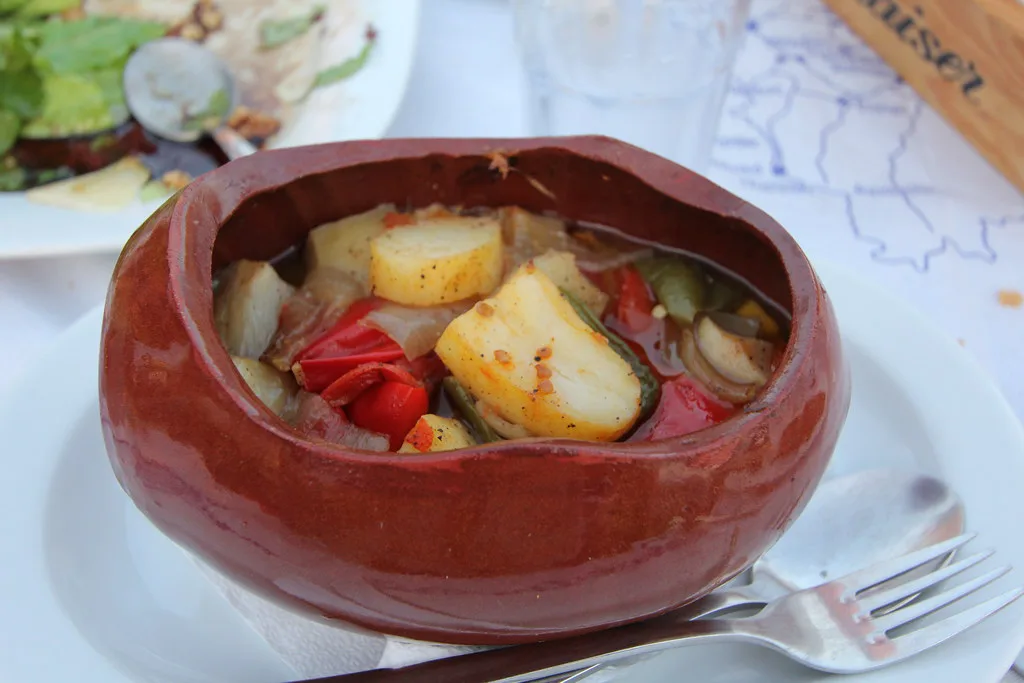
The natural pairing is a church visit followed by a long lunch in the village square, and Halki and Filoti both have the setup for it. In Filoti, Ambrosia on the main square is named among the better restaurants on the island, and Apeiranthos has tavernas serving traditional food at reasonable prices with views toward Mt Zas. Order what the village does well: fava, a yellow split pea purée, with raw onion, or slow-cooked veal with aubergine and feta.
If you want a quick stop instead, gyros and souvlaki in Chora are the efficient option before or after the drive, and our guide to what to eat in Naxos explains the local dishes and cheeses worth ordering. Keep the meal flexible: village kitchens may run out of a dish, and the menu may be whatever is cooking that day.
For the full spread of tavernas, from harbour tables to mountain squares, browse the best restaurants in Naxos Town for the Chora end of the day.
Practical Notes: Short Distances, Slow Mountain Roads
The inland villages sit close together on the map, but the roads climb, bend and narrow, so journey times run longer than the distances suggest. Do not plan a church loop by straight-line distance; plan it by the number of stops you can comfortably walk and the number of hours of daylight you have. Fuel up before you leave the coast, since service stations thin out inland.
Buses run to the main west-coast beaches and the larger villages, but the mountain timetable is limited and not designed around a multi-stop day. A rental car for two or three days is the realistic way to cover Halki, Filoti, Apeiranthos and Koronos in one loop. If you are weighing the cost, our guide to whether Naxos is expensive sets out the transport and meal budget side by side.
Two Things That Change the Plan: Opening Hours and Service Times
The two variables that can undo a church day are whether a building is open and whether a service is underway. A locked chapel or a Sunday liturgy changes what you can do, and neither is published in a reliable online schedule for these small village churches. Call the parish, ask your accommodation, or check the municipality's pages the day before, and keep one alternative stop in reserve.
Beyond that, check current details for any restaurant you plan around, since village kitchens keep their own hours and menus. Two reminders cover the whole day: confirm the church, then confirm the table. If both hold, the drive, the lanes and the long lunch take care of themselves.
Plan Your Visit
Naxos churches reward a plan built around villages rather than a checklist: Agios Georgios Diasoritis outside Halki in the morning, a long square lunch in Filoti or Apeiranthos, and Agia Marina at Koronos in the softer late light. In Chora, the Metropolis and the Kastro hill fill a short loop, with the Grotta excavation below the square adding the older layer.
Take the dress code seriously, carry a scarf, ask before you photograph, and accept a locked door as part of the deal. Confirm access locally the day before, keep the driving legs short, and let the landscape be the reason for the trip. For the rest of the island's table and sight planning, the best restaurants in Naxos and the guide to shopping in naxos round out the practical side.
Explore more Naxos sauna guides
Frequently Asked Questions
Which Naxos churches are worth visiting?
Four stand out for a village-based day: the 11th-century Agios Georgios Diasoritis about 600 metres from Halki, Agia Marina in Koronos with its two aisles, Panagia Kera, and the Metropolis in Chora near Mitropoleos Square. Each works best as one anchor for a morning or afternoon rather than as part of a long crawl.
Where is the Church of Agios Georgios Diasoritis?
It sits roughly 600 metres from Halki, also written Chalkio, about a ten-minute walk out of the village among the olive groves. Park in or near Halki and walk rather than trying to drive to the door, since the approach is part of the visit.
How old are the Byzantine churches on Naxos?
Dates vary by building: Agios Georgios Diasoritis is described as 11th century, and Panagia Kera is given as ninth century by one travel source, so treat that date as the source's figure and check locally.
Can you visit Naxos churches for free?
No reliable source consulted for this guide states entrance fees or ticketing for these village churches, and several may simply be locked outside services. Ask in the village or with the parish about access, and plan on the walk and exterior being the dependable part.
What should you wear when visiting churches in Greece?
Cover shoulders and knees, and carry a light scarf or long layer in your bag. Keep voices low inside, avoid flash where it is not wanted, and step aside for anyone praying or lighting a candle.
How far is Halki from Naxos Town?
Halki is an inland mountain village reached by a winding road from Chora; the map distance is modest but the drive takes longer than the number suggests. Allow real time, fuel up before leaving the coast, and pair Halki with Filoti or Apeiranthos rather than squeezing in the whole island.
Are Naxos churches open every day?
No published schedule confirms daily opening for these small village churches, and a chapel may be locked outside services. Ring the parish, ask at your accommodation, or check the municipality's pages the day before, and keep one alternative stop in reserve.
When is the best time of day to visit?
Early morning or after five in the afternoon, when the heat eases and village restaurants reopen after the siesta. In Halki specifically, the advice is to visit early or after five, which also gives better light on the stone and marble lanes.
Sources
- Archaeological Site of Grotta | Naxos and the Small Cyclades
- Things to Do in Naxos (2026): Insider Tips From a Month on the Island | The Common Wanderer
- The 21 best spots for gyro in Naxos
- Agia Marina is the main church of Koronos village on ...
- Church of Agios Georgios Diasoritis, Chalkio
- Panagia Kera Church in Naxos, Greece
Notes for eating well in Greece
Optional updates to our guides.
You might also like
Continue reading
More guides you'll find useful