Naxos History: Marble, Portara & Kastro Visitor Guide
A visitor's guide to Naxos history, from Cycladic settlements at Grotta to the Portara, the unfinished kouroi and the Venetian Kastro in Chora.
On this page
Naxos rewards travellers who look past the beach. The island held one of the most important centres of the early Cycladic world, supplied marble and emery for Greek sculpture, and later became the seat of a Venetian duchy whose walled quarter still shapes the lanes of the capital.
This guide treats that history as a set of places you can actually visit: the Grotta area beneath modern Chora, the Portara at the harbour mouth, the unfinished statues at Melanes and Apollonas, and the Kastro. Each section says what you are looking at, where it sits and what it costs you in time, so you can slot the sights around lunch and dinner rather than planning a separate sightseeing day.
Why Naxos History Matters on a Short Visit
Four layers stack up on one island: a prehistoric Cycladic culture, an Archaic period of marble carving, a Venetian colonial state and an Ottoman centuries-long interlude before union with the modern Greek state. You do not need a timeline to enjoy them, but knowing the layers turns a walk through Chora into something readable.
The practical payoff is orientation. Almost everything in the capital is within a short walk of the waterfront, while the two ancient quarry sites sit in the interior and need transport. Deciding which layer interests you most tells you whether to spend a morning on foot in Chora or a half-day on the road.
Historically, Naxos was described as the leading centre of civilisation across the Cyclades in the ancient period, and the island's own travel guide notes that settlements date back to the fourth millennium BC. Wikipedia's overview adds that it was a major centre in both the Bronze Age Cycladic culture and the Archaic period.
Cycladic Beginnings: Grotta and the Settlements Under Chora
The earliest settlements on Naxos belong to the Neolithic era, and archaeological finds point to a developed society by the end of that period. The first major civilisation is Cycladic, in the third millennium BC, when small settlements spread across the island's eastern side.
One excavated hamlet of that era lies near Panormos, at the Korfari position in Amygdalies. More significant for visitors is Grotta, at the spot where Chora now stands: a larger, better-organised settlement with carefully built houses and quantities of pottery. Because it sits under the modern town, you are effectively walking over it when you follow the waterfront north of the centre.
Naxos emerged from this evidence as one of the most important centres of Proto-Cycladic civilisation, so much so that archaeologists name phases of the period after island locations. The Grotta-Louros label, for instance, refers to the Proto-Cycladic I phase dated to roughly 3200 to 2800 BC, with the Louros-type figurines coming from a cemetery in the Sagri area inland.
For a visitor, the lesson is modest: there is no grand ruin to photograph at Grotta, so treat this as context for the town rather than a standalone stop. If you want the objects themselves, plan a museum visit in Chora and check opening days locally, since museum hours shift with the season.
The Marble Island: Emery, Sculptors and the Birth of Greek carving
Naxos had two natural advantages that made it a sculpture centre. The first was abundant marble; the second was emery, a hard abrasive rock mined on the island until the 1950s and used since antiquity for the final polishing of marble works. Put together, they gave Naxian craftsmen the material and the finishing technology.
Those craftsmen were in demand and commanded high fees, wealth they sometimes converted into costly votive offerings to sanctuaries. Their reputation helped push Greek sculpture towards monumental scale in the Archaic period, and the island's travel guide argues that Naxian work influenced Greek architecture, particularly the Ionian school of marble sculptors. Some of their output travelled far: the Sphinx of Delphi, the lions of Delos and a House of Naxians on that sacred island all carry Naxian associations.
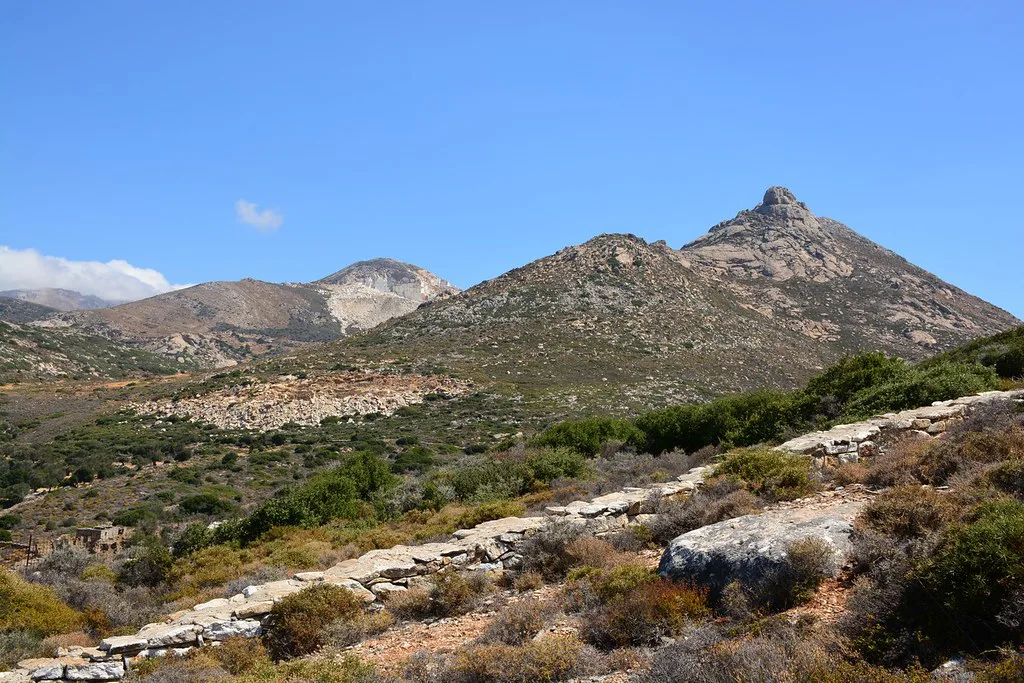
You can see the raw material in the landscape rather than in a gallery. The marble quarries of Melanes and Apollonas, both now disused, are where the evidence for the island's sculptural economy is most direct. Keep this in mind when you plan the interior: these are quarry sites in working countryside, not staffed monuments with fixed visitor facilities.
The Portara: The Giant Doorway at the Harbour Mouth
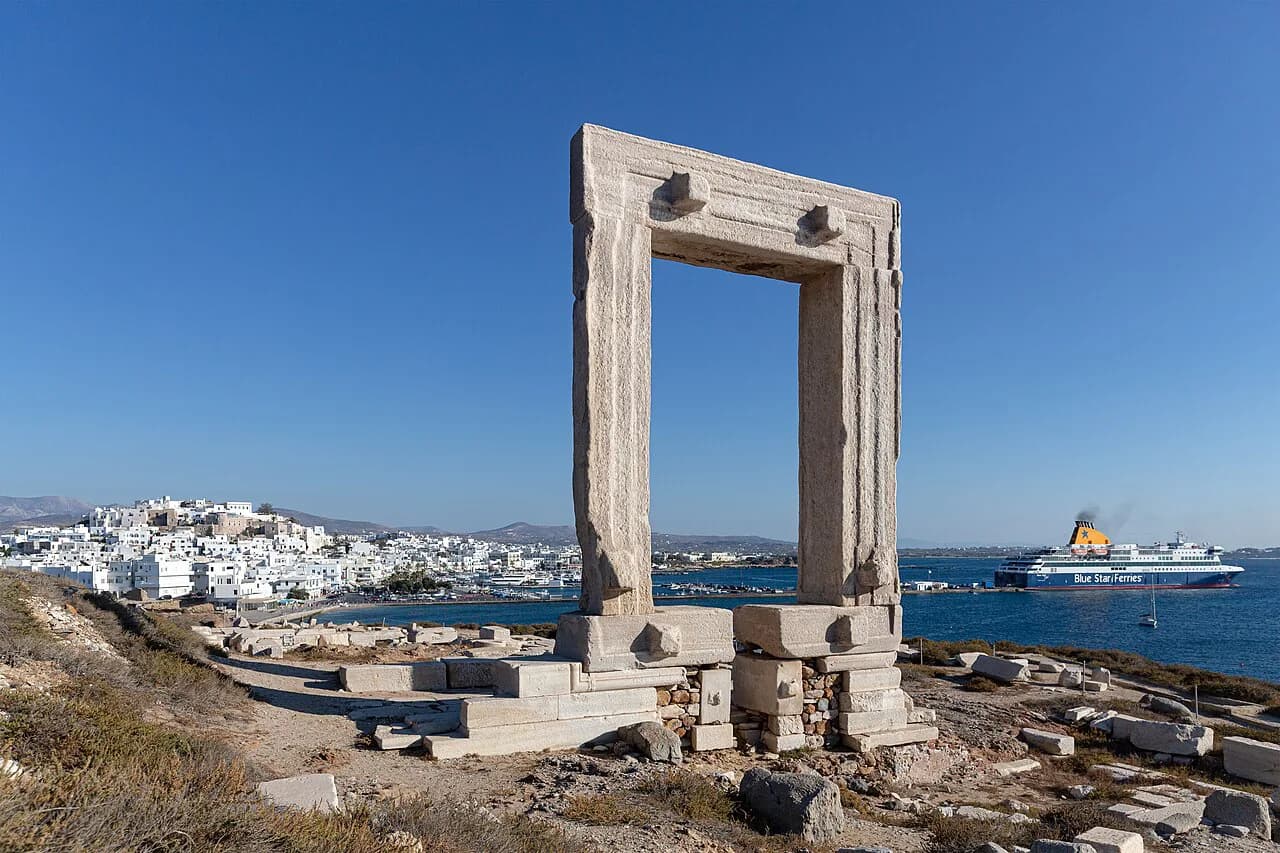
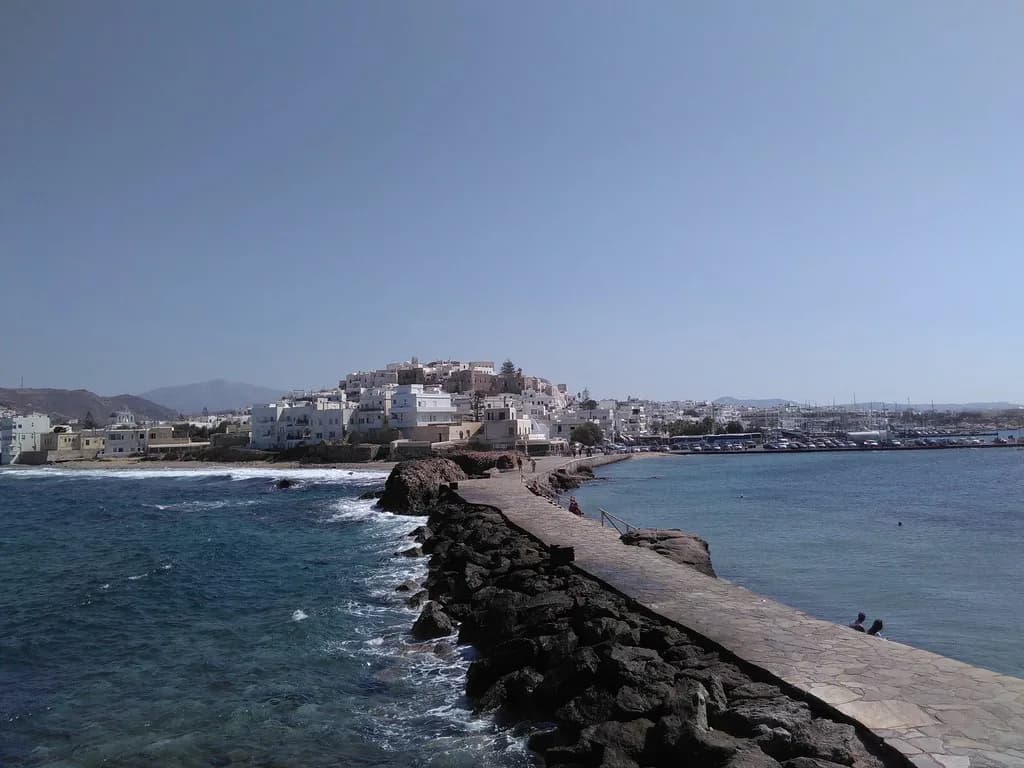
The Portara is the single most photographed piece of ancient Naxos: a vast marble doorway standing alone on the islet of Palatia, linked to the harbour front of Chora. The island's guide describes the doorposts as single blocks weighing many tons, an engineering statement as much as an architectural one.
It is the surviving fragment of a temple that was never completed, which explains why you see a doorway rather than a building. Treat the visit as a short walk from the waterfront, best paired with a wander through the lanes of Chora rather than a separate excursion. The islet is exposed, so the experience depends heavily on wind and time of day.
The walk to the islet is popular at sunset and on summer evenings. If you want a meal afterwards, the choice is between the harbour front, convenient but often busier and pricier, and the back lanes of the old town, quieter and usually better value. Our guide to the best restaurants in Naxos Town compares the two.
The Unfinished Kouroi at Melanes and Apollonas
A kouros is a free-standing statue of a naked young man, a standard form in Archaic Greek sculpture. Naxos has two celebrated examples that were never finished and still lie in the ancient quarries where they were carved: one at Melanes and a colossal one at Apollonas, described as about 10.5 metres long, roughly three and a half storeys.
Nobody knows why the statues were abandoned, and the sources only speculate about the reasons. That uncertainty is part of the appeal: at both sites you see a carving process interrupted rather than a finished monument on a plinth. Look for the way the figure is only partly separated from the quarry bed.
The two sites sit in the interior and pull in opposite directions. Melanes lies inland from Chora in the direction of the Sagri plateau, while Apollonas is a village on the north coast, a much longer drive. Many travellers combine Melanes with a village lunch and treat Apollonas as a northern day out with a swim, rather than trying to see both in one morning.
Plan the quarries around daylight and road conditions rather than a schedule. If you are relying on buses, confirm the current timetable at the start of your stay, because interior and northern services thin out outside high season.
Venetian Rule, 1207 to 1537: Marco Sanudo and the Kastro
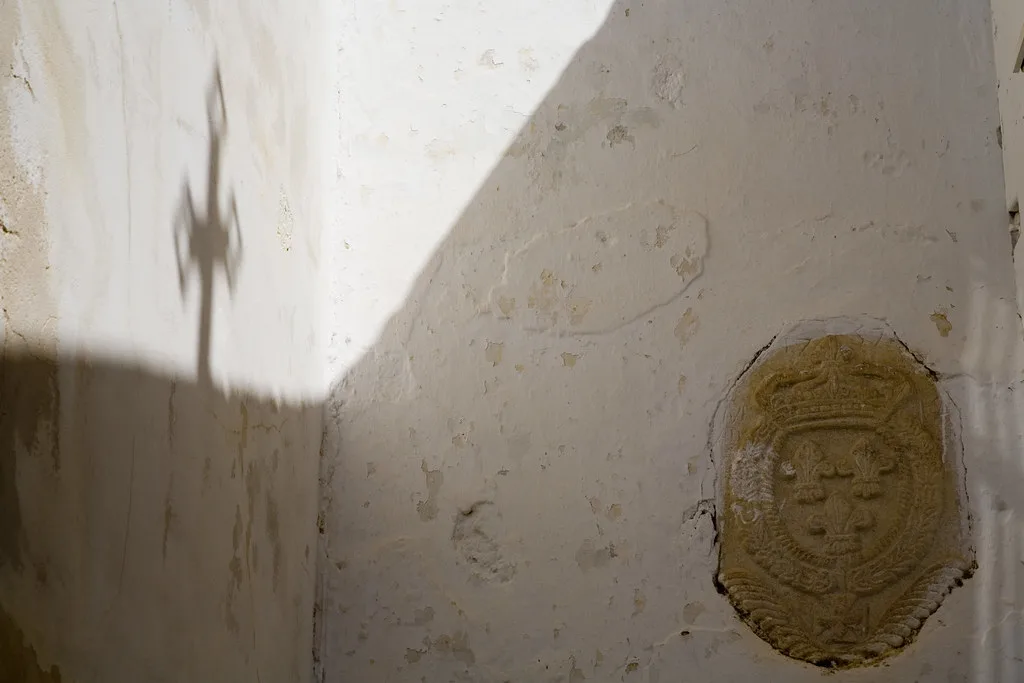
Venetian rule on Naxos ran from 1207 to 1537. Around 1207 Marco Sanudo landed with his men at Agiassos and took the island, establishing a duchy that gave the Cyclades a Latin ruling class for three centuries. If the Venetian layer is what draws you, Corfu history covers a much longer and more layered Venetian period in the Ionian.
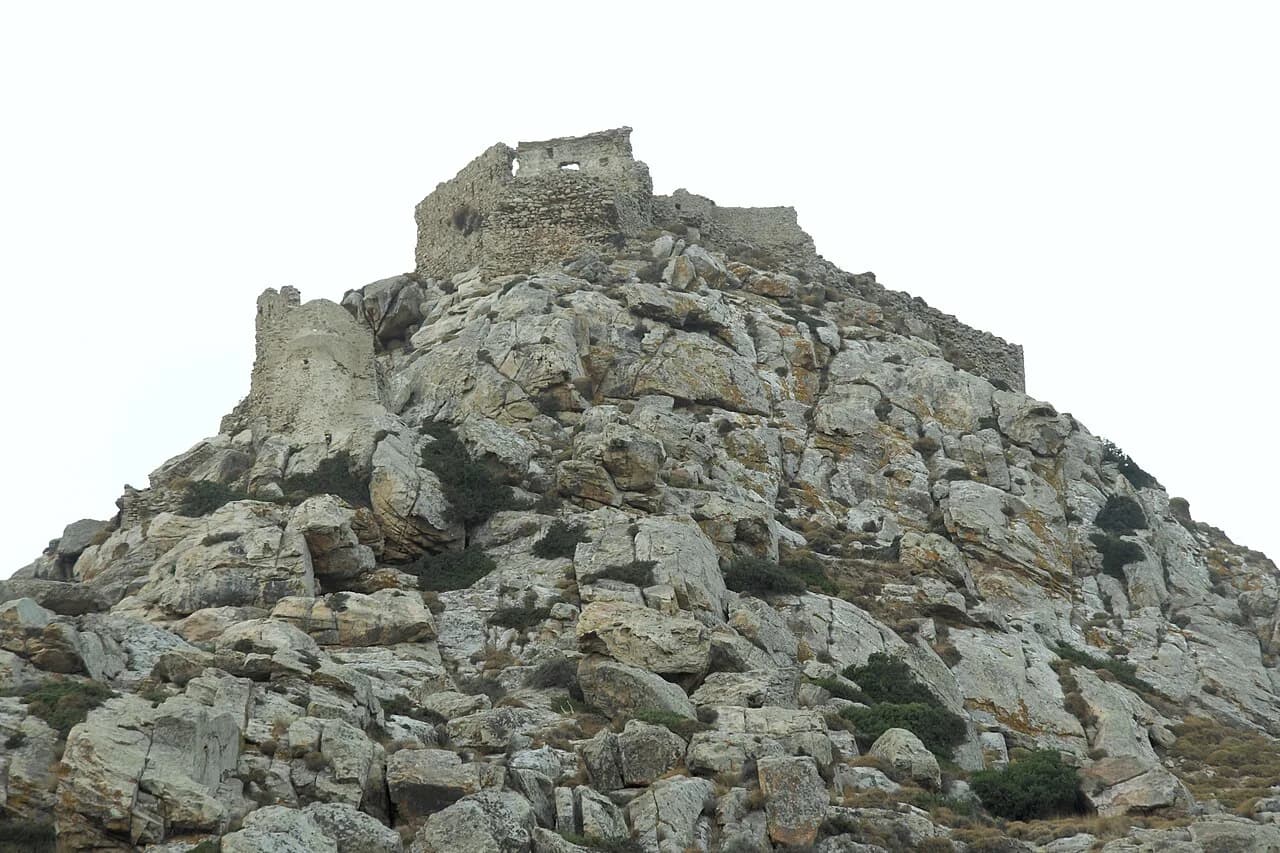
The visible legacy is the Kastro quarter of Chora, the walled hilltop that the island's noble families occupied. Before the Venetians, the same hill held the local oligarchy, who lived on the site of today's Kastro while most of the population worked in farming, fishing, herding and crafts.
Walking the Kastro is the cheapest history lesson on the island. Go early or late to avoid the midday crush, enter through the surviving gates and notice how the lanes are built for shade and defence rather than traffic. This is also where Chora feels least like a resort and most like a lived-in town.
When you come down, the food decision matters. The Kastro lanes and the old town around them favour small tables and slower meals, while the harbour front sells convenience and sea views. Our round-up of the best restaurants in Naxos covers both town and beach options if you want to plan the meal before the walk.
Ottoman Centuries and the Road to the Modern Greek State
Turkish rule lasted from 1537 to 1829, when Naxos joined the modern Greek state. Unusually for the Aegean, the Ottomans chose not to colonise Naxos and the other islands in the same way, which helps explain the persistence of a Latin-descended local elite and the Catholic presence in parts of the island.
Naxian society stayed feudal in structure, divided between the lords and masters who lived in mansions and the peasants who worked the land. That arrangement shaped the island's villages and country houses as much as any battle did, and it is why some inland settlements feel grander than their size suggests.
For the visitor this period is mostly read through buildings and church architecture rather than excavated sites. The island's guide notes monasteries and churches of historic and architectural importance, and many are still in use, so dress and behaviour should follow local norms rather than tourist habits.
Reading the Layers on Foot: A Short Walk Through Chora
Start at the waterfront and walk north towards the causeway to the Portara for the doorway and the harbour panorama. Then turn inland, climb into the Kastro through its gates, and drop down into the lanes on the far side. Allow a half day if you want to stop for coffee and look at doorways properly.
The order matters for comfort, not for history. Doing the Portara first means you are on the exposed islet before the heat peaks, and finishing in the shaded Kastro lanes puts you in the old town at the hour when the tavernas start setting tables. A mid-morning start also leaves room for a bakery stop; our pick of the best bakeries in Naxos makes a useful breakfast anchor before the walk.
If you only have one day in Chora, skip the interior and do this walk instead. The quarries need a car or a bus and a willingness to be away from the sea for several hours; the town delivers the Cycladic, Venetian and harbour history in one compact circuit.
Practical Notes: Distances, Transport and Timing
Everything in Chora is walkable. The Portara is a short stroll from the harbour front, the Kastro is a few minutes inland, and the Grotta area lies just north of the centre. The interior sites are the ones that need planning: Melanes is a short drive inland from Chora, while Apollonas on the north coast is a substantially longer trip, better paired with a beach day than squeezed in.
Buses, taxis and rental cars all serve parts of the island, but schedules and availability change with the season. Rather than rely on any published timetable you read in advance, confirm times at the bus station or with your accommodation when you arrive, and check whether a return service exists before you set out for a remote quarry.
Seasonality shapes the whole plan. Coastal village life thins out in winter, so a cold-season visit should centre on Chora and its year-round population. In high summer, book any table you care about, particularly for sunset, and eat lunch late to avoid the busiest hour.
One reminder covers most of it: check current opening days and transport times locally before committing to a day in the interior, since small sites and rural services do not run to fixed tourist schedules.
Common Mistakes: Beach-Only Naxos and the Skipped Interior
The most common error is treating Naxos as a beach-only island. The beaches are genuinely excellent, but the island's identity comes from marble, quarries and a Venetian hill town, and none of that is on the sand. Two or three hours of history in Chora will not compromise a beach holiday.
The second mistake is skipping the interior villages entirely. The quarry at Melanes sits on the road towards the Sagri plateau, where inland village life and a very different landscape are part of the reward. Combine the statue with a village meal rather than driving out and back for a single photo.
The third is over-scheduling. Two quarry sites, a museum and a full Kastro walk in one day produces fatigue rather than insight, especially in summer heat. Pick either the northern quarry or the inland one, add one town walk, and leave the rest for a return visit.
Plan Naxos History Around Your Meals
The workable pattern is simple: put the Portara and Kastro walk on your first full day in Chora, when you are still orienting yourself, and save the interior quarries for a day when you have a car or a confirmed bus. Build lunch into both, because the best tables in Chora and the villages fill early in summer.
Use the history as a filter for where you eat. A Kastro walk naturally ends in the old town, a Portara sunset ends on the waterfront, and a Melanes morning ends in an inland village. For the wider picture of food on the island, start with our guide to what to eat in Naxos and then match dishes to the neighbourhood you end up in.
Explore more Naxos sauna guides
Frequently Asked Questions
What ancient ruins can you actually visit on Naxos?
The most accessible is the Portara, the giant marble doorway on the islet beside Chora's harbour, reachable on foot. In the interior, the unfinished kouros statues at Melanes and at Apollonas still lie in their old quarries. The Cycladic settlement at Grotta lies beneath modern Chora, so there is little to see above ground.
What is a kouros and why were the Naxian ones left unfinished?
A kouros is an Archaic Greek statue of a naked young man. The Naxian examples at Melanes and Apollonas were abandoned in the quarries, and the reason is not known; sources only speculate, which is why you see partly carved figures still attached to the rock.
How old are the Cycladic settlements on Naxos?
Settlements on the island go back to the Neolithic, and the first major civilisation is Cycladic, in the third millennium BC. One phase of that period, named Grotta-Louros, is dated to roughly 3200 to 2800 BC.
When did the Venetians rule Naxos, and what did they build?
Venetian rule lasted from 1207, when Marco Sanudo landed at Agiassos, until 1537. Their main visible legacy is the walled Kastro quarter of Chora, which you can walk through freely.
How do you get to the kouroi at Melanes and Apollonas?
Melanes is a short drive inland from Chora, towards the Sagri plateau. Apollonas is on the north coast, a much longer trip. Buses and rental cars serve the island; rural bus services are seasonal, so check current timetables locally before setting out.
Do you need to book the Portara or the Kastro?
No. Both are open outdoor areas reached on foot from central Chora, with no ticket needed. What you may want to book is a table afterwards, particularly for sunset on the harbour front in high season.
Which Greek island is the oldest?
Claims about the oldest island are hard to pin down precisely. For Naxos, the island's own historical guide traces settlement back to the fourth millennium BC and describes Naxos as a leading centre of Cycladic civilisation, which is a fair summary of what the evidence supports without ranking islands.
Why is Naxos associated with marble sculpture?
The island had abundant marble and also emery, a hard rock mined there until the 1950s and used since antiquity to polish marble. Naxian sculptors were sought after and influenced the development of monumental Greek sculpture in the Archaic period.
Sources
Notes for eating well in Greece
Optional updates to our guides.
You might also like

Continue reading
More guides you'll find useful