What to Eat in Naxos: Local Dishes and Where to Try Them
Plan your eating in Naxos with a guide to the island's cheeses, potatoes and kitron liqueur, plus village tavernas in Halki, Filoti, Apeiranthos and Koronas.
On this page
Naxos is the largest island in the Cyclades, and its interior is unusually fertile for the Aegean, which is why potatoes, cheese and citrus carry more weight here than on the smaller islands. That matters when you plan meals: the coastal strip around Chora and Plaka serves beach-day food, while the mountain villages of Halki, Filoti, Apeiranthos and Koronas eat from the land around them. This guide maps those two eating zones, explains the dish names in plain English and shows where to slot each stop into a day of sightseeing.
Where a taverna has no fixed menu, as in Koronas, the advice is to ask what is cooking rather than order from a list. Treat the named places as anchors for a route, then check days and hours locally before driving out.
Start With the Produce: Potatoes, the Interior and Why Villages Eat Differently
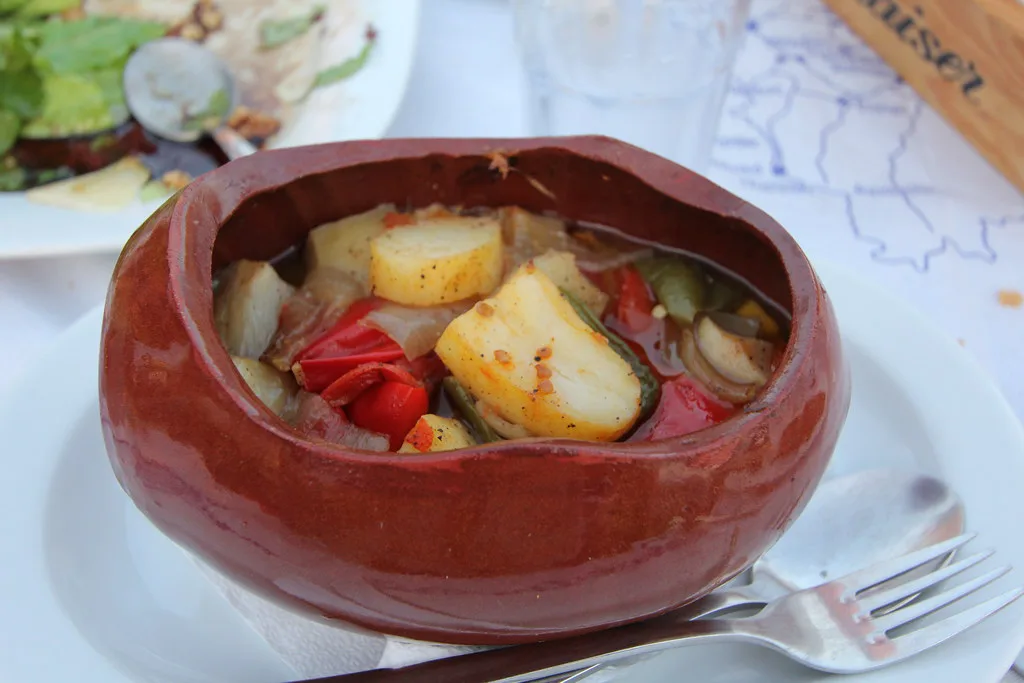
Naxian potatoes are the island's quiet claim to fame, and you will see farm trucks stacked with them rolling toward Chora from the interior. Because the mountain villages sit in agricultural land rather than on the tourist strip, their tavernas cook from what is grown and raised nearby, and the food reads accordingly: braised meats, pulses, greens and cheese rather than fried seafood platters.
The practical consequence is that you should not treat a village lunch as a quick fuel stop between sights. Plan the village day around one long midday table and let the driving fill the rest of the hours. If you only eat in Chora and on the west-coast beaches, you will miss the produce side of the island almost entirely.
The Cheeses to Order: Graviera and Xinomizithra Explained
Graviera is a firm, aged sheep's or goat's cheese, nutty and salty enough to eat on its own with bread or to appear grated over baked dishes. Xinomizithra, which translates roughly as sour cheese, is a soft, tangy whey cheese with a yogurt-like sharpness; it shows up on meze plates and works as a spread rather than a table cheese. Ordering a small cheese plate before the main course is the simplest way to taste the difference between them.
For buying cheese to take away, Kiriakos Tziblakis Local Products in Chora is described as the oldest market store on the island, with nuts, dried fruit, honey, olive oil, marmalades and a range of Naxian cheeses spanning graviera and xinomizithra. It is a shop rather than a taverna, so it suits a late-morning stop before lunch. If you want to structure a tasting rather than shop by eye, compare options in a Naxos Olive Oil Tasting session, where the producers talk you through what pairs with what.
Kitron: What the Citron Liqueur Is and How to Taste It
Kitron is a liqueur made from citron, the thick-skinned citrus fruit that grows in the fertile valleys around Halki, and it is the one drink most closely tied to Naxos. It is usually served well chilled in small glasses and ranges from sweeter to more aromatic styles, so a tasting is more informative than buying blind. The Vallindras Kitron Distillery in Halki is the established stop for that, and it fits naturally into a village day rather than a separate trip.
Taste before committing to a bottle, since a liqueur you found too sweet in a tasting glass will stay too sweet at home. Halki itself is a good base for this: the village sits among citrus orchards and olive groves, has a shaded main square and the Church of Saint George Diasoritis a short walk away in the olive groves.
Eating in Chora: The Old Market, Loukoumades and Siesta Timing
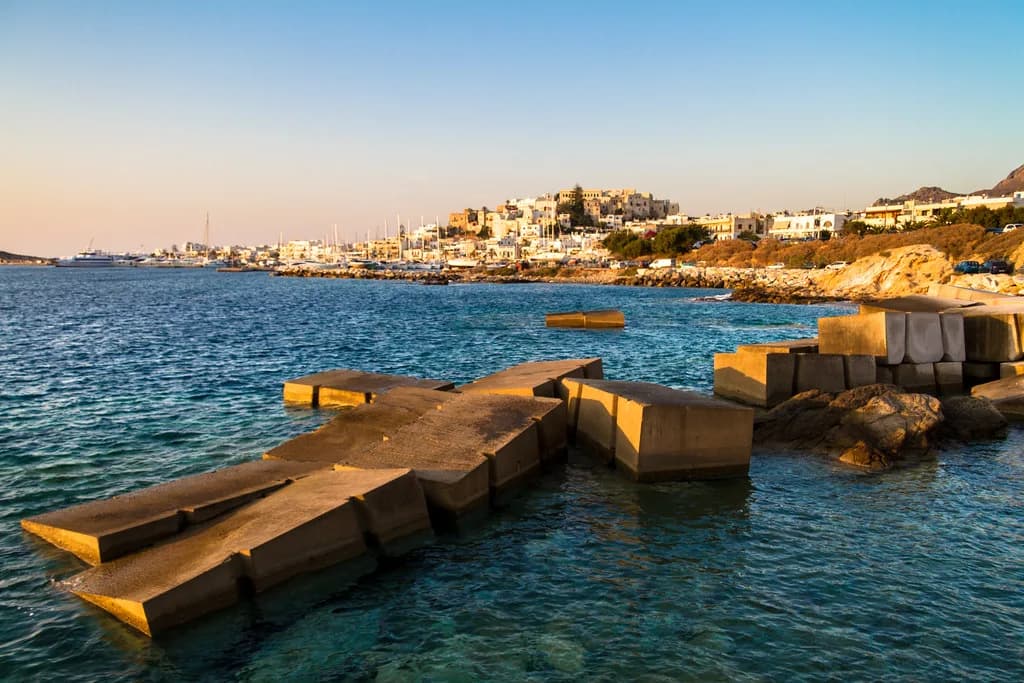
Chora's old town is a maze of narrow lanes and arches, and the old market running through it is the best place on the island to combine shopping with eating, offering local produce, honey, olive oil and cheese at calmer prices than the big-name Cycladic ports. Pocket Gallery is worth a look for contemporary ceramics, and the Venetian Castle above the lanes is inhabited and open to wander, which makes a natural loop between meals.
Loukoumades are small fried dough balls served with honey, crisp outside and soft within, and Padelis Coffee Shop in Chora is the spot associated with them. Treat them as a mid-afternoon stop rather than dessert after a big lunch. For the sit-down meals, the best restaurants in naxos town are concentrated around the old town and harbour, which lets you eat early before a sunset walk.
Siesta is the timing rule that catches visitors out: much of Chora's old town closes through the mid-summer heat, and village restaurants also shut in the afternoon. Arrive early or come back after 5pm to find shops and kitchens actually open. That rhythm argues for a big village lunch and a later, lighter dinner in town.
The Mountain-Village Lunch Circuit: Halki, Filoti, Apeiranthos and Koronas
These four villages sit close enough together to link in a single driving day, and each adds something different to a food itinerary. Halki brings citrus, kitron and a proper square for a long lunch; Filoti has a leafy main street, an active produce stall on the square and the trailhead for the Mt Zas hike just outside the village; Apeiranthos is a marble-built town with tavernas looking toward Mt Zas; and Koronas is the sleepiest of the group, with dramatic views north over the Aegean.
Driving logic matters here. A sensible loop heads north from Chora via Melanes, where the unfinished ancient Kouros statues lie in the olive groves, then climbs through Kinidaros toward Koronas for lunch, continues to Apeiranthos, and returns through Filoti and Halki toward Chora. Ending at Plaka Beach for a late swim is a reasonable finish. A rental car makes this day far easier than buses, which serve the main west-coast beaches and larger villages but not every small square on this route.
If you would rather have someone else handle the driving and the ordering, a naxos food tour covers similar ground with a guide doing the translating. Do the villages independently if you want to linger over a two-hour lunch; take the tour if you want the context explained as you go.
Named Tables: Ambrosia, Taverna Platanos and the Koronas Kitchen
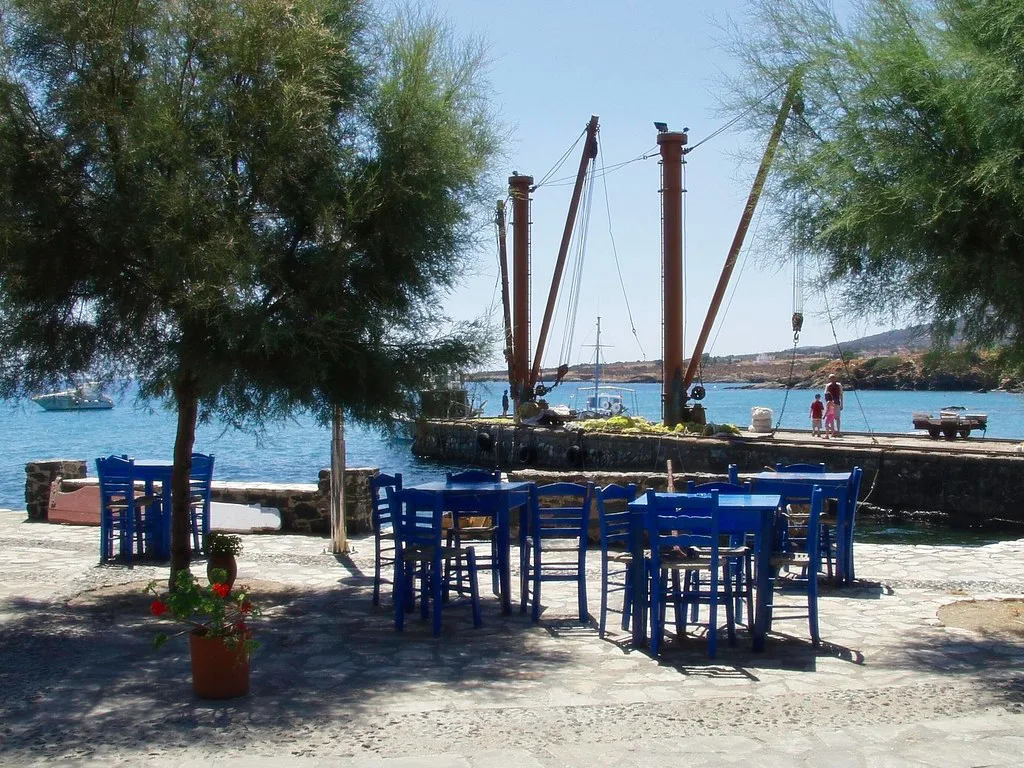
Ambrosia on Filoti's main square is described as one of the better restaurants on the island, which makes it a strong lunch candidate if you are timing the day around the Mt Zas trailhead. Taverna Platanos in Apeiranthos serves traditional food with views over the hills toward Mt Zas. Both sit in villages where the midday heat is punishing, so a shaded table at the right hour is part of the plan, not an afterthought.
Martina and Stavros' Taverna on the square in Koronas is reported to have no fixed menu, with the kitchen deciding what is cooked that day. That is the no-menu situation the brief's advice addresses: say yes to what arrives, expect home-style Greek cooking and a jug of local wine, and ask what is available rather than hunting for a list. Do not count on a particular dish being ready.
Koronas is almost entirely unaccustomed to visitors and English is less widespread than on the coast, so a few words of Greek and some patience go a long way. The trade-off is real: you give up the reliability of a printed menu and gain a square where very little happens at a very slow pace. If you want to learn to cook this kind of food rather than just eat it, the Naxos Cooking Class Guide covers hands-on options.
Beach-Day Eating: Plaka, Agios Prokopios and the View-Versus-Value Trade-Off
On the west coast, eating follows the sunbeds. Plaka is a long stretch of white sand backed by dunes and relaxed beach bars, with Tortuga beach club the established afternoon stop at that end. Agios Prokopios is the busiest and most developed of the beaches, with beach clubs and watersports, so the food is convenient and priced for the setting rather than for value.
The trade-off is view and convenience against value and character. A beach club gives you a sunbed, a sea view and a menu in English; a back-street taverna in Chora or a village square gives you better food for the money but requires a drive or a bus ride. A workable compromise is a light beach lunch and a proper dinner inland. Note that the meltemi wind peaks in July and August, which can push you off the sand and into a taverna earlier than planned.
Beach days and bakery runs pair easily: pick up bread and pastries in the morning, eat simply at the beach, then go out for dinner. The Naxos Bakery Guide covers where to do the morning stop, and the best gyros in naxos are the cheap fallback when nobody wants a sit-down meal.
How to Order: Meze, Main Plates and Jugs of Wine
In Naxos, as across Greece, a meal can be built from shared meze plates or from individual main courses, and the village tavernas lean toward the shared model. Meze are small plates meant for the middle of the table, so ordering four or five between two people is normal and ordering one each is usually too much. A jug of local red wine, house wine rather than a labelled bottle, is what appears alongside traditional food in the mountain villages.
For the wider vocabulary of Greek menus, the guide to traditional greek food explains standards such as horiatiki salata, the village salad of tomato, cucumber, onion, olives and feta with no lettuce, and shrimp saganaki, prawns baked in a tomato and cheese sauce. Recognising these names lets you read a handwritten menu in a village square without guessing, and the same vocabulary carries over to every taverna between here and Athens.
Fellow travellers' forum threads on Naxos food repeatedly name To Elleniko, Meltemi, Boulamatsis and Kozi among places people return to, which is useful as a shortlist for dinner in or near Chora rather than a ranking. Restaurant review aggregator listings for Naxos give a wider, more commercial spread of options. Cross-check both, then book where the menu matches what you actually want to eat.
Practical Planning: Cars, Midday Heat and the Off-Season Question
Buses on Naxos are reliable for Chora, the main west-coast beaches and the larger villages, but reaching the small mountain squares by bus eats a lot of the day. Hiring a car for even two or three days opens up the village lunch circuit, the quieter beaches and the interior. Scooters and ATVs work for shorter coastal hops but are less comfortable on the climbing, winding roads toward Koronas and Apeiranthos.
Time your driving around the heat. Mountain villages are scorching at midday and their restaurants close in the afternoon, so aim to arrive for a late lunch rather than an early one, and use the hottest hours for a shaded table or a swim. For the Mt Zas hike, the usual advice is to allow several hours for the return and carry water, sun protection and a torch for the descent, since the summit section is loose rock.
As a general pattern on the Greek islands, many seasonal restaurants shut from roughly November to April, and small mountain kitchens may open only at weekends or by arrangement outside summer. That is a broad pattern rather than a guarantee for any named place here, so check the specific taverna before you build a winter day around it. May and September are the usual sweet spots for warm sea, manageable crowds and easier tables.
Where Food Fits Into a Naxos Itinerary
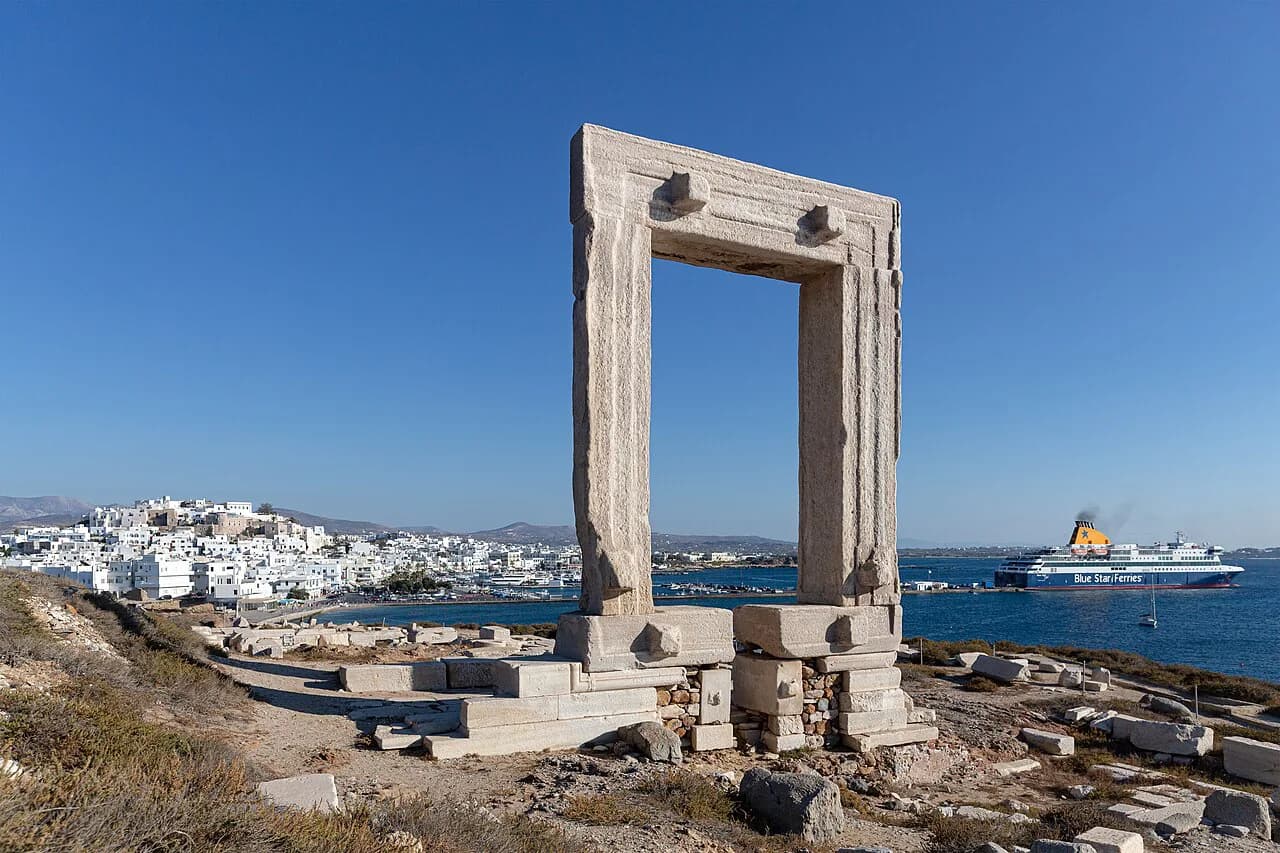
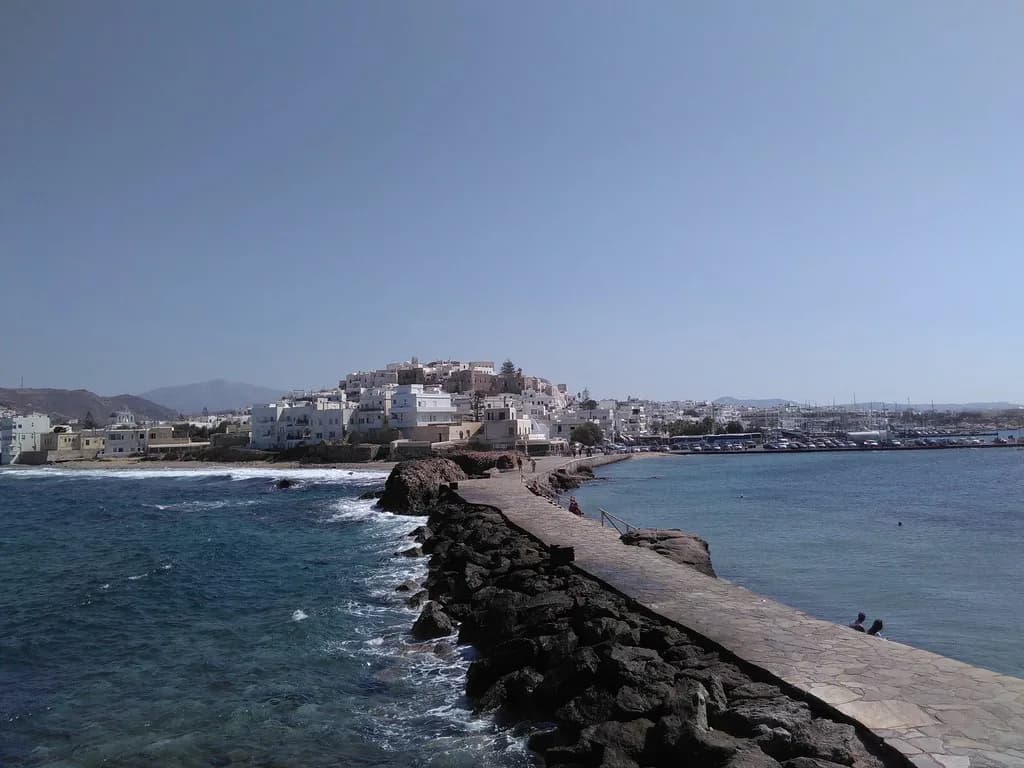
Meals anchor a week on Naxos better than sights do. A first afternoon in Chora can run from an old-town wander to Portara Gate at sunset on Palatia islet, where the causeway walk takes about five minutes from the harbour. Be warned that peak-season sunset there is crowded; sunrise gives you the site almost to yourself instead.
From there, shape the week around food rather than around a checklist: one full beach day with a beach-club lunch, one mountain-village day ending in a long lunch, one hike day timed so dinner comes after the descent, and a final Chora evening before the ferry. If you want the broader sightseeing picture to hang these meals on, the Naxos Attractions: 4 Visitor Guides collection covers the monuments, beaches and villages in more depth.
Plan Your Naxos Eating Around the Villages, Not Just the Coast
The clearest rule for eating well on Naxos is to move inland at least once: order graviera and xinomizithra, taste kitron where the citrus grows, and let a village kitchen decide the rest. Book the car for that day, keep the afternoon free and do not schedule anything tight afterward. Buy cheese and honey in Chora's market on the way home.
Check current opening days and seasonal closures directly with the taverna or distillery before you drive out, especially outside summer, and confirm ferry and bus times the same week you travel.
Explore more Naxos sauna guides
Frequently Asked Questions
What food is Naxos known for?
Naxos is known for its potatoes, its cheeses, particularly graviera and the soft sour cheese xinomizithra, and for kitron, a citron-based liqueur tied to the Halki area. The fertile interior means mountain-village tavernas cook from local produce rather than imported staples, so braised meats, pulses, greens and cheese plates are common.
What is xinomizithra and how is it eaten?
Xinomizithra is a soft, tangy whey cheese with a sharp, yogurt-like flavour, and its name translates roughly as sour cheese. It appears on meze plates and works as a spread with bread rather than as a firm table cheese, so order it alongside a harder cheese such as graviera to compare the two.
Where can I try kitron liqueur on Naxos?
The Vallindras Kitron Distillery in Halki is the established stop, and Halki sits among the citrus orchards where the fruit grows. Kitron is usually served chilled in small glasses and comes in sweeter and more aromatic styles, so taste before buying a bottle.
Do Naxos restaurants close in the afternoon?
Much of Chora's old town closes during the mid-summer heat, and village restaurants also shut in the afternoon. Arrive early or come back after 5pm, and treat the siesta window as the reason to plan a late lunch rather than an all-afternoon table.
Is it worth driving to the mountain villages just for lunch?
Yes, if you have a car and can give the day over to it. Halki, Filoti, Apeiranthos and Koronas sit close enough to link in one loop, and the food is the point rather than a side stop. Buses reach the larger villages but make a four-village lunch day difficult.
What should I order at a Naxian taverna with no menu?
Ask what is cooking today and say yes to a spread of small plates rather than picking one main course each. Expect home-style Greek cooking and a jug of local wine, and do not count on a specific dish being available, since the kitchen decides by what it has.
Sources
Notes for eating well in Greece
Optional updates to our guides.
You might also like

Continue reading
More guides you'll find useful