
Archaeological Museum of Rhodes: A Visitor's Guide to the Hospital of the Knights
The Archaeological Museum of Rhodes is the island's main collection of ancient finds, and it is housed in one of the most striking buildings in the Medieval City: the Hospital of the Knights of St. John. That double identity is what makes a visit worthwhile, because you are walking through a Gothic hospital as much as looking at cases of pottery and sculpture. This guide covers where the museum sits, how to reach it on foot, what to look for on each level and how to fit it into a morning or afternoon in Rhodes Town.
Quick Answer: What the Museum Is and Where It Sits
The museum occupies the monumental Hospital of the Knights in the Medieval City of Rhodes, a walled quarter that is itself a UNESCO-listed monument. The collection is one of the most important archaeological holdings in the Dodecanese, the island group that includes Rhodes and Kos, and it covers material from prehistoric to medieval times. Because it is inside the old town rather than on its outskirts, it slots naturally into a walking day between the harbour and the Palace of the Grand Master.
Where It Is: Akti Sachtouri 8, Inside the Medieval City
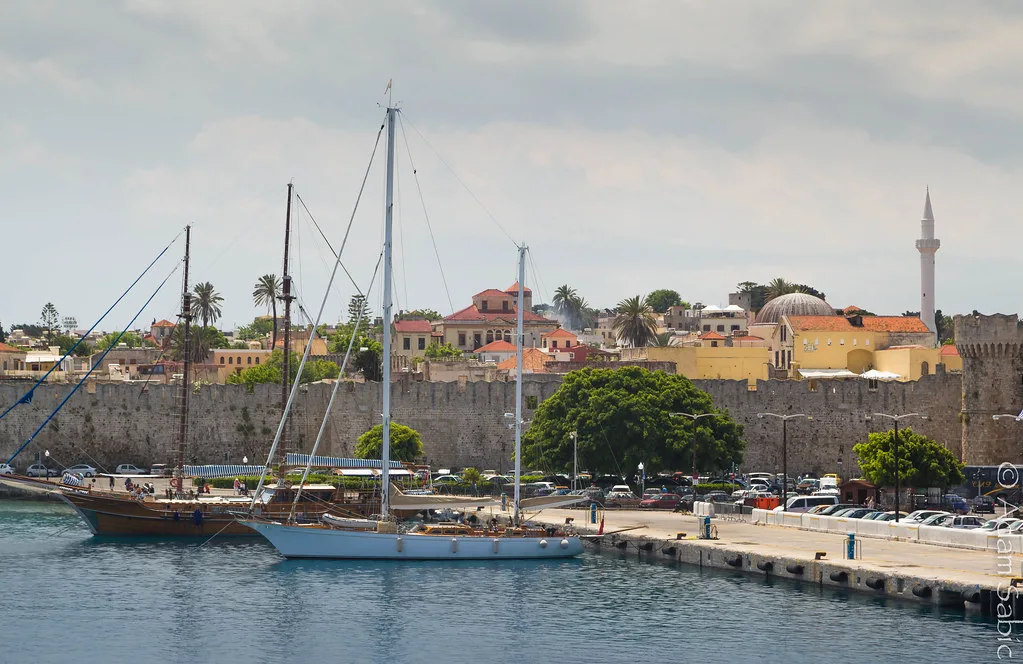
The museum's published address is Akti Sachtouri 8, Rhodes, placing it just inside the northern edge of the Medieval City near the waterfront. In practice you will navigate by landmarks rather than street numbers, since the old town's lanes twist and signs are inconsistent; aim for the hospital building with its long Gothic facade and central courtyard. If you are coming from Mandraki harbour, enter through the gate closest to the waterfront and follow the walls inward.
How to Get There: Walking from Mandraki and the Street of the Knights
Walking is the sensible way to arrive, because vehicular access inside the Medieval City is restricted and the lanes are narrow. From Mandraki harbour the approach is short and flat, which makes the museum an easy first stop if you are arriving by boat or staying near the port. Approaching from the upper part of the old town means walking down through the Knights' quarter, so you arrive at the museum already oriented to the medieval street plan.
Travellers with limited mobility, small children or heavy bags should consider a taxi to the nearest accessible gate rather than a long walk through cobbles; the museum does not publish detailed access information, so ask about step-free routes at the entrance before committing. Allow extra time if you are visiting in high summer, when the walled lanes trap heat and shade is patchy. The walk from the harbour is the most straightforward option for most visitors.
The Building Itself: A Gothic Hospital of the 1440s–1490s
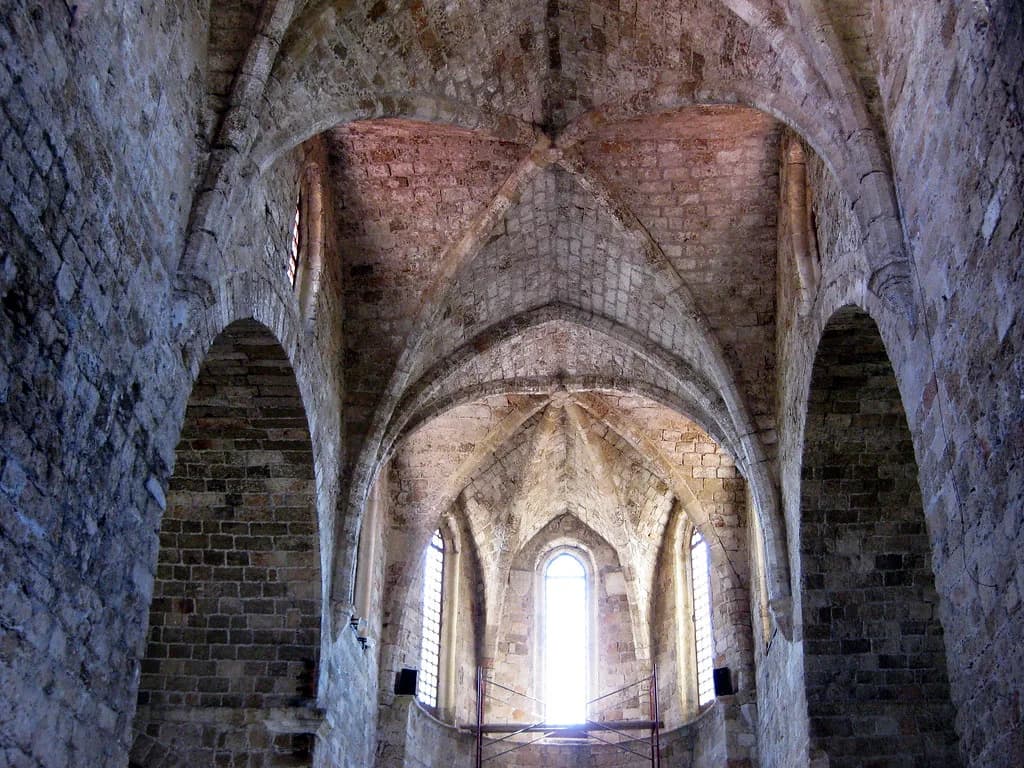
The Hospital of the Knights was built between 1440 and 1490 by the Knights of St. John, the military order that ruled Rhodes for two centuries, and it was converted into a museum in 1916. The structure is Gothic with Renaissance touches, arranged around a central courtyard on four sides. Knowing this changes how you read the interior: the long wards and upper rooms were designed for patients, not for display, which is why the collection unfolds in a series of intimate spaces rather than one grand hall.
The Central Courtyard: The Lion and the Cannonballs
Before you enter the galleries, slow down in the courtyard. A large Hellenistic lion statue dominates the space, holding the head of a bull between its paws, and fragments of cannonballs are displayed as a reminder of the sieges the city endured. It is the single best place to pause and look up at the arcades, because the building's four-sided plan reads most clearly from here. Treat the courtyard as a room in its own right rather than a corridor between ticket desk and exhibits.
Ground Floor: Funerary Steles, Inscriptions and Coats of Arms
The ground floor holds funerary steles, which are carved stone slabs set up to mark a grave and often carry the name and image of the deceased, along with inscriptions, medieval sarcophagi and the coats of arms of the Knights. The heraldry is the section most people walk past, yet it is the clearest link between the building and the order that built it: each shield belonged to a specific family or office. Read a few closely and the political geography of the medieval order starts to make sense.
First Floor: Finds from Ialysos and Kamiros
Upstairs, the rooms overlook the courtyard and hold finds from Ialysos and Kamiros, two of the three ancient cities that shared the island with Lindos in antiquity. Displayed here are geometric ceramics, idols, Mycenaean jewellery, metal objects and Hellenistic coins. The sequence rewards readers who know the sites: if you have walked the ruins at Kamiros, the household pottery and small bronzes here fill in what the bare stones cannot show.
If your trip also takes in Lindos, the same logic applies in reverse: see the acropolis there first and the museum's labels will mean more, or come here first and the hilltop ruins will make better sense afterward. Either order works, but pairing the two deliberately is more rewarding than treating the museum as a rainy-day filler.
Star Objects: Crouching Venus, Head of Helios and the Stele of Krito and Timarista
Three pieces justify the ticket on their own. The Crouching Venus is a 1st-century BC sculpture of the goddess drawn into a crouch, the Head of Helios is a 2nd-century BC depiction of the sun god who was Rhodes' patron deity, and the funerary stele of Krito and Timarista is a 5th-century BC grave relief. Look for all three early, because they sit within a dense run of cases and are easy to pass while reading labels.
The Helios head matters beyond its craftsmanship: the sun god appeared on Rhodian coinage and was honoured by the colossus that once stood near the harbour, so the face here is a useful anchor for the island's civic identity. Give the stele a minute as well, since grave reliefs are where ordinary family relationships, rather than imperial propaganda, come through.
Also Look For: Mosaics, Fikellura Vases and the Athena/Artemis Statue
Beyond the headline pieces, the collection includes mosaics, Fikellura vases, Mycenaean lenses and an archaic statue of Athena or Artemis. Fikellura pottery is a distinctive eastern Greek style with figured decoration on a pale ground, and it is worth knowing the name so you can spot it on the labels. The archaic statue rewards a look at the face and posture, which differ markedly from the classical pieces elsewhere in the building; the contrast is the point.
How Much Time to Allow, and Pacing a Hot Midday Visit
Two hours covers the building and the main pieces without rushing, while a serious archaeology reader can spend half a day. The museum is compact enough that you are never far from the courtyard, which makes it a good refuge during the hottest part of the day when the open streets are uncomfortable. Start upstairs while you are fresh, since the upper rooms hold the most demanding material, then work down to the ground floor and finish in the courtyard.
Opening Hours and Tickets: What Is Published
The museum's listing gives opening hours of 08:00 to 20:00 daily, with no variation by weekday shown. Hours at Greek state museums do change with the season, so confirm the day you plan to visit on the official culture ministry site or by asking at the entrance rather than relying on a cached page. The museum also publishes no ticket price here, so check the current admission and any concession rules at the ticket desk or on the official site before you budget.
Getting the Context: Read Up on Kamiros and Ialysos First
The museum's upper floor is essentially a story about three ancient cities, so a little preparation pays off. Kamiros is the excavated hillside city on the west coast, and seeing its streets and cisterns before or after the museum turns a case of pots into evidence of how households actually lived. Rhodes Town's own ancient predecessor lies beneath the modern city and is harder to visit, which makes the museum the practical place to meet that material.
Nearby: Street of the Knights, the Palace and the Harbour
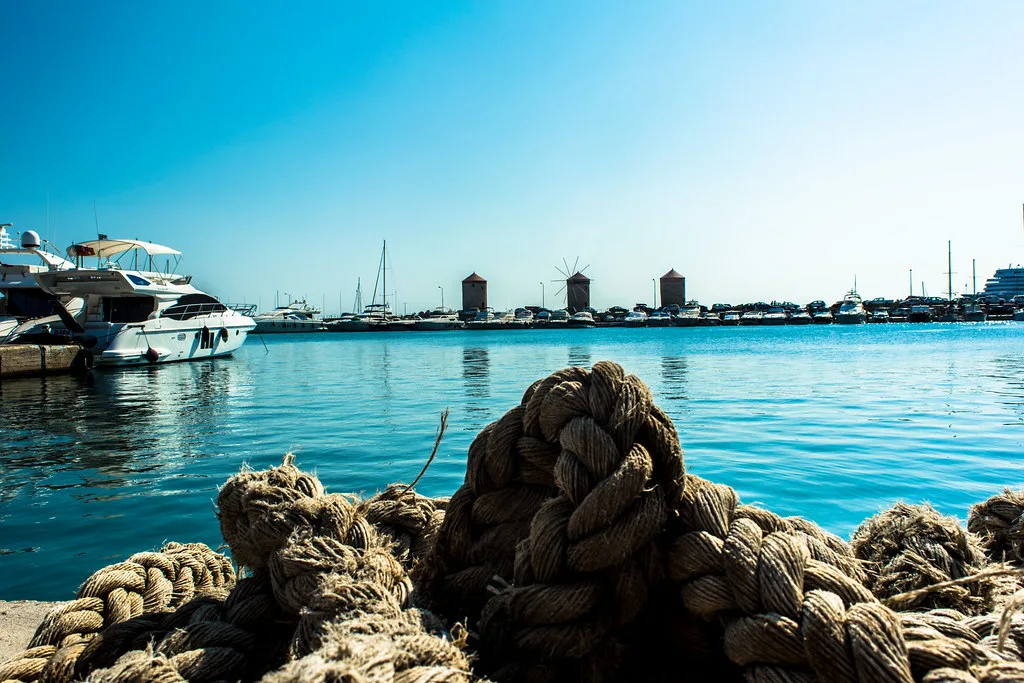
The museum sits within a few minutes' walk of the Street of the Knights, the preserved medieval street lined with the inns of the order's different tongues, and of the Palace of the Grand Master, the fortress-palace at the high point of the old town. Mandraki harbour is also close, which makes a simple half-day shape: museum first, then the street, then the palace, finishing at the water. Filerimos Monastery lies well outside the walls and is a separate outing rather than an add-on.
Practical Trade-offs: Museum First or Late
Going early has two advantages: the upper rooms are quieter and you leave the middle of the day free for shaded lanes and a long lunch. Going late, in the hours before closing, suits anyone who wants the courtyard to themselves but risks being hurried out if the galleries take longer than expected. Either way, the museum pairs poorly with a tightly timed palace visit on the same morning, so give one of the two a proper slot.
What to Save for Another Day, and a Half-Day Shape
Save the island's outlying sites, such as the acropolis above Lindos and the ruins at Kamiros, for days of their own; both need transport and several hours, and squeezing either around a museum visit shortens both. A workable half-day inside the walls runs: museum at opening, the Street of the Knights on the way up, the palace next, then down to Mandraki for the harbour breeze. If you are comparing archaeological collections across Greece, the museums in Chania and Corfu follow the same logic of building plus regional finds and are worth a look before you decide how to allocate time.
Plan Your Visit
The Archaeological Museum of Rhodes is worth an unhurried two hours precisely because the building and the collection tell different halves of the same story. Check the day's opening hours and admission at the official source before you go, wear shoes that cope with cobbles and carry water for the walk in. Build the visit around the courtyard lion, the three star pieces and the Kamiros material, and the rest of the Medieval City will read more clearly afterward.
Explore more Rhodes sauna guides
Frequently Asked Questions
Where is the Archaeological Museum of Rhodes located?
It is inside the Hospital of the Knights in the Medieval City of Rhodes, at Akti Sachtouri 8, close to the northern waterfront and a short walk from Mandraki harbour. You enter the walled old town on foot and navigate by the hospital's Gothic facade rather than by street signs.
What are the museum's opening hours?
The published listing gives 08:00 to 20:00 every day, with no weekday variation shown. Because Greek state museum hours can shift with the season, confirm your date on the official culture ministry site or at the entrance.
How much are tickets to the Archaeological Museum of Rhodes?
Admission prices are not published in the information available here. Check the current ticket price, and any concession or free-entry rules, at the ticket desk or on the official site before you budget for the day.
How long does a visit take?
Allow about two hours for the building and the main pieces, and up to half a day if you read the labels and the Ialysos and Kamiros material closely. Starting upstairs while you are fresh and finishing in the courtyard is a sensible order.
What are the most important exhibits?
Look for the Crouching Venus, the Head of Helios and the funerary stele of Krito and Timarista, all on the upper floor among the star pieces. The courtyard lion holding a bull's head is the other unmissable object.
Is the museum near the Street of the Knights?
Yes, the Street of the Knights and the Palace of the Grand Master are both a few minutes' walk away inside the Medieval City. That makes a natural half-day sequence of museum, street and palace, ending at Mandraki harbour.
Does the museum cover the ancient cities of Kamiros and Ialysos?
The first floor displays finds from both, including geometric ceramics, idols, Mycenaean jewellery, metalwork and Hellenistic coins. Seeing the excavated site at Kamiros as well makes the case contents much easier to interpret.