
Street of the Knights (Odos Ippoton) in Rhodes Old Town: A Practical Visitor Guide
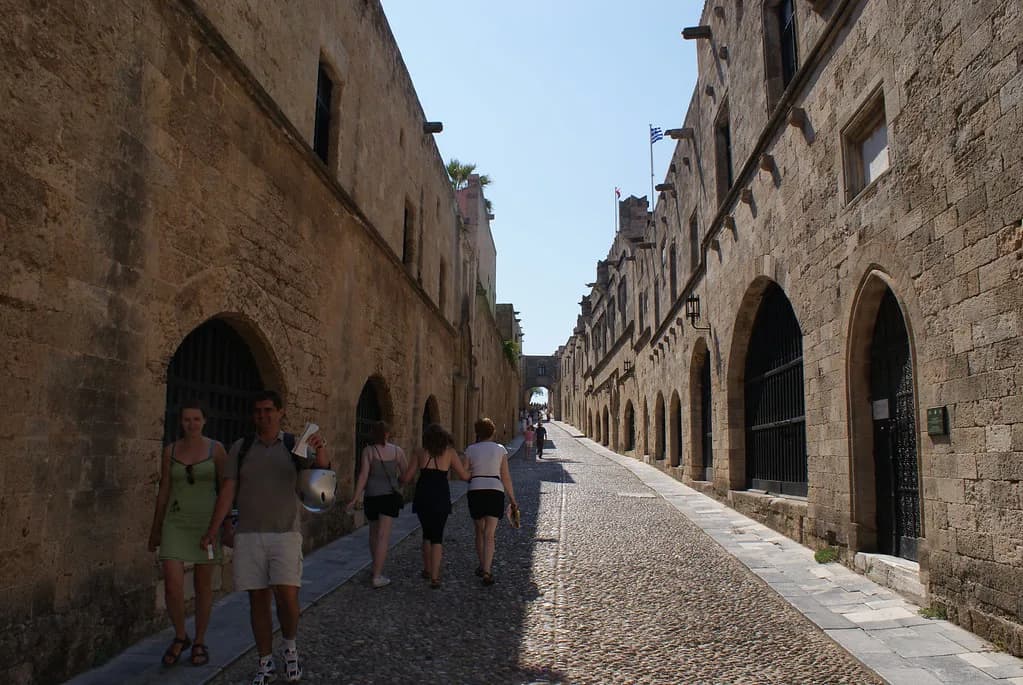
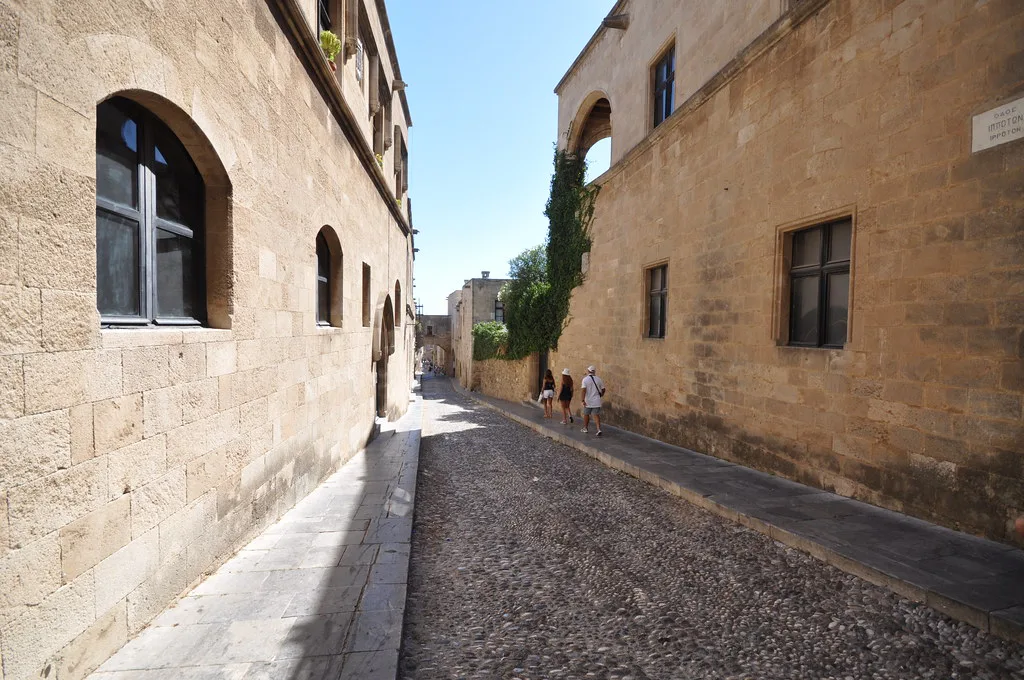
The Street of the Knights, called Odos Ippoton in Greek, is the best-preserved single stretch of the medieval city of Rhodes: a cobbled avenue lined with stone inns built in the 14th century for the Knights Hospitaller. It is not a district to wander into by accident but a defined line between two landmarks, roughly 600 metres long, which is why a little planning changes the visit.
The street is free to walk and quick to cover, while the two big buildings at either end, the Knights' Hospital and the Palace of the Grand Master, are separate ticketed visits. Treating the three as one outing is the most common planning error.
What the Street of the Knights Is
Odos Ippoton is a narrow, cobbled medieval avenue inside the UNESCO-listed Old Town of Rhodes, running through the High Town close to the palace. It was laid out in the 14th century as the residential street of the Knights Hospitaller, also known as the Knights of St. John, a Christian military order that ruled the island.
Its name is literal: this was where the knights lived, and their stone houses still give the street its Gothic facade. If you have read about the Knights Templar in Rhodes, set that aside; the Templars were a different order, and the builders and residents here were the Hospitaller Knights of St. John.
Expect a lived-in street rather than a museum corridor. Along the same cobbles you will find consulates, former guild houses, shops, galleries and restaurants alongside the historic inns, so the buildings are not all open to the public as interiors.
Where It Sits in the Old Town Layout
The street runs in a straight line from the square in front of the Knights' Hospital, at its eastern end, to the Palace of the Grand Master at its western end. That means you can walk it end to end as a single route rather than circling back, which is the key to timing it well.
Because it is one of the main axes of the upper town, the street fills from both ends at once. If you walk it from the hospital square toward the palace, you finish at the palace door with the rest of the Old Town below you; if you walk the other way, you finish at the museum. Choose based on which building you want to enter first.
How to Get There
You reach the street on foot from anywhere in Rhodes Old Town; the medieval lanes are pedestrian and the gates around the walls are the entry points from the modern town and the harbour. From the harbour side, expect a steady climb through the lanes to the upper town, so allow more time than the map suggests. If you are choosing where to stay, our Rhodes Neighborhoods guide covers the areas around the old town.
Public bus and taxi drop-offs sit outside the walls, not on the street itself, so the last part is always walked. If you are coming from Lindos or the beach resorts for the day, build the transfer into your plan and arrive with the street walk and at least one museum in mind.
Wear shoes with grip. The surface is cobbled and worn smooth in places, and the lanes leading to it are uneven, which matters most after rain or in the early morning when the stone is damp.
The Inns and the Seven Tongues
The street's signature buildings are its inns, or auberges, one for each of the seven tongues of the Knights Hospitaller: France, Italy, Provence, Auvergne, Aragon, England and Germany. A tongue was the order's national division, and an auberge was its residence, so the street reads as a row of national headquarters rather than a row of houses.
Knowing this changes how you look at the facades. Each inn carries the architectural character of its tongue, and the carved doorways and stone details are the reason to slow down rather than photograph the whole street in one frame and move on.
Today the inns are not a uniform set of museums. Some have been adapted into shops, restaurants or offices, so do not plan on touring seven interiors; the value is in the exteriors and the sequence.
The Knights' Hospital at the Eastern End
At the eastern end of the street stands the Hospital of the Knights, the order's main healthcare building, now housing the Archaeological Museum of Rhodes. Its collection covers finds from across the island's history and is the natural pairing with the street itself.
Pair the street with the museum if you want context before or after the walk. Museum opening hours and ticket prices change with the season, so check the official Greek culture ministry listings or the museum's own published information before you set out.
The Palace of the Grand Master at the Western End
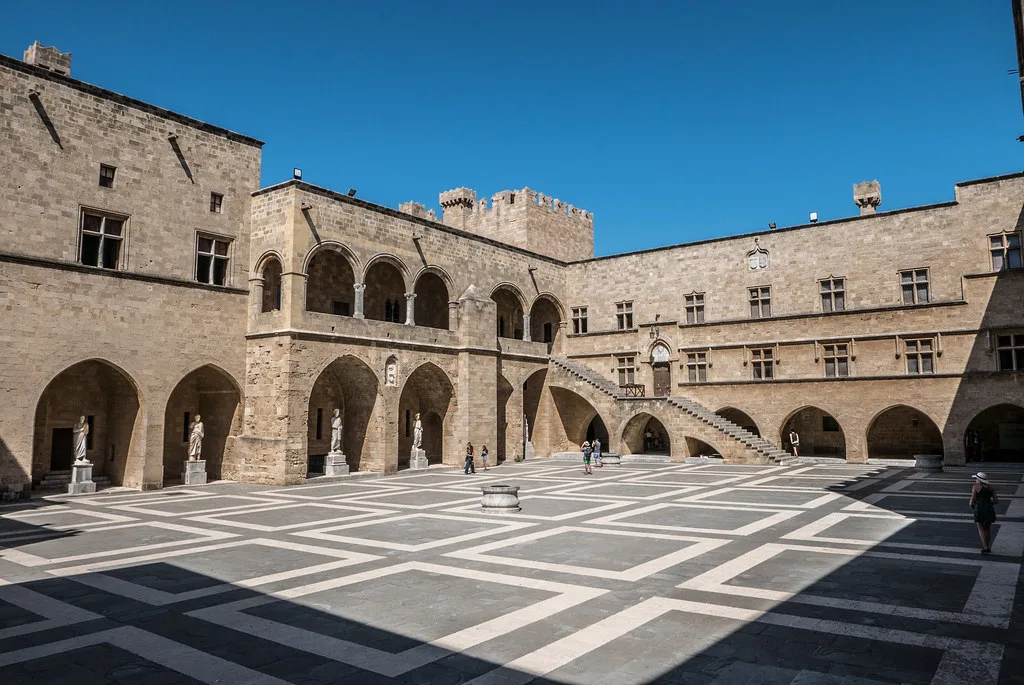
The Palace of the Grand Master closes the western end of the street and was the administrative heart of the Hospitaller order on Rhodes; it now operates as a museum with frescoes and mosaic floors. It is a substantial visit in its own right, easily the longest stop of the day.
Plan the palace as a separate block of time rather than as the last five minutes of the street. If you only have an hour in the upper town, walk the street and leave the palace for another slot; if you have a half day, do the street and one of the two museums, not both.
Architectural Details Worth Slowing Down For
Look up. The upper facades carry intricate carvings and ornate stonework from the 14th century, and the doorways are where the craftsmanship concentrates. The Medieval Clock Tower, which once served as a watchtower and timekeeper, is the other landmark to pick out along the way.
The street also looks out toward the city walls and the harbour in places, which is the reward for walking slowly rather than treating the route as a corridor between two ticket desks. Colourful facades and cobbles are part of the experience, not background.
The Street Today
This is a working street inside a living town. Along it you will pass consular offices, including the British Vice Consulate and the Honorary Consulate of the Czech Republic for the South Aegean, alongside former guild houses, shops, galleries and restaurants.
Food here is incidental to the sightseeing rather than the reason to come, and the street's eateries tend toward convenient rather than destination. If a proper meal matters to your day, plan it for the lanes away from the main axis and check menus before sitting down.
How Much Time to Allow
The street itself takes about 15 to 20 minutes at an unhurried pace, plus photo stops. Add 30 to 45 minutes for the museum at one end and 45 to 60 minutes for the palace at the other, and you have a realistic half day in the upper town.
Build the walk into a wider Old Town morning: start early, do the street and one museum before the lanes fill, then spend the afternoon on the lower town, the walls or the harbour. Rhodes Old Town repays that kind of pacing.
What Else Is Nearby
At the lower end of the upper town, the Suleiman Mosque is a short walk through the lanes and makes a natural next stop after the palace. In the other direction, the lanes around the hospital square lead back down toward the bazaar streets and the walls.
If you are using Rhodes Town as a base for day trips, the island's other headline sights, from the Acropolis of Lindos to Ancient Kamiros and the Filerimos Monastery, are separate outings rather than add-ons to this walk.
Practical Visiting Notes
The street is outdoors and unshaded in stretches, which matters most in high summer around midday. Go early or late, carry water for the walk, and remember that the lanes around it are more exposed than the street itself.
Do not rely on any single opening time for the museum or the palace; published hours vary by season and by day of the week. Confirm the current schedule and ticket arrangements through the official Greek culture ministry or the museum's own channels before you travel.
Common Mistakes to Avoid
The biggest mistake is treating the street as a quick photo stop. It takes little time, but its value is in the carvings, the inns and the sense of a planned medieval avenue, and that requires a slow walk in one direction.
The second is expecting all the inns to be open interiors. Most are private or commercial buildings, so plan on seeing them from outside and budget your interior time for the museum and the palace instead.
Plan Your Visit
Approach the Street of the Knights as one straight walk between two landmarks: start at the Knights' Hospital or the palace, walk the cobbles slowly, and save your ticketed time for one of the two buildings at either end. That way you see the medieval avenue on its own terms without shortchanging the museums.
Check the official opening times and ticket arrangements for the Archaeological Museum and the Palace of the Grand Master close to your travel date, and let the street itself be the free, unhurried part of the day.
Explore more Rhodes sauna guides
Frequently Asked Questions
What is the Street of the Knights in Rhodes?
It is a narrow, cobbled medieval avenue in Rhodes Old Town, known in Greek as Odos Ippoton. It was laid out in the 14th century as the residential street of the Knights Hospitaller, also called the Knights of St. John, and is lined with their stone inns.
How long is the Street of the Knights and how long does it take to walk?
It is roughly 600 metres long and runs in a straight line through the upper town. Allow about 15 to 20 minutes at an unhurried pace, more if you stop for the carved facades and doorways.
Where does the Street of the Knights start and end?
It runs between the square in front of the Knights' Hospital at its eastern end and the Palace of the Grand Master at its western end. That makes it a single route rather than a district to wander, so choose your direction based on which building you want to enter first.
Do you need a ticket to walk the Street of the Knights?
No, the street itself is free to walk. The Archaeological Museum of Rhodes in the Knights' Hospital and the Palace of the Grand Master at the other end are separate ticketed visits, so check their current arrangements before you go.
What are the inns on the Street of the Knights?
The inns, or auberges, were the residences of the seven tongues, or national divisions, of the Knights Hospitaller: France, Italy, Provence, Auvergne, Aragon, England and Germany. Each inn carried the architectural character of its tongue, and today they are not all open as interiors; many are shops, restaurants or offices.
Were the Knights Templar in Rhodes?
The order that built and lived on the Street of the Knights was the Knights Hospitaller, also known as the Knights of St. John. The Knights Templar were a separate order, so the street's history belongs to the Hospitallers.
How do you get to the Street of the Knights from Rhodes harbour?
Walk from the harbour through the Old Town gates and up through the lanes to the upper town; the medieval streets are pedestrian and the last stretch is on foot. Wear shoes with grip, since the cobbles are worn and uneven.
What else is near the Street of the Knights?
The Suleiman Mosque is a short walk through the lanes, and the Old Town's bazaar streets and walls are within easy reach. Longer outings such as Lindos, Kamiros and Filerimos are separate day trips rather than add-ons to this walk.