
Acropolis of Lindos: How to Visit Rhodes' Cliff-Top Citadel
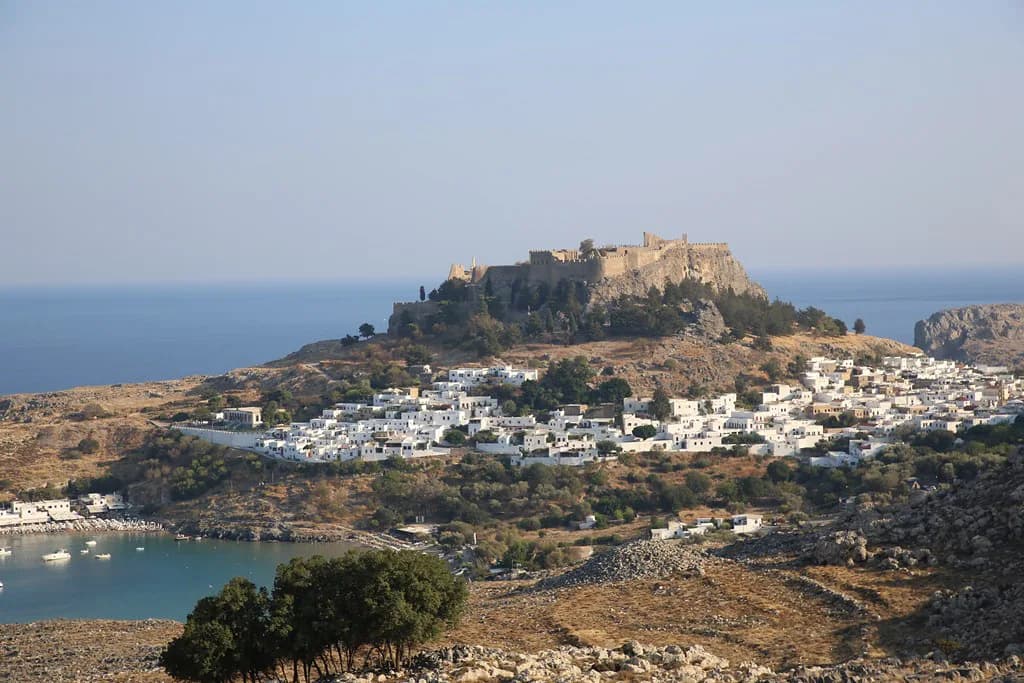
The Acropolis of Lindos is the ancient citadel that rises on a natural cliff directly above Lindos village on the east coast of Rhodes. It is the reason many travellers build a day around this corner of the island, and it rewards a little planning: the visit is two separate journeys, a road trip to the village and then a steep walk up.
This guide keeps the practical facts in order — where the site sits, how to arrive, what to look for once you are through the gate, and how long to allow. Hours and admission change with the season, so where a detail cannot be confirmed it points you to the official Greek culture ministry rather than a reseller.
What the Acropolis of Lindos Actually Is
Above the modern town rises the acropolis of Lindos, a natural citadel fortified in turn by the Greeks, Romans, Byzantines and the Knights of St John. That layering is what makes the site interesting: you are not looking at one monument but at a cliff that has been reused and refortified for well over two thousand years.
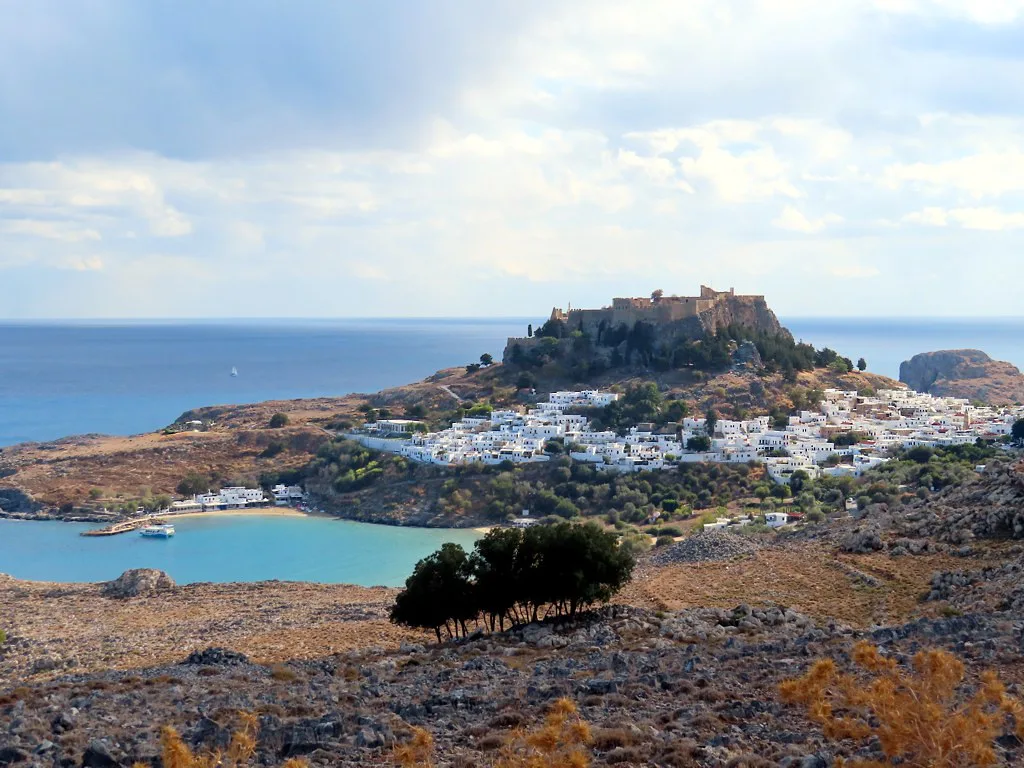
The ticket site describes the rock as standing roughly 116 m above the sea, framed by massive castle walls, with the village's white houses spread below it. Treat that figure as an approximate orientation rather than a surveyed fact. What matters for planning is simpler: the site sits on top of a cliff, and you reach it on foot.
Historically the sanctuary was dedicated to Athena Lindia, the patron goddess of Lindos, and the worship on this rock is usually traced back to the Geometric era. The Doric temple, the stoa and the later Byzantine church all sit within the same walled enclosure, which is why an hour inside passes quickly.
Where It Sits in Rhodes
Lindos lies on the east coast of Rhodes, and the acropolis rises directly over the village rather than beside it. The village itself is a tight knot of pedestrian lanes, so the approach on foot begins the moment you leave the car park or the bus drop-off. Weighing which base gives you the simplest drive down, these Rhodes Neighborhoods: 5 Area Guides are a useful comparison.
By road, Lindos is often quoted as roughly 30 miles, about 48 km, from Rhodes Town, which translates into something over an hour in a bus or car depending on traffic and stops. Use that as a planning buffer: the drive and the climb are separate time costs, and both need to fit into the same day. Where you stay in the capital changes how easily that drive slots into a day, and these Rhodes Neighborhoods: 5 Area Guides break down the town's areas for that decision.
If you are basing yourself in the capital, the Rhodes Neighborhoods: 5 Area Guides help you judge whether a day trip or an overnight in the village suits your schedule better. Staying in Lindos removes the drive but puts you in a small village with limited parking.
How to Get There: Bus, Taxi or Car
Public buses, taxis and rental cars all run from Rhodes Town and other parts of the island to Lindos, according to the site's own visitor answers. Bus is the least flexible but removes the parking problem; a car gives you freedom to combine the visit with stops along the east coast.
Parking in Lindos village is the practical bottleneck on busy days. Arrive earlier in the morning if you are driving, and expect a walk from the edge of the village to the start of the acropolis path whatever your mode of transport.
The Climb from the Village
From the village, the walk up to the acropolis is generally estimated at 20 to 30 minutes, and the donkey option is offered at the entrance to the village for those who prefer not to walk. Neither choice is a shortcut in time — both still end at the same gate.
The path is steep and uneven, with steps for much of the way, so footwear matters more than fitness. If you are travelling with anyone who struggles on stairs, plan for a slower ascent and shade breaks rather than pushing straight through.
What to See Inside, in Order
Once through the entrance, the usual sequence runs from the Hellenistic stoa — a long covered colonnade that framed the sanctuary — up through the Propylaia, the monumental gateway, to the Temple of Athena Lindia on the summit platform. Reading the site in that order makes the layout legible instead of a scatter of stones.
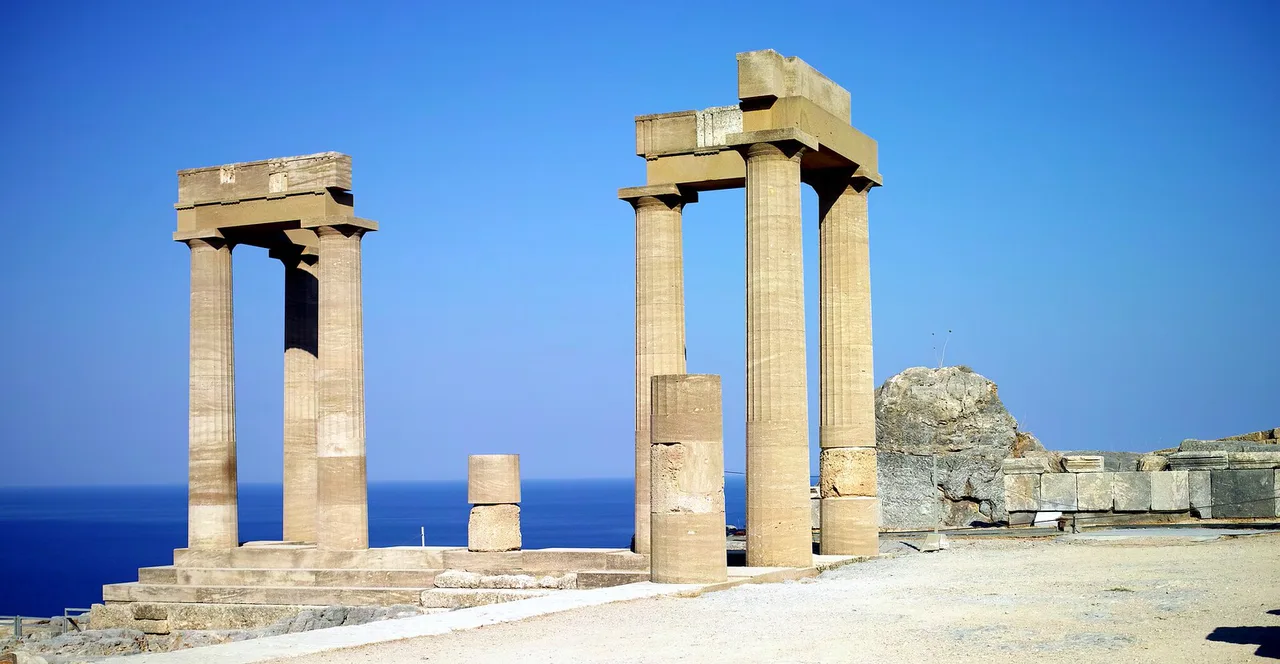
The Temple of Athena Lindia was rebuilt in the 4th century BC after a fire destroyed its predecessor, and it follows a Doric pattern. Look for the columns and the raised platform; the scale of the reconstruction is easier to grasp once you have climbed the broad stairway below it.
Later layers sit on top of the ancient ones: a Byzantine church of Saint John, and the Knights' fortification walls that encircle the whole rock with towers and battlements. The mix of Doric, Byzantine and medieval masonry in one enclosure is the site's defining feature.
The Knights' presence here belongs to the same story told across Rhodes, and if the medieval period appeals, the Palace of the Grand Master of the Knights of Rhodes in Rhodes Town and the Street of the Knights (Odos Ippoton) in Rhodes Old Town make natural companions to this visit.
The Trireme Carving and the Kleoboulos Legend
At the foot of the hill, a warship known as a trireme is carved into the rock, and it is generally read as a votive offering to Athena Lindia. It is easy to miss if you are focused on the stairs, so look for it before you start climbing rather than on the way down.
Local tradition also ties the tyrant Kleoboulos to the site: the story holds that he was turned to stone for disrespecting the goddess, and that the rock at the entrance is the result. It is a legend rather than a documented event, but it gives the entrance a story to anchor on.
Views from the Top
From the summit the site opens onto panoramic views of the coastline and the village below, and the walled platform is the obvious place to pause for photographs. The light is harshest around midday, so earlier or later arrivals get both softer colour and thinner crowds.
There is little shade on the rock, so treat the summit as an exposed place rather than a place to linger for an hour. A hat and water are practical comfort measures, not medical advice, and they make the descent noticeably easier.
Opening Hours by Season
The site publishes a seasonal pattern rather than one fixed schedule: longer days in June to August, an earlier close in September and October, and the shortest window in winter. The published table also notes that last entry falls before closing time, so do not plan to arrive at the gate at the closing hour.
Answers on the same site give a different set of hours, so treat any single timetable with caution and confirm the current schedule with the Greek culture ministry or the site itself before you travel. This is the one detail most worth double-checking on the day.
Tickets and Entry
Admission is ticketed, and the ticket page sells dated entry with reduced and free categories that require documentation at the entrance. Prices are not confirmed here; check the official culture ministry listing or the ticket desk for the current rate and any free-entry days before you budget.
Note that the site selling advance tickets states plainly that it is not the official site's web presence. That does not make it illegitimate, but it does mean the official source should be your reference for rules and eligibility.
How Long to Allow
Allow roughly one to two hours inside the site itself, then add the climb up and the walk back down. Combined with the village lanes and a meal, the Acropolis of Lindos comfortably fills half a day from Rhodes Town.
If you also want the Archaeological Museum of Rhodes in Rhodes Town, keep it for a separate day rather than squeezing it in after Lindos. The museum's collection adds context to the finds from sites like this one, but it deserves unhurried time.
Access and Facilities
The climb involves uneven terrain and steep steps, and the site is not considered wheelchair accessible. There are also no restrooms, food or drink facilities on the acropolis itself, so use the village before you start up.
Pets are not allowed within the archaeological site, and tripods or professional photography equipment may be restricted. Personal photographs are permitted, but climbing on the ancient structures is not.
Best Months and Crowds
Spring and autumn are generally described as the more comfortable windows, with milder weather and thinner crowds than the peak summer months. If your dates fall in July or August, start early and treat the middle of the day as the time to be in the village rather than on the rock.
The site is part of the wider UNESCO recognition attached to Rhodes' medieval heritage, which helps explain its popularity with organised groups. Expect coach arrivals to bunch around mid-morning, and plan your ascent around them if you want quieter steps.
What to Wear and Carry
Grippy shoes, a hat, sun protection and water are the practical kit for this climb, given the steps and the lack of shade. A light layer helps on windy days at the top even when the village feels hot.
Nearby Options After the Acropolis
Back in the village, the whitewashed lanes hold tavernas and shops, which is where most visitors eat after the descent. St Paul's Bay, a short walk from the village, is the obvious place to cool off afterwards if you have a car or are happy to walk.
If you are stringing together more of the island's ancient sites, Ancient Kamiros on the west coast and the Monastery of Filerimos inland offer very different settings and can be paired with a Lindos day only if you start early.
For a broader shortlist of what else competes for your days on the island, see these things to do in Rhodes, which set Lindos alongside the old town and the coast.
Common Mistakes and Trade-offs
The most common misjudgement is treating the acropolis as a quick photo stop and underestimating both the drive and the climb. The second is arriving at midday in high summer with no water and expecting facilities at the top — there are none.
The genuine trade-off is view versus ease: the summit rewards the effort, but the village lanes and tavernas are where the day stays comfortable. Budget your energy so the climb happens before the meal, not after it.
Plan Your Visit
The Acropolis of Lindos works best as a half-day built around two legs: the road journey from Rhodes Town or your base, then the 20- to 30-minute climb from the village. Go early, carry water, wear shoes that grip the steps, and leave time for the village afterwards.
Confirm the current hours and admission rules on the official culture ministry site before you set out, since the published timetables vary by month and by source. With those two details settled, the rest of the visit is straightforward.
Explore more Rhodes sauna guides
Frequently Asked Questions
Is the Acropolis of Lindos worth visiting?
For most travellers, yes. It combines a genuine ancient sanctuary, a Byzantine church and Knights' period walls in one walled enclosure on a cliff above the sea, with wide coastal views from the top. The trade-off is effort: the climb is steep and there is no shade or facilities on the rock.
How long does it take to walk up to the Acropolis of Lindos?
The walk up from the village is generally estimated at 20 to 30 minutes, depending on pace and how often you stop. A donkey option is offered at the village entrance. Add the same again for the descent and roughly one to two hours inside the site.
What was the Acropolis of Lindos used for?
It began as a sanctuary of Athena Lindia, with a Doric temple rebuilt in the 4th century BC. Over the centuries it served as a fortress under the Byzantines and then the Knights of St John, who wrapped the rock in massive walls and towers.
How do I get to the Acropolis of Lindos from Rhodes Town?
Buses, taxis and rental cars all cover the route from Rhodes Town and other parts of the island. The distance is often quoted as roughly 30 miles, about 48 km, so allow over an hour by road before you even start the climb.
What are the opening hours of the Acropolis of Lindos?
The site follows a seasonal pattern, with the longest days in June to August and the shortest window in winter, and last entry falls before closing time. Published timetables differ between sources, so confirm the current schedule with the Greek culture ministry or at the gate before you travel.
How much time should I allow inside the site?
Plan on roughly one to two hours inside the walls to see the stoa, the Propylaia, the Temple of Athena Lindia and the later Byzantine and medieval layers. Add the climb up and down, plus time in the village, if you want a comfortable half-day.
Is the Acropolis of Lindos wheelchair accessible?
No. The approach is steep with uneven steps, and the site itself is not considered wheelchair accessible. Visitors with mobility difficulties should plan for a slower ascent, shade breaks and assistance.
Are there toilets or cafes at the Acropolis of Lindos?
There are no restrooms, food or drink facilities on the acropolis itself. Use the village of Lindos before you climb, where there are tavernas, cafes and shops, and carry water with you for the ascent.