
Palace of the Grand Master of the Knights of Rhodes: What to See and How to Visit
The Palace of the Grand Master of the Knights of Rhodes is the single most famous building inside the medieval walls of Rhodes Old Town, a UNESCO World Heritage Site on the largest of the Dodecanese islands. It anchors the knights' quarter at the top of a cobbled street lined with their inns, and most visitors reach it on foot within minutes of entering the old town.
This guide stays on the palace itself: where it stands, how to walk there through lanes where phone navigation struggles, what you are actually looking at given the building's heavy 20th-century reconstruction, how long to allow, and where to eat afterwards in the old town. Ticket prices and opening hours are deliberately left to the official sources, because they change and this page will not guess.
Where the Palace Sits in Rhodes Old Town
The palace stands within the fortifications of Rhodes Old Town, in the walled medieval city rather than the newer Italian-built town around Mandraki harbour. It sits at the upper end of the Street of the Knights, the knights' quarter, which runs downhill from the palace entrance toward the bottom of the old town. Because it is inside the walls, you approach it on foot through gates and lanes, not by car to the door.
That position matters for planning: the palace is the natural top point of a short walk that begins at the lower end of the knights' street and climbs gently uphill. Many visitors combine the two without thinking of them as separate sights, and the climb itself, past stone inns on both sides, is part of the visit rather than a route to endure. Where you stay shapes that walk, so it is worth weighing the options in these Rhodes Neighborhoods before you book.
How to Get There on Foot, and Why GPS Wobbles
From the main squares of the old town, the palace is a short walk uphill, and the simplest approach is to aim first for the lower end of the Street of the Knights and follow it up. Travel writers who know the town well note that phone GPS becomes unreliable among the medieval lanes, so downloading an offline map before you enter the walls is a practical precaution rather than a paranoid one.
Rhodes is reached by air or by ferry, and Rhodes Town itself is easily covered on foot once you are inside the walls, which is why so many people see the palace on a day visit from a cruise ship or a catamaran from Turkey. If you are building a wider island itinerary, the rest of the island's sights are gathered in the Rhodes Attractions: 7 Visitor Guides collection. If you would rather stay closer to the old town, the Rhodes Neighborhoods: 5 Area Guides cover where to base yourself around the island.
What the Building Actually Is
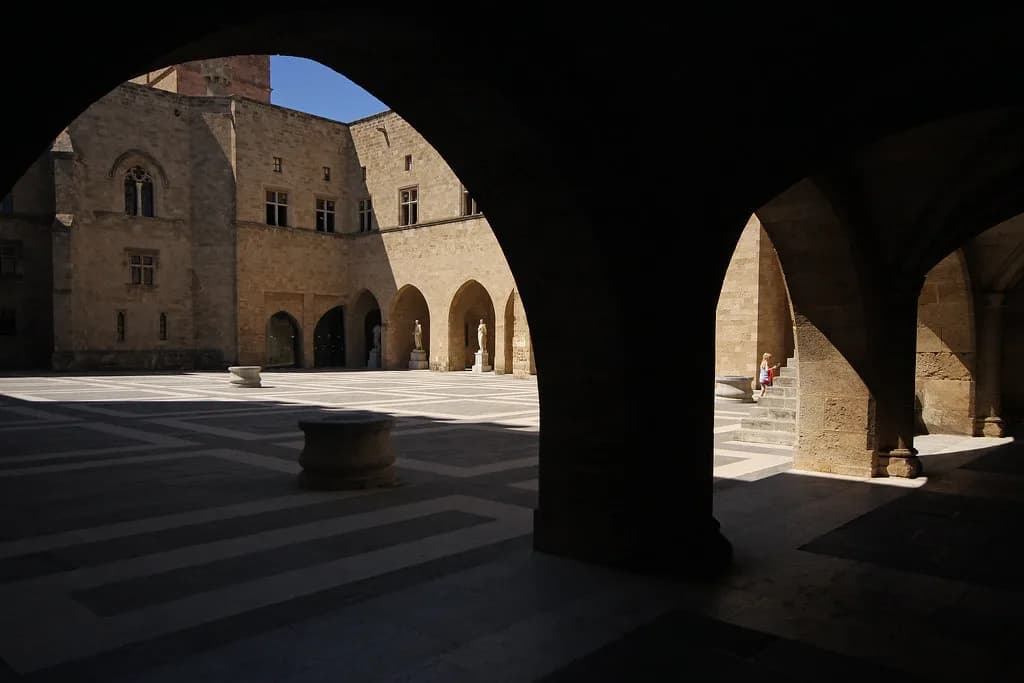
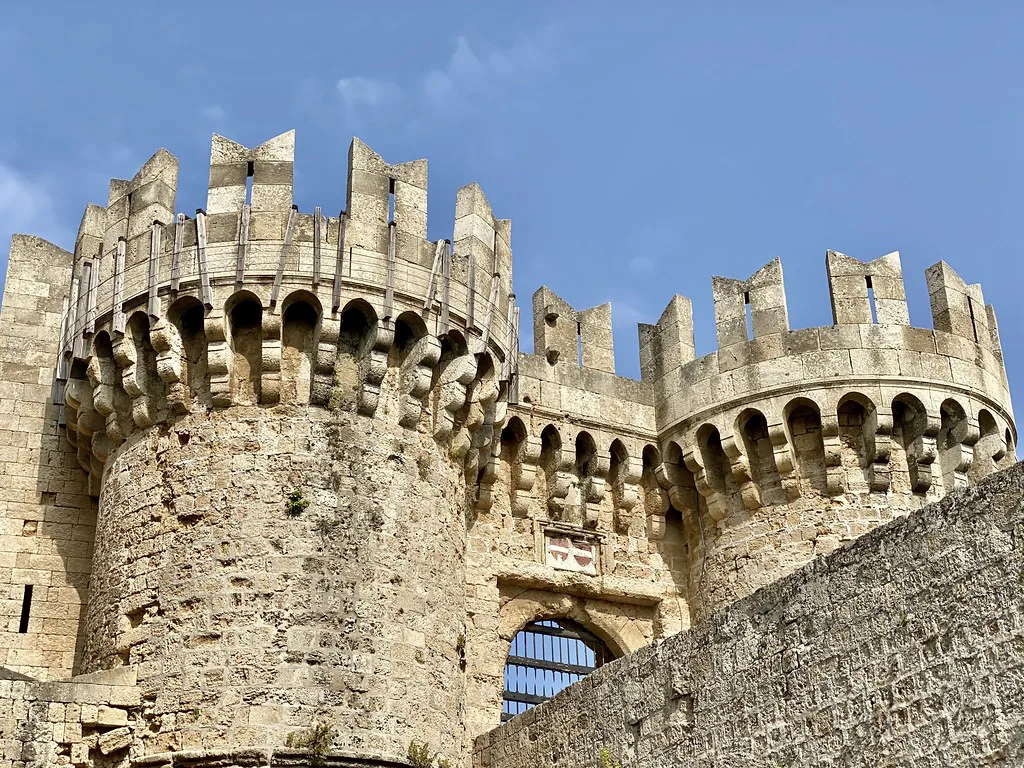
The palace has stood since the 14th century and was built by the Knights of St. John, the military order also known as the Knights Hospitaller, who made Rhodes their base after leaving the Holy Land. What you see today, however, is largely the result of a big restoration and rebuilding project carried out in the early 20th century when the island was under Italian rule.
That history is the key to reading the interior sensibly: you are walking through a medieval shell reconstructed in the 1920s and 1930s, not an untouched crusader residence. Knowing this changes what you look at, from the scale of the state rooms to the mosaics and floors installed during the Italian period. Contemporary listings also describe the castle as originally a Byzantine citadel before the knights' palace, which adds another layer to the same site.
What to See Inside
Only part of the palace is open to visitors; one source puts it at over 20 of the building's 158 rooms, a figure that describes the scale of the complex rather than a guaranteed list of what is accessible on your day. Treat any room count, and any particular exhibition, as something to confirm at the entrance or on the Hellenic Ministry of Culture's site, which publishes the palace's current visiting information.
The state rooms, the floor mosaics and the exhibitions housed in the building are the three things most visitors come for, and they reward slow walking rather than a quick pass. Because the interior is a reconstruction, the interest lies in the craftsmanship and the story of how the palace was remade, so a short read about the building's history before you enter genuinely improves the visit.
The Street of the Knights and Its Seven Inns
The Street of the Knights begins outside the palace entrance and heads downhill on the line of an ancient road, flanked by stone buildings that once served as inns. Seven of these inns represented the seven countries and languages from which the Knights of St. John came, giving each group a place to eat, relax and talk in its own tongue.
Walk it downhill rather than up if you want the palace as your climax, or up if you prefer to arrive at the museum first and finish at the top. Either way, allow time to stop: the facades, the carved doorways and the view back down the street are the reason this lane is photographed so heavily, and it is short enough that a slow pass costs only minutes.
Pairing the Palace With the Archaeological Museum
At the bottom of the Street of the Knights stands the Archaeological Museum of Rhodes, housed in what was the Hospital of the Knights, which makes it the obvious pairing with the palace. Its exhibits span ancient Greek material and the medieval period of the Knights of St. John as well as the Ottoman era, so the two buildings together tell a longer story than either does alone.
If you have a spare half hour, the Hafiz Ahmed Agha Library nearby holds close to 1,300 manuscripts, including a Quran dated to 1540 and a history of the Ottoman siege of the city in 1522, and the entrance room is open to visitors. It is a small, quiet stop that fits naturally between the palace and the museum.
How Long to Allow
For the palace alone, plan on roughly an hour if you read the displays and walk the state rooms at an unhurried pace, and less if you are skimming. For the palace plus the downhill walk along the knights' street and a proper look at the archaeological museum, set aside a half day, which is what the geography of the old town rewards.
Anyone who has spent a day in Rhodes Town will tell you that a single day covers the headline sights but leaves little room to slow down, so if the palace is a priority, give it the morning and let the rest of the town fill the afternoon. Morning also means thinner crowds at the palace entrance and cooler air on the climb.
Tickets, Opening Hours and Closures
Opening hours, ticket prices, closure days and whether advance booking is needed all change with the season, and the palace is a state-run monument, so the reliable check is the Hellenic Ministry of Culture's official pages or the ticket office on arrival. Do not rely on an old blog post or a map listing for a winter closure day.
Rhodes has a strong seasonal rhythm, and one source notes that many restaurants and hotels on the island close their doors from late October until April, a pattern that can affect how much of the old town feels open outside summer. Verify the palace's own schedule directly rather than assuming it follows the restaurant calendar.
Practical Constraints: Stairs, Floors and Heat
The visit involves stairs and uneven, polished surfaces, and the old town lanes outside are cobbled and sloped, so sturdy shoes matter more here than on a beach day. Mobility is worth thinking about honestly: the tower climbs and upper levels elsewhere in the old town are steep, and if stairs are difficult, ask at the palace entrance what the route involves before buying.
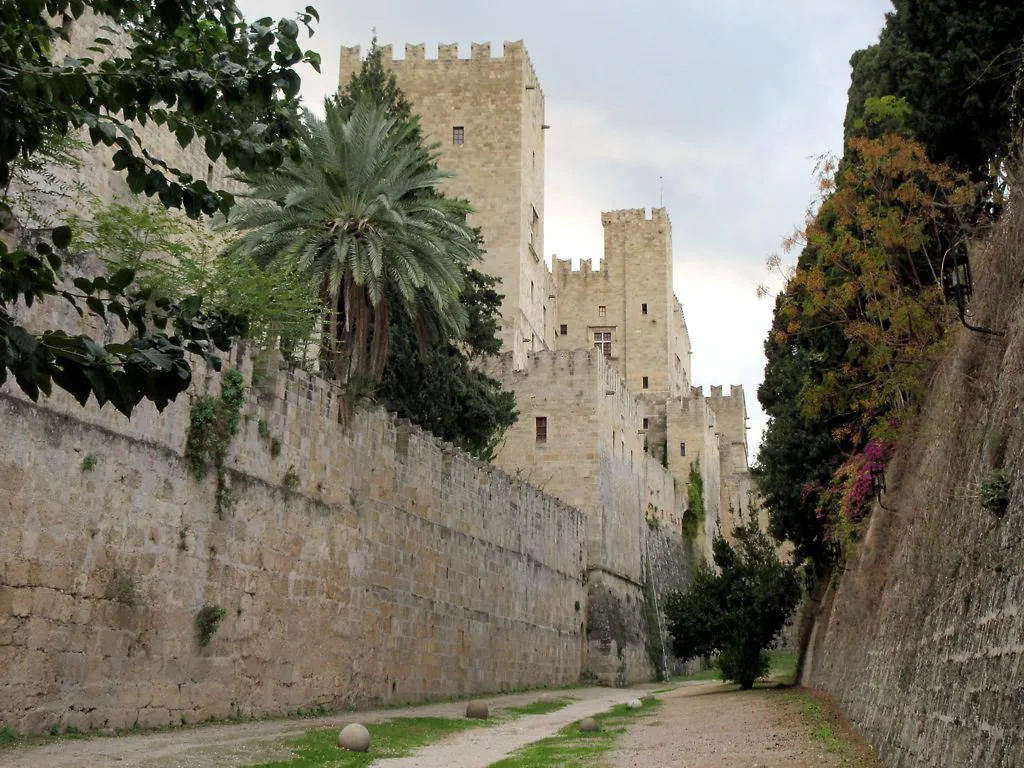
Summer heat inside the walled lanes is real, and shade is patchy between the stone buildings, so carrying water and visiting earlier in the day is the sensible trade-off against a lie-in. The medieval moat walk is one option for cooler, greener strolling when the squares get busy.
Nearby After Your Visit
Hippocrates Square is the main square of the old town and a hub of restaurants, bars and souvenir shops, the kind of place your feet find again and again, and it is a short walk from the bottom of the knights' street. Come early morning and it is peaceful; by peak season it fills with tour groups off the cruise ships.
Sokratous Street is the old town's shopping street, climbing steadily uphill beneath the rose-pink Mosque of Suleiman, and it makes a natural loop back toward the palace quarter after a wander. The Suleiman Mosque in Rhodes Old Town sits at the top of that climb and is best viewed from the street itself, since it is closed to visitors.
Eating Near the Palace
The old town splits between square-side tables with a view of the passing crowds and back-street tavernas where the cooking, not the scenery, is the point. For a sit-down dinner close to the palace quarter, Marco Polo Mansion on Agiou Fanouriou serves Mediterranean food with Italian influences on a garden-like patio, and it books up, so reserve ahead in summer.
Piatakia on Leontos is a small-plates option where the format is a multi-course tapas menu; one published price was a set menu for a fixed sum, so check the current price when you book rather than budgeting from an old figure. If you want a cheap, quick fill, a gyros from a corner shop near the Square of Jewish Martyrs is the local budget answer.
Rhodian cooking is worth knowing by name: pitaroudi are savoury chickpea fritters, melekouni is a sticky sesame and honey bar, and stifado is a slow-braised stew, often of goat, cooked with wine and spices. For a harbour-side contrast, Nikos Fish sits just outside the old town walls and is known for seafood dishes such as feta-stuffed squid.
If you are staying in Lindos rather than Rhodes Town, Mavrikos on the village's main square has been run by the same family since 1912 and serves elevated Rhodian dishes. Village tables like Paraga in Apollona, up in the hills, are a different day out entirely and pair well with a drive rather than a walk from the palace.
Plan Your Visit
Build your day around the palace rather than squeezing it in: enter the old town early, walk up the Street of the Knights, see the palace and the archaeological museum, then eat in a back street rather than on a square. Check the official culture ministry pages for current hours and tickets before you travel, and download an offline map so the lanes do not defeat your phone.
If the palace leaves you wanting more of the island's history, the acropolis of Lindos and Ancient Kamiros, Rhodes are the two other headline sites, each a drive rather than a stroll from Rhodes Town.
Frequently Asked Questions
Is the Palace of the Grand Master worth visiting?
Yes, if you want the single best introduction to the knights' quarter of Rhodes Old Town. Go knowing that the interior is largely an early 20th-century reconstruction of a 14th-century building, and the visit becomes more interesting rather than less.
How long does it take to walk around Rhodes Old Town?
The old town is compact enough to cross on foot in well under an hour, but the sights slow you down. Allow a half day for the palace, the Street of the Knights and the Archaeological Museum, and a full day if you also want the squares, shopping street and moat walk.
What can you see inside the Palace of the Grand Master?
Visitors see state rooms, floor mosaics and the exhibitions housed in the building, though only part of the palace is open. Check the official culture ministry pages or ask at the entrance for what is accessible on your day.
Do you need to book Palace of the Grand Master tickets in advance?
Booking rules vary by season, so confirm on the official Hellenic Ministry of Culture pages or at the ticket office. If you are visiting in peak summer and want a set time, arriving early is the simplest safeguard.
What is the Street of the Knights and where does it start?
It is the cobbled medieval lane that begins outside the palace entrance and runs downhill through the knights' quarter, lined by the seven inns that once housed knights from different countries and languages.
What else is near the palace in Rhodes Old Town?
The Archaeological Museum in the Hospital of the Knights sits at the bottom of the street, the Hafiz Ahmed Agha Library is a short walk away, and Hippocrates Square and Sokratous Street are within minutes for food and shopping.