

Little Venice, Mykonos: Where It Is, What to See and How Long to Allow

Little Venice, or Mikri Venetia in Greek, is the waterside quarter of Mykonos Town, not an island, a village or an attraction with a gate. It is a strip of old houses built close to the water, with balconies that hang out over the sea. Treat it as a walk and a viewpoint rather than a ticketed sight.
That framing changes how you plan the visit. There is nothing to queue for and no set route, so the practical questions become where the quarter starts, how you reach it on foot from the rest of town, and what time of day suits you. The sections below answer those and separate what stays fixed about the neighborhood from what you should confirm on the day.
What Little Venice Actually Is
Little Venice is a neighborhood within Mykonos Town, made up of old houses set right against the water's edge. Travel sources describe it as a romantic stretch of handsome old houses beside the sea rather than a monument or museum. Its name comes from the look of the balconies and facades over the water, which visitors compare to Venice.
Because it is a residential and commercial quarter, there is no entrance gate, no ticket window and no fixed visiting schedule. It is worth knowing this before you go looking for one. Think of it the way you would a seafront street: open to walk, best seen slowly, and shared with people who live and work there.
The common point of confusion is whether Little Venice is the same as Mykonos Town. It is part of Mykonos Town, one small quarter of the larger Chora, so a walk through town can include it without a separate trip or transfer. That is also why it appears in town guides rather than island day-trip lists. If you are weighing where to base yourself, the Mykonos Neighborhoods guide compares the town's quarters side by side.
Where It Sits Inside Mykonos Town
Little Venice occupies the waterfront edge of Mykonos Town, where the built-up lanes meet the sea. Sources place it in Mykonos Town, in the Cyclades, and tie it closely to the town's most photographed corners. It sits at the point where the town looks out toward the water rather than inland toward the hills.
In practice, you will find it by heading downhill toward the sea from the middle of town and following the shore. The Church of Panagia Paraportiani and the Mykonos windmills are both close by within the same compact area, so a single walk can take in all three. Expect narrow lanes, whitewashed walls and a sudden open view of water.
For orientation, use the town's landmarks rather than a street address, since the quarter is a stretch of waterfront rather than a numbered building. The windmills on the hill and the Paraportiani church are useful reference points on either side of the walk. For the wider layout of the town's quarters, see the Mykonos neighborhoods overview, which puts Little Venice in context with the rest of Chora.
How to Get There on Foot
The usual approach is on foot from central Mykonos Town, since the lanes are pedestrian and vehicles cannot penetrate the old core. Sources list Fabrika Square as a nearby landmark on the edge of the town center, which makes it a sensible place to aim for before walking down to the water. From there, follow the lanes toward the sea rather than trying to drive closer.
If you arrive by ferry, you will come in at one of the island's ports and continue into town on foot, by local bus or by taxi depending on the port. Sources distinguish Mykonos Old Port from Mykonos New Port, and the old port is the one closer to the town core. Check your ferry operator's arrival point before deciding how to cover the last stretch.
Once you are in the old town, the walk to Little Venice is short and best done without a fixed route. Allow time to get mildly lost in the lanes; that is part of the experience, and the sea gives you a constant direction to aim for. Comfortable shoes matter more than a map here, because the surface is uneven stone and steps appear without warning.
Layout and Orientation on the Waterfront
The quarter works as a linear waterside walk rather than a grid of streets. On one side are the old houses with their overhanging balconies; on the other, the sea, sometimes close enough that waves reach the path in rough weather. Lanes branch off uphill back into the town, so you can leave the water at almost any point.
Because the buildings sit right at the water's edge, the waterfront path is narrow in places and can be slick when spray comes over. Walk it slowly, keep an eye on the footing and step aside when you want to take photos rather than stopping mid-path. This is a working neighborhood with cafés and homes, not a purpose-built promenade.
The uphill lanes connect directly into the rest of Mykonos Town, which is what makes Little Venice easy to combine with a wider wander. If you want to understand how the quarter fits into the town's tangle of streets before you arrive, the Mykonos Town guide covers the layout from the center outward.
What to See: Balconies, Houses and the Sea
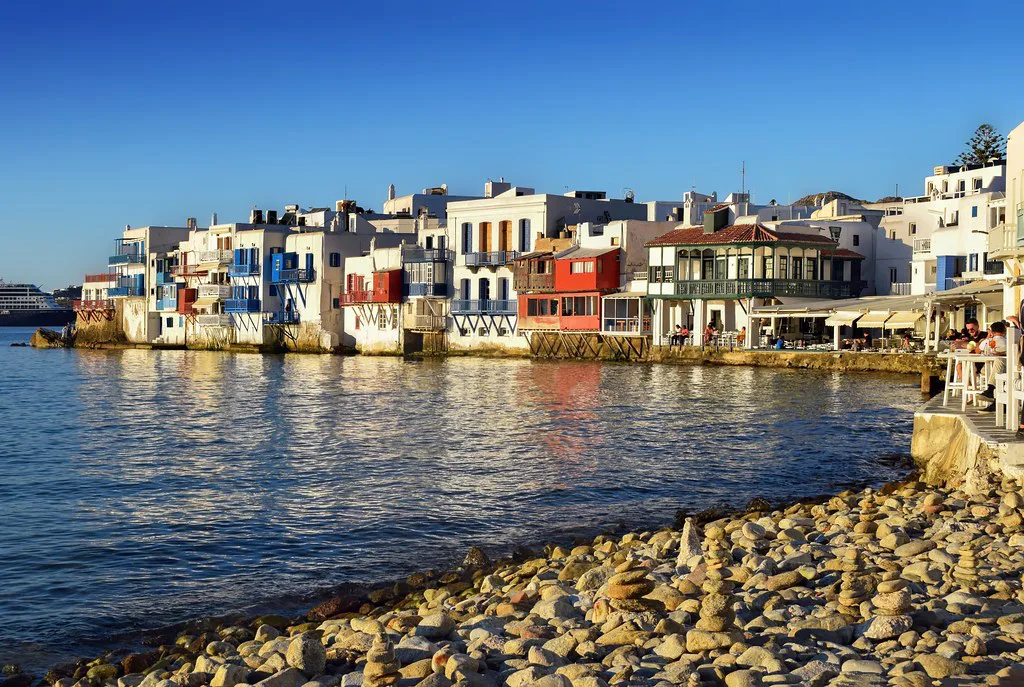
The main sight is the architecture itself: old houses in white and color, with wooden balconies projecting over the water. Travel reviews single out the colorful balconies as the image most visitors come for. Look up as you walk, because the most distinctive details are above eye level.
Neighboring the quarter, the Church of Panagia Paraportiani is the other sight most closely linked with a Little Venice walk. Sources name it among the top things to see in and around the area. The whitewashed, clustered form of the church is a short continuation of the same waterside stroll.
Beyond the buildings, the sea view and the passing boats are the point. Reviews mention the iconic windmills as part of the same view, visible along the shoreline. There is no collection inside to see, so the reward is the outlook and the atmosphere of the quarter rather than exhibits.
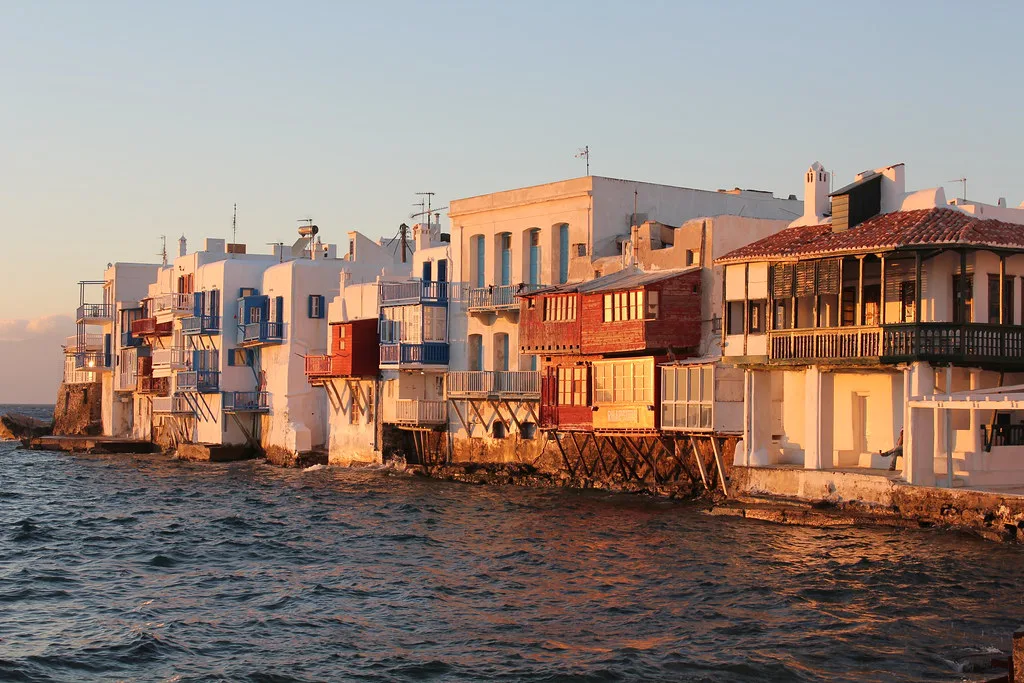
Sunset at Little Venice
The waterfront faces the open sea and the setting sun, which is why sunset is the busiest time in the quarter. Sources describe it as one of the most romantic spots on the island, and the light on the water is the reason. If sunset is your goal, arrive well before it rather than at the last minute.
The practical tactic is to claim a spot early, whether on the waterfront path or at a table facing the water, and then stay put as the light changes. Tables with a direct sea view are the ones in demand, so the earlier you settle, the more choice you have. Expect the quarter to be at its most crowded in the hour before the sun goes down.
Because the walk is narrow and shared, sunset is not the moment for a leisurely photo session at the railing. Decide in advance whether you want the view from the path or from a table, since switching once the crowd builds is difficult. Bringing a layer helps, as the sea breeze picks up as the light fades.
View Versus Value: Waterside Tables and Back Streets
The clearest trade-off in Little Venice is between the view and the bill. Waterside tables come with the sunset and the sea directly in front of you, and that setting is what you are paying for. Back-street tavernas a few lanes uphill in Mykonos Town typically offer a quieter table and a lower bill for similar food.
A sensible approach is to split the evening: take the view from the waterfront path at sunset with a drink or a stroll, then eat uphill where the tables are calmer. If you want to dine facing the water, book or arrive early and accept the premium. If value and conversation matter more, the lanes behind the seafront are the better bet.
For finding your way around the town's eating options, the Mykonos attractions guide shows how the seafront, the market lanes and the windmill hill connect on foot. Prices and menus change by season and venue, so check them at the door or on a restaurant's own listing rather than relying on any fixed figure.
Crowds, Cruise Traffic and Timing
Little Venice is central, compact and free to walk, which makes it one of the busiest corners of town when ships are in. Reviews describe it as crowded and touristy at peak times, so plan around that rather than expecting solitude. Early morning is the calmest window, when the lanes are quiet and the light is soft.
Cruise calls drive much of the midday foot traffic in the old town, so checking the day's ship schedule before you set out is worthwhile. If several ships are in, save Little Venice for early or late and use the middle of the day for a museum or a longer walk elsewhere. The quarter is small, so a crush of visitors is felt quickly on the narrow path.
If you want a quieter version of the same sea view, the windmill hill above town gives you the outlook without the waterside bottleneck. The Mykonos Windmills (Kato Mili) stand on the ridge and are a short walk from the lanes. Pairing the two lets you see the quarter at its best and the sunset from a less confined spot.
How Long to Allow
For a simple walk-through, half an hour to an hour is enough to cover the waterfront and take in the balconies and the sea view. Add the Paraportiani church and a loop back through the lanes and you can fill a relaxed morning. The quarter is small, so the time you spend depends on how often you stop.
For a sunset visit with a meal, plan the whole evening: arrive an hour or so before sunset, settle at a table or a viewpoint, and stay through the afterglow. That is a two-to-three-hour block once dining is included. If you are combining Little Venice with the windmills and a walk through town, give the afternoon over to it.
A common plan is a daytime orientation walk first, then a return at sunset when you know the lanes and the viewpoints. This avoids wasting the golden hour finding your way. Sources suggest two to three days on Mykonos overall if you want to see the town, the windmills and take a boat trip, which leaves room for a leisurely Little Venice visit.
Nearby in Mykonos Town
The windmills above town are the classic add-on, standing on the ridge overlooking the water and the quarter. They are close enough to reach on foot from Little Venice and give a wider view back over the seafront. The Mykonos windmills guide covers what to see up there and how to time the climb.
The Church of Panagia Paraportiani is effectively next door, and the Mykonos Museum of Folklore sits in the same part of town for anyone wanting an indoor counterpoint to the seafront. Both appear among the places of interest listed around Little Venice. The Archaeological Museum of Mykonos is a further option if history is the focus, and it is worth confirming its hours before setting out.
For a bigger day out, boats run from Mykonos to the Delos archaeological site, which pairs well with a morning in town. Matoyianni Street, the shopping lane in the old town, is another nearby wander if you want to browse between sights. The island's maritime history is covered at the Aegean Maritime Museum in Mykonos, a short walk inland from the waterfront.
Practical Tips for the Waterfront Path
Wear shoes with grip: the stone path beside the water is uneven and can be damp from spray. The lanes around the quarter are stepped and narrow, so a stroller or wheeled bag is awkward. If mobility is a concern, the flatter approach is from the town side rather than along the water's edge.
Watch for waves in windy weather, when water can come over the path and diners at the closest tables feel it first. That is part of the appeal for some and a reason to choose a table set back a little for others. Keep bags and phones away from the edge when the sea is up.
If you are staying elsewhere on the island, the bus and boat connections into Mykonos Town are the way in; check the day's timetables at the port or bus station rather than relying on a printed guide. For trips beyond town, the Panagia Tourliani Monastery in Ano Mera, Mykonos is a separate excursion into the island's interior.
What to Check on the Day
Little Venice itself has no opening hours, tickets or closures to check, since it is a neighborhood rather than a sight. What does change is everything around it: which cafés and tavernas are open, whether boats are running, and how busy the town is. Confirm those on the day rather than from any fixed list.
For the church, the museums and any ferry or excursion, use each venue's or ticket seller's own listing to check current times and any charges. If a restaurant's waterside tables take bookings, ask when you arrive in town. The Mykonos Attractions guide is the place to start for the wider set of sights and their practical details.
Plan Your Little Venice Visit
Little Venice rewards a simple plan: walk down from central Mykonos Town in the morning to see the balconies and the sea without the crush, then return before sunset if you want the view at its best. Decide in advance whether you are taking the view from the path or paying for a waterside table.
Use the windmills and the Paraportiani church as anchors on either side of your walk, and keep the rest of the old town for eating and wandering. None of it needs a ticket or a fixed schedule, which is exactly why an hour of planning pays off here.
Frequently Asked Questions
Is Little Venice in Mykonos worth visiting?
Yes, if you want the classic Mykonos waterfront image: old houses with overhanging balconies directly above the sea. It takes little time to walk and combines easily with the windmills and the Paraportiani church. Reviews note that it gets crowded and touristy at peak times, so go early or accept the bustle.
Can you walk from Mykonos Town to Little Venice?
Yes. Little Venice is a quarter of Mykonos Town itself, so you reach it on foot through the lanes toward the sea. Sources list Fabrika Square as a nearby landmark on the edge of the town center, and the Church of Panagia Paraportiani and the windmills are close by. There is no need for a taxi or bus once you are in the old town.
Is Little Venice the same as Mykonos Town?
No. Little Venice is one small quarter within Mykonos Town, also called Chora, not a separate village or island. Thinking of it as the seafront stretch of the town is the most accurate way to plan around it.
Where is Little Venice in Mykonos?
It sits on the waterfront edge of Mykonos Town, in the Cyclades, where the old lanes meet the sea. You will find it by heading downhill toward the water from the center of town. The windmills on the ridge and the Paraportiani church are useful reference points.
What is the best time to visit Little Venice for sunset?
Arrive well before sunset, since the waterfront is at its busiest in the hour before the sun goes down. Settle on the path or at a table early and stay through the afterglow. Early morning is the quietest time if you want the same views without the crowd.
What else is near Little Venice in Mykonos Town?
The Windmills of Mykonos, the Church of Panagia Paraportiani, the Mykonos Museum of Folklore, Matoyianni Street and the Aegean Maritime Museum are all within the old town. Boats to the Delos archaeological site leave from Mykonos, and the interior monastery at Ano Mera is a separate trip. Check current opening times for any museum before you go.