
Delos Archaeological Site: What to See and How to Visit
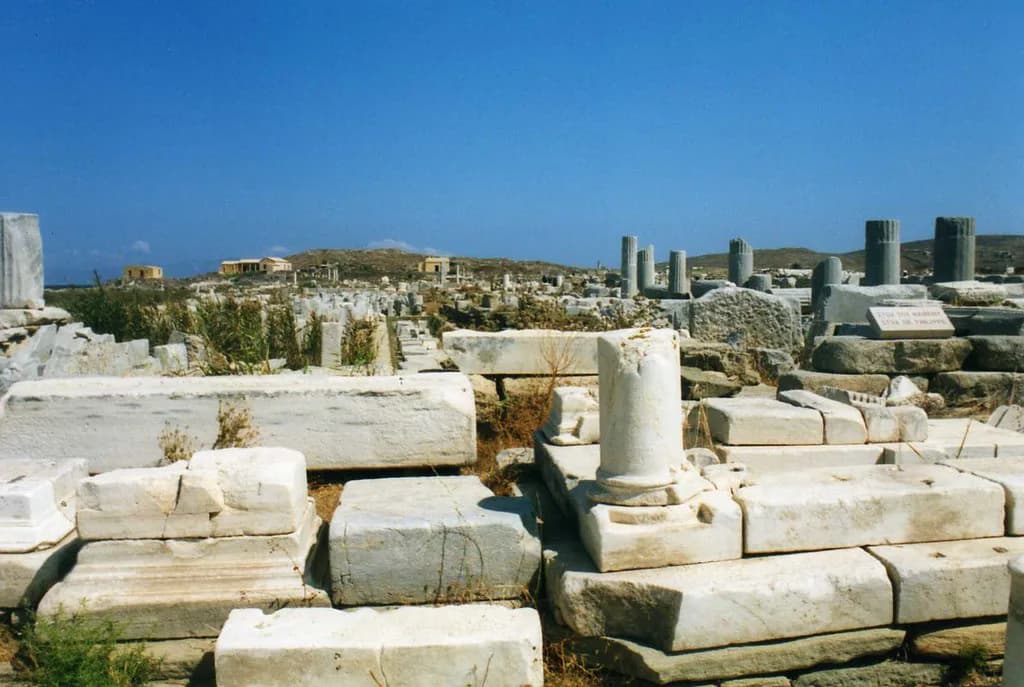
Delos is not a single ruin but an entire small island in the Aegean, just off Mykonos, where an ancient city lies exposed among rocks and scrub. Visitors come by boat for a few hours to walk its paved paths and imagine what once stood there. The site suits travellers who enjoy archaeology and can handle sun, wind and limited shade. It is not a quick photo stop.
The island was a major sanctuary in antiquity, and today it is a UNESCO World Heritage Site with ongoing excavation. A visit requires some planning: the crossing can be rough in summer winds, and there are no shops or places to stay overnight on Delos. This guide gives you the practical details to decide whether to go and how to make the most of your time.
Where Delos is and why it matters
Delos lies in the Aegean Sea, a short boat ride from Mykonos. The island is uninhabited apart from guards, and the entire surface is an archaeological zone rather than a single monument. That means you should plan for a half-day outing, not a quick stop between beach and dinner.
Its importance comes from its long history as a sacred site. Britannica notes that Delos was a major sanctuary with temples and votive offerings, and that it later hosted a sanctuary to foreign gods, including Egyptian and Syrian deities. This layered past is why the ruins include not just Greek temples but also Roman-era houses and mosaics.
How to get there and when to go
Access is by boat from Mykonos. A travel director interviewed by Insight Vacations describes the crossing as roughly 30 minutes, but warns that in August the Meltemi winds can make it wet and adventurous. The Meltemi are strong, dry northerly winds that blow across the Aegean in summer. If you are prone to seasickness or travelling with young children, consider a calmer day or a larger vessel.
Departures are typically in the morning because the site has a defined daily visitor window. The same source reports that visitors must leave by early afternoon, and that the island is protected from overcrowding. Boat schedules and exact times vary by company and season. Treat the crossing as weather-dependent and keep your plans flexible.
The island's story in brief
Delos was inhabited from Neolithic times and later had Mycenaean presence. In the Classical period it became a sacred sanctuary dedicated to Apollo, and Athens exerted influence over it. Homer describes rituals on Delos, including dancing and athletic competitions. These layers mean that as you walk you are seeing traces from different eras, not a single moment in time.
In the Roman era, Delos was turned into a free port and attracted a large population. The same interview source says that around 30,000 people once lived there, and that the island was later destroyed during the Mithridatic wars. After that, it declined and was eventually abandoned. Understanding this arc helps you interpret the ruins: what looks like scattered stones was once a busy harbour city.
What you actually see
From the dock, a clear paved path leads inland. You first pass the ancient harbour area, then reach the famous lion statues, which are a highlight for many visitors. These lions, weathered but evocative, mark the approach to the sacred precinct. The path continues toward the Sanctuary of Apollo, the central religious area.
The Sacred Way is the main route through the site, leading to the sanctuary of Apollo. Along the way you see foundations of buildings, fragments of statues, and the remains of altars. The interview source mentions a lone palm tree that still stands, traditionally associated with the birth of Apollo. These details reward slow walking and a little imagination.
Up the slope: Mount Cynthus and the Temple of Isis
Mount Cynthus is the rocky hill that rises above the site. A path leads up to the Temple of Isis, which sits on the slope and offers wide views over the ruins and the sea. The climb is not long but is exposed, with little shade and loose stones in places. Wear sturdy shoes and carry water.
The wind can be strong at the top, and the sun is intense even in shoulder season. The same source describes the site as under the scorching sun with no tree for shelter. If you have limited time or mobility concerns, you can skip the climb and still see the main monuments on the flat lower ground.
Houses, mosaics and the theatre
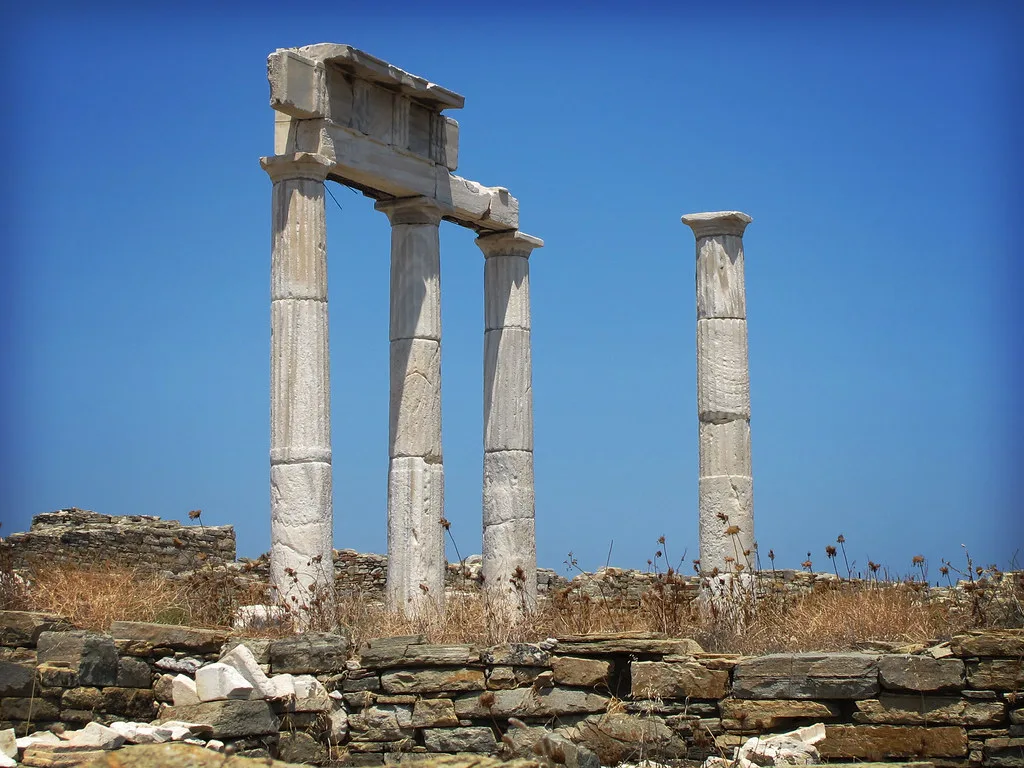
The Roman residences on Delos are known for their mosaics, which are still visible in some houses. However, you cannot enter these houses; you view the mosaics from outside as you walk past. This is a key expectation to set: you will see the floors and some walls, but not walk through the rooms. The theatre is another feature, and you can sit on its seats and imagine performances.
The interview source notes that some mosaics are preserved but faded, and that you use imagination to reconstruct the past. For travellers who prefer well-labelled, interactive museums, this aspect may feel underwhelming. But for those who enjoy reading ruins, the domestic details are a highlight.
Practical constraints: time, facilities and rules
Delos is an uninhabited island with no overnight accommodation and no shops. The source states you cannot stay overnight, swim or shop. There is also ongoing excavation, and some areas may be closed for work. These constraints mean you should bring everything you need for the day, including water, sun protection and any snacks, although eating on site may be restricted.
Visitor numbers are managed, and the same source reports that visitors can only stay on the island between nine and two. Treat that as a reported pattern rather than a fixed timetable, since hours can change with the season and with excavation work. The Greek Ministry of Culture publishes current opening times, and the boat company you sail with can also advise on the day's schedule.
How long to allow and how to pace the visit
Most visitors have around three to four hours on the island, given the boat schedule and the site's closing time. That is enough to walk the main path, see the lions, explore the sanctuary and climb Mount Cynthus if you move steadily. If you are a serious archaeology enthusiast, you may wish you had more time; if you are casual, three hours may feel long in the heat.
Prioritise the Sacred Way, the lions and the sanctuary if time is short. The climb to the Temple of Isis is optional and can be skipped if you are tired or the wind is fierce. A guided tour can help you interpret the ruins, but it also sets a pace. Independent travellers can use the information boards and a good guidebook.
Tickets, hours and closures
The Greek Ministry of Culture's Odysseus portal is the authoritative place to confirm ticket prices and opening hours, but its Delos entry currently shows no detailed visitor information. Ask a local boat operator what the current fare and entry charge are when you book, and treat any figure you see on an old blog post as out of date. That way you budget from the boat operator's own quote rather than a guess.
Closures can occur due to excavation work or weather. The interview source mentions that some areas are closed while awaiting funding for digs. If a specific monument is essential to your visit, ask your operator on the day. Flexibility is wise.
Nearby: Mykonos town and other sights
Delos is visited as a day trip from Mykonos, and the boat returns you to the main port. Once back, you can explore the whitewashed lanes and waterfront of Mykonos Town (Chora). For a broader look at the island's attractions, see Mykonos Attractions: 8 Visitor Guides. The windmills of Kato Mili and the bars of Little Venice, Mykonos are within walking distance of the port and make an easy pairing with a morning at Delos.
If you have more time, the Archaeological Museum of Mykonos in Mykonos Town holds artefacts that complement what you see on Delos. The Panagia Tourliani Monastery in Ano Mera offers a different kind of history. These are separate outings, not part of the Delos visit, but they can fill an afternoon after your boat returns.
Who should skip Delos
Delos is not for everyone. If you have little interest in archaeology, the ruins may feel like hot, dusty stones. The site has no shade, no facilities and requires walking on uneven ground. The boat crossing can be rough, especially in August. Travellers who prefer comfort, shade and clear labels may enjoy other Mykonos attractions more, and our Mykonos Neighborhoods guide can help you choose where to base yourself for those alternatives.
If you are travelling with young children or anyone with mobility issues, consider whether the exposed terrain and lack of shelter suit you. The source describes the site as difficult, with no tree for shelter and strong winds. That said, the reward is a unique, unspoiled landscape that feels far from the crowds.
Plan Your Visit
Delos offers a rare chance to walk through an entire ancient city, but it demands preparation. Book a morning boat, bring water and sun protection, and wear sturdy shoes. Check the official ministry page for current hours and tickets, and confirm the weather forecast. If you go with the right expectations, the island's ruins and windswept landscape can be a memorable half-day.
Back on Mykonos, you can continue exploring the town's attractions or relax at a harbour taverna. The contrast between the uninhabited sacred island and the busy modern resort is part of what makes the trip interesting.
Explore more Mykonos sauna guides
Frequently Asked Questions
What is Delos known for?
Delos is known as a major archaeological site and UNESCO World Heritage Site, with extensive ruins of a sacred sanctuary and ancient city. It was a center of worship for Apollo and later a busy Roman port. The entire island is uninhabited and open for day visits.
How do you get to the Delos archaeological site from Mykonos?
You reach Delos by boat from Mykonos. The crossing takes roughly 30 minutes, but can be rough in summer winds. Boats typically depart in the morning and return in the early afternoon. Schedules vary by operator, so check current details before you travel.
How long do you need at Delos?
Most visitors have about three to four hours on the island, which is enough to walk the main path, see the lions and the sanctuary, and climb Mount Cynthus if you move steadily. Serious archaeology enthusiasts may want more time.
Can you stay overnight on Delos?
No, overnight stays are not permitted. The island is uninhabited apart from guards, and visitors must leave by early afternoon. There are no hotels or shops.
What can you see at the Delos archaeological site?
You can see the ancient harbour, the famous lion statues, the Sacred Way, the Sanctuary of Apollo, the Temple of Isis on Mount Cynthus, Roman houses with mosaics (viewed from outside), and a theatre. The site is extensive and mostly exposed.
Is the boat crossing to Delos rough?
It can be, especially in August when the Meltemi winds blow. The crossing is short, but you may get wet from spray. If you are prone to seasickness, choose a calmer day or a larger vessel.
Do you need a guide for Delos?
Not necessarily, but a guide can help interpret the ruins. Independent visitors can use information boards and a guidebook. Guided tours are available from Mykonos and set a pace.
Are there facilities on Delos?
There are no shops or places to buy food or water on the island. Bring what you need. There may be limited toilet facilities near the dock, but it is best to be prepared.