
White Tower of Thessaloniki: What to See Inside and How to Visit

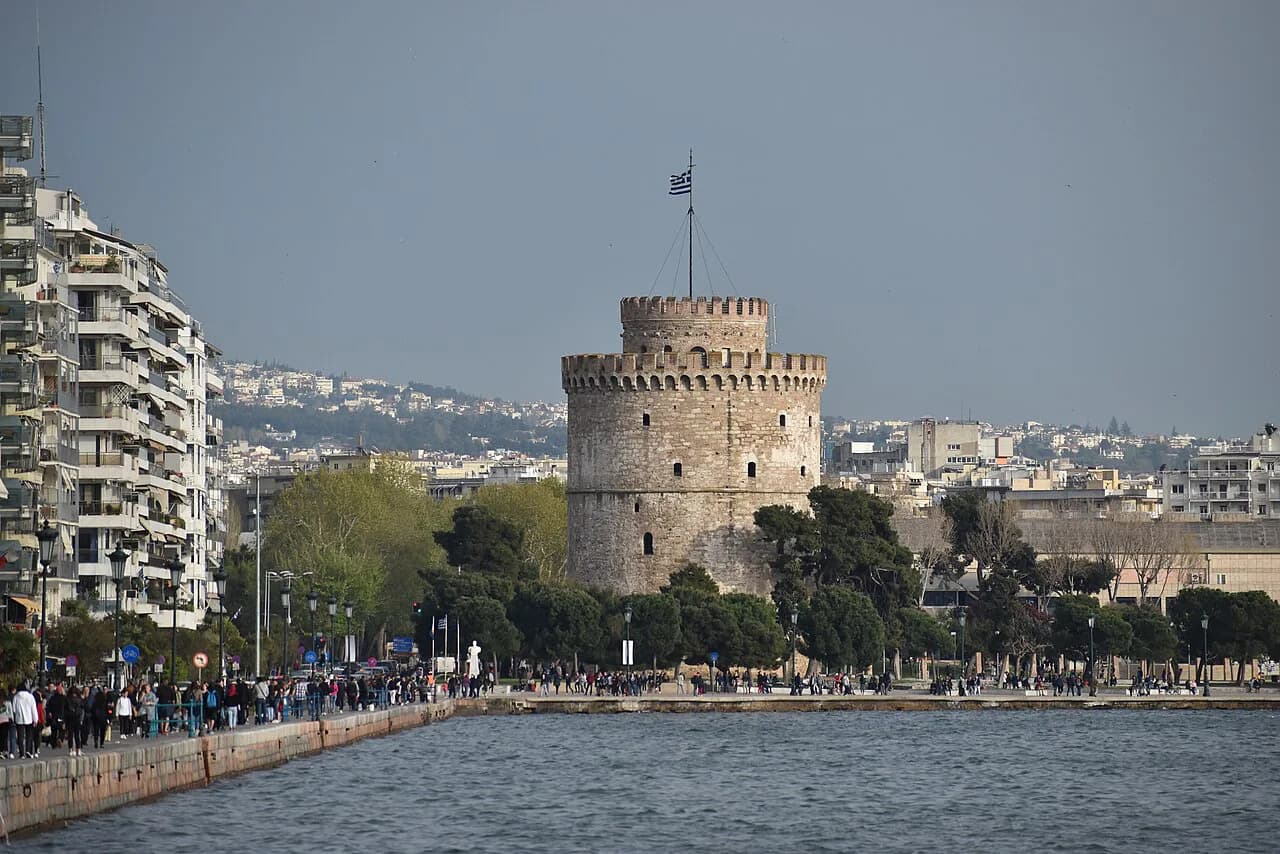
The White Tower is the building most people picture when they think of Thessaloniki: a round fort-tower on the eastern side of the waterfront, on Leoforos Nikis. It works as a landmark, a museum and a viewpoint in one, so visitors have to decide how much of it they want. This guide keeps to that single building and the immediate waterfront around it.
Two decisions shape a visit. The first is whether to go inside and climb to the balcony or simply see the tower from the promenade. The second is how to fit it into a walk along the waterfront, since the tower sits at the eastern end of the seafront rather than in the middle of the old centre. Either way, it is worth pairing the waterfront with a meal, so browse the best restaurants in Thessaloniki before you set out.
Where the White Tower stands on the waterfront
The tower stands on Leoforos Nikis in the 54640 postcode area, at the eastern part of the Thessaloniki waterfront. That position matters for planning: the long seafront promenade runs west from here towards the city centre, so the tower is a natural starting or finishing point for a walk rather than a detour inland. If you want to combine the walk with a meal, see the best restaurants in thessaloniki.
Use the sea as your compass. If the water is on your right and the city on your left, you are heading west towards the centre; the tower behind you means you have already passed the eastern end of the promenade. The address and a location note are published by the city's tourism office.
How to get there from the city centre and Nea Paralia
Walking is the simplest approach. From the central waterfront around Aristotelous Square, follow Leoforos Nikis east along the sea; the tower is the round building you see ahead on the promenade. From Nea Paralia, the landscaped park and promenade area, continue east along the same seafront until the tower appears.
The walk is flat and follows the water, which makes it easy to combine with a stop at the cafes and patisseries along Leoforos Nikis. The tourism office lists Konstantinidis Patisseries in the tower's immediate area, useful if you want coffee or a pastry before or after the climb.
Bus routes and stops change, so it is worth checking the latest route numbers and stop locations with the city's transport information or at your accommodation before travelling rather than relying on an old route number. If you are coming from further inland, allow extra time for traffic on the approach roads near the seafront.
A short history you can read in five minutes
The tower is described by Thessaloniki Tourism as a round fort-tower built in the 15th century as part of the city's fortifications. During the Ottoman period it served as a prison and a place of torture, a history that explains why the building carries weight beyond its appearance.
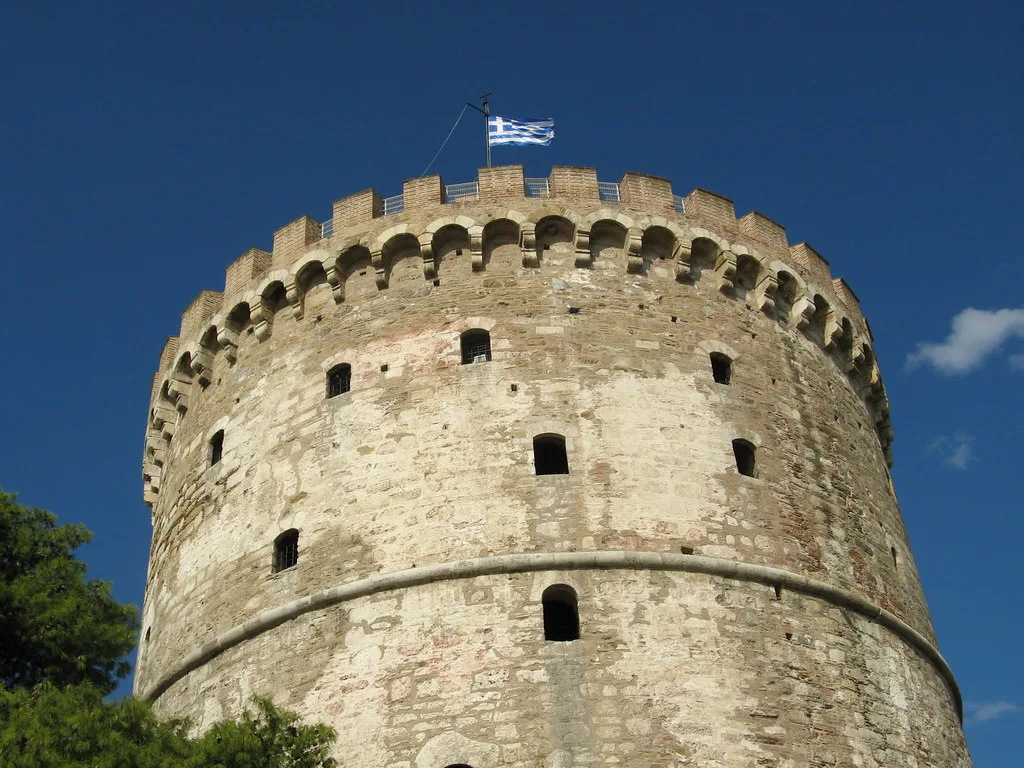
After the city's liberation, the tower was whitewashed, according to the tourism office, so that it would be symbolically purified; that is the origin of the name White Tower. The same source notes that the tower is no longer white, so do not arrive expecting a bright facade. The name is history, not a description.
One third-party listing reports the tower as roughly 34 metres high and describes a six-storey interactive museum inside. Treat those figures as reported rather than officially measured, and check the official page if exact dimensions or floor counts matter to you.
What is inside: the museum floors
Inside, the tower houses a permanent exhibition covering the city's history, spread across its floors. The tourism office recommends visiting the exhibition and then climbing to the balcony, which suggests the two belong together rather than being alternatives.
The displays are arranged as you ascend, so the visit works as a slow climb rather than a single room. If you only want the view, you can treat the museum floors as a pass-through, but the exhibition is what gives the building context beyond its shape.
Descriptions of the museum as interactive come from third-party listings rather than the city's tourism office, so expect a modest city-history display rather than a large modern museum. For a deeper collection, the Archaeological Museum of Thessaloniki is a separate visit covered in its own guide. If you are planning your meals around sightseeing, the best restaurants in Thessaloniki guide is a useful next read.
Climbing to the top: the balcony and the view
The balcony at the top is the main reason many visitors go inside. From there you look out over the waterfront, the promenade and the city behind it, which is the clearest way to understand how Thessaloniki relates to the sea. Thessaloniki Tourism describes the view from the balcony as magnificent.
The climb is part of the visit, and the tower's age means the route up is not a modern lift lobby. If stairs are a concern, ask at the entrance about access before buying a ticket; the tower's official page is the place to check current facilities and opening arrangements.
For photographs, the light on the waterfront is usually softer earlier or later in the day, and the balcony is exposed, so plan around wind and sun. Midday tends to be the busiest and brightest slot.
How much time to allow
For the museum floors plus the balcony, allow roughly an hour to ninety minutes. That covers a reasonably unhurried read of the displays, the climb, and a few minutes at the top without rushing.
If you only want the view, a shorter stop of around half an hour is realistic, assuming no queue at the entrance. Groups and school parties can slow the stairs, so build in a buffer if you have a fixed next stop.
The tower pairs naturally with a walk along the promenade, so the total time on the waterfront will be longer than the visit itself. Treat the tower as one anchor in a half-day along the sea rather than a standalone outing.
Tickets, opening hours and closures
Thessaloniki Tourism names the site and its address but does not publish ticket prices, opening hours, closing days or booking rules for the tower. Those details sit with the tower's official page, so check it before you go, especially outside the summer season when hours can shorten.
If you are planning around a specific day, confirm the opening time the day before and note whether last entry is earlier than closing. Ticket prices and any reduced rates should be confirmed at the same operator source, since they change and should not be assumed from older trip reports.
Practical tips for the visit
Wear shoes you can climb stairs in, and carry water in warm weather; the upper levels and balcony offer little shade. A light layer helps on windy days at the top even when the promenade feels warm.
Go early or late for softer light and thinner crowds, and avoid the middle of the day in high season if you can. The tower is a popular landmark, so the entrance and stairs can bunch up when tour groups arrive.
Confirm lift access and any temporary exhibition closures shortly before travelling, since these are the facts most likely to change and least likely to be widely posted. The rest of the visit is straightforward once you are on the waterfront.
What is nearby
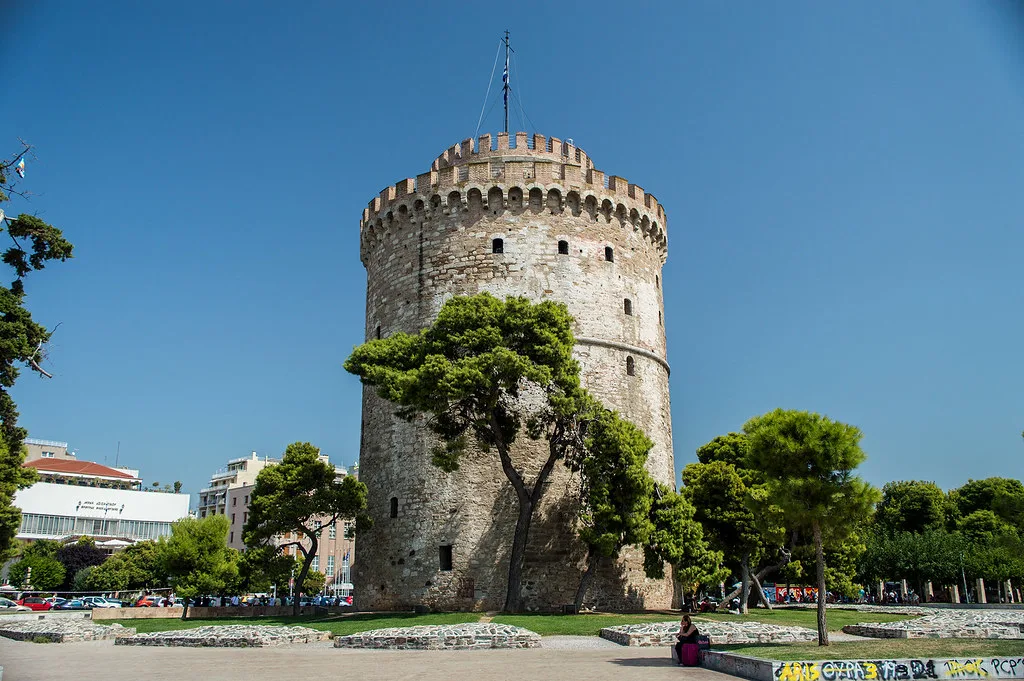
Nea Paralia, the landscaped seaside promenade and park, runs west from the tower and is the obvious place for a walk after the climb. The waterfront path continues towards the centre, passing cafes and benches facing the sea.
Inland from the promenade, the Arch of Galerius in Thessaloniki is a Roman monument on the city's main axis and a natural second stop if you are continuing into the centre. It is covered in its own guide, so treat it as a nearby option rather than part of this visit.
If you want a market stop, Modiano Market (Agora Modiano) in the centre is a separate outing and best visited on its own schedule. For a broader set of options around the city, the Thessaloniki Attractions: 8 Visitor Guides page lists the main sights by area.
Combining the tower with a waterfront walk
A simple shape for a half day: start at the tower, visit the museum and balcony, then walk west along the promenade towards Nea Paralia and the centre. Stop for coffee or a pastry on Leoforos Nikis on the way, and finish with a look at the waterfront around Aristotelous Square. If you would rather end the day with dinner, plan your meal around the best restaurants in thessaloniki by area before you set out.
If you prefer to eat a proper meal afterwards, the best restaurants in Thessaloniki guide covers areas including Ano Poli, which is uphill from the waterfront and a separate trip. Keep the tower day focused on the sea and the centre rather than trying to reach the upper town on the same walk.
Plan Your Visit
The White Tower rewards a short, focused visit: the history of the building, the city exhibition on the floors, and the balcony view over the waterfront. Decide in advance whether you want the full climb or just a look from the promenade, and let that choice set your timing.
Because ticket prices and opening hours are not posted on the Thessaloniki Tourism page, confirm them on the tower's official page before you go. The tower's position at the eastern end of Leoforos Nikis makes it easy to combine with a walk along Nea Paralia and a stop in the city centre.
Explore more Thessaloniki sauna guides
Frequently Asked Questions
What is the White Tower of Thessaloniki and why is it famous?
It is a round fort-tower on the eastern waterfront, built in the 15th century as part of the city's defences and later used as a prison during the Ottoman period. It is Thessaloniki's best-known landmark and now houses a museum about the city, with a balcony at the top.
How do I get to the White Tower in Thessaloniki?
The simplest route is on foot along the seafront. From the central waterfront follow Leoforos Nikis east, or walk east from Nea Paralia along the promenade until you reach the tower. Bus routes change, so confirm current options locally.
Is it worth going inside the White Tower or just looking at it?
Going inside gives you the city-history exhibition and the climb to the balcony, which is the best viewpoint over the waterfront. If you are short on time or not interested in the displays, seeing it from the promenade is still worthwhile.
How long does a visit to the White Tower take?
Allow about an hour to ninety minutes for the museum floors and the balcony at an unhurried pace. A quick view-only stop is closer to half an hour, assuming no queue at the entrance.
Can you go up to the top of the White Tower?
Yes, visitors climb to a balcony at the top, which is the main viewpoint. The climb involves stairs, so ask at the entrance about access if stairs are a concern.
Why is it called the White Tower if it isn't white?
The tower was whitewashed after the city's liberation, according to the city's tourism office, as a symbolic purification, and the name stuck. The building is no longer white, so the name reflects history rather than its current appearance.
What is near the White Tower in Thessaloniki?
Nea Paralia and the waterfront promenade are immediately west, and cafes and patisseries line Leoforos Nikis nearby. Further into the centre you reach Aristotelous Square and the Arch of Galerius, which are separate stops.