
Roman Forum Thessaloniki: What to See at the Ancient Roman Agora
The Roman Forum, also called the Roman Agora, is the largest archaeological site in central Thessaloniki, and it sits in the middle of the modern city rather than on its edge. It is a Roman-era civic and market complex that was later built over and around by Byzantine and Ottoman layers, which is why the remains read as fragments rather than a complete square. The site is small enough to fit between coffee and lunch, but only if you know what you are looking at before you arrive.
This guide stays on the Roman Forum itself: where it is relative to Aristotelous Square, how to reach it on foot, what survives on the site, how much time to budget, and how to combine it with nearby central sights and food stops. Ticket rules and daily hours are not published in the sources used here, so the guide points you to the entrance rather than guessing.
What the Roman Forum of Thessaloniki Actually Is
The Roman Forum of Thessaloniki is the ancient Roman-era forum of the city, located on the upper side of Aristotelous Square, according to the standard description of the site. It dates to roughly the end of the 2nd century AD and functioned as a civic and commercial heart: an open square ringed by market and public buildings, where the city's administrative and trading life concentrated.
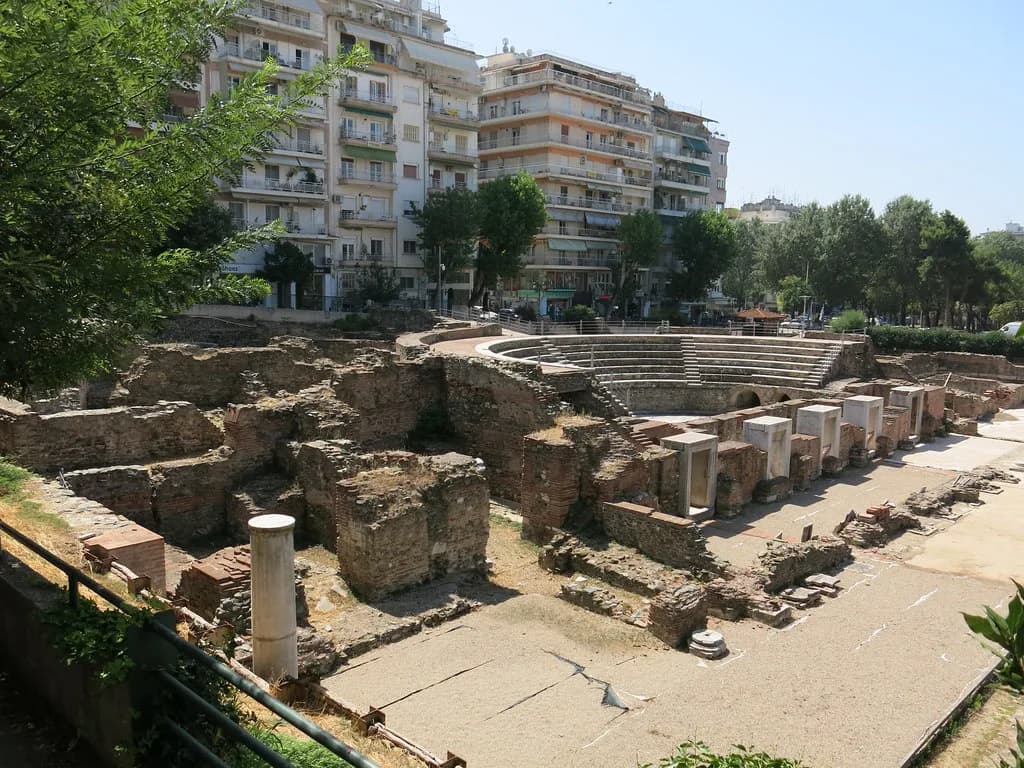
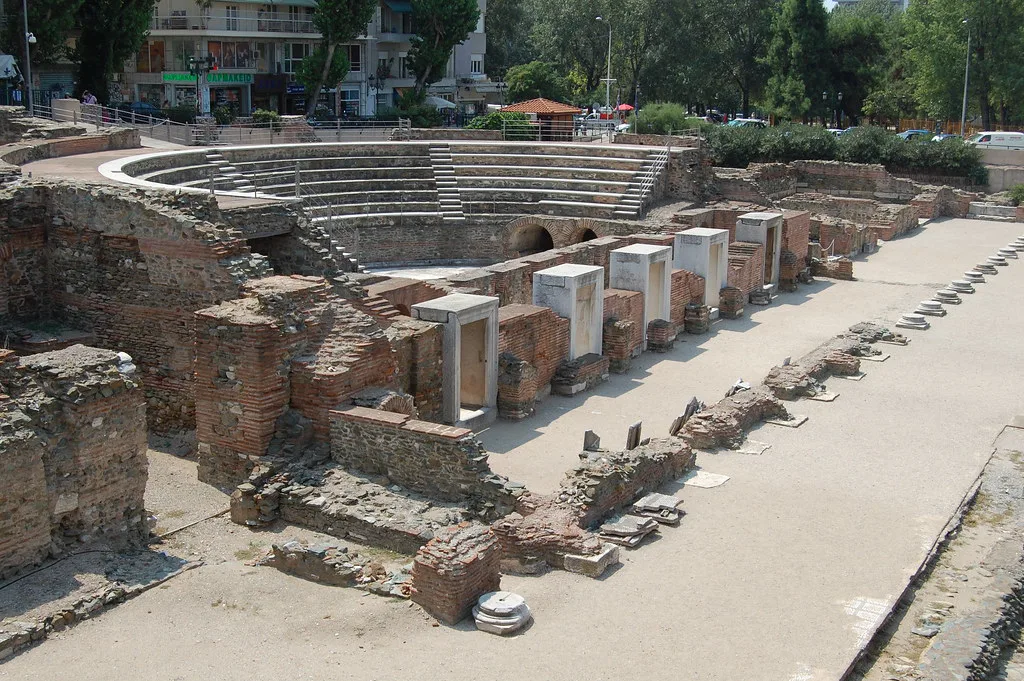
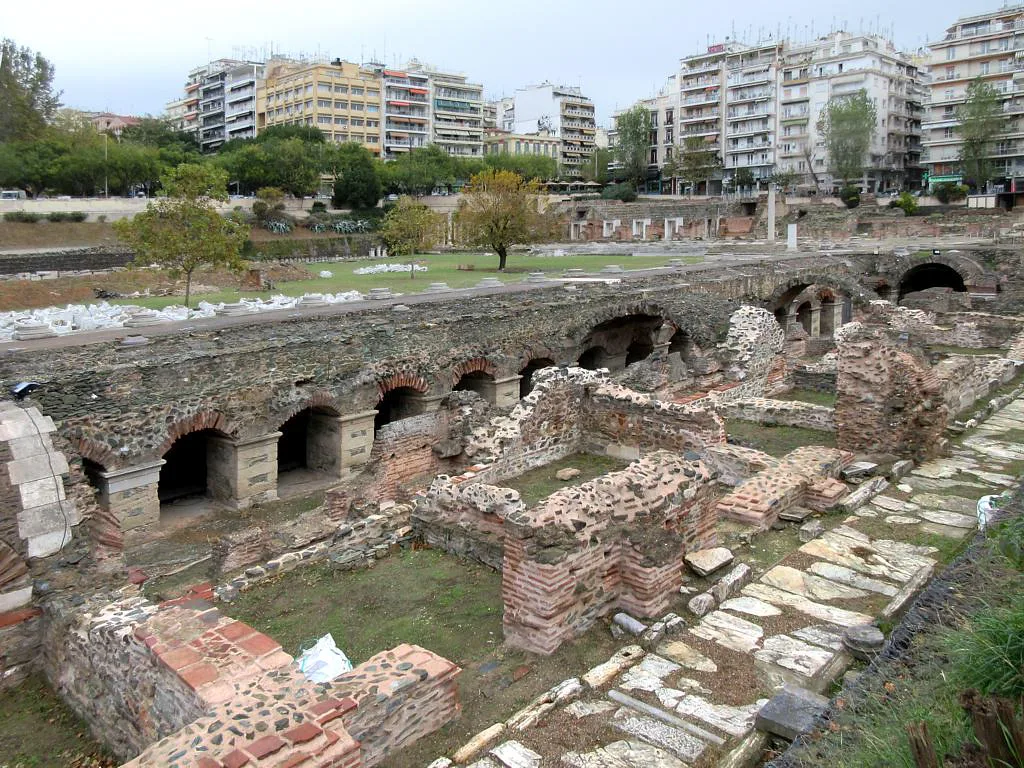
What you meet today is an excavated, partly sunken zone inside a working neighbourhood, not a reconstructed monument. Expect stone foundations, paved areas and the outlines of rooms and colonnades rather than standing columns with capitals, and read the site as a footprint of a complex that was altered for centuries after the Romans. Byzantine and Ottoman construction later occupied the same ground, which is why the archaeology is layered and why the modern street layout cuts across the ancient one.
It is worth knowing before you go that the site is often labelled 'Greek Agora and Roman Forum' on visitor listings, which can make it sound like two separate places. Treat that as one central archaeological area and use the words Roman Forum or Roman Agora when asking directions, so you are not sent to a different ancient site.
Where It Is and How to Find the Entrance
The site lies in central Thessaloniki, immediately on the upper, inland side of Aristotelous Square, the city's main seafront plaza. Coming from the waterfront, walk across the square away from the sea and you reach the streets that border the archaeological zone; the excavated area is visible from the surrounding pavements before you reach any gate. Because it is enclosed by city blocks, the practical approach is to walk the perimeter once and look for the signed entrance rather than cutting through side alleys.
There is no reliable transit-specific shortcut to describe here, so treat this as a walking destination from anywhere in the centre: the square itself is the landmark, and the site is the block behind it. If you are arriving by taxi or bus, ask for Aristotelous Square rather than the Roman Forum, then walk inland.
What to See Once You Are Inside
From the walkway, the readable features are the open excavated square and the remains of the market and civic buildings that framed it. Look for stretches of paving and the stubs of walls and colonnade bases that mark where porticoes ran, then step back and trace how the open space was enclosed on several sides. The value here is spatial: you are seeing the scale and position of a Roman civic centre under a modern city, not a set of showpiece artefacts.
Information panels on site are the fastest way to fix the layout in your head, so read the first one you meet before walking the length of the site. If a panel is missing, damaged or in Greek only, photograph the plan and read it afterwards, because the sequence of rooms and open areas is hard to reconstruct from the stones alone.
How Much Time to Allow
For a walk-through that takes in the excavated square and the main panels, budget roughly a quarter of an hour to half an hour. That is enough to see the whole site from the walkway and read the layout, especially if you have already studied the plan at the entrance. If you want to photograph specific details, cross-reference the panels and look down on the site from the surrounding streets as well, allow closer to an hour.
The trade-off is depth against breadth. The Roman Forum rewards a slow, deliberate look more than a quick photo stop, but it cannot fill a half-day on its own, so pair it with something in the same neighbourhood rather than travelling across the city for it. Anyone with a tight schedule should decide in advance whether they want the walk-through or the slower read, because the site does not force the decision on you.
Hours, Tickets and Closures: What to Confirm Before You Go
Ticket prices, opening hours, closing days and any free-entry arrangements for the Roman Forum are not published in the sources used for this guide, so nothing here should be treated as current. Check at the entrance, at the city's archaeological museum information desk, or through the Greek Ministry of Culture before you build your day around it. An enclosed archaeological area can shut for works or holidays without a public notice you would see in advance.
Seeing the Site from the Surrounding Streets
Because the Roman Forum sits below the level of the modern streets, much of the excavated area can be seen from the pavements around it, free of any gate. Walk the perimeter first if you are unsure whether to pay for entry, since the overview tells you quickly whether the archaeology holds your interest. The view from above is also the best way to understand how far the ancient complex once extended under the buildings that now surround it.
The trade-off is that the street-level view flattens the site: you see the plan but not the detail of the walls and paving, and the panels are usually inside. Use the perimeter as a taster, then go in if you want the context, or skip it if your day is already crowded with larger museums.
Fitting It Into a Central Thessaloniki Day
The Roman Forum competes for time with Thessaloniki's larger museums, and that is the decision most visitors actually face. A single archaeological site of this size is a short stop; the Archaeological Museum of Thessaloniki and the Museum of Byzantine Culture are indoor, collection-led visits that absorb a half-day each. If you have one day in the centre, do the Roman Forum as part of a walk between the square and the shopping streets, and save a museum for the time you can give it properly. The same trade-off between a short site visit and a longer food-led outing comes up when choosing among the best restaurants in Thessaloniki.
The Byzantine option fits naturally with the Roman site, since both tell the story of the same ground across different centuries. The Museum of Byzantine Culture is the city's dedicated collection for that period, and it is worth checking ahead rather than turning up expecting a specific exhibition.
Nearby in the Same Central Area
Aristotelous Square and the waterfront are the obvious add-ons, literally at the foot of the site, and they make a natural loop back toward the sea. Inland from the square, the market streets around Kapani and Modiano sit within the same central district, so a visit can be combined with a look at the food halls without another journey. Both markets are covered, which matters if the weather turns.
For Roman-era sightseeing beyond the forum, the Arch of Galerius in Thessaloniki stands on the same central axis and pairs well with the forum if you are tracing the city's imperial period on foot. Keep it as a second stop rather than a substitute, since the arch is a monument in the street and the forum is an excavated complex, and they reward different kinds of attention.
Coffee or Bougatsa Before or After the Visit
Bougatsa is the city's signature pastry: thin, flaky phyllo wrapped around a filling that can be sweet custard, cheese, spinach or minced meat, eaten warm and usually with coffee. Two established bakeries are named in local food guides, Bougatsa Bantis on Panagias Faneromenis in the Faneromeni area and Bougatsa Giannis on Mitropoleos in the centre, both within reach of the square on foot. Arrive early for the custard version, which is typically a morning bake.
For a sit-down stop rather than a bakery counter, ERGON Agora on Pavlou Mela is a modern food market with a restaurant, bakery and deli attached, useful if you want a proper table after walking the site. If you would rather compare a wider set of tables for a later meal, the city's best restaurants in Thessaloniki cover the range from gyros counters to seafood tavernas, and the Ano Poli is the neighbourhood to head for if you want the older, quieter end of town.
A Note on the Site's Layers
The Roman Forum is a useful reminder that Thessaloniki is a city built on itself: Roman civic buildings, Byzantine churches and Ottoman-era markets occupy the same few hundred metres. You do not need a guide to see this, but knowing it changes what you look for, because the modern street pattern above the excavation is part of the story rather than an interruption. Treat the site as a section through the city's history and the short visit makes more sense.
Who Should Prioritise the Roman Forum
Prioritise the Roman Forum if you are already in the centre, want a compact piece of the city's Roman past, and are happy to read the stones rather than admire a reconstruction. It suits travellers who like archaeology as urban history and who plan to walk the square, the waterfront and one market street in the same outing.
Skip it, or see it only from the street, if your visit is short and you would rather spend the time inside a museum with labelled collections, or if you are travelling for food and views and have no particular interest in Roman urban planning. In that case, the square and the waterfront give you the setting, and the nearby pastry and coffee stops give you the reason to be there.
Before you set out, confirm the day's opening and ticket arrangements at the entrance or through the Ministry of Culture, since those details change; everything else on this page can be planned around a walk from Aristotelous Square.
Explore more Thessaloniki sauna guides
Frequently Asked Questions
Where is the Roman Forum in Thessaloniki?
It is in the centre of Thessaloniki, on the upper, inland side of Aristotelous Square, the main seafront plaza. Coming from the waterfront, cross the square away from the sea and the excavated area is immediately behind it, visible from the surrounding pavements. Use Aristotelous Square as your landmark when asking directions rather than the Roman Forum, which some people confuse with other ancient sites.
Is the Roman Forum in Thessaloniki worth visiting?
It is worth it if you are already in the centre and want a compact look at the city's Roman civic centre, with the open square and the outlines of market and public buildings visible from a walkway. It is not a reconstructed monument and will not fill a half-day, so it works best as one stop in a central walk. Travellers with very limited time and no interest in archaeology can reasonably see it from the street instead.
How long do you need at the Roman Forum of Thessaloniki?
A walk-through that covers the excavated square and the information panels takes roughly fifteen to thirty minutes. Allow closer to an hour if you want to read the panels carefully, photograph details and also look down on the site from the surrounding streets. Pair it with another central stop rather than travelling across the city just for this site.
Is the Roman Forum of Thessaloniki free to enter?
Ticket arrangements are not confirmed in published visitor information used for this guide, so do not assume the site is free or that entry is charged. Ask at the entrance or check with the Greek Ministry of Culture before you plan around going inside. Much of the excavated area can be seen from the surrounding pavements regardless.
What are the opening hours of the Roman Forum in Thessaloniki?
Daily opening hours are not published in the sources consulted here, and an enclosed archaeological site can close for works or holidays at short notice. Confirm the day's hours at the entrance or through the Ministry of Culture before you go. Treat any hours you see on third-party listing sites as unverified until you check them yourself.
What can you see at the Roman Agora site in Thessaloniki?
Expect an excavated, partly sunken area with stretches of paving, wall stubs and colonnade bases that mark the open square and the market and civic buildings around it. Information panels explain the layout, and the surrounding modern streets show how the ancient complex sits beneath the present city. It is a footprint-and-plan visit rather than a collection of artefacts.
What is near the Roman Forum in Thessaloniki?
Aristotelous Square and the waterfront are directly below the site, and the central market streets around Kapani and Modiano are within the same district. The Arch of Galerius is on the same central axis if you want more Roman-era sightseeing, and the Museum of Byzantine Culture and the Archaeological Museum of Thessaloniki are the larger indoor options nearby. Bougatsa Bantis and Bougatsa Giannis are established pastry stops within walking distance of the square.
Sources
- The 17 best bougatsa spots in Thessaloniki
- Museum of Byzantine Culture | Thessaloniki, Greece | Attractions - Lonely Planet
- Thessaloniki Food Guide: Where To Eat & Drink (2026) - The City Lane
- Roman Forum (Thessaloniki)
- Neighborhood Guide: The Roman Forum of Thessaloniki
- The Greek Agora and Roman Forum - Tripadvisor