
Modiano Market (Agora Modiano): A Visitor's Guide to Thessaloniki's Covered Market
Modiano Market, or Agora Modiano in Greek, is the covered food hall at the centre of Thessaloniki's shopping grid. It is the city's largest indoor market, and its mix of produce counters, fish and meat shops, bakeries and sit-down tavernas makes it the single most useful food stop for a visitor with a few hours in the city. This guide covers what the building is, how to approach it on foot, what to order, and how much time to set aside.
What Modiano Market Is and Why It Looks Parisian
The market carries the name of Eli Modiano, the architect who designed it, and it opened in 1930. The building was conceived in the style of the covered markets of Paris, which is why you see a large iron-and-glass hall rather than an open-air street bazaar. That architectural reference is the quickest way to understand the layout: one big roofed volume with stalls arranged beneath it and shops facing the surrounding streets.
The building has had a long and interrupted life since it opened in 1930, including a period of reconstruction before its recent return as a food hall. Treat the architecture as part of the visit rather than a backdrop: walk the perimeter first to see the street-facing shops, then move into the central hall. That order also helps you keep your bearings in a space with several exits.
Where It Is: Egnatia, Ermou and Vasileos Irakliou
The market occupies the block between Egnatia Avenue and Vasileos Irakliou Street, with exits onto Ermou Street. Use those three names as your orientation triangle. Egnatia is the broad avenue on the northern side, Ermou is the pedestrian shopping street to the south, and Vasileos Irakliou runs along the western edge. Note which entrance you came in by, because the interior is easy to exit from a different side than you entered.
If you are navigating by landmark, the market sits a short walk east of the Roman Forum and the Aristotelous axis. Coming from Aristotelous Square, head north-east along Egnatia until you reach the market frontage; from the Roman Forum, walk east on Egnatia and watch for the covered hall on your right. Either approach keeps you on flat, pedestrian-friendly streets rather than in the surrounding one-way grid.
How to Get There on Foot
Walking is the simplest way to arrive. The market sits on the Egnatia corridor, which is served by city buses along the avenue, and it is within easy walking distance of the central hotel district around Aristotelous Square. Driving is the least rewarding option: the surrounding streets are narrow, largely one-way, and short on parking, so a car adds circling time rather than saving it.
If you are coming from further out, use the Egnatia avenue stops and walk the last few minutes rather than trying to reach the door by vehicle. Thessaloniki's bus routes and ticket rules change, so confirm the current line and fare with the city transport operator before you set out. Build in ten minutes of walking from the avenue stop to the market itself.
What's Inside: Street-Side Shops and the Central Hall
The produce, cheese, meat and fish shops are concentrated mainly along the street-side areas, while the interior holds both traditional and newer tavernas, restaurants and bars. That split is useful when planning: buy your cheese, olives or bakery goods at the edge, then sit down in the middle. It also means you can shop without committing to a full meal, or eat without carrying bags through the whole hall.
Visitors consistently describe the hall as a social gathering place as much as a shopping destination, which is why the interior bars fill up around lunch. If you want a table rather than a counter stool, arrive before the peak rather than at it. The market is not a museum: counters are working businesses, so keep bags clear of displays and ask before photographing staff at work.
The Reopened Layout: 32 Shops Under One Roof
Thessaloniki tourism lists 32 shops under the historic roof following the market's reopening in September 2026. The published mix runs across a produce stand, a butcher, a fish market, a bakery, a grocery store, delis, tsipouro bars, a pastry shop, a coffee shop, a wine shop and a bar. In practice that means you can assemble a picnic, buy fish to cook, or settle in for a drink without leaving the building.
Each unit has its own name and its own staff, so there is no single market menu or counter to queue at. Walk the full loop once before buying anything; the same category of shop can appear more than once, and prices and displays differ between them. Individual traders set their own opening patterns inside the hall.
Eating Inside: Tsipouro Bars and Market Tavernas
A tsipouro bar is the key term to know. Tsipouro is a Greek spirit distilled from grape pomace, the skins and stems left after pressing, and it is served in small glasses, usually alongside small plates of cheese, olives, cured fish or grilled bites. Ordering at a tsipouro bar is a grazing exercise rather than a set menu: you choose a spirit, then add plates as you go.
A market taverna lunch is different from a sit-down restaurant meal elsewhere in the city. You are eating inside a working hall, so the pace is quicker, the room is louder, and the menu tends toward what the surrounding counters sell that day. The trade-off is atmosphere and speed against the quieter comfort and wider choice of a dedicated restaurant; if that trade-off matters, weigh it against the best restaurants in Thessaloniki by area. If you want a long, unhurried dinner, this is not the room for it.
For a lighter stop, the bakery, pastry shop and coffee shop cover breakfast and an afternoon break without a full table service. These are also the easiest places to buy something to carry out toward the waterfront. Expect standing room at busy moments rather than guaranteed seating.
What to Order and How to Check Prices
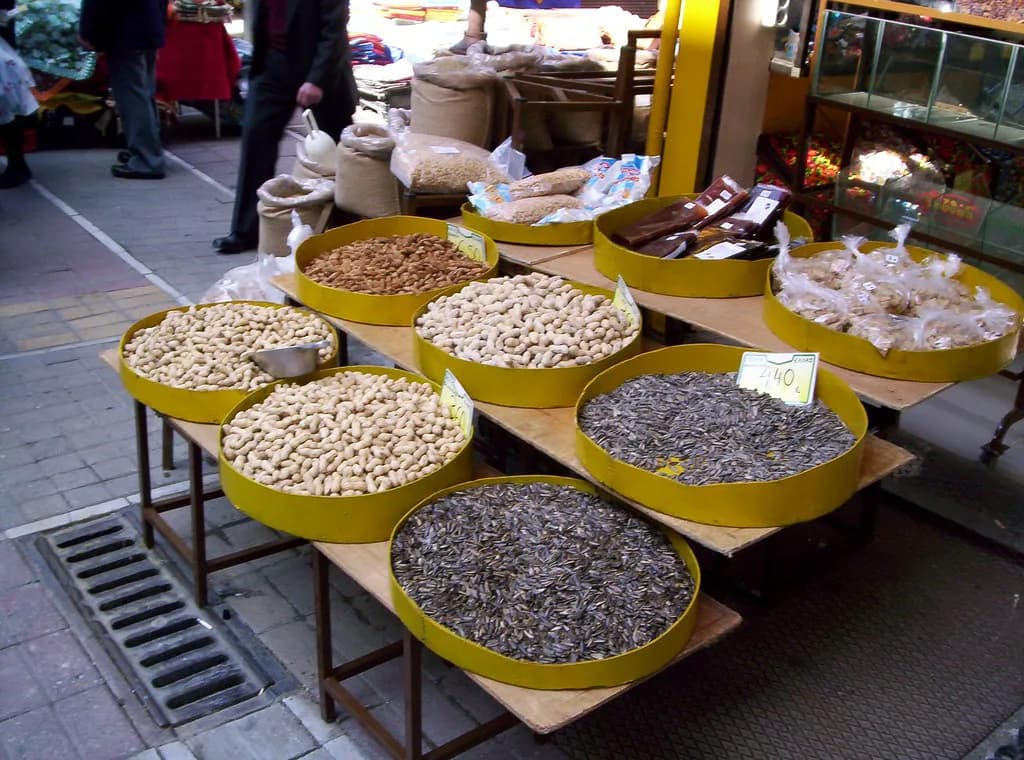
The reliable order at a market like this is built from what the counters do best: Greek cheeses such as feta and kasseri, olives by weight, cured or salted fish, and fresh bread from the bakery. Add a slice of the day's pie or a pastry from the sweet counter for something portable. These are the staples that travel well if you are heading onward to the White Tower waterfront or the Arch of Galerius.
Prices are set by individual traders and are not published centrally, so read the counter labels or ask before ordering by weight. The same applies to taverna plates inside the hall: check the menu at the door, since a market meal is not automatically cheaper than a restaurant. For current opening hours and holiday closures, check the Thessaloniki tourism office listing before a special trip.
Counter Versus Table: The View-and-Value Trade-Off
The main choice inside is between a stool at an interior bar and a proper table at one of the tavernas. A counter seat gets you served faster, costs less in the sense that you order less, and puts you in the middle of the hall's noise and movement. A table buys you space, a fuller menu and the ability to linger, at the cost of time and a larger bill.
There is no caldera view here, and no sea outlook to pay a premium for, so the practical trade-off is purely between speed and comfort. If you have a museum slot booked later, take the counter; if the market is your main outing, take the table. Either way, settle the bill before you move on rather than at the end of a wandering loop.
How Long to Allow
A shopper's loop through the stalls and street-side shops takes roughly 45 to 60 minutes at an unhurried pace. Add another hour if you sit down for a tsipouro and small plates, and more if you take a full taverna lunch. The hall is compact enough that you will not spend a whole day inside it, so pair it with one nearby sight rather than treating it as a day's destination.
Mid-morning is the liveliest window for the food halls, when the produce and fish counters are fully stocked and the coffee and bakery trade is in full swing. Late afternoon is quieter and better for a drink, but the choice at some counters will already be thinner. Plan your time around which of those two experiences you actually want.
Nearby: Kapani Market and the City Centre
Kapani Market is the neighbouring traditional food market and the natural comparison if you want the older, more street-level version of a Thessaloniki market. It sits within the same central grid, so you can walk from one to the other without transport. Go to Modiano for the covered hall and the bar scene, and to Kapani for the open bazaar feel.
Beyond the food, the Egnatia and Aristotelous axis gives you a full afternoon of walking. The Roman Forum is a short west, the Arch of Galerius is east along Egnatia, and Hagia Sophia sits between the market and the waterfront. The Museum of Byzantine Culture and the White Tower are further south, a reasonable walk or a short bus ride from the market.
If you want to climb above the city afterwards, Heptapyrgion in Ano Poli gives you the upper-town view and a sense of how far the old walls once reached. It is uphill from the market, so budget a walk or a taxi rather than treating it as a quick add-on. Save it for a day when your legs are fresh.
Practical Checks Before You Go
Opening hours, holiday closures and the exact mix of traders are not fixed by any single published schedule, so confirm before making a special journey. Check the market's own listing or the Thessaloniki tourism office, and remember that individual shops inside set their own patterns. If a particular counter is the reason for your visit, call ahead rather than relying on a general market listing.
Plan Your Visit
Modiano Market rewards a simple plan: enter from Egnatia or Ermou, loop the street-side counters once, then choose between a counter stool and a taverna table in the interior. Allow an hour for shopping and longer if you eat, and confirm current hours with the market or the tourism office before a dedicated trip. Pair it with Kapani Market or the Roman Forum to fill an afternoon in central Thessaloniki.
Explore more Thessaloniki sauna guides
Frequently Asked Questions
Where exactly is Modiano Market in Thessaloniki?
It occupies the block between Egnatia Avenue and Vasileos Irakliou Street, with exits onto Ermou Street. Use those three street names as your orientation points, and note which entrance you used so you can find your way out on the same side you arrived.
Is Modiano Market open every day?
A single daily schedule is not published centrally. Individual shops set their own patterns inside the hall, so check the market listing or the Thessaloniki tourism office for current hours and holiday closures before a special trip.
What can you eat at Modiano Market?
The hall holds produce, cheese, meat and fish shops, a bakery, a grocery, delis, a pastry shop, a coffee shop, a wine shop and a bar, plus tavernas and tsipouro bars in the interior. A tsipouro bar serves the grape-pomace spirit in small glasses with small plates alongside.
What is tsipouro?
Tsipouro is a Greek spirit distilled from grape pomace, the skins and stems left after pressing grapes. It is served in small glasses, usually with small plates of cheese, olives or grilled bites, and you order plates as you go rather than choosing a set menu.
How long should you spend at Modiano Market?
Allow about 45 to 60 minutes for a shopping loop through the stalls and street-side shops. Add an hour for a tsipouro and small plates, or more for a full taverna lunch. The hall is compact, so pair it with one nearby sight rather than a whole day.
Is Modiano Market worth visiting compared with Kapani Market?
They offer different experiences. Modiano is the covered hall with the bar and taverna scene, while Kapani is the traditional neighbouring food market with a more street-level feel. Both sit in the same central grid, so you can walk between them.
Where do you check prices at Modiano Market?
Traders set their own prices, so read the counter labels or ask before ordering by weight. For taverna plates inside the hall, check the menu at the door; a market meal is not necessarily cheaper than a restaurant.