
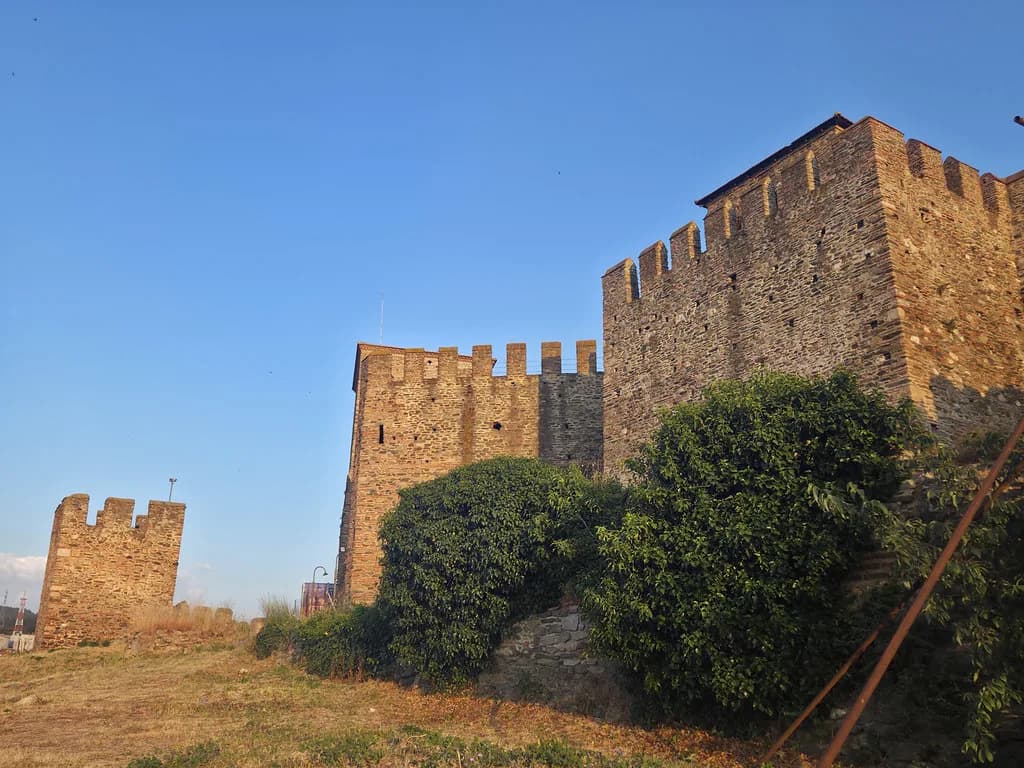
Heptapyrgion (Eptapyrgio) Thessaloniki: A Visitor's Guide to the Seven Towers
The Heptapyrgion is the fortress that closes off the top of Thessaloniki's old town, a walled compound of towers and ramparts that has served as refuge, governor's seat, prison and now museum. Visitors meet it under three names, so it helps to know them before you read a street sign: Heptapyrgion and the modern Greek Eptapyrgio both mean seven towers, and the Ottoman name Yedi Kule carries the same meaning.
The site sits in Ano Poli, the Upper Town that locals often call Kastra, on the ground of the ancient acropolis above the modern city. It is a history and viewpoint stop rather than a museum of objects, and it pairs naturally with the lanes, gates and tower of the same quarter; if you are still mapping the city, start from this overview of Thessaloniki Attractions: 8 Visitor Guides.
What the Heptapyrgion is and where it stands
The fortress is a polygonal walled enclosure with towers, built into the line of the city's defences at the highest point of the historic centre. In antiquity this was the acropolis of Thessaloniki, and the later walls ran down from here toward the sea, so the Heptapyrgion reads as the head of a system rather than an isolated castle.
Its setting in Ano Poli matters for planning. The quarter around it is a dense grid of narrow streets and old houses on a slope, and the fortress marks its upper edge. Allow for that gradient when you build your day, because the climb is part of the visit rather than an inconvenience before it; the same quarter is where you will find many of the best restaurants in thessaloniki once you are headed back down.
History in brief: Byzantines, Ottomans, prison
The present fortification was raised by the Byzantines in the 14th century, late in the empire's life under the Palaiologos dynasty, on the remains of the older city wall. Its original job was shelter in a siege and barracks for the city guard, not punishment.
After the Ottoman conquest of 1430 the compound served the Ottoman governor of the city until the late 19th century, when it was converted into a prison. It stayed a prison after the Greek army took Thessaloniki in 1912 to 1913, and it held common-law inmates as well as political prisoners through the dictatorships and the Nazi occupation and the civil war that followed.
The prison closed in 1989, when the site passed to the Greek Ministry of Culture and began its life as a museum, following citizen protests and criticism of conditions that were called unfit by European standards. Overcrowded, damp cells and executions gave the place its grim reputation, and rebetiko songs, the urban Greek music of the early 20th century, kept its name in circulation.
What to see inside the walls
The visit works on two levels. Architecturally you read the polygonal circuit, the towers and the ramparts, with later annex buildings added for administration once the state took over. Historically you walk the former detention wings and cells, where the exhibition explains who was held here and why the building became a symbol.
Expect an emotionally mixed hour or two: admiration for the masonry and the outlook, then the sobering detail of the prison. The two halves belong together, and the contrast is the point of the place rather than a flaw in the presentation.
The view from the ramparts
From the battlements you look down over the whole city and out across the Thermaic Gulf, the water that defines Thessaloniki's waterfront. This is the reward for the climb, and it is why the fortress works best as a late-afternoon stop when the light softens over the gulf.
The trade-off is that the same walls carry the prison's history, so a view-only visit misses the reason the site matters. Read the panels before you go up to the ramparts and the panorama lands differently.
Getting there from the centre
The fortress is reachable by bus or by car, and the walk up from the lower city is possible but best suited to people who are comfortable with a steady climb. In summer heat the ascent is the hardest part of the outing, so many visitors take transport up and walk down through Ano Poli instead; if you are weighing where to base yourself for the climb, the same choice comes up when picking among the best restaurants in thessaloniki between the upper town and the centre.
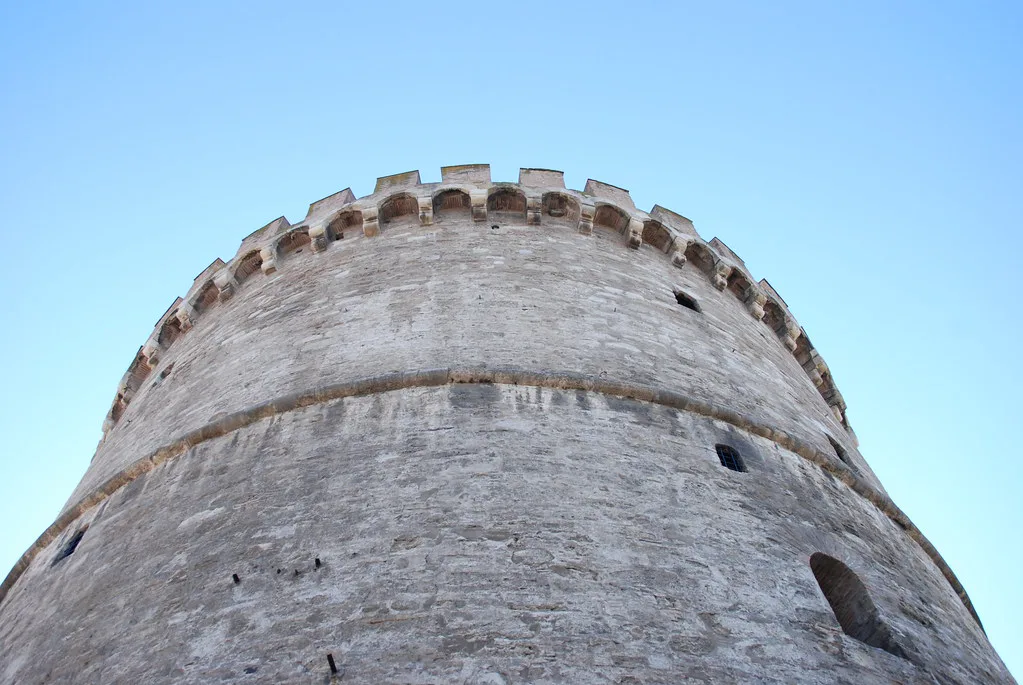
Which bus to take and where to park are local details that change, and the fortress does not publish a visitor access page in the sources here, so confirm the route with your accommodation or the city transport information before setting out. If you are starting from the waterfront, the White Tower of Thessaloniki is the obvious landmark to orient yourself by.
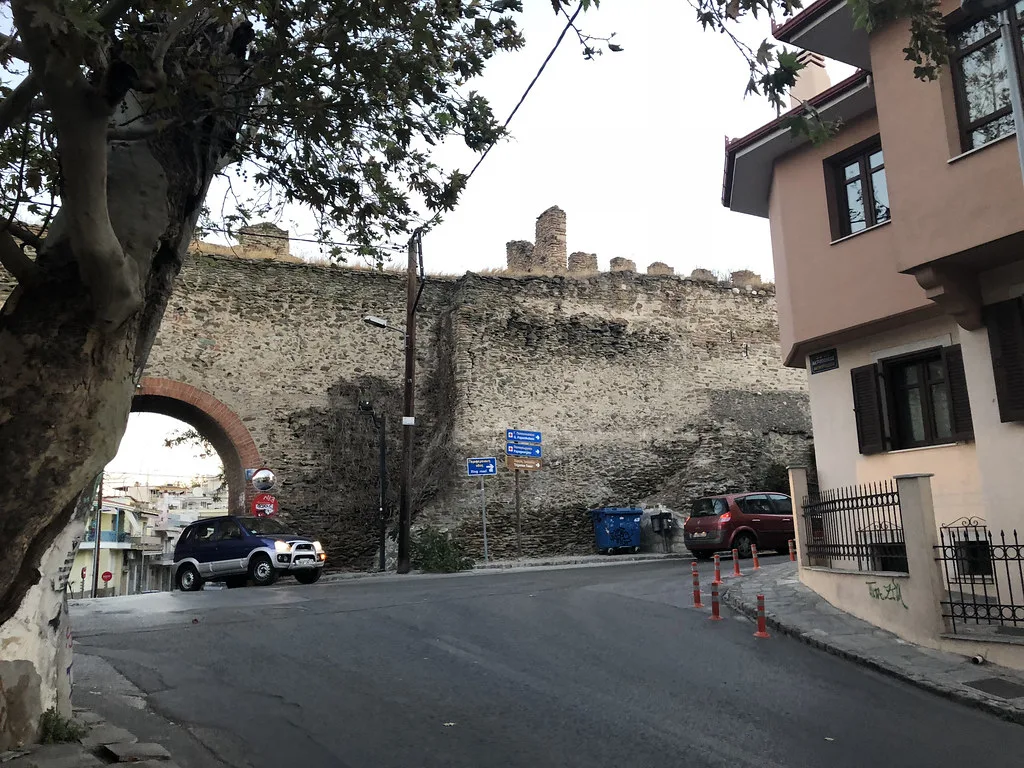
Once you are up in Kastra, walking is the sensible way to move between sights. The streets are steep and narrow, and the reward is the quarter itself: the Trigoniou Tower, the two oversized gates known as the Portares, old houses and small cafes with outlooks.
How long to allow
Budget roughly an hour for the fortress itself, then add time for the quarter around it. The visit inside is compact, but the prison exhibition rewards reading, and the ramparts hold people longer than they expect.
A realistic half-day covers the Heptapyrgion, a wander along the walls toward the Trigoniou Tower and the Portares gates, and a slow loop back down through Ano Poli. If you are squeezing it between other stops, treat the fortress as the fixed point and trim the wandering rather than the exhibition.
Nearby in Ano Poli and below
The Trigoniou Tower and the Portares gates sit within the same walled upper town, so they fit into one walk without extra transport. The lanes between them are part of the appeal, and the local cafes with a view make a natural pause after the fortress; for a fuller picture of eating in the old town, see this guide to the best restaurants in thessaloniki by area.
Down in the centre, Thessaloniki's Roman and Byzantine sights fill out the rest of a day. The Arch of Galerius in Thessaloniki marks the Roman quarter on the axis of the city's main street, a straightforward stop on the way back from Ano Poli.
For context on the Byzantine world the Heptapyrgion belonged to, the Museum of Byzantine Culture, Thessaloniki is the strongest complement, and the archaeological museum covers the earlier city on whose acropolis the fortress stands. Both are in the lower city and need their own time slot.
Practical details and where to check them
Opening hours, ticket prices, closure days and any reduced-admission rules are not fixed here and vary by season, so check them with the site or the Greek Ministry of Culture before you climb. The same goes for whether any part of the fortress is roped off for works.
The site's identity as a former fortress, prison and now museum is consistent across descriptions, but the operational side is the part that changes. Treat this guide as the what and the why, and confirm the when and the how much on the day you plan.
Plan Your Visit
The Heptapyrgion rewards a visitor who comes for both halves: the Byzantine walls and the gulf view on one side, the prison cells and their history on the other. Go up by bus or car if the climb is not for you, walk down through Kastra, and give the exhibition more time than the map suggests.
After the descent, eat in Ano Poli or the centre rather than at the fortress, which has no food stop of its own. For a table with local cooking rather than a view premium, the best restaurants in thessaloniki are a useful starting point, though it is worth checking current prices and opening days as you plan.
Explore more Thessaloniki sauna guides
Frequently Asked Questions
Is the Heptapyrgion worth visiting in Thessaloniki?
Yes, if you want both architecture and history in one stop. The Byzantine fortification and the ramparts give one of the widest views over the city and the Thermaic Gulf, while the former prison wings and cells explain why the site is so closely tied to modern Greek history and rebetiko songs. It suits visitors who read the panels rather than those looking only for a photo stop.
How do you get to the Heptapyrgion from central Thessaloniki?
The fortress can be reached by bus or by car, or on foot for visitors comfortable with an uphill walk. The climb is demanding in summer heat, so many people ride up and walk back down through Ano Poli. Confirm the current bus route and parking with your accommodation or the city transport information, as these details change.
How long does it take to visit the Heptapyrgion?
Allow about an hour inside the fortress, plus extra time for the Ano Poli streets around it. The walled compound is compact, but the prison exhibition and the ramparts hold people longer than expected. A half-day covers the fortress, the Trigoniou Tower and the Portares gates, and a slow walk back down.
Was the Heptapyrgion a prison?
Yes. After serving the Ottoman governor, the compound became a prison in the late 19th century and stayed one after Thessaloniki joined Greece in 1912 to 1913, holding common-law and political prisoners through the dictatorships, the occupation and the civil war. It closed in 1989, when it passed to the Greek Ministry of Culture and became a museum.
What is there to see near the Heptapyrgion in Ano Poli?
Within the upper town you can walk to the Trigoniou Tower, the two large gates called the Portares, and the lanes and old houses between them, with small cafes offering outlooks. Below, in the centre, the Roman and Byzantine sights fill out the rest of a day.
Do you need tickets for the Heptapyrgion, and what are the opening hours?
Ticket prices and opening hours vary by season and are not published in a fixed form here. The Greek Ministry of Culture lists closure days and any reduced admission; the visit is the main reason to make the climb, so check current details before you go up.