
Hagia Sophia in Thessaloniki: How to Visit the Church of Agia Sofia

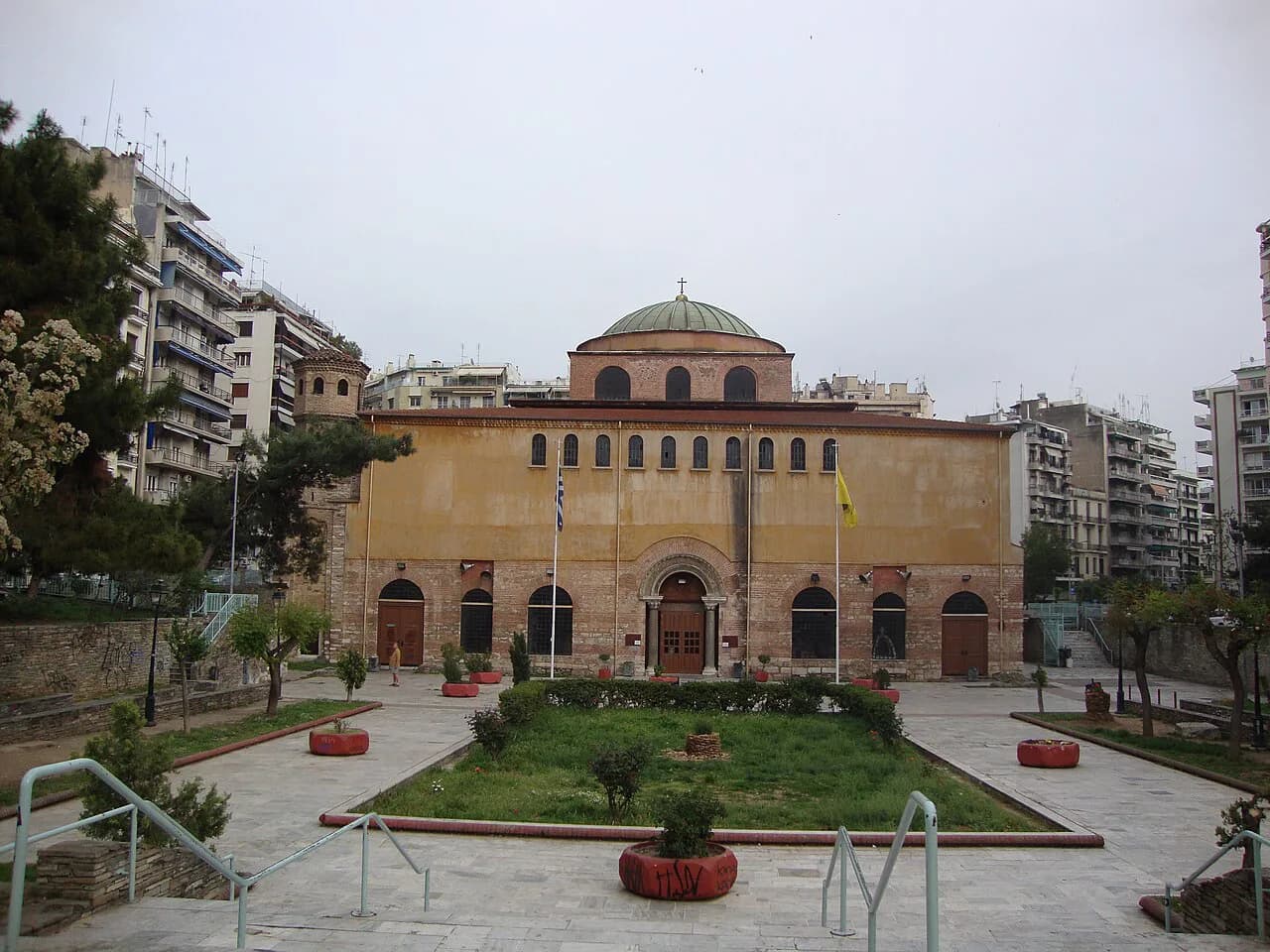
Hagia Sophia in Thessaloniki is the Church of Agia Sofia, a Byzantine church on Platia Agias Sofias in the city centre. The Greek name means Holy Wisdom, so it describes the dedication rather than a saint called Sophia, and the building has served as a cathedral, a mosque and an Orthodox church across its long life.
This page covers that one church: where it stands, the walking route from the city's commercial heart, what to look for inside the dome and apse, and how much time a visit realistically takes. Hours and entry arrangements are not published in the sources used here, so this guide explains where to confirm them before setting out.
Where the Church of Agia Sofia Stands
The church occupies Platia Agias Sofias, the square in central Thessaloniki that carries its name, as the German-language reference entry on the building records. That places it inside the compact core of the city, within easy walking distance of the waterfront and the Aristotelous Square area, so it fits naturally into a morning or afternoon on foot rather than requiring transport.
Because the church sits in the middle of a working square, expect traffic, buses and passers-by around the entrance rather than a quiet precinct. The compensation is the palm-planted garden that encircles the building, which gives the exterior a calmer edge than the surrounding streets suggest.
Thessaloniki or Istanbul? Sorting Out the Name
Searching for Hagia Sophia usually returns the former basilica-turned-mosque in Istanbul, which is a different building in a different country. The Thessaloniki church shares the dedication and the familiar name, but it is smaller, still in active Orthodox use, and recognised as one of the city's UNESCO-listed monuments rather than a museum.
To avoid pulling up the wrong map, add Thessaloniki or the Greek spelling Agia Sofia to your search, and check that the result sits on Platia Agias Sofias. The other reliable filter is the phone number and listing that carries the Thessaloniki address rather than the Istanbul one.
Getting There on Foot
One described route starts from Aristotle Street: walk up Karolou Dil Street, then turn onto Ermou Street to reach the square, a route of roughly 700 metres according to the saloniki.guide listing. That is a comfortable ten- to fifteen-minute walk at an easy pace, and it threads through the shopping streets rather than along the seafront.
If you are coming from the waterfront, head inland from the Aristotelous Square area and use the church's dome as your landmark once the streets open out. Buses and taxis serve the surrounding streets, but for most visitors in the centre the walk is simpler than working out a route.
Opening Hours and Entry: What to Confirm
The sources used here do not publish opening hours or entry arrangements for the Church of Agia Sofia, and as an active place of worship its visiting times can shift around services and feast days. Confirm the current situation with your accommodation or on the parish's own notices before you build a day around it. This is the one practical detail worth checking in advance rather than on arrival.
If the doors are closed when you arrive, the square and exterior still justify the walk, and you can return later in the day. Treat a service in progress as a reason to wait outside rather than to slip in and look around.
What to See on the Outside
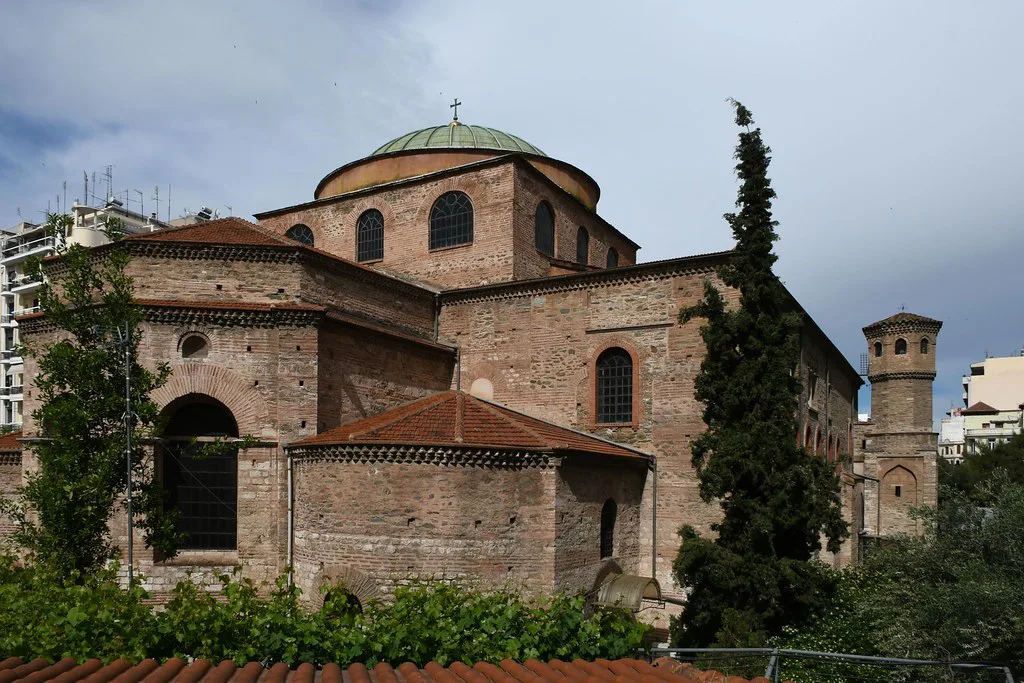
The exterior blends two architectural ideas: a three-aisled basilica, meaning a long hall divided by rows of columns, and a cross-domed church, where the plan is shaped like a cross and crowned by a central dome. Seeing both in one shell helps explain why the building looks less tidy than a single-style church.
Walk the perimeter before going in, because the palm garden and the square give you the best sense of the building's bulk and its dome from below. The square also works as an orientation point for the rest of the centre, with streets radiating toward the waterfront and the market district.
Inside: The Dome and Its Mosaic
The interior's centrepiece is a dome roughly ten metres across, decorated with an Ascension of Christ mosaic. Christ appears at the top with angels beside him, and the apostles are arranged around the drum with trees separating the figures, a detail worth looking for as you stand beneath it.
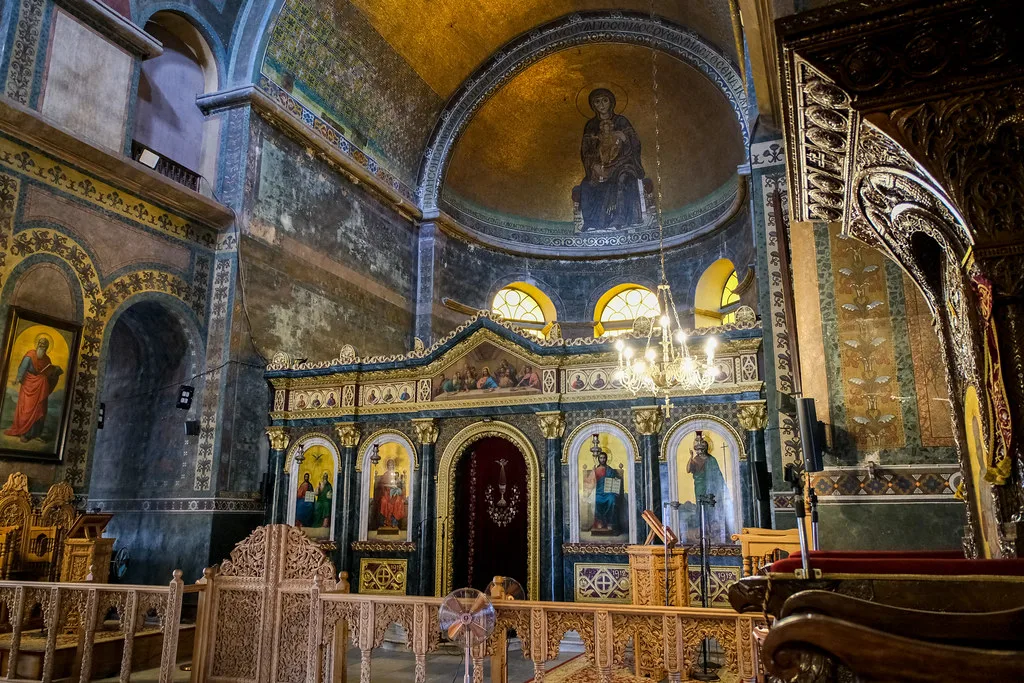
Below the dome, the apse carries a mosaic of the Virgin Mary in the Hodegetria style, meaning she is shown holding the child and gesturing toward him. This image replaced an earlier cross design after the period of iconoclasm, and fragments of the older work are still visible, which makes the apse a good place to look closely.
Elsewhere the interior shows Orthodox art, columns with carved capitals, and walls partly decorated with floral patterns. Sculptural pieces were reused from different periods, including a fifth-century pulpit brought from Constantinople in 1905, so the fittings reward a slow circuit rather than a glance from the door.
Mosaics and Frescoes in Context
The date of the dome mosaic is genuinely debated: some scholars place it in the ninth century, others in the seventh, and it may have been made across a span of centuries. Treat confident dates you see elsewhere with caution, and read the mosaic as evidence of a long, layered workshop tradition rather than a single moment.
Eleventh-century frescoes, including figures such as Euphemia and Theodora, were hidden under plaster during the Ottoman period and have since been restored. Knowing that they spent centuries concealed makes them easier to appreciate as survivals rather than as decoration in the ordinary sense.
A Short History of the Building
Nobody knows exactly when the church was built; researchers place its foundation around the end of the seventh century or in the eighth. A tenth-century Byzantine writer described the temple as impressive, and it went on to serve as the cathedral of the metropolitan of Thessaloniki.
In the sixteenth century, under Ottoman rule, it became a mosque, and it was returned to Orthodox Christian use in 1912. Further damage followed: the great fire of 1917, an air raid in 1941 that destroyed an ornate portico, and the 1978 earthquake, which led to repairs lasting roughly two decades.
In 1981 the relics of Archbishop Basil of Thessaloniki were found behind one of the church's balustrades, reflecting the old practice of burying bishops within the walls. In 1988 the church was inscribed on the UNESCO list as part of Thessaloniki's collection of early Christian and Byzantine monuments.
Dress Code and Etiquette
This is an active church, so dress respectfully: cover shoulders and knees, which generally means no vests or very short shorts, as the saloniki.guide tips advise. Women may enter in trousers with heads uncovered, and a skirt or headscarf is optional rather than required.
Photographs inside are acceptable, but not during a ceremony, so watch for services beginning and put the camera away if one does. Keep voices low, avoid blocking the aisles, and step aside if worshippers need to light candles or approach the icons.
How Long to Allow
A quick look at the architecture and the dome takes roughly fifteen to twenty minutes, which suits anyone fitting the church into a wider walk through the centre. If you intend to pick out the Ascension figures, the apse mosaic and the restored frescoes, plan on closer to forty-five minutes so you can move around the nave and look up without hurrying.
Photography of a ten-metre dome benefits from patience and a steady hand rather than a flash, so build in a few extra minutes if that is a priority. Combine the visit with the square itself and it fills a comfortable hour before lunch or after a coffee.
What Is Nearby
Because the church sits in the centre, several other sights are within a short walk. The White Tower of Thessaloniki on the waterfront makes a natural next stop, and the Arch of Galerius in Thessaloniki lies inland along the Roman route through the city; both are easy to pair with the church in one loop.
For context on what you have just seen, the Museum of Byzantine Culture, Thessaloniki holds collections that make sense of the mosaics and church fittings. The Modiano Market (Agora Modiano) is also nearby for a walk through the city's food stalls if you want something less solemn after the visit.
Plan Your Visit
Hagia Sophia in Thessaloniki rewards a deliberate stop rather than a photo from the square: the dome, the apse mosaic and the reused sculpture all repay looking up and walking slowly. Give it thirty to forty-five minutes, dress for a church rather than a beach, and confirm the day's visiting arrangements locally before you go.
For the rest of your day, the church's central position makes it easy to move on to the waterfront or into the market streets for lunch. Plan the meal around the walk rather than the other way around, and you will spend less time crossing the centre twice. If you want to weigh up options before settling on a table, this guide to the best restaurants in Thessaloniki breaks the choices down by area.
Frequently Asked Questions
Is Hagia Sophia in Thessaloniki the same as the one in Istanbul?
No. The Thessaloniki building is the Church of Agia Sofia on Platia Agias Sofias, an active Orthodox church and a UNESCO-listed monument. The Istanbul Hagia Sophia is a separate former basilica-turned-mosque in Turkey, so add Thessaloniki or Agia Sofia to searches to avoid mixing them up.
How do you get to Hagia Sophia in Thessaloniki?
It is in the city centre on Platia Agias Sofias, within walking distance of the waterfront and the Aristotelous Square area. One described route runs from Aristotle Street up Karolou Dil Street and onto Ermou Street, roughly 700 metres to the square.
What can you see inside the Church of Agia Sofia?
Look for the roughly ten-metre dome with its Ascension mosaic, where trees separate the apostles, and the apse mosaic of the Virgin in the Hodegetria style. The interior also has columns with carved capitals, floral wall decoration and an early pulpit brought from Constantinople in 1905.
How long should you spend at Hagia Sophia in Thessaloniki?
A brief visit takes about fifteen to twenty minutes. Allow closer to forty-five minutes if you want to study the dome mosaic, the apse and the restored frescoes, and add a little time if you plan to photograph the dome.
Is there a dress code for visiting the church?
Yes. Cover your shoulders and knees, and skip vests or very short shorts. Women may enter wearing trousers with heads uncovered; a skirt or headscarf is optional.
Is photography allowed inside the church?
Photographs are generally acceptable inside, but not during a ceremony. If a service begins, put the camera away, keep your voice low and give worshippers space.
When was Hagia Sophia in Thessaloniki built?
The exact date is unknown. Researchers place construction at the end of the seventh or during the eighth century, and the building has since been damaged by fire, air raid and earthquake and repaired several times.
Is there an entrance fee?
The sources used here do not state whether there is a fee or what the opening hours are. Your accommodation or the notices at the church can tell you the current visiting arrangements before you plan your day around it.