
Church of Saint Spyridon in Corfu: What to See and How to Visit

The Church of Saint Spyridon is the most famous church in Corfu Town and the one building most visitors already know something about before they arrive, because its bell tower rises above the surrounding rooftops. It is not a museum piece: it is an active parish church where the island's patron saint is venerated, and that shapes everything from how you behave inside to how long you can stay.
This guide treats the church as a single place worth an hour of your day rather than a tick-box stop. It covers orientation in the old town lanes, the bell tower as a navigation aid, what to see inside, the saint's story, and which days transform the building into a crowded public event.
What the Church of Saint Spyridon is
The building is a single-nave basilica, meaning one continuous hall rather than a series of side aisles, which makes the interior feel more compact than the exterior suggests. Its bell tower, built in 1620, is described as the highest in the Ionian Islands, and the church is regarded as the most famous on Corfu. That combination of a modest plan and a soaring tower is the first thing to understand about the place.
The reason the church matters to Corfiots is not architectural. It holds the relics of Saint Spyridon, which were moved to Corfu after the fall of Constantinople and eventually placed in the church, which was inaugurated in 1589. For centuries the relics have been carried in procession through the town, and the church functions as the spiritual centre of the island rather than a sight with a ticket desk.
Sources do not document a ticket desk or a published entry charge, so treat admission on the day rather than budgeting for a specific sum; this is a working parish church, and any collection or candle offering is made inside.
Where it is in Corfu Town
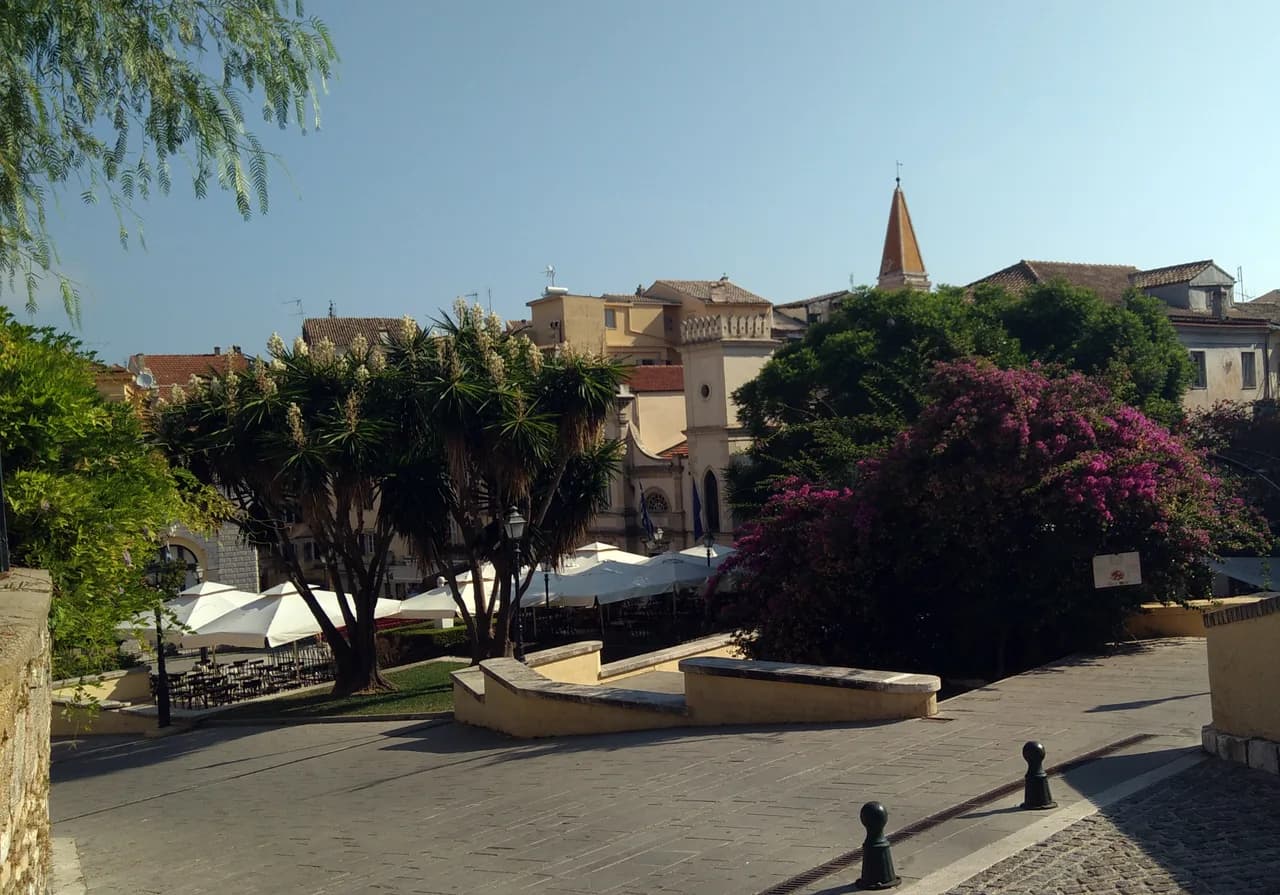
The church sits in the dense fabric of Corfu Town's old quarter, a short walk from the main square and the open ground of the Spianada, which is the large esplanade between the old town lanes and the fortress side of the city. Use the tower as your beacon: in a quarter of narrow, shaded streets where sightlines are short, a landmark above the rooflines is more useful than a street address.
Orient yourself by heading inland from the Spianada and letting the lanes pull you toward the bell tower. Once you are within a couple of blocks the church announces itself through its tower and the flow of people around it. The corfu old town around it is worth exploring on its own account, with the church as one fixed point in a half-day of wandering.
If you want a wider sense of how the church fits into the town's sights and neighborhoods, the Corfu Attractions: 7 Visitor Guides collection sets out the options by area. That helps you decide whether to visit the church first thing, before the lanes fill, or to slot it into a route that ends near the water.
How to get there
Most visitors reach the church on foot, because it sits inside the old town core where driving and parking are genuinely awkward. If you are staying in or near the centre, walk in from the Spianada side and expect a short, mildly confusing approach through lanes rather than a straight boulevard. Allow extra time if you are navigating with a phone, since signals between tall buildings can be patchy.
Arriving from outside Corfu Town by bus or car means sorting out the town transport and parking arrangements yourself, since timetables and lot locations change and are not reliable in a static guide. The green bus network serves the island and the local blue buses cover the town, but look up current routes and stops locally before setting out, and plan to park on the edge of the centre rather than beside the church.
The bell tower as your landmark
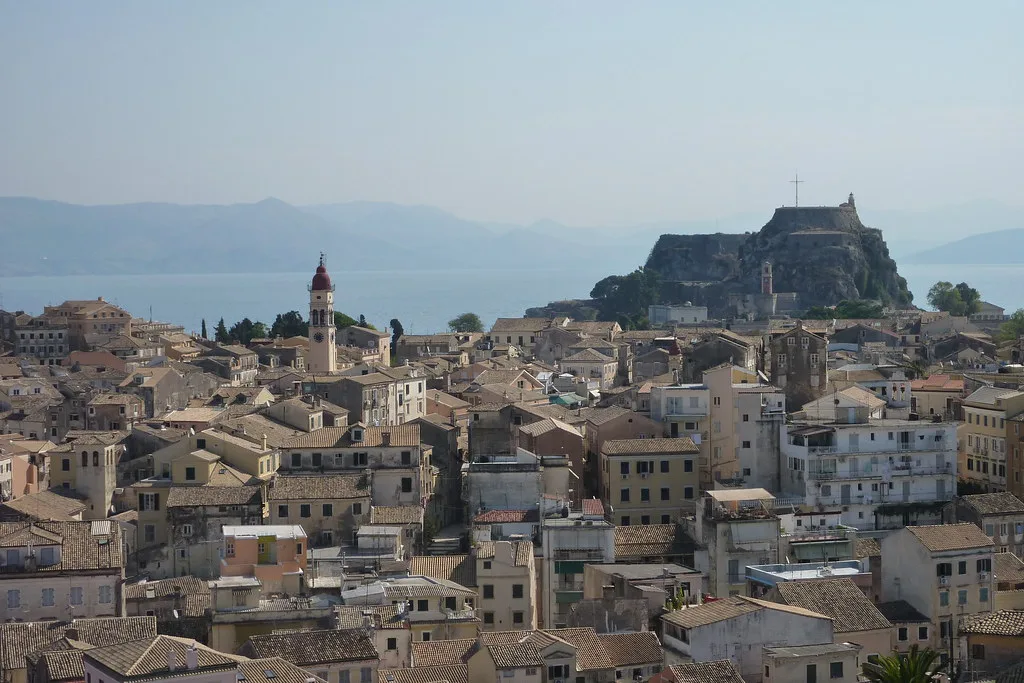
The tower built in 1620 is the highest in the Ionian Islands, and it is the single most useful fact for a first-time visitor: look up, find it, and you have your bearing for the rest of the old town. Even if you approach from the wrong side, correcting course is simply a matter of keeping the tower in view between the buildings.
Photographing the tower is easiest from a little distance, where the surrounding buildings frame it, rather than pressed against the church wall. Late afternoon light on the stone reads better than harsh midday sun, and the streets around the church offer several angles within a minute or two of walking.
What to see inside
The focal point of the interior is the silver casket that holds the saint's relics, an object of veneration rather than an exhibit, and visitors should give those praying around it room and quiet. Beyond that, read the church as a working interior: the layout of the single hall, the hanging lamps and the icons give you the sense of a place in daily use rather than a curated display.
Respectful behaviour is straightforward: dress modestly with shoulders and knees covered, keep voices low, avoid flash photography, and do not stand in the path of anyone approaching the relics. If a service is underway, stay near the back or step outside and return later. These habits matter more here than in a museum because the congregation is not performing for visitors.
Who Saint Spyridon was
Saint Spyridon was born in the fourth century in Askeia on Cyprus, worked as a shepherd, and became bishop of Trimythous after his wife died. He is venerated in both the Western and Eastern churches, and his memory is honoured on 12 December, the day he died in 348. Corfiots call him the Keeper of the City, a title earned through the disasters the island credits him with averting.
The relics were moved from Cyprus to Constantinople in the seventh century and then, after the fall of that city, brought to Corfu, initially to the temple of Saint Athanasios. Over time they passed through the hands of the Voulgaris family before reaching the church that now bears his name. That lineage explains why the church is a pilgrimage site as much as a landmark, and why the atmosphere changes so completely on feast days.
The litanies and feast days
The church's year is punctuated by processions that carry the relics through the town, and a visit on one of those days is a completely different experience from a quiet morning. The litanies are held on Palm Sunday, Holy Saturday, 11 August, 13 July and the first Sunday of November, each commemorating a specific deliverance, and 12 December marks the saint's memory and the name day of everyone called Spyros or Spyridoula.
On those days expect crowds, road closures and a church that is difficult to enter at all, so plan to watch the procession from the street rather than trying to see the interior. If calm and the casket are what you came for, pick an ordinary weekday instead. Either way, check the current year's programme locally before you travel, since the town publishes details closer to the date.
How long to allow and when to go
Budget around twenty to thirty minutes inside the church for a focused visit, plus time to linger outside and find your way back into the lanes. Photographers and anyone attending a service will need considerably longer. Because it sits within the old town's sight cluster, the church fits naturally into a half-day that also takes in the waterfront and the fortress.
The published listing for the church shows opening times of 7:00 AM to 8:00 PM on Saturday and Sunday, which suggests early mornings and early evenings are worth planning around. Check current hours with the church before making it your first stop of the day, since schedules can shift with the liturgical calendar.
Nearby sights to combine with the visit
The Spianada and the lanes around it put most of the old town within a few minutes' walk. The Liston, the arcaded cafe terrace along the esplanade, is the obvious place for a coffee before or after the church, and the open ground in front of the Old Fortress Corfu (Palaio Frourio) is a short stroll from the same area.
If you want an indoor stop with a very different atmosphere, the museum of asian art corfu is housed in the Palace of St Michael and St George, the neoclassical building at the north end of the Spianada, a short walk from the church quarter. It pairs well with the church because the two interiors could not be more different in scale and mood.
Further afield, Mon Repos Palace, Corfu sits outside the centre and needs its own transport plan, so keep it for a separate half-day rather than bolting it onto a church visit. For a broader menu of options, Things to Do in Corfu lays out the town and island sights side by side, much as our Thessaloniki restaurants guide organises eating by area for a city break elsewhere.
Common mistakes to avoid
The most frequent error is treating the church as a museum, walking in mid-service with a camera raised and working the room as if it were an exhibit hall. The second is arriving on a litany day without knowing it, then finding the streets blocked and the church full. A quick look at the feast-day calendar before you go prevents both.
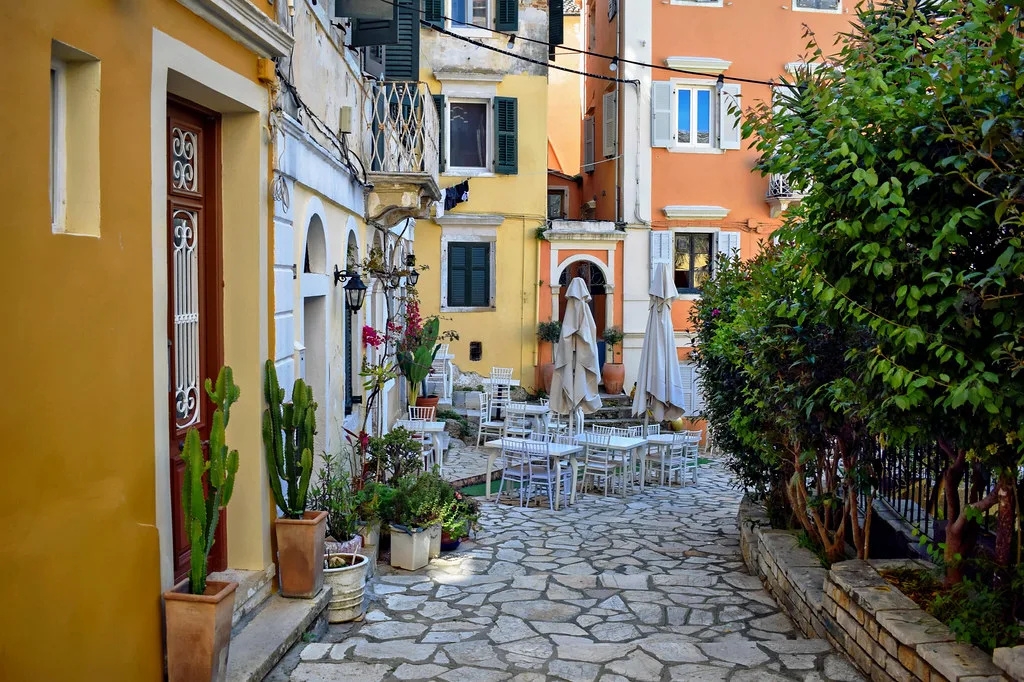
The third is treating the church as a standalone errand and missing the surrounding lanes, which hold much of the old town's character and connect the church to the waterfront and the fortress. Give yourself room to walk out a different way than you came in.
Plan Your Visit
Plan the Church of Saint Spyridon as an hour of your Corfu Town day: a short, quiet visit inside, a look up at the 1620 tower to fix your bearings, and a slow walk through the surrounding lanes. Check the current opening hours and the litany programme close to your travel dates, since both shape what you will actually find.
If you are building an itinerary around the old town, the Old Fortress gives you the view back over the rooftops you have just walked beneath. Between the church, the Spianada and the waterfront, Corfu Town's core fills a comfortable half-day.
Explore more Corfu sauna guides
Frequently Asked Questions
Where is the Church of Saint Spyridon in Corfu Town?
It stands in the old town quarter, a short walk inland from the Spianada, the large esplanade near the Old Fortress. The 1620 bell tower is the easiest way to find it: keep it in view above the rooflines and follow the lanes toward it.
Is there an entry fee for the church?
No reliable source confirms an entry fee, so the honest answer is that admission is unconfirmed. Confirm on arrival or ask locally rather than budgeting for a specific price, and remember that this is a working parish church rather than a ticketed monument.
How long does a visit take?
Allow about twenty to thirty minutes inside for a focused visit, plus time to find it and to walk the lanes around it. If you attend a service or photograph the tower, plan for longer.
When are the litanies at the Church of Saint Spyridon?
Processions with the relics are held on Palm Sunday, Holy Saturday, 11 August, 13 July and the first Sunday of November, with 12 December marking the saint's feast and the name day of Spyros and Spyridoula. On those days expect crowds and closed streets.
What is Saint Spyridon known for?
He was a fourth-century Cypriot shepherd who became bishop of Trimythous and is venerated across both Western and Eastern churches. Corfiots call him the Keeper of the City and credit him with saving the island from famine, plague and siege.
What is inside the church?
The main focal point is the silver casket holding the saint's relics, set within a single-nave basilica with hanging lamps and icons. It is an active place of worship, so keep voices low, dress modestly and give people praying room.
What should I wear and how should I behave inside?
Cover shoulders and knees, keep voices low, avoid flash photography, and do not stand in the way of anyone approaching the relics. During a service, stay at the back or step outside and return later.
What else is near the church?
The Spianada and the Liston cafe terrace are a short walk away, as is the open ground in front of the Old Fortress. The Museum of Asian Art in the Palace of St Michael and St George at the north end of the esplanade makes a contrasting indoor stop.