
Rhodes Old Town: A Practical Guide to the Walled City
Rhodes Old Town is the walled medieval city at the heart of Rhodes Town, and it is a UNESCO World Heritage Site rather than a museum set piece: people live, shop and eat inside the fortifications. The lanes are cobbled and pebble-floored, the main sights cluster within a short walk of each other, and the whole district is small enough to cross on foot.
The catch is that the medieval grid defeats phone navigation, so download a map before you enter the gates and treat signage as a rough guide. This guide stays inside the walls and points outward only where you need an exit, a gateway or a different neighbourhood for comparison.
What Rhodes Old Town Actually Is
The Old Town sits within massive fortifications on the northern tip of Rhodes island, with the newer Italian-era town, the Mandraki harbour and Elli Beach lying just outside the walls. Inside, the street pattern is medieval: a long spine road, Sokratous Street, climbs uphill past shops to the Mosque of Suleiman, while side lanes branch off into residential quarters.
It helps to think in three layers. The Knights of St. John left the palace, the Street of the Knights and the hospital that now holds the Archaeological Museum; the Ottomans left mosques, a library and shisha bars in old stone buildings; and the Italian occupation of the early 20th century rebuilt parts of the palace and shaped the new town outside. A source describes the walled city as a living open-air museum rather than a single sight.
Who It Suits, and Who Should Base Themselves Elsewhere
History lovers, walkers and slow travellers get the most from the Old Town: the pleasure is in covering a small area slowly, stopping at a mosque, a Gothic fragment or a pebble-mosaic floor between coffees. Shoppers also do well here, since Sokratous Street and the side lanes are lined with sandals, leather, linen and jewellery.
Beach-first visitors and anyone with limited mobility should weigh it carefully. The lanes are uneven, Sokratous Street climbs steadily, and the Roloi Clock Tower viewpoint involves steep steps that reviewers describe as demanding, so a rooftop cafe may be the kinder alternative. Those who want sand, sun loungers and easy transport links are better off outside the walls.
Getting In and Getting Oriented
Most arrivals enter on foot from the tourist port or the new town, and Hippocrates Square is one of the first natural stopping points when you come in from the port side. From there, Sokratous Street runs uphill through the shopping lanes, and the Street of the Knights branches off near the palace at the top of the knights' quarter.
Mandraki harbour, just outside the walls, is the departure point for daily boat trips along the coast and the short crossing to Symi, which makes it a sensible place to end a morning in the Old Town. Allow more time than the map suggests: the distances are short but the lanes twist, and a wrong turn costs ten minutes rather than two.
The Core Circuit: Palace, Knights' Street and the Museum
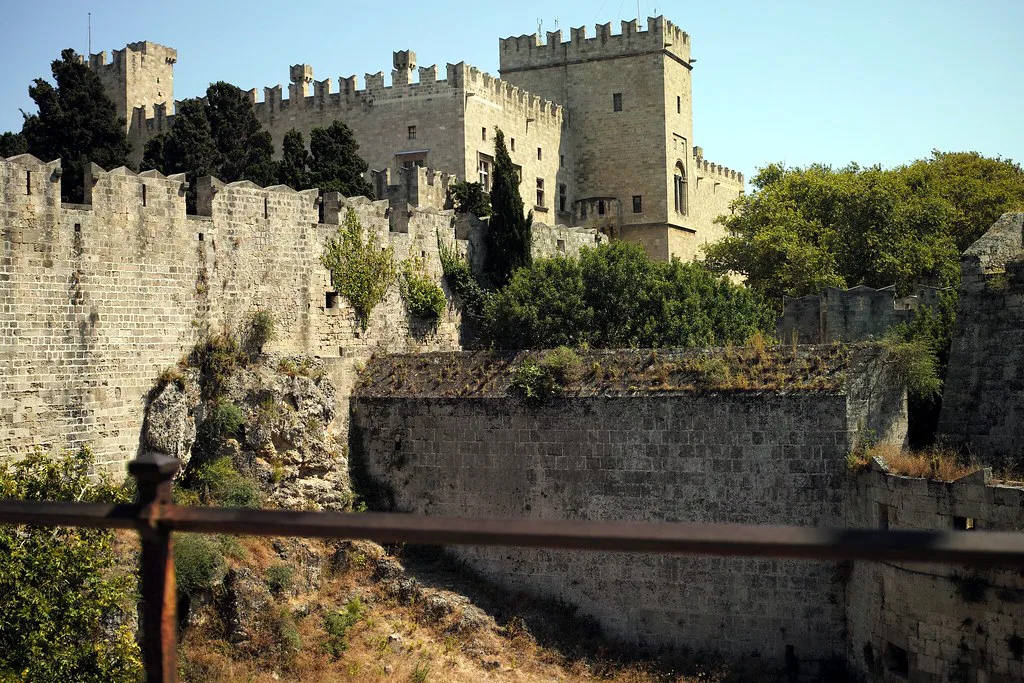
Start with the Palace of the Grand Master of the Knights of Rhodes, the most famous building inside the walls and a 14th-century structure heavily rebuilt during Italian rule. Around twenty of its 158 rooms are open to the public, and the palace entrance is where the Street of the Knights begins before heading downhill.
The Street of the Knights is a preserved cobbled lane built on an ancient road, flanked by stone inns that housed knights according to the seven countries and languages they came from. At its foot stands the Archaeological Museum of Rhodes, housed in the former Hospital of the Knights and covering ancient Greek, medieval and Ottoman periods. Neither the palace nor the museum publishes fixed hours in the sources used here, so confirm opening times and ticket details before you commit a day to them.
Squares and Shopping Streets
Hippocrates Square is the busiest hub inside the walls, ringed by terrace restaurants, bars and souvenir shops and used by locals as well as visitors, who gather on its 14th-century steps on summer evenings. Arriving early morning from the port gives you the square at its calmest, which makes it a good place to plan the day over a frappe, the iced instant-coffee drink that is a Greek summer staple.
Sokratous Street is the shopping spine, climbing past sandals, belts, cotton clothing and jewellery toward the rose-pink Mosque of Suleiman. The Evreon Martyron, or Square of Jewish Martyrs, is a different sort of stop: staff from surrounding bars will offer you drinks and food, but the green area under the trees holds a black obelisk memorial to the Jews of Rhodes and Kos killed in the Holocaust.
Ottoman and Later Layers
At the top of Sokratous Street, the Mosque of Suleiman commemorates the sultan who took Rhodes for the Ottomans in the 16th century, after which the Knights of St. John moved to Malta. A source reports the mosque as closed to visitors, so treat it as a landmark to look at from the street rather than a stop to plan around.
Nearby, the Hafiz Ahmed Agha Library was founded in 1793 and holds almost 1,300 manuscripts, with an entrance room open to visitors. Lower down, the Church of the Virgin Mary of the Burgh survives as Gothic arches after Second World War damage, a quick photographic stop rather than a substantial site.
Quiet Alternatives: the Moat and the Back Lanes
The medieval moat is the best escape from crowds: a walk between the colossal walls and outer fortifications, past gardens and through historic gates and tunnels, and, unusually for a castle moat, it was never filled with water. It takes you out of the shop-and-restaurant circuit entirely.
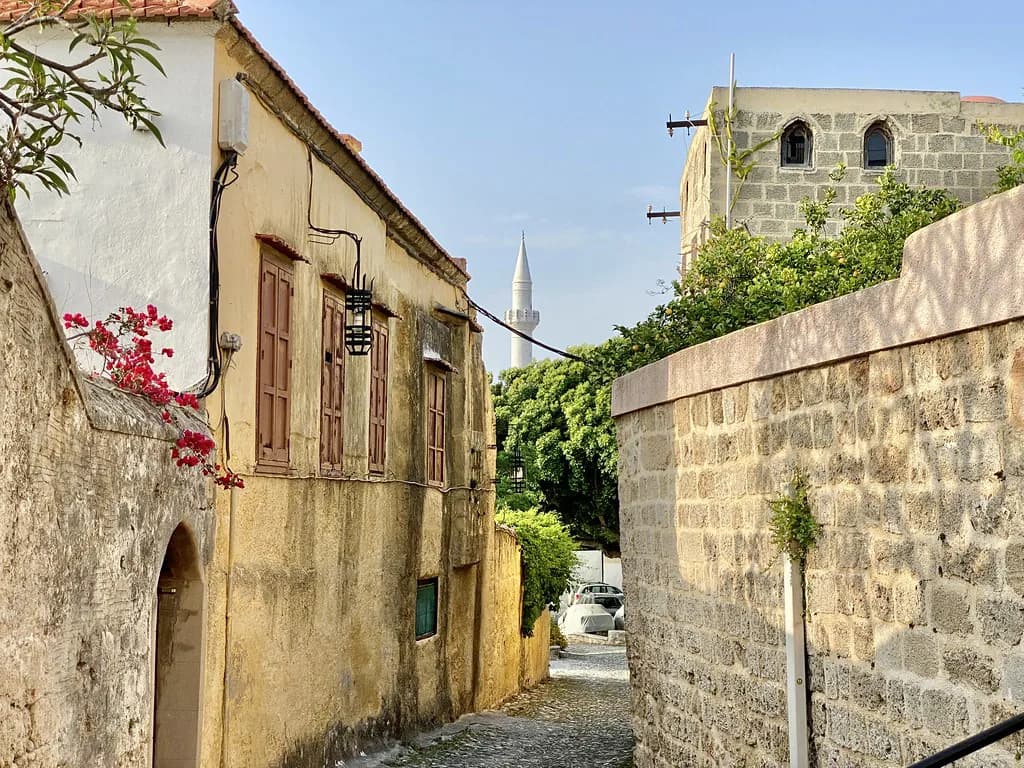
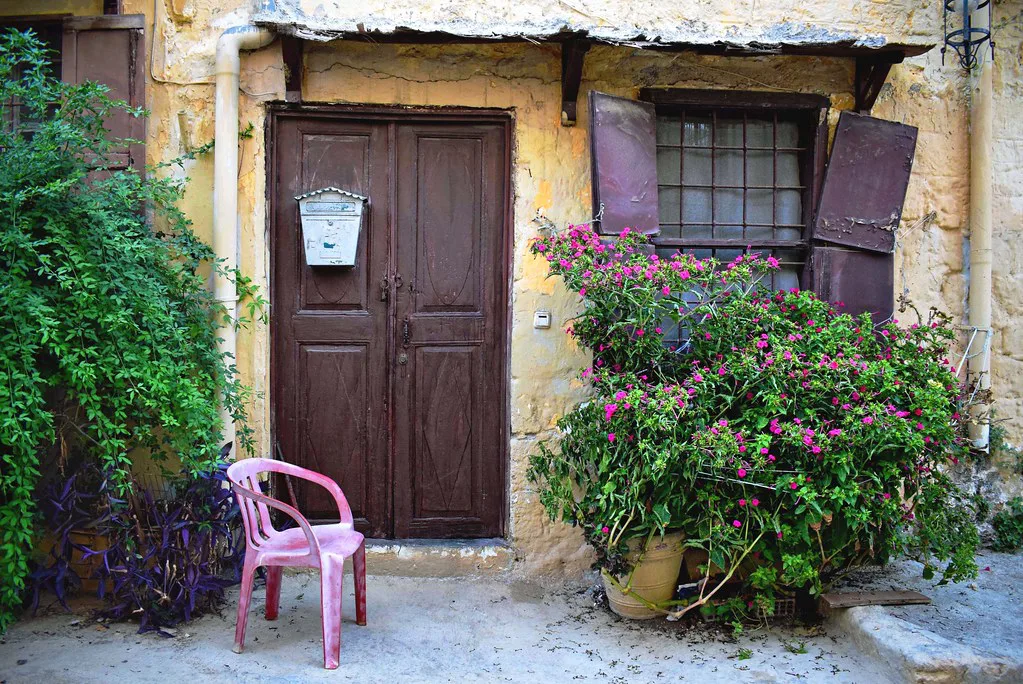
The residential side streets reward aimless wandering more than any tick-list does: pebble floors, stone archways, bougainvillea and small squares with a mosque or church. These lanes are also where the smaller tavernas hide, so they are the practical alternative to a square-side table.
The Jewish Quarter in More Detail
From the Square of Jewish Martyrs, take the side street Dosiadou to reach the 16th-century Kahal Shalom Synagogue, which also houses the Jewish Museum of Rhodes. A source describes the museum as open for visits in the summer months, but no fixed dates or hours are published, so check the community's own website before making the walk.
Give the square its due even if you are not hungry: the memorial is easy to miss under the trees, and the quarter's bars and restaurants are among the most persistent in greeting passers-by. If you want a quiet moment, visit early rather than in the evening press.
Rooftop Views Without the Climb
Two viewpoints rise above the rooftops: the Minos Pension roof garden cafe, which is open to the public even if you are not staying there, and the Roloi Clock Tower, which charges a fee and involves steep steps. The roof garden is the easier option for anyone who wants the panorama over the old city, the sea and the cruise port without a climb.
For a different kind of view, the west-coast Acropolis of Rhodes on Monte Smith Hill is outside the walls and, per the same source, was free to enter in 2026; confirm that before you build a plan around it. The trade-off is straightforward: pay or climb for a close-up of the medieval roofs, or walk out for a wider, cheaper sunset.
Where to Eat Inside the Walls
The eating decision inside the Old Town is mostly view versus value. Hippocrates Square and the Square of Jewish Martyrs put you in the middle of the action with terrace tables and constant people-watching, but you are paying for position; the smaller tavernas in the residential lanes trade the view for quieter tables and better value.
For a cheap, fast meal, Pita Nikos is a gyros counter on the corner of the Square of Jewish Martyrs: gyros is meat sliced from a vertical spit and wrapped with salad, onion and sauces in pita. A source singles it out as good value, but prices are not published here, so check the counter's displayed prices on the day.
For a sit-down drink with atmosphere, the Mevlana Shisha Bar occupies a 14th-century building on Sokratous Street, serves coffee, tea and beer, and has a sloped black-and-white pebble-mosaic floor of the Dodecanese type. Beyond that, no source used here gives opening hours or prices for Old Town tavernas, so read menus at the door, as you would anywhere in Greece.
Where to Sleep: Old-Town Character or New-Town Convenience
Staying inside the walls buys atmosphere, short walks to the sights and the odd advantage of a rooftop view over the roofs; the Minos Pension is the one Old Town guesthouse named in the sources used here, with its roof garden cafe open to non-guests. The trade-off is that vehicles cannot reach many doors, so expect to carry bags through the lanes.
The new town and the Mandraki area offer larger hotels, easier transport links and the beach, and the bus station for island day trips sits in the new town. A sensible split for a longer stay is a night or two inside the walls for the atmosphere and the rest outside for convenience, with Lindos, Rhodes as an easy day trip by road or by boat.
Timing: Mornings, Cruise Surges and Wobbly GPS
The rhythm of the Old Town follows the ships and the heat. Early morning is calm and best for photographs of Hippocrates Square and the Church of the Virgin Mary of the Burgh; midday in peak season brings tour groups off the cruise ships into the main squares; evening belongs to strollers and locals on the steps.
Two practical warnings matter more than any itinerary. Phone GPS can go wobbly inside the medieval streets, so download offline maps before you enter and rely on signs as a rough guide; and if you are carrying a day bag, remember that the lanes are where pickpockets would work in any crowded city, so keep bags closed in the busiest squares.
A Sample Half Day and a Sample Full Day
For a half day, enter from the port side early, take Hippocrates Square while it is quiet, climb Sokratous Street to the Mosque of Suleiman and the library, then descend the Street of the Knights to the Archaeological Museum. Finish with a gyros at the Square of Jewish Martyrs and exit toward Mandraki, Rhodes for the harbour and the boats.
For a full day, add the palace interior, the moat walk in the quieter hours of early afternoon, and the Jewish Quarter including the synagogue and museum if it is open. End with a rooftop drink at dusk; the view is the reward for staying when the day-trippers have gone. If you want more context on the rest of the island after the walls, our things to do in Rhodes guide is the natural next step.
Plan Your Visit
Rhodes Old Town works best as a district you move through slowly rather than a checklist you race. Pick two or three sights for the morning, leave room for the moat and the back lanes, and decide early whether you want a square-side table or a cheaper one in the residential streets.
Check the palace, museum and synagogue arrangements before you go, since the sources used here give no fixed hours for any of them, and treat any seasonal claims about named venues as things to confirm directly. With a downloaded map and a realistic half day of walking, the walled city gives up its layers without much effort.
Explore more Rhodes sauna guides
Frequently Asked Questions
What is the name of Rhodes Old Town?
It is usually called Rhodes Old Town or the medieval city of Rhodes, and it is the walled historic district of Rhodes Town on the island of Rhodes. Locals and maps refer to it simply as the Old Town or the medieval city. It is the part of town inside the fortifications, distinct from the newer Italian-era town outside the walls.
Why is Rhodes so famous?
Rhodes is known for the Colossus of Rhodes, one of the Seven Wonders of the Ancient World, which stood at the harbour entrance before being toppled by an earthquake. The medieval walled city, a UNESCO World Heritage Site, is the other reason visitors come, along with the Knights of St. John's legacy and the island's beaches.
Were the Knights Templar in Rhodes?
The knights associated with Rhodes are the Knights of St. John, also called the Knights Hospitaller, who built the palace, the Street of the Knights and the Hospital of the Knights. The Templars were a different order; the sources used here do not link them to Rhodes.
How long do you need in Rhodes Old Town?
A half day covers the core circuit of the palace, the Street of the Knights and one square; a full day lets you add the moat, the Jewish Quarter and a rooftop view. Slow travellers often stay two or three nights, since the district is small but dense and day trips are easy from outside the walls.
Is Rhodes Old Town easy to get around on foot?
Yes, it is small and walkable, but the lanes are cobbled and uneven, Sokratous Street climbs, and the Roloi Clock Tower involves steep steps. Phone GPS can be unreliable in the medieval streets, so download a map in advance.
Where should you eat in Rhodes Old Town?
For a quick, cheap meal, Pita Nikos on the corner of the Square of Jewish Martyrs serves gyros, meat sliced from a spit and wrapped in pita. For a sit-down meal, square-side terraces offer view and atmosphere, while the smaller tavernas in the residential lanes usually offer better value. Read menus at the door rather than relying on published prices.