
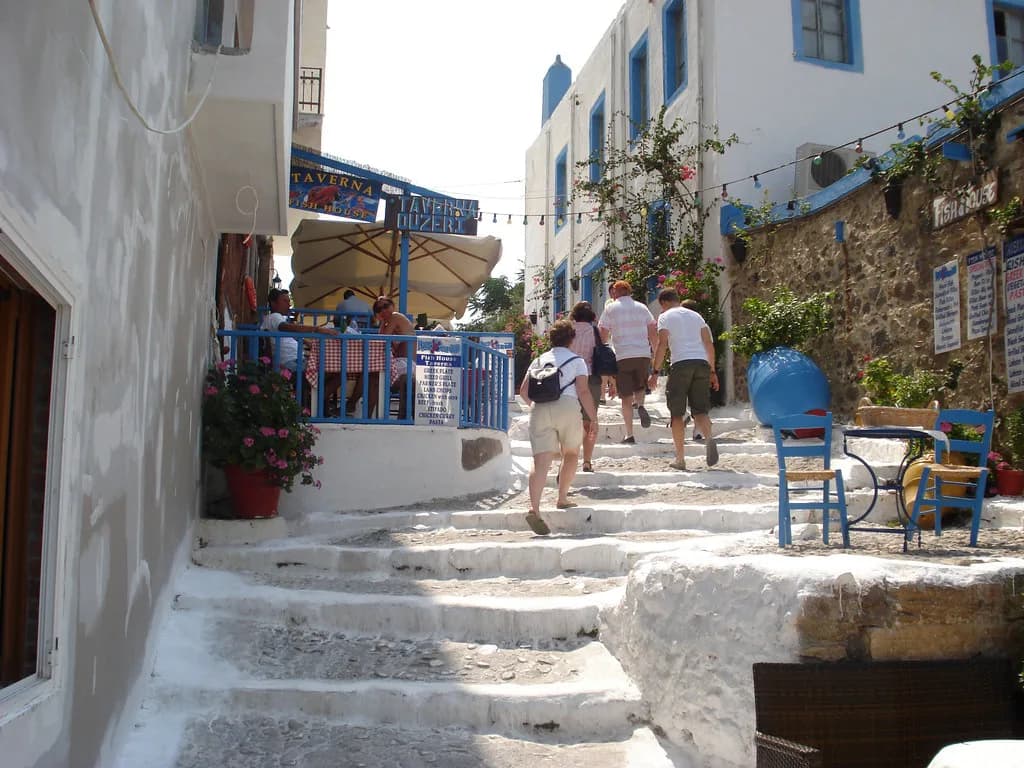
Kos Old Town: A Neighborhood Guide to Streets, Sights and Eating
Kos Old Town is not the whole of Kos Town. It is the fully pedestrianized core that begins at Freedom Square, known in Greek as Platia Eleftherias, and ends at Diagoras Square, and it stays busy well into the evening, especially through the April to October season.
This guide treats the district as a neighborhood in its own right: what you can walk to inside it, what to order when you sit down, which two hotels the sources place in the centre, and how the streets compare with the beachside alternatives of Psalidi, Kos and Lambi, Kos further along the coast.
What Kos Old Town Is, and How It Differs from Kos Town
Think of Kos Town as the whole island capital, with its port, beaches on the edges and traffic on the approach roads, and Kos Old Town as the walled-in pedestrian layer at its middle. The Old Town stretches between two squares, Freedom Square at one end and Diagoras Square at the other, and inside that span cars give way to shoppers, café tables and sightseers.
That distinction matters when you plan a day. If you want a swim and a sunbed, you will be looking at the coastline outside the district; if you want ruins, small shops and a table in a lane, you can leave the car behind entirely and cover the Old Town on foot. For the wider picture of where each area sits, use the Kos Neighborhoods: 4 Area Guides index before booking a base.
Who the Old Town Suits, and Who It Does Not
This is a good fit for walkers, ruin-spotters and shoppers who like having shops, cafés and excavated stonework within a few minutes of each other. Travelers who prefer a quiet base, a beach on the doorstep or a car-first day trip pattern will usually be happier in a resort outside the centre, where parking comes free with the room and evenings are calmer.
Families and older visitors should note that the core is flat and compact, which keeps distances short, but the lanes are busy in high season and some surfaces around the excavations are uneven. Solo travelers who want company will find the squares lively; those who want solitude should plan mornings rather than evenings.
The Character of the Streets
Inside the district you get a maze of narrow lanes lined with traditional whitewashed houses, mixed with Ottoman and Italian-era buildings and the odd stretch of ancient masonry built into a modern wall. Small shops sell handicrafts, spices and souvenirs, and tavernas and cafés spill out of the side streets, so the atmosphere is closer to a working market quarter than a museum.
Eleftherias Square, the large square on the western side of the district, is the social focal point, with the Defterdar Mosque and Italian-period buildings around it. Guided walks of the historic quarter are sold commercially if you want the background narrated, but the streets themselves are free to wander.
Sights Inside or on the Edge of the District
The Tree of Hippocrates, a plane tree held by legend to be where the physician taught, stands near the Ancient Agora and is one of the first things you meet coming in from the harbour side. The present tree is roughly five centuries old and some of its branches are supported by metal scaffolding, so treat it as a monument to look at rather than a shady picnic spot.
An agora was the market and civic heart of a Greek city, and the Agora of Kos is among the largest excavated marketplaces in Greece, with three arcades that met in a central courtyard, plus remains of temples, baths and mosaic floors. It is a large open excavation rather than a museum hall, so allow time, wear shoes that cope with stone, and go early if you want shade and fewer people.
Nerantzia Castle, usually called Kos Castle, sits by the harbour where the district meets the water. A 2025 visitor account describes entering without paying and finding mostly walls, towers and scattered artefacts with inscriptions and coats of arms, so it is worth checking current opening arrangements before making it the centrepiece of a day.
Eating in the Old Town
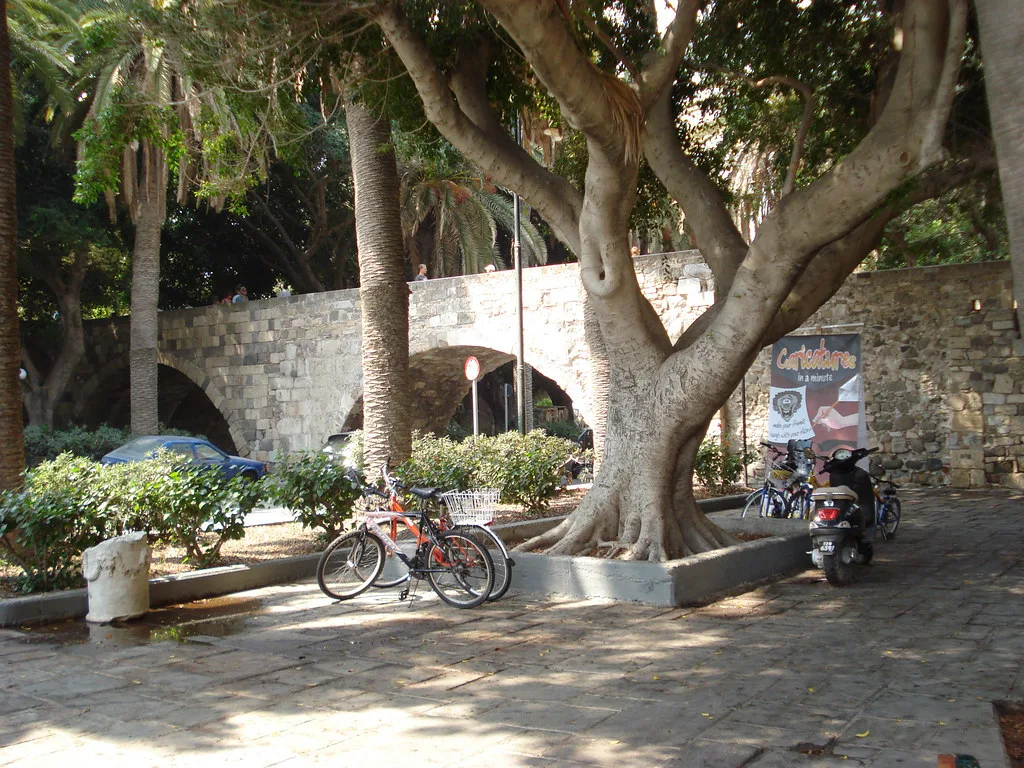
A Greek taverna meal usually works from a few shared plates: a horiatiki salad of tomato, cucumber, onion and feta; tzatziki, the yogurt and cucumber dip; grilled octopus or sardines; and something from the oven such as moussaka. Order two or three plates per person to start, add bread and a carafe of house white or a bottle of beer, and you will have a fair picture of the kitchen without overspending.
The main trade-off here is position. Tables on and around the busy squares buy people-watching and easy orientation; tables a lane or two back tend to be quieter and often better value, at the cost of the view. Menus are displayed outside almost everywhere, so read one before sitting down rather than choosing on atmosphere alone.
Prices in the centre are set by each business and are not published as a fixed list, so compare a couple of menus for the same dishes before committing, and confirm whether bread and service are charged separately. Our guide to Kos prices explains how the island's costs are usually structured.
Where to Stay in the District
Two central options come up for the Old Town. The Maritina Hotel is a three-star property in the heart of Kos Town, open year-round, with a rooftop pool and a café-bar-restaurant looking over nearby archaeological sites, which puts the ruins and the shops within a short walk of your room.
The Olympia Hotel is a family-run two-star place about 100 metres from the main square, with air-conditioned rooms, private balconies and fridges; the nearest beach is roughly a five-minute walk away. Between the two, the Maritina suits travelers who want facilities and year-round certainty, while the Olympia trades amenities for price and a more personal scale.
Staying in the district is a decision, not a default. You gain walkability, restaurants at the door and the ruins before breakfast, but you accept evening noise in high season and a walk to the beach; resort stays at Psalidi, Kos, just south along the coast, flip that balance.
Getting There
Arrivals from the airport are straightforward: Kos International Airport (Hippocrates) has year-round flights from Athens and Thessaloniki plus seasonal international services, and the KTEL bus connects the terminal with Kos Town in around 40 minutes. Taxis wait outside the terminal and are cheaper shared than on longer island runs; a 2025 account gives an approximate range, which you should confirm at the rank rather than rely on.
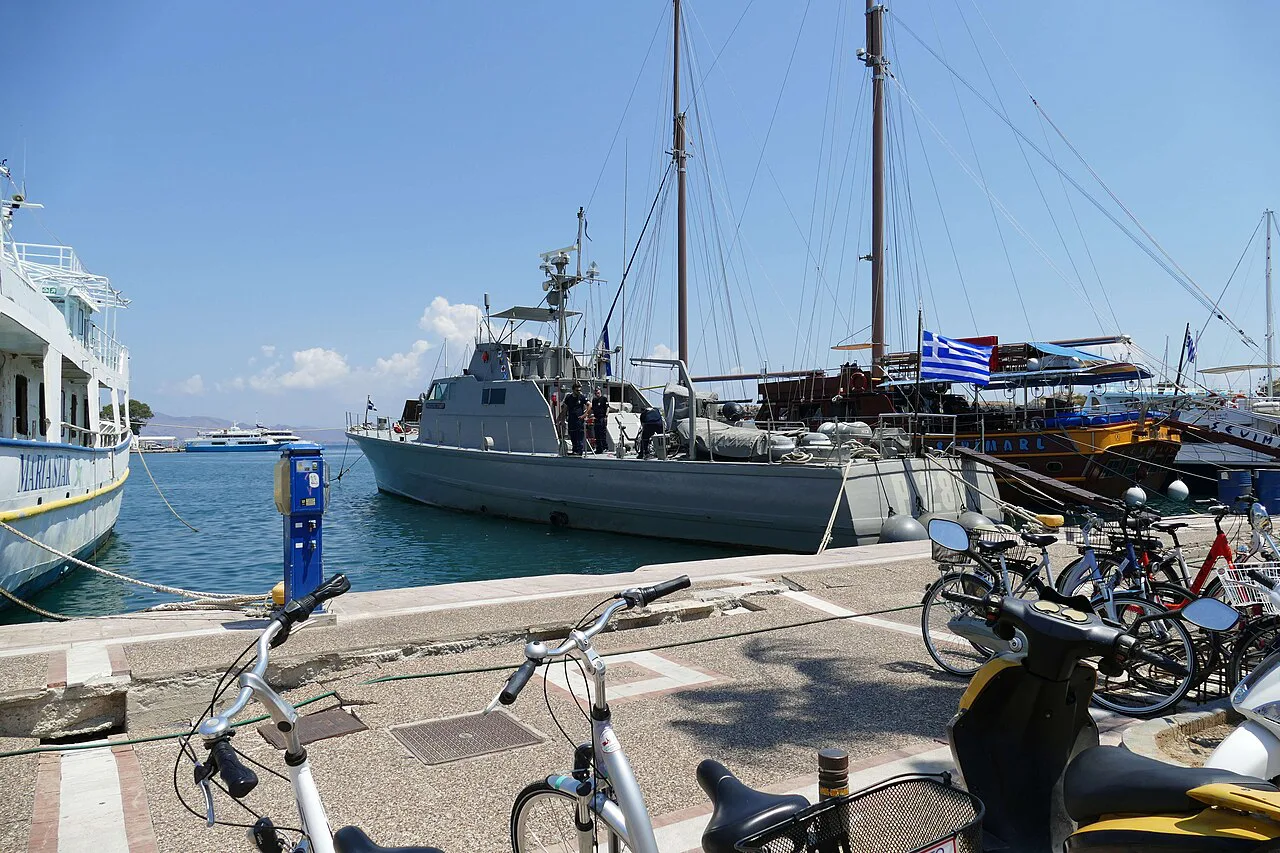
By sea, ferries from Piraeus take roughly nine to twelve hours, while services from Rhodes, Kalymnos, Nisyros and other Dodecanese islands are much shorter, and the Bodrum crossing takes about half an hour. From Kos port, the Old Town is a short walk inland, which makes arriving by boat one of the easiest ways in.
On foot from town resorts, the walk into the centre is manageable, though distances vary by hotel: one account puts it at about 30 minutes from a resort outside the centre. Bicycles are a good option, with dedicated lanes in Kos Town, and the harbour-front end near the castle is the natural place to lock up and start walking.
Getting Around and Walking Distances
The district is compact, flat and entirely pedestrianized, so most of what is described here sits within a few minutes of the next stop. A sensible route is to start at Freedom Square, walk the lanes towards the Tree of Hippocrates and the Ancient Agora, then finish at Nerantzia Castle on the harbour, giving you a half day at an easy pace.
If you are driving, plan to leave the car outside the pedestrian zone and walk in, since the core is closed to traffic. Parking near the squares and the harbour side fills up in high season, so arrive earlier in the day or use the KTEL bus system, which links Kos Town with villages and beaches such as Kefalos, Tigaki and Mastichari.

Shopping and the Market Streets
Shopping is one of the Old Town's main occupations, with souvenir shops, handicraft stalls and spice sellers filling the lanes. The bazaar-like stretches near the busy squares are the most convenient if you want variety in one pass, while the narrower back lanes are where the quieter craft and food shops tend to sit.
Buy spices and dried herbs from shops that sell them by weight rather than prepacked for tourists if you want something to take home, and keep receipts for anything you plan to carry through customs. For the island's broader set of monuments and day sights beyond the district, the Kos Attractions: 10 Visitor Guides hub is the place to branch out.
When to Go
The Old Town is liveliest from April to October, when the island's tourist season is in full swing and the squares fill from morning to late evening. May to June and September to October are widely recommended for warm weather with fewer crowds than midsummer, while April and November are milder and quieter but come with cooler sea temperatures.
December to March is the quiet stretch, when some hotels and attractions on Kos close entirely and the weather turns cool with occasional rain. Treat that as general seasonal guidance rather than a list of specific closures, and confirm any hotel or restaurant you are counting on before booking a winter trip.
Plan Your Visit
Kos Old Town rewards a slow half day rather than a checklist: come in from Freedom Square, follow the lanes to the Tree of Hippocrates and the Ancient Agora, and end at the castle by the harbour. Eat a lane or two off the squares for better value, and stay central only if walkability matters more to you than beach access and quiet nights.
Before you travel, check current castle opening arrangements and that your chosen hotel or taverna is operating for your dates, since island businesses adjust with the season. If you are weighing up where to sleep beyond the centre, compare this district with Platani, Kos, just inland and quieter.
Explore more Kos sauna guides
Frequently Asked Questions
Is Kos Old Town worth visiting?
Yes, if you want a compact, pedestrian historic quarter with excavated ruins, small shops and plenty of places to eat. It suits walkers and sightseers; travelers who mainly want a beach base may prefer to stay outside the centre and visit for a half day.
Are Kos Town and Kos Old Town the same?
No. Kos Town is the whole island capital, including the port, approach roads and surrounding beaches. Kos Old Town is the pedestrianized core that runs from Freedom Square to Diagoras Square, and it is that smaller area this guide covers.
Is Kos Old Town pedestrianized?
Yes. The district is described as entirely pedestrianized, running from Freedom Square to Diagoras Square. If you are driving, plan to park outside the core and walk in.
What is there to see in Kos Old Town?
The main stops are the Tree of Hippocrates, the Ancient Agora with its arcades, temples and mosaics, the Defterdar Mosque on Eleftherias Square, and Nerantzia Castle by the harbour. The lanes themselves, with whitewashed houses and mixed Ottoman and Italian-era buildings, are part of the appeal.
Where should I eat in Kos Old Town?
Tavernas and cafés fill the lanes, with tables on and around the squares and quieter options a street or two back. Read the displayed menus and compare a few for the same dishes before choosing, and ask whether bread and service are charged separately.
Where can I stay in Kos Old Town?
The Maritina Hotel is a three-star property in the heart of Kos Town, open year-round with a rooftop pool. The Olympia Hotel is a family-run two-star about 100 metres from the main square, with the nearest beach roughly a five-minute walk away.
How do I get to Kos Old Town from the airport or port?
The KTEL bus connects Kos International Airport with Kos Town in around 40 minutes, and taxis wait outside the terminal. Ferries dock at Kos port, from which the Old Town is a short walk inland.
When is the best time to visit Kos Old Town?
April to October is the liveliest stretch, with May to June and September to October offering warm weather and fewer crowds. December to March is quiet and cool, with some hotels and attractions closed, so confirm your bookings if you travel then.