
Mandraki, Rhodes: A Guide to the Harbour District

Mandraki is the main harbour of Rhodes Town, a working port and marina pressed against the seaward side of the walled city. It is not a beach district or a resort strip: travelers come here for the waterfront, the ferry quay and the short walk into the Old Town. This guide covers what is actually at Mandraki, who the area suits, and where the evidence stops short.
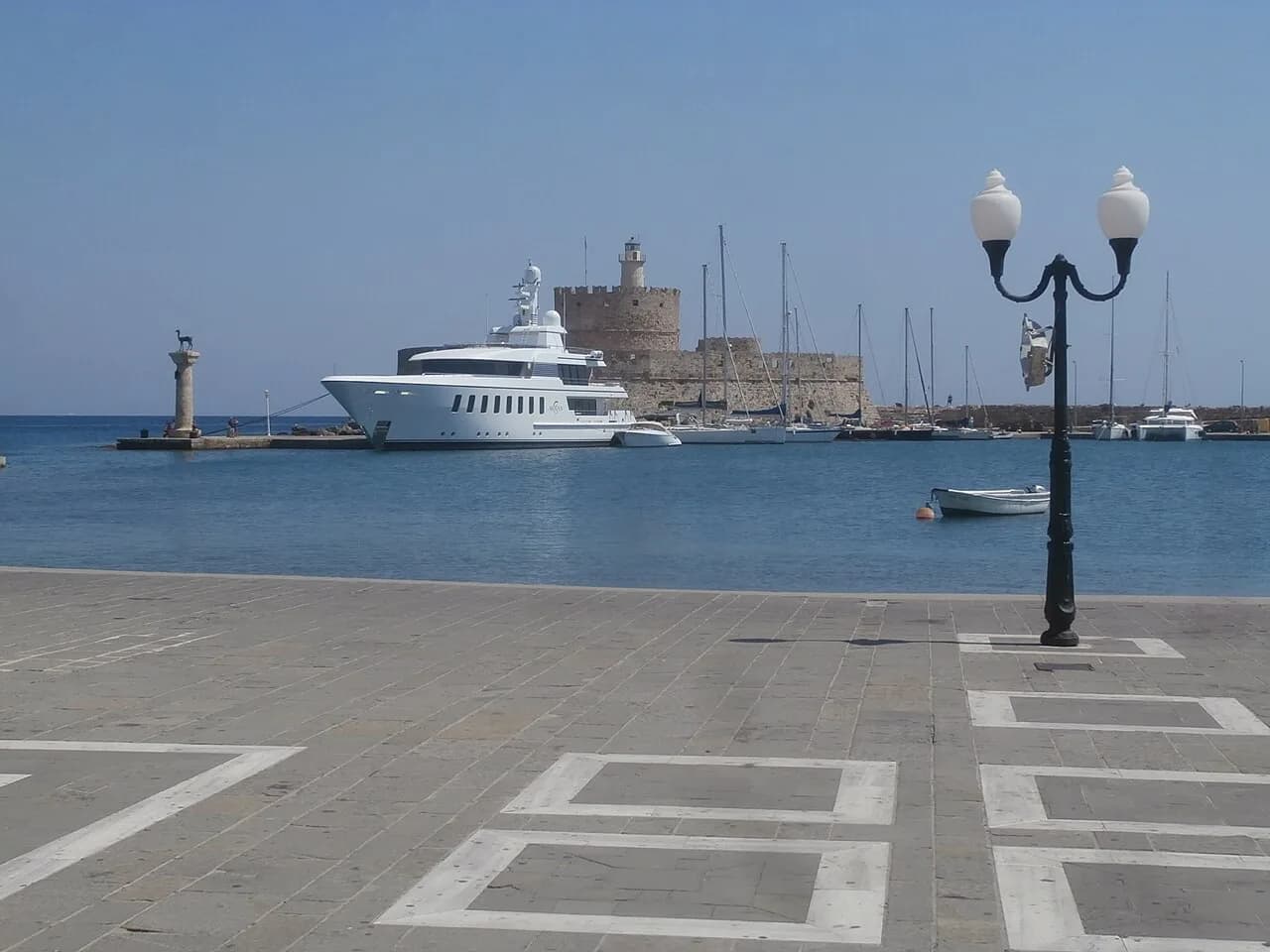
The district is compact and best treated as a half-day or a transit point rather than a base for a whole holiday. Two bronze deer statues mark the harbour entrance, a castle-lighthouse sits on the seaward wall, and yachts and summer ferries share the water. Everything below sticks to what published sources describe, and flags where you should confirm details yourself.
Where Mandraki Is and How It Fits Into Rhodes Town
Mandraki sits on the edge of Rhodes Town, on the harbour side of the medieval walls, and is generally described as adjacent to the Old Town rather than inside it. Sources treat the harbour and the walled city as neighbouring pieces of the same town, so you can walk between them, but no source gives a measured distance or walking time. Plan on a short stroll and leave the exact minutes open.
That position makes Mandraki a hinge between the walled city and the newer town. Travelers heading for the medieval lanes use the harbour as a landmark and orientation point, while those arriving by sea step off almost at the Old Town gates. If you are choosing where to sleep across the city, the wider Rhodes Neighborhoods overview sets out how each district differs.
Character of the District and Who It Suits
Mandraki suits three kinds of traveler: people catching a boat, people who want a waterfront walk with the Old Town within reach, and people who like watching a working marina. It is a place of quays, statues and sea views rather than a district of shops and cafés in the sources reviewed. Travelers wanting a beach day or a quiet resort atmosphere should look at other parts of the island instead.
The trade-off is straightforward. Harbour-side positions offer convenience and outlook, but the area functions as a port, so expect movement and activity rather than stillness. Quieter evenings are more likely inside the walled lanes, which is why many visitors pair a Mandraki walk with a stay in the Rhodes Old Town Guide area and treat the harbour as an outing.
The Deer Statues, Elefos and Elafina
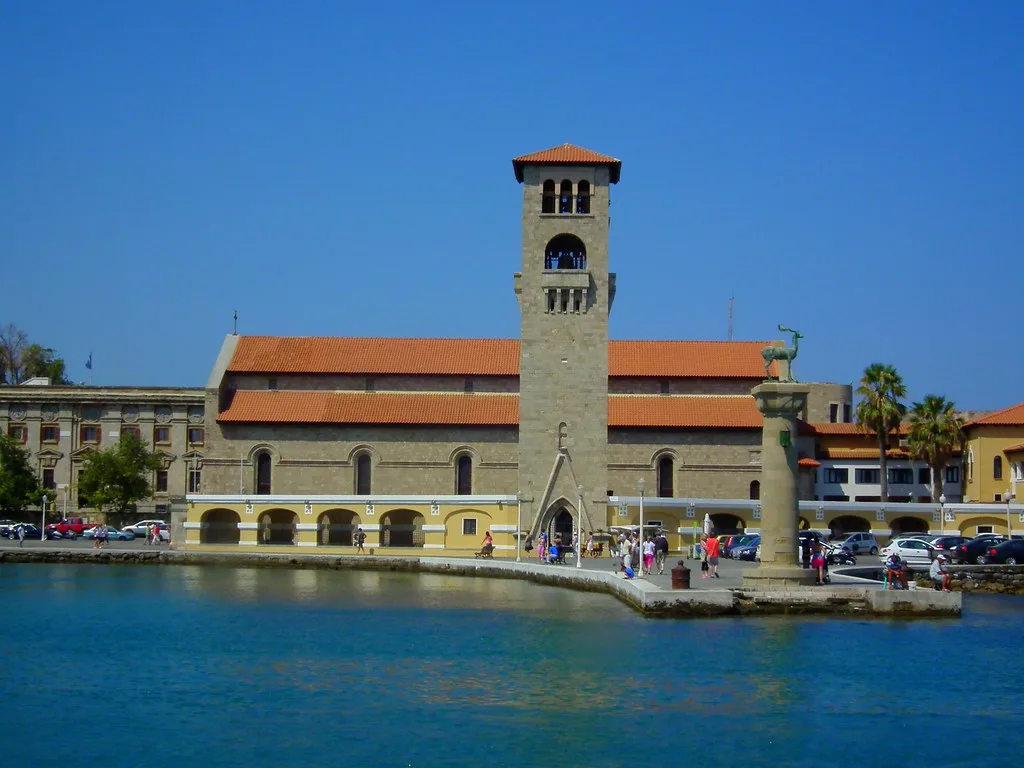
Two bronze deer stand at the harbour entrance, named Elefos and Elafina, and they are the landmark most visitors photograph. According to Rhodes Guide, they mark the spot where the feet of the Colossus of Rhodes were once said to stand, tying the modern harbour to the ancient wonder. Treat that as local tradition attached to the site rather than a settled archaeological fact.
The statues are free to see and take only a few minutes, so build them into a waterfront loop rather than a separate trip. They work well as a meeting point before a ferry or as the start of a walk toward the city walls. For a wider list of sights across the island, the Rhodes Attractions hub is a sensible next stop.
St Nicholas Castle and the Lighthouse
On the seaward city walls stands the castle of Saint Nicholas, named for the patron saint of seafarers, which now operates as a lighthouse. Rhodes Guide describes it as sitting by the walls facing the sea, close enough to the harbour to include in the same walk. It is the second anchor of any Mandraki visit after the deer statues.
The castle is a landmark to view from the harbour rather than a site with published visiting arrangements in the sources reviewed. Check locally whether any part is open when you arrive, and otherwise treat it as scenery on the waterfront circuit.

The Marina and the Waterfront Walk
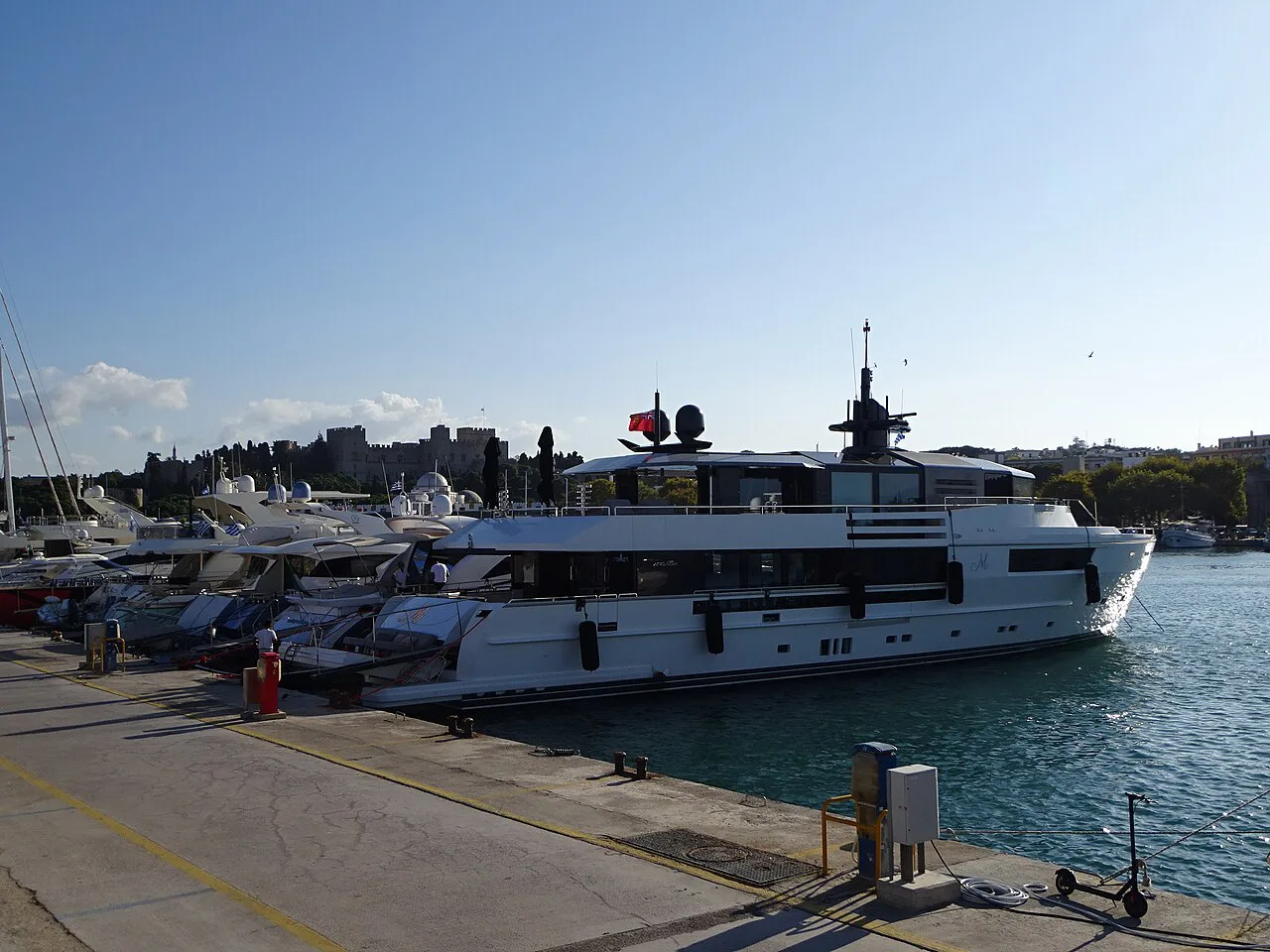
Mandraki has modern marina facilities and is a place of call for yachts visiting Rhodes, according to Rhodes Guide. That means the waterfront is a mix of moored boats, quay edges and open views rather than a promenade of venues. Walkers get a flat, easy circuit with the Old Town walls as a backdrop on one side.
Plan the walk for early morning or late afternoon if you want softer light and fewer people around the ferry quay. There is no confirmed beach at Mandraki despite what some search suggestions imply, so do not come expecting sand. The harbour is for strolling, boat-watching and photographs.
Summer Ferries to Lindos, Symi and Neighbouring Islands
In summer, ships leave Mandraki every day for Lindos, Symi and the neighbouring islands, according to Rhodes Guide. That makes the harbour a practical departure point for day trips rather than only a sightseeing stop. If a boat trip is part of your plan, Mandraki may shape your whole day.
Rhodes Guide describes this as a summer service, so winter departures and off-season timetables are not part of the published schedule. Confirm sailing times and whether trips run in your travel window directly with the harbour office before building an itinerary around a departure. Arrive with margin, since ferry quays get busy when several boats leave close together.
Getting There and Walking to the Old Town
Mandraki is reached on foot from the Old Town and from the streets of Rhodes New Town, and the sources describe the harbour as sitting against the walled city. No source gives bus numbers, taxi fares or measured walking times, so ask your accommodation for the simplest route on arrival. The walk itself is flat and short enough to repeat during a stay.
Within the district, everything of note is close together: the deer statues at the entrance, the castle-lighthouse on the sea wall, and the marina along the quays. Getting around means walking, and comfortable shoes matter more than any transport plan. Travelers comparing areas can read the Rhodes New Town guide for the streets just beyond the harbour.
Where to Eat and Stay Around Mandraki
The sources reviewed for this guide name no specific restaurant, taverna, bakery or hotel at Mandraki, and give no price ranges. Rather than invent names, it is better to treat the harbour as a walking area and choose food in the streets around it once you see what is open. Restaurants near a working port often lean on passing traffic, so compare a quay-side table with one a block inland before committing.
For stays, the same limitation applies: no hotel in Mandraki is identified in the material used here. The practical approach is to book in the Old Town or New Town and use the harbour on foot, or to look up current listings and reviews for harbour-side properties yourself. Travelers who want a resort-style base with a beach should look at areas such as Ixia, Rhodes instead of Mandraki. If you are weighing a different island base altogether, our Chania food guide shows how another harbour city's eating scene compares.
Practical Notes for a Mandraki Visit
Two details matter for planning: ferry operation is summer-only and daily sailing times vary. Rhodes Guide reports that boats run daily to Lindos, Symi and the neighbouring islands in summer, but schedules shift with the season, so harbour ticket desks should be checked a day or two ahead.
Allow roughly an hour for the statues, the waterfront and the view of St Nicholas Castle, and add time if you are catching a boat. Combine the visit with a walk into the walled lanes, where the atmosphere changes completely from the open quay. Themodernpostcard describes pairing Mandraki with a walk in the Old Town, which is the most natural way to spend a morning here.
Plan Your Visit
Mandraki is best understood as Rhodes Town's harbour district: a place to see the deer statues, look up at the lighthouse-castle, wander the marina and, in summer, catch a boat to Lindos, Symi or a neighbouring island. It rewards a morning or an afternoon, not a whole holiday.
Treat the harbour as part of a larger Rhodes plan and keep your expectations honest: no beach, no confirmed restaurants in the sources reviewed, and ferries that run in summer. Verify schedules and opening arrangements on the ground, and use the district as the doorstep to the Old Town rather than a destination in itself.
Explore more Rhodes sauna guides
Frequently Asked Questions
Is Mandraki Harbour in Rhodes Old Town?
No. Mandraki is Rhodes Town's main harbour, on the seaward side of the medieval walls, and sources describe it as adjacent to the walled city rather than inside it. You can walk between the two, but treat them as neighbouring districts of the same town.
What is there to see at Mandraki Harbour?
The main sights are the two bronze deer statues, Elefos and Elafina, at the harbour entrance, the castle of Saint Nicholas that now works as a lighthouse on the seaward walls, and the marina with visiting yachts. All are viewed on foot along the waterfront.
Do ferries leave from Mandraki Harbour?
Yes, in summer. Rhodes Guide states that ships leave daily for Lindos, Symi and neighbouring islands during the summer season. Check sailing times and whether trips run in your travel window before planning around a departure.
Why are there deer statues at Mandraki?
The statues, named Elefos and Elafina, mark the spot where the feet of the Colossus of Rhodes are said to have stood. Local sources present this as tradition attached to the harbour entrance rather than a confirmed archaeological location.
Is there a beach at Mandraki?
No beach is confirmed at Mandraki in the sources reviewed. The area is a working harbour and marina with quays and waterfront walks. Travelers wanting a beach day should look at other parts of Rhodes.
Where should I eat near Mandraki?
The sources reviewed name no specific restaurants at Mandraki, so there is no reliable shortlist to give. Walk the quay and the streets just inland, compare menus and prices in person, and check recent reviews before choosing.