
War Museum of Nafplio: What to See and How to Plan a Visit
The War Museum of Nafplio is a small military museum in a town that spent a few years as the capital of the young Greek state, which is the reason its collection has a local story to tell rather than a purely national one. It sits on Vasilissis Amalias Avenue, on the modern side of town rather than in the cobbled Old Town, so it takes a deliberate detour. This guide covers where it is, what the displays focus on, how much time to budget, and the things you must confirm at the source rather than assume.
What the War Museum of Nafplio is and why it exists here
The museum documents Greece's modern military history, with an emphasis on the independence struggle and the twentieth-century conflicts that followed. Tripadvisor reviewers describe a film about Greece's fight in the Second World War as one of the stronger parts of the visit, alongside rotating art displays in part of the building. That split use matters: half of what you see may be temporary exhibitions rather than military material, so go expecting a mixed bill.
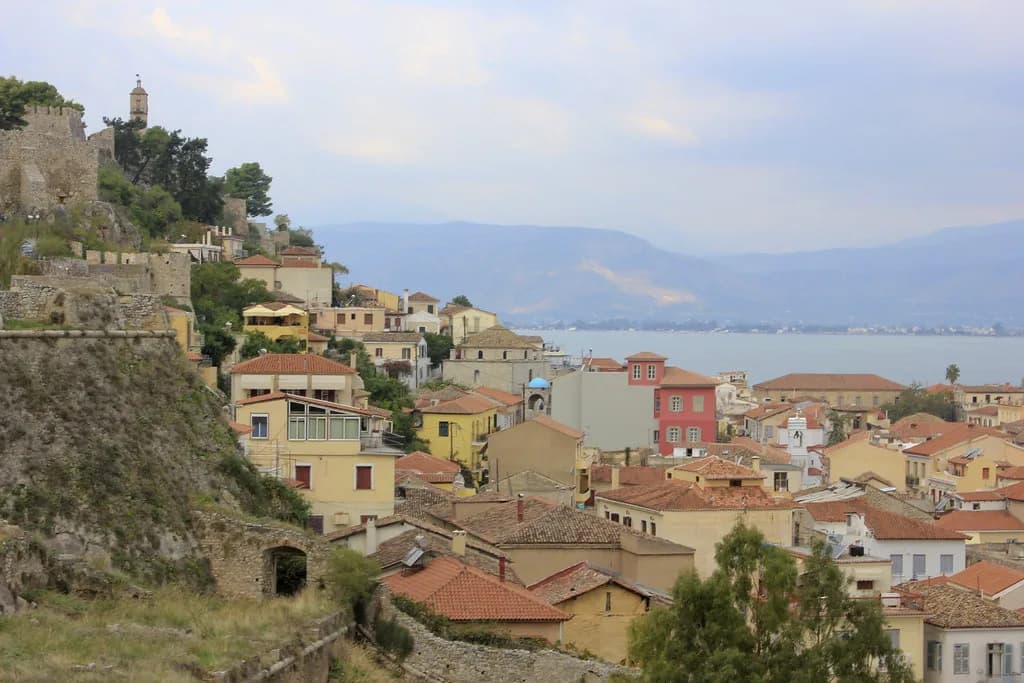
Nafplio's claim on this subject is genuine. The town served as Greece's first capital from 1829 to 1834, and the Old Town preserves that era in its public buildings and squares. A military museum here reads differently from one in Athens because the politics of the new state were played out on these streets. If you want the wider context first, the Nafplio Attractions: 8 Visitor Guides hub sets out the fortresses and museums in relation to each other.
Where it is: Vasilissis Amalias Avenue and the Old Town
The museum's listed address is 22 Vasilissis Amalias Avenue, a broad avenue on the landward side of the centre. That puts it outside the pedestrian tangle of the Old Town, and outside the immediate waterfront strip where the harbour car parks and cafés sit. Treat the address as your anchor: the avenue runs through the modern town, and the museum is a separate stop from the marble-paved square at the historic core.
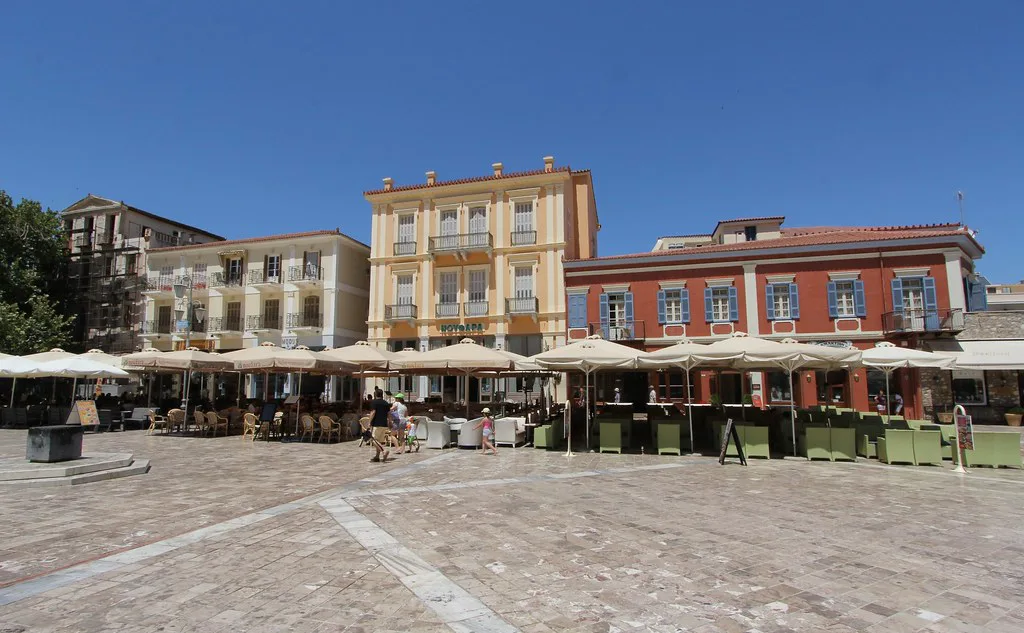
Distance and walking time from the Old Town depend on where you start, and no reliable figure is published, so judge it on the map once you arrive rather than planning a precise schedule around it. A practical approach is to visit on the way in or out of town, when you already have your bearings on the avenue, instead of making a dedicated round trip from the harbour. As you plan that route, the Nafplio Neighborhoods guide is a quick way to see how the modern avenues sit against the Old Town and waterfront. Syntagma Square, Nafplio's central marble square, is the easiest landmark to orient yourself against.
How to get there on foot from the Old Town and waterfront
From the Old Town, head out of the pedestrian streets toward the modern town and follow Vasilissis Amalias Avenue until you reach the listed number. The route is on paved city streets rather than trails, so ordinary shoes are fine and the walk is manageable in the heat if you go before midday. From the waterfront, walk inland past the harbour parking area and the cafés facing the water, then continue to the avenue.
If you are combining the museum with the fortresses, note that Palamidi sits on the hill above town and Akronafplia on the peninsula between the Old Town and the sea, both on the opposite side of the centre from the avenue. Walking between them and the museum is realistic but adds up over a day, and the Palamidi climb is steep. Drivers have the easier option of moving the car between stops, though parking near the Old Town fills in season. If you would rather compare these stops before committing, our things to do in Nafplio guide sets out the fortresses, walks and beaches together.
What to see inside: the collection's focus
Expect a compact military collection rather than a national-scale museum. The displays follow Greece's modern conflicts, and the Second World War film described by visitors is the kind of interpretive element that gives a small museum its shape. Rotating art exhibitions occupy part of the building, so the balance between military and artistic content can shift between visits.
The municipal listing and the local visitor listings are the places to confirm what is currently on show before you build a morning around it. Neither publishes a room-by-room inventory, so a reader who needs specific artefacts or a particular campaign should ask at the entrance rather than rely on a guide written earlier. Labels are in Greek in most Greek military museums; whether English text is provided here is worth asking when you arrive.
The building and the rotating art displays
Reports describe a building shared between war exhibits and temporary art shows, with one half given over to the rotating displays. That arrangement is worth knowing in advance: if you came for military history alone, part of your time may go to work from a different field entirely. It also means repeat visitors may find something new on a second trip, since the art side changes.
No source describes the architecture, the entrance, or facilities such as a shop, café, or cloakroom, so plan as you would for a small civic museum and carry what you need. If step-free access matters to you, ask directly before travelling across town, because accessibility information is not published in the listings consulted here.

How much time to allow and how to pace the visit
A small museum with a film and a temporary exhibition typically absorbs an hour or so, though the film's length is not published, so treat that as a planning estimate rather than a fixed figure. Most travellers will see it comfortably in under two hours. The trade-off is real: an hour here is an hour not spent on the Palamidi climb or in the Old Town's churches, and the fortresses are the stronger draw for most first-time visitors. If you are weighing how to split your time, our guide to the things to do in Nafplio sets out the fortresses, old town walks and beaches side by side.
If you are short on time, do the museum on a shoulder-season or wet-weather morning and keep the fortresses for clear hours, since the views from Palamidi and Akronafplia are the point of those climbs. Nafplio's own seasonal guidance suggests spring and early autumn for walking comfortably, which is when an indoor stop is least necessary but also least crowded.
Tickets, opening hours and closures: confirm before you go
Opening hours, ticket prices, reduced-entry rules and closure days for the War Museum of Nafplio are not published in the sources consulted for this guide, so check the municipality's museum listing and the museum's own notices before setting out. Greek state and municipal museums commonly close on public holidays and may run shorter winter hours, but do not assume a specific schedule here without confirming it. A quick phone call or a look at the listing on the day is the reliable route.
Book ahead only if you are travelling with a group or want a guided explanation; a museum of this size does not generally require advance tickets, and no booking system is documented in the available listings. If your trip hinges on seeing it, call the museum on the day you plan to visit to check that it is open.
Practical notes: cash, labels and photography
Cash remains useful in Nafplio for small purchases, and many traditional tavernas and shops prefer it even though cards are increasingly accepted. Carry some euros for a ticket window that may not take cards, and check the payment rules when you arrive rather than discovering them at the desk.
Photography rules inside the museum are not published, so ask at the entrance before photographing exhibits; military collections in Greece often restrict flash or certain displays. The same applies to language: confirm whether labels and the film have English subtitles if that affects your decision to visit.
Nearby options within a short walk
Palamidi Fortress dominates the hill above town and is reached either by the famous stepped path or by road; the climb is the more rewarding option if the weather is cool. On Akronafplia, the rocky peninsula that was the city's original settlement, paths lead up from the Old Town and around to the coast, with views back over the rooftops and the water. Both are on the far side of the centre from the avenue, so plan the order of your day around one crossing rather than several.
The waterfront itself is the easiest place to end a museum morning, with the cafés along the harbour looking out at Bourtzi, the small Venetian fort on its islet. Boats reach the islet in high season, though the service is seasonal and worth confirming locally. The Arvanitia promenade continues around the base of Akronafplia to a pebble beach, a gentle walk that suits the hour after a museum visit.
Karathona, a long sandy beach a few kilometres east of town, is the locals' alternative when the town beach is busy, and it has a fish taverna and shade trees at the back. Walking there from Arvanitia takes the better part of an hour on a scenic path, or you can drive.
Combining the museum with the Archaeological and Folklore museums
Nafplio's Archaeological Museum occupies a well-preserved Venetian building and holds finds from the surrounding Argolid, making it the stronger stop if you want ancient rather than modern history. The Peloponnesian Folklore Foundation Museum, in a neoclassical mansion, covers costume and domestic life, which pairs naturally with the military story if you are tracing how the modern Greek state imagined itself. Both sit in the Old Town, so they combine well with a single walk through the centre.
The honest trade-off is scale. The War Museum is a small collection on the edge of the centre; the archaeological and folklore museums are within the atmospheric streets you came to see. If you have one museum in you, choose by subject, not by convenience.
Is it worth it for families, history buffs or a rainy day?
For travellers focused on modern Greek history and the independence period, the museum adds a layer that the fortresses alone do not provide, and the Second World War film gives younger visitors something to follow. For families with small children, the climb to Palamidi and the boat views of Bourtzi will usually win. For a wet or very hot day, an indoor stop of an hour or so is a sensible filler, provided you have confirmed it is open.
Treat it as one stop among several in Nafplio rather than the reason for the trip. If your interests lean toward the town itself, the Nafplio Neighborhoods: 5 Area Guides explain how the Old Town, the waterfront and the modern avenues relate, which makes the museum's location on Vasilissis Amalias easier to place in your day.
Plan Your Visit
The War Museum of Nafplio rewards a short, deliberate visit: confirm the address on Vasilissis Amalias Avenue, check opening hours and ticket details with the municipality or the museum on the day, and slot it into a walk that also takes in the Old Town. Build the rest of the day around the fortresses and the waterfront, which are the experiences most visitors remember. Carry cash, ask about photography and English labels at the desk, and you will get exactly what a small civic museum can offer without wasted detours.
Explore more Nafplio sauna guides
Frequently Asked Questions
Where is the War Museum of Nafplio located?
It is listed at 22 Vasilissis Amalias Avenue in Nafplio, on the modern-town side of the centre rather than inside the pedestrian Old Town. Use the avenue as your reference point and allow a walk of a few minutes from the Old Town edge, checking the number as you go.
What can you see inside the War Museum of Nafplio?
The collection covers Greece's modern military history, with a film on the Second World War noted by visitors, and part of the building is used for rotating art exhibitions. Because the displays change, ask at the entrance what is currently on show.
How long does a visit to the War Museum of Nafplio take?
Plan for roughly an hour, longer if you watch the film and linger in the temporary exhibition. The film's running time is not published, so treat any figure as an estimate and check the programme when you arrive.
Do you need to book tickets for the War Museum of Nafplio in advance?
No advance booking system is documented for this museum, and its size suggests walk-in entry is normal. Confirm opening hours and ticket arrangements with the municipality or the museum before travelling across town, especially on public holidays.
What other museums are near the War Museum of Nafplio?
The Archaeological Museum of Nafplio and the Peloponnesian Folklore Foundation Museum are both in the Old Town, within walking distance of each other and a short walk from the avenue. The Komboloi Museum is also in the centre.
Is the War Museum of Nafplio worth visiting?
It is worth an hour if you are interested in modern Greek military history or want an indoor stop on a hot or wet day. Travellers with limited time usually prioritise the fortresses, the Old Town streets and the waterfront instead.