
Akronafplia: Nafplio's Oldest Fortified Hill

Akronafplia is not a separate excursion from Nafplio; it is the hill the old town sits beneath. Fortified since antiquity, it carries Frankish and Venetian extensions, later Ottoman use and, until around 1960, a prison, which is why its walls feel layered rather than tidy.
That history makes it a different proposition from the postcard castles nearby. It is a place to walk through rather than a monument you file past, and the reward is orientation over the rooftops and harbour more than a single showpiece building.
What Akronafplia actually is
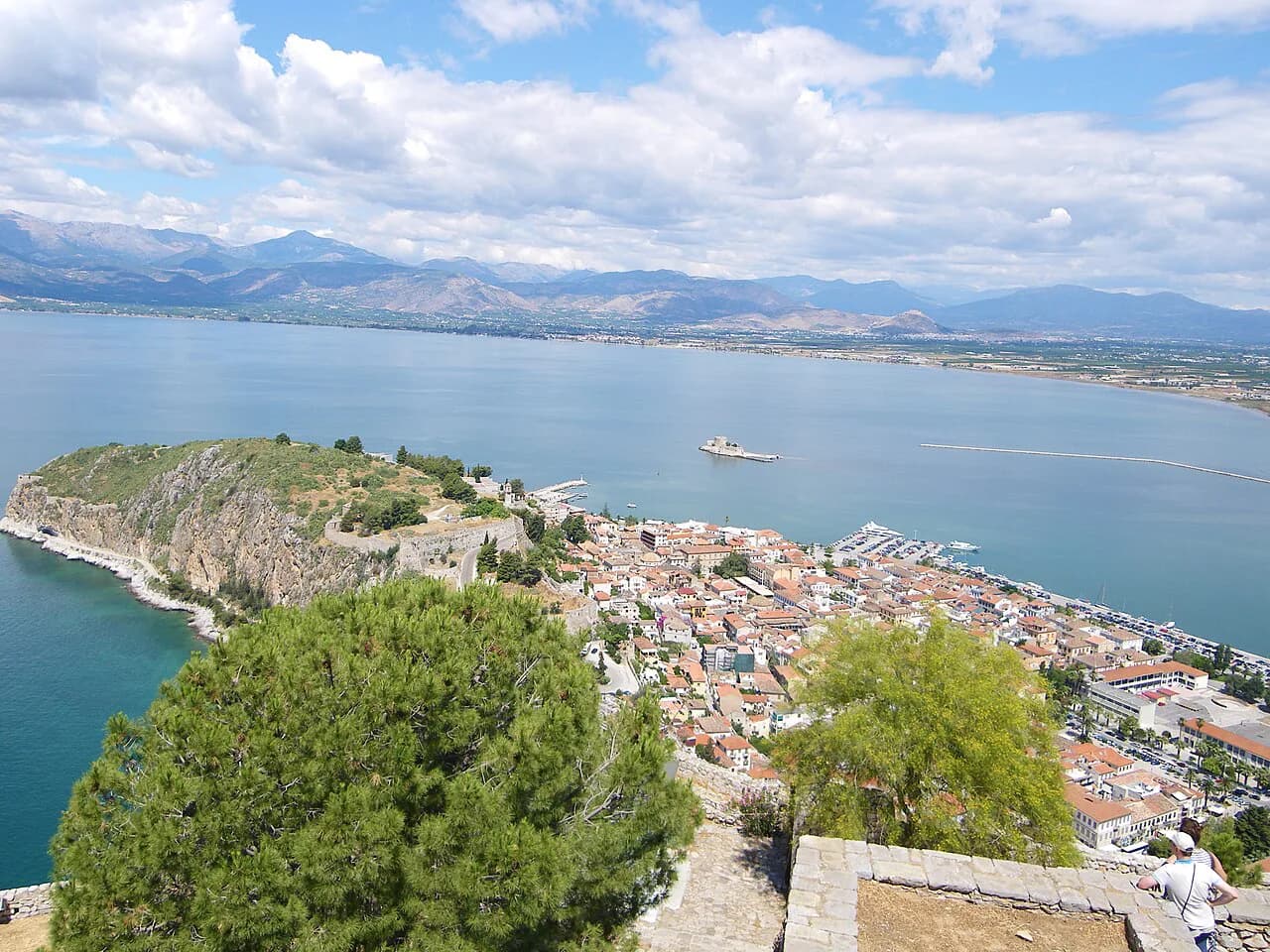
Picture a low, rocky headland pushed into the sea, with the old town wrapped around its landward side. That headland is Akronafplia, and its walls have defined the settlement for far longer than any of Nafplio's later fortresses. Travellers who make a beeline for Palamidi often skip it entirely, which is precisely why it feels calmer. To pair the climb with the streets below, see these Nafplio Neighborhoods guides for the areas around the hill.
The site is listed with an altitude of about 40 metres, which tells you the climb is modest compared with the high fortress above town. Treat it as a hill walk with fortifications on it, not a mountain ascent.
Where it sits and how to get there
Akronafplia occupies the hill immediately above Nafplio's historic centre, so the approach is on foot from the old town streets. There is no bus or taxi stage to arrange; you simply pick a lane heading uphill and keep climbing until the walls appear.
The access is described as road access, so a vehicle can reach parts of the hill, but walking is the natural way in from the centre. If you are driving, expect narrow old-town lanes and limited parking; arriving on foot avoids that entirely.
The climb: what the walk involves
The ascent is short but steep in places, with steps and uneven stone underfoot on the old-town approaches. Anyone with mobility concerns should plan a slower pace and use the road approach rather than stair lanes. Closed shoes make more sense than sandals for the descent alone.
Because the hill is only around 40 metres high, the effort is concentrated in a few minutes of climbing rather than a long slog. That makes it easy to fit in before or after something else in the old town rather than building a half day around it.
What you see on the hill
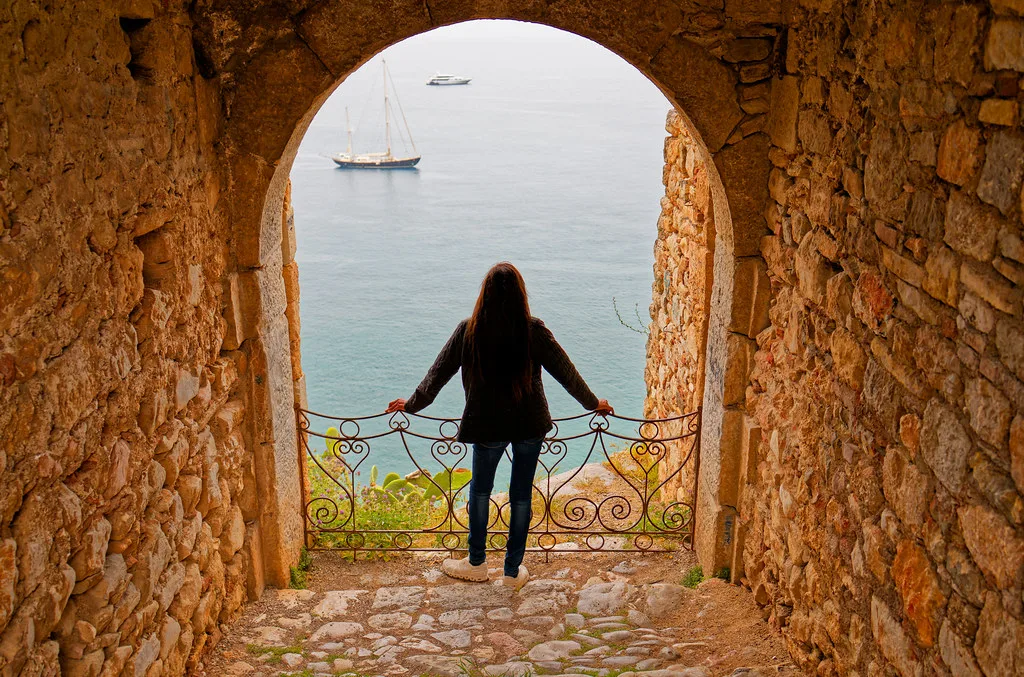
The draw is the fortification itself: continuous walls, gateways and bastions built and rebuilt by successive rulers rather than a single clean epoch. The entrance carries a Lion of Saint Mark, the Venetian emblem that marks so much of the town's architecture.
From the walls you look down on the old town's rooftops, the harbour and the water beyond. Bourtzi, the small castle on its own islet, sits in that view and is worth identifying before you descend, since it is easy to see from the hill and awkward to reach otherwise.
A short history in plain terms
Akronafplia was the walled settlement of Nafplio from ancient times, with the Franks and Venetians extending the fortifications and the Ottomans later using the castles. That sequence explains why the masonry changes character as you walk the circuit.
The detail most short descriptions leave out is the modern chapter: until around 1960 the site served as a prison. Knowing that changes how you read the plain buildings inside the walls, which are not all medieval.
How much time to allow
One visitor listing estimates a visit duration of roughly one hour and ten minutes, which is a sensible planning figure. That covers a proper walk around the walls with pauses for the view, not a rushed photo stop.
If you only want a lookout over the town, twenty minutes at the top will do. If you like reading fortifications, following wall lines and picking out landmarks, budget the full hour or more and go before the light fades.
Tickets, hours and access
The site is listed in the free cost category, so no ticket purchase should be expected for the hill itself. Combine it with the old-town sights rather than treating it as a scheduled stop with a timed entry.
Do not assume the hill is staffed or lit at all hours; treat it as an open archaeological ground rather than a managed attraction. If you are visiting late in the day, check at your accommodation in town what the current situation is.
Akronafplia versus Palamidi and Bourtzi
The trade-off is effort against spectacle. Palamidi Fortress sits high above town and demands a serious climb or a drive, but delivers the big panoramic payoff; Akronafplia is a shorter ascent with a closer, more intimate view over the old town.
Bourtzi is the third option, reached by boat to its islet, which makes it a different kind of outing altogether. Akronafplia's advantage is that it costs nothing and needs no planning, so it can fill a spare hour when the others cannot.
Timing your walk: sunset and midday heat
Late afternoon is the sensible slot. The climb is short but exposed, and the walls hold warmth through the middle of the day, so walking up in the early evening is more comfortable and sets you up for the light over the harbour.
It is also a popular late-day stop, so expect company on the walls near sunset. If you want the hill quiet, go earlier in the morning instead and accept flatter light for the views.
Practicalities for the climb
Wear shoes with grip, carry water and expect little shade on the exposed upper sections. The paths are stone and steps, so a bag you can carry comfortably beats one you drag.
Allow for the descent as well as the climb, and take the steps slowly on the way down. If you are combining the hill with the old town sights, leave the museum visits for later so you are not carrying bags up uneven stone.
Nearby sights in the old town
Syntagma Square, Nafplio's main plateia, sits in the heart of the old town below the hill and works as a natural starting or finishing point. From there the lanes climb towards Akronafplia, and the square itself is where you can pause afterwards.
The 999 steps are the stair route associated with the climb towards Palamidi, and they are a landmark in their own right for anyone wanting a harder walk. The Archaeological Museum of Nafplio and the War Museum of Nafplio give you indoor alternatives if the weather turns.
Smaller collections round out the old town, including the Komboloi Museum in Nafplio, devoted to worry beads, and Vouleftiko, Nafplio, the old state house. Neither takes long, which suits a day built around a hill walk.
For a broader sense of what else is within walking distance, the Nafplio Attractions: 8 Visitor Guides page groups the castles, squares and museums so you can see how they stack up.
Where to eat afterwards
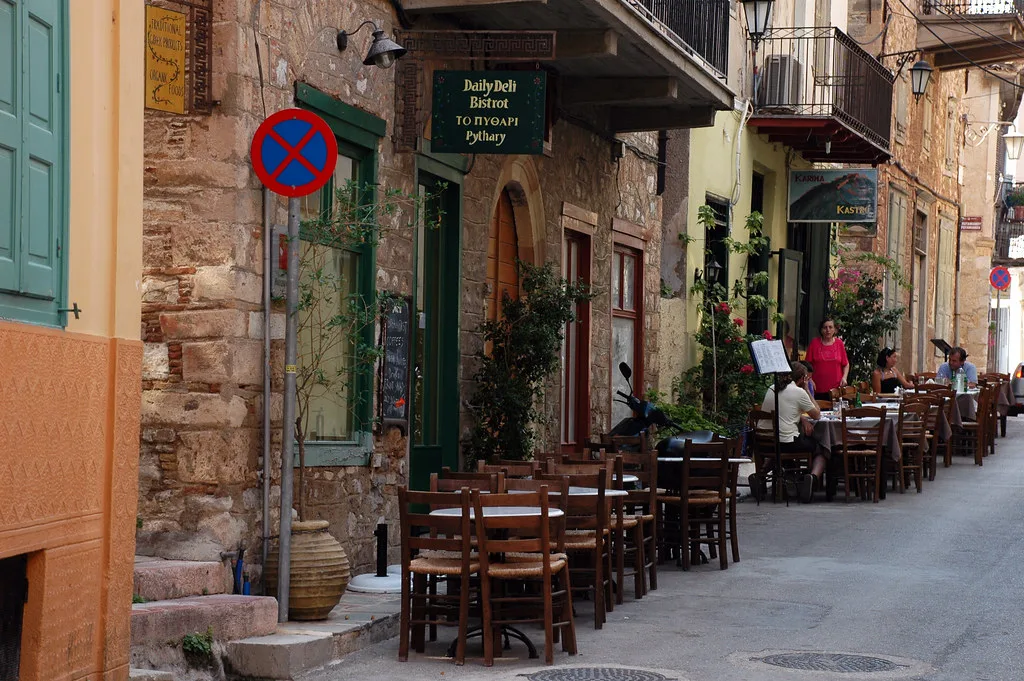
The taverna streets of the old town lie directly below the hill, so a meal after the descent needs no transport. Order the local standards: grilled meats, horiatiki (the Greek village salad of tomato, cucumber, onion and feta) and a plate of whatever seasonal vegetable the kitchen is serving.
Expect harbour-front tables to cost more than the back streets a lane or two inland; the view is the premium. For value, walk one street back from the water and look for a menu with fewer photographs.
Plan Your Visit
Akronafplia rewards the traveller who treats it as a walk rather than a ticketed sight. Go in the late afternoon with proper shoes, allow an hour, and use the hill to get your bearings over Nafplio before choosing where to eat below.
If you have energy left after the hill, the National Gallery – Alexandros Soutsos Museum and the higher fortress make a natural second stop.
Explore more Nafplio sauna guides
Frequently Asked Questions
Is Akronafplia free to visit?
The site is listed in the free cost category by exploring-greece.gr, so no ticket purchase should be expected for the hill. Because there is no published opening schedule, check locally before making it your first stop of the day.
How long does it take to walk up to Akronafplia?
The climb from the old town is short, since the hill rises only about 40 metres, but it is steep in places with steps. Allow ten to twenty minutes for the ascent and longer if you pause, then budget roughly an hour at the top if you want a proper circuit.
Is Akronafplia worth visiting compared with Palamidi?
They serve different purposes. Palamidi Fortress is the high, dramatic climb with the big panorama, while Akronafplia is a shorter ascent straight out of the old town with a closer view over the rooftops and harbour. If you only want one, pick Palamidi for spectacle and Akronafplia for convenience and quiet.
What is the history of Akronafplia Castle?
The walled hill was the settlement of Nafplio from ancient times, with Frankish and Venetian extensions to the fortifications and later Ottoman use. Until around 1960 the site was used as a prison, which explains the plainer buildings inside the walls.
Can you walk to Akronafplia from Nafplio old town?
Yes. The hill rises directly above the historic centre, so you walk up from the old-town lanes, starting naturally from Syntagma Square. A road also reaches parts of the hill, which suits anyone who would rather not use the steps.
What can you see from Akronafplia?
The walls, gateways and bastions built by successive rulers, including the entrance with the Lion of Saint Mark, plus views down over the old town rooftops, the harbour and Bourtzi on its islet.