
Palamidi Fortress: A Practical Guide to Nafplio's Hilltop Castle

Palamidi Fortress sits on the hill above Nafplio, on the eastern side of the Acronafplia peninsula, looking down over the Old Town's rooftops and the Argolic Gulf. It is the single most visible landmark in town, and the walk up its stepped path is one of the few things in Nafplio that requires an actual decision beforehand. This guide stays on the fortress itself: how to reach it on foot or by road, what the interior holds, how much time to budget, and what to arrange around it.
What Palamidi Fortress Is and Where It Sits
Palamidi is a Venetian fortress perched on a hill about 216 metres above Nafplio's harbour, in the Argolis region of the Peloponnese. The Venetians built it in the early 18th century as a defensive crown over the town, and it changed hands within a few years when the Ottomans took it. For visitors, the practical point is the position: it stands on the ridge east of the Acronafplia peninsula, directly above the Old Town, so you can see it from almost anywhere in the centre.
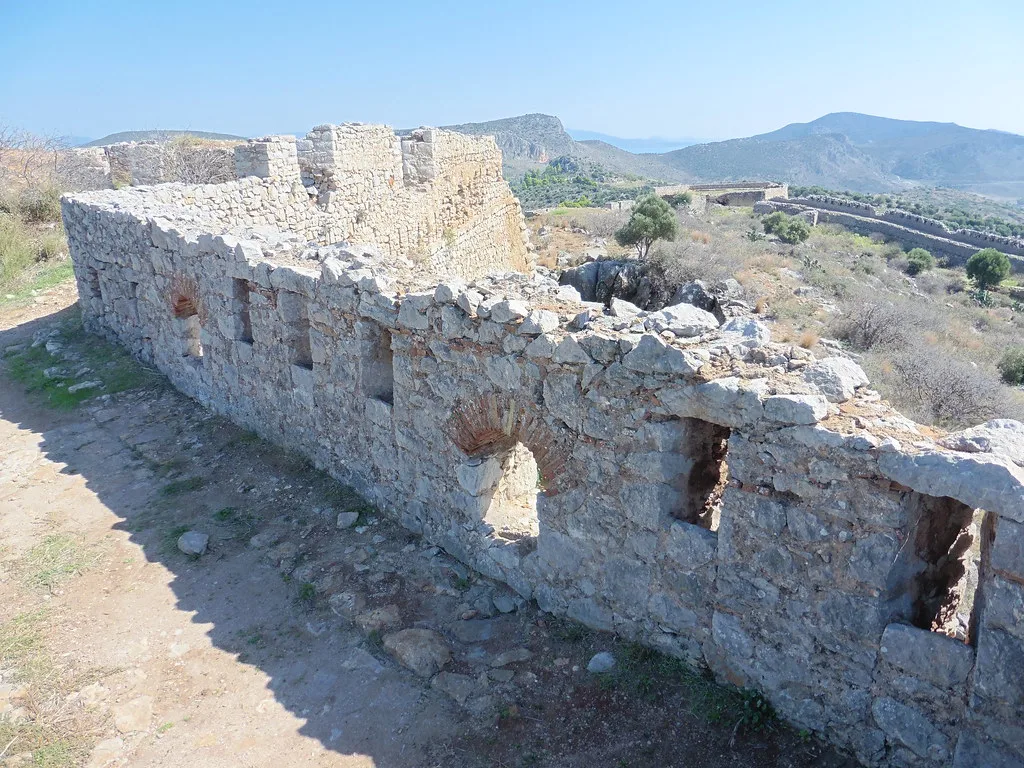
The structure is not one building but a set of separately walled sections joined together, which is why walking the site feels like moving between small forts rather than crossing one courtyard. That layout also means there is more ground inside than the outside view suggests, and some sections sit higher than others. Plan on moving between them on foot once you are through the gate.
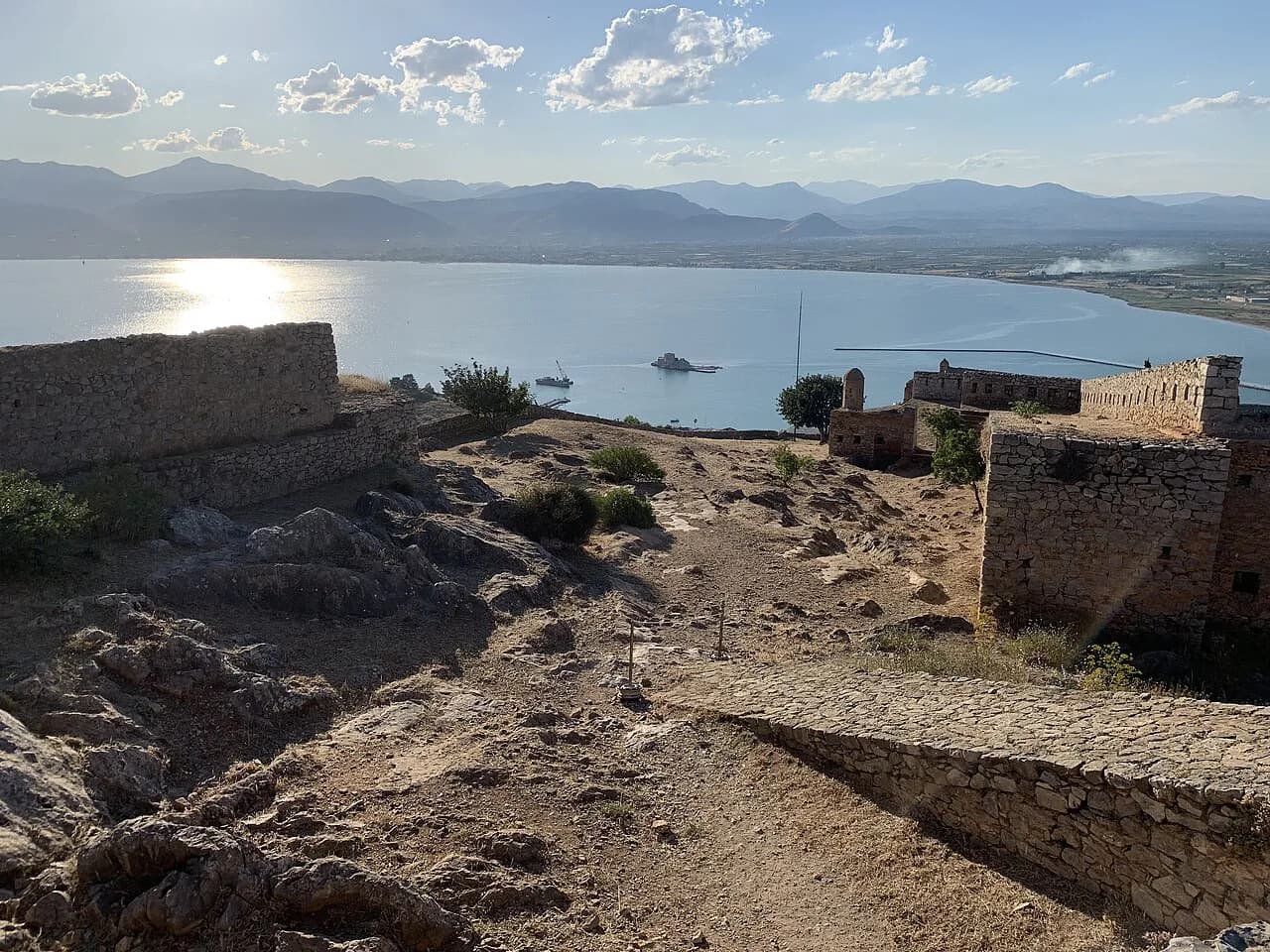
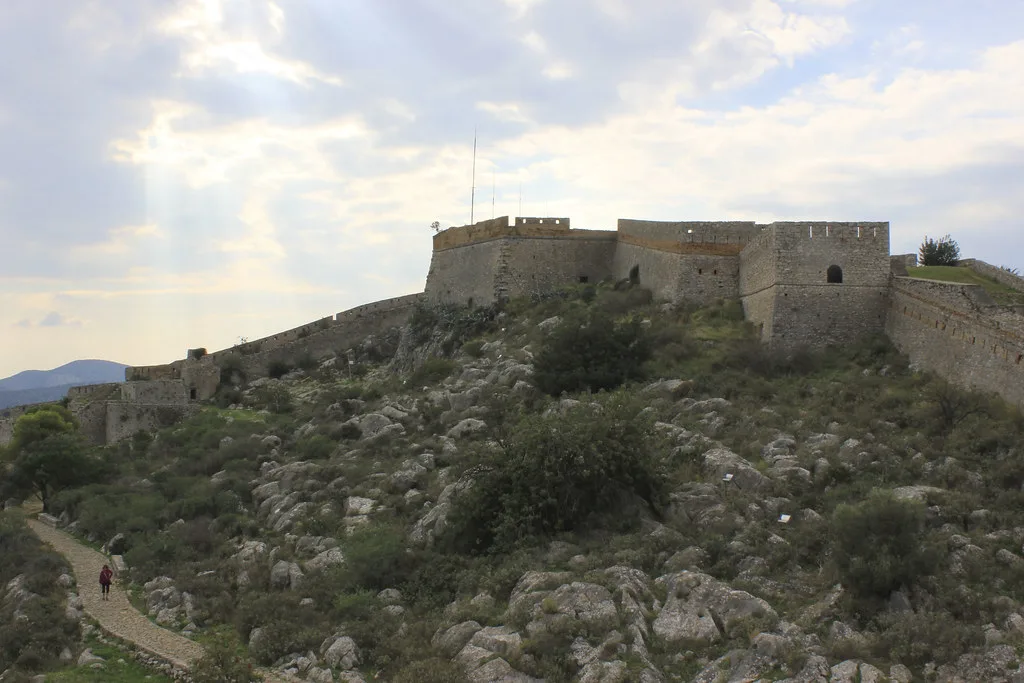
Seen from the town, the fortress reads as a long wall running along the hilltop rather than a tower, and it dominates the skyline above the harbour and the Bourtzi islet below. The distance from the Old Town streets to the fortress gate is short in map terms but entirely uphill; the climb is the whole point of the visit for some people and the main obstacle for others. Decide which camp you are in before you set out, because it determines your route. It also helps to know which approach streets below you are starting from, so glance at these Nafplio Neighborhoods before you walk.
Getting There on Foot: The Famous Steps
The stepped path begins in the Old Town and switchbacks up the hillside to the fortress gate. It is universally known as the 999 steps, but treat that number as a nickname rather than a survey: accounts of the actual count disagree, and even the sources that repeat the figure note the dispute. What is reliable is the shape of the walk: continuous stone stairs with turns that open progressively wider views over the town and the gulf.
Allow 30 to 45 minutes for the ascent if you are walking steadily with breaks, and treat that as approximate rather than a promise. The climb is exposed, so morning is the more comfortable window; the same guide that gives the timing advises starting early to avoid the heat and the crowds. Bring water and something with grip on your feet, since the stone treads are worn and uneven in places.
If stairs are not how you want to spend an hour of an Argolid afternoon, there is no shame in taking the road. The path and the road deliver you to the same place; only the effort differs. The trade-off is straightforward: the stairs buy you the satisfaction of arriving under your own steam and views that change with every turn, while the road saves your legs for walking the walls at the top.
Getting There Without the Climb: Road, Taxi and the Walk Down
A vehicle road reaches the top of the hill, and a taxi can take you up in a fraction of the time the stairs take. The third option suits a lot of visitors best: ride up, walk the fortress and the viewpoints, then descend on foot if your knees and the temperature allow, so you get the downhill views without the uphill slog. Ask the driver to confirm the current drop-off point at the top, since access arrangements at the gate are the kind of detail that changes.
Driving yourself works if you have a car, but parking near the fortress is limited and the hill road is narrow in places. On a hot day the road option also removes the main practical risk of the climb, which is doing sustained stairs in full sun with no shade. Whichever way you arrive, you still need to walk the site itself, so budget energy for the interior rather than spending all of it on the approach.
What to See Inside and How Long to Allow
Inside the gate, the site unfolds as a series of bastions, gateways and connecting walls, with the sea and the town appearing through openings at different heights. The pleasure is in walking the sections and looking out rather than in any one room or exhibit, and there is little signage to slow you down. Give the top of the hill roughly an hour if you want to cover the main sections and stop for views.
The fortress was built by the Venetians in the early 18th century and then held by the Ottomans until it was surrendered during the Greek War of Independence after a long siege. That history explains the military logic of the plan: overlapping walls, controlled gateways and positions that watch every approach to the harbour. Knowing this makes the walk more than a viewpoint circuit, and a short read on the siege before you go adds context without needing a guide.
Tickets, Opening Hours and Closures
Opening hours shift with the season, and there is no reliable way to fix them in advance from secondary travel accounts. Check the Greek Ministry of Culture website and confirm at the ticket office or with your accommodation before you commit to a late-afternoon climb, particularly outside the main summer months. The same applies to any temporary closure of sections of the walls.
Entrance is ticketed, but the amount is not something to plan around from outdated blog posts. Confirm the current fee at the gate or on the Ministry of Culture pages when you check the hours, and carry cash as a backup in case card payment is not working. Some sources also mention a separate admission for parts of the site, so ask at the ticket window what your ticket covers.
The Trade-Off: Climb, Drive or Drive Up and Walk Down
The climb is the classic version of the visit and the one most photographs imply, but it costs time and energy that could go into the fortress itself. Driving up flips that: you arrive fresh and can spend your effort on the walls, at the price of skipping the changing perspectives the stairs provide. The hybrid option, up by road and down on foot, splits the difference and is the choice to consider if you have a knee that complains on descents.
Time of day matters more than route. The hill is exposed, the Argolid is hot in summer, and midday is the least forgiving window for either the stairs or the walls. Early morning gives softer light and cooler air, while late afternoon gives the warm light photographers want but compresses your visit against the closing time you must confirm. Pick one and build the rest of the day around it.
Practical Kit for the Hill
Bring more water than you think you need, wear shoes with grip for worn stone, and take sun protection because shade on the hill is sparse. Toilets and drinking water at the top are not things to assume, so use facilities in the Old Town before you start and carry what you need. If you are climbing in summer, start early and plan the rest of the day around a slower afternoon.
The walk down deserves the same shoes as the walk up, since tired legs on uneven steps are where slips happen. If you drove up, keep the car keys accessible and check the gate closing time when you arrive so the descent is not rushed. A light layer helps on windy evenings at the top even when the town below feels warm.
Views from the Top: Old Town, Bourtzi and the Gulf
From the walls you look down on the terracotta roofs of the Old Town, the harbour, the Bourtzi islet offshore, and the wider Argolic Gulf beyond. The Bourtzi is the small fortified islet that serves as the town's emblem, and from Palamidi you see it in context: guarding the harbour entrance it was built to protect. This is the view to plan your photographs around, and it changes through the day as the light moves across the water.
For photography, the fortress rewards wide shots from the walls looking down and tight shots of gateways and stonework inside. Bring a camera you can operate one-handed on stairs, and keep both hands free on the descent. If you want the town lit warmly below, the late-afternoon window is the one to aim for, subject to the closing time you confirmed.
Combining Palamidi With the Rest of the Hill
Palamidi is the highest point of a hill that also holds Akronafplia, the older fortress directly above the Old Town, and the two can be linked on foot if you have the energy. Akronafplia is reached by paths from the town and offers its own views back toward Palamidi and out over the gulf. Treat it as a separate, gentler walk rather than a second climb, and check what is accessible before you go.
Below Akronafplia, the Arvanitia promenade runs around the rocky base of the peninsula to Arvanitia beach, a pebbly town beach reached by a short pine-lined path. It is a natural way to end a morning on the hill: descend from the fortress, walk the promenade, and cool off before lunch. Beach facilities such as loungers and umbrellas operate in season rather than year-round, so do not count on them outside summer.
Nearby After Your Visit: Old Town, Museums and Karathona
Back in the Old Town, Syntagma Square is the natural place to land, with cafes around a marble-paved square and the main streets radiating from it. The Archaeological Museum of Nafplio, housed in a Venetian building, holds finds from the surrounding Argolid and makes a compact follow-up if you want context for the region. Both are within a short walk of the lower end of the fortress path.
If you have a car, Karathona beach lies a short drive east of town and is the long sandy stretch where locals go, with a fish taverna and trees for shade. A taxi from Nafplio to the nearby beach at Tolo is roughly a 15-minute ride, according to one family travel account. The Old Town's pedestrian streets and museums fill the rest of the day without any driving at all, which is the simpler plan if you are on foot.
Eating Afterwards in the Old Town
After a morning on the hill, the Old Town's tavernas are a short walk from the bottom of the path, and the local menu rewards a little translation. Look for hilopites, a small egg pasta often served with rooster, and gogges, the hand-shaped pasta shells associated with the region. Grilled fish from the Argolic Gulf and local cheeses from nearby villages round out an order without any guesswork.
Drinks follow the same regional logic: wines from Nemea, the wine district west of Nafplio, and tsipouro, a grape spirit, or ouzo, the anise-flavoured aperitif. A waterfront table gives you the Bourtzi view and a higher bill; a back street gives you quieter tables and often better value. Decide which you want before you sit down, because the difference is mostly about the setting rather than the kitchen.
Plan Your Visit
Palamidi is not a long visit; it is a hill, a set of walls and a view, and the real planning lies in how you get up and when. Choose the stairs for the experience, the road for your legs, or the road up and stairs down for a compromise, and confirm hours and tickets on the Ministry of Culture site before you go. Whatever you pick, go early or late, carry water, and leave time to wander the Old Town afterwards.
Explore more Nafplio sauna guides
Frequently Asked Questions
How many steps are there to Palamidi Fortress?
The path is traditionally called the 999 steps, but the count is a local convention rather than a verified figure, and sources that repeat the number acknowledge the disagreement. Plan for a sustained stone staircase of roughly 30 to 45 minutes' ascent and do not fixate on an exact tally.
Can you drive up to Palamidi instead of walking?
Yes. A vehicle road reaches the hilltop, and taxis will take you up, which lets you walk the walls without the climb. Parking near the top is limited and the hill road is narrow in places, so many visitors go up by road and walk down if their knees allow.
How long should you allow at Palamidi Fortress?
Allow about an hour at the top to walk the walled sections and take in the views, plus roughly 30 to 45 minutes for the stair climb if you walk up. Add time for photos and for the descent, and start early in summer to avoid the worst heat.
What are the entrance fees and opening hours for Palamidi?
These change with the season and are not reliable in secondary travel accounts. Check the Greek Ministry of Culture website and confirm at the ticket office on the day; ask at the window what your ticket covers, since sources mention separate admission for parts of the site.
What can you see from the top of Palamidi Fortress?
The walls look down on Nafplio's Old Town rooftops, the harbour, the Bourtzi islet offshore and the Argolic Gulf beyond. Inside, you walk between separately walled sections, bastions and gateways rather than a single courtyard.
What is nearby after visiting Palamidi?
The Old Town is directly below, with Syntagma Square, the Archaeological Museum and the waterfront within a short walk. Akronafplia and the Arvanitia promenade and beach lie on the same hill, and Karathona beach is a short drive east.
Sources
- Nafplio Old Town: A Complete Guide to Greece's Most Romantic Historic Quarter | Unique Greek Tours Blog
- Karathona Beach | Nafplio, Greece | Attractions - Lonely Planet
- 18 Things to do in Nafplio, Greece – A Modern Mother
- A Short Trip to Nafplion, Greece
- Palamidi Castle - All You SHOULD Know Before Going ...