

Syntagma Square, Nafplio: What to See at the Old Town's Main Square
Syntagma Square is the paved central square of Nafplio's old town in the Argolis region of the Peloponnese, and it is where most walks through the lanes naturally end. It is not the Syntagma Square of Athens; the shared name trips up plenty of searchers, so treat this as a compact old-town square rather than a capital-city plaza. It works best as a walking landmark: you arrive on foot, look around, and use it to orient yourself for the rest of the day. If you're deciding where to stay nearby, our Nafplio Neighborhoods guide covers the areas around the old town.
What and Where Syntagma Square Is
The square is a large paved open space at the centre of the old town, and it marks the end of the main street running through it, which local descriptions call the Great Road. Because it sits inside the pedestrian lanes rather than on a ring road, the practical approach is to walk in from wherever you are staying in the old town and let the square open up at the end of the street.
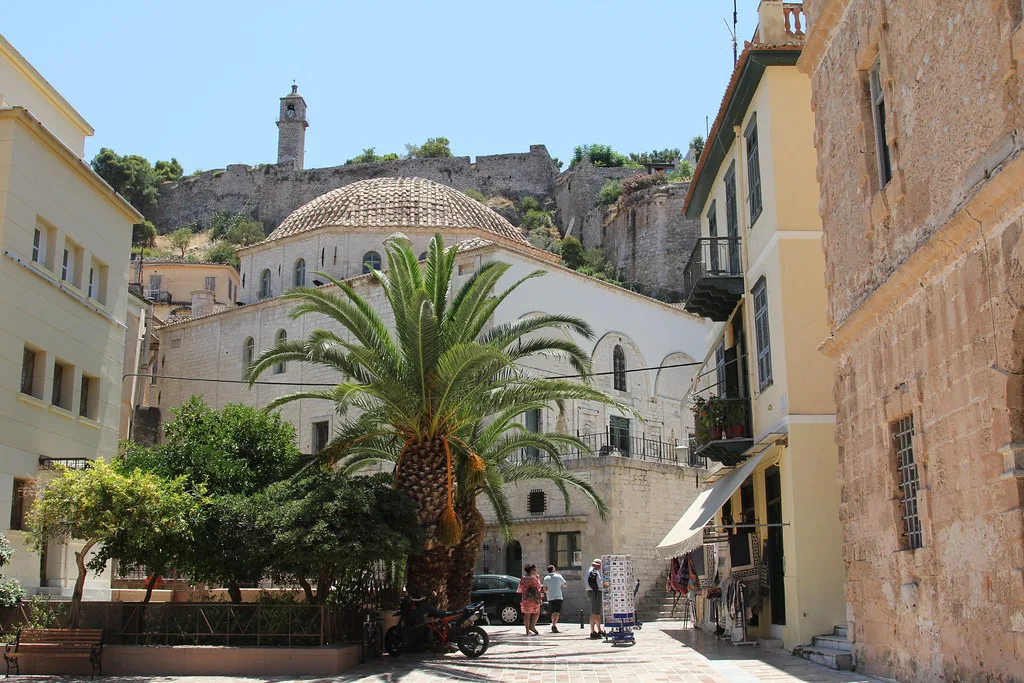
Its landmark is a historic plane tree beside the Archaeological Museum, which stands at one end of the square and gives the space a natural start and finish point. Around the edges are the era's most important buildings, including the former mosque of Aga Pasha, the houses linked to Nikitaras and Kolokotronis, and the building associated with the first parliament.
How to Reach Syntagma Square
You reach the square on foot through the old-town lanes, and that is the point: it is a walking landmark rather than a drive-to sight, so plan to park outside the historic centre or arrive by bus and continue on foot. Coming from the harbour side, the square sits inland from the waterfront squares, so a short stroll uphill through the shopping streets puts you there.
For orientation, the port and Filellinon Square with its philhellene memorial lie on the seaward side, while the Land Gate, the historic walled entrance to the lower town, sits at the other edge of the old town. Bourtzi, the small island fortress in the bay, is visible from the waterfront rather than from the square itself, so save it for the harbour end of your walk.
The Square's Role in Modern Greek History
The name references the constitution struggle during the reign of King Otto, which is why the surrounding buildings carry such weight for a small provincial square. Nafplio was the first capital of modern Greece, and the square's ensemble of parliament building, mosque and chieftains' houses is the physical trace of that brief period of national government.
The former mosque of Aga Pasha, a well-preserved Turkish-era building dating to the 1730s, housed the first Hellenic Parliament in the mid-1820s, and it was there that the trial of the revolutionary chiefs Kolokotronis and Plapoutas took place. It now functions as a cultural venue rather than a museum, so treat the exterior and the story as the main draw unless an event is running.
The Archaeological Museum on the Square
The Archaeological Museum occupies a building at the main square that was constructed in 1713 under the Venetians as a warehouse and later served as barracks, reopening as a museum after renovation in 2009. Its permanent collection covers prehistory through the Bronze Age, with finds from Franchthi cave and from Midea, Tiryns and Assini in the surrounding Argolid.
The emblematic piece is a bronze body armour from the Mycenaean cemetery of Dendra, dated to the late 15th century BC and displayed on the second floor, with a video showing how the parts assemble. Its helmet carries almost 40 wild boar teeth, and the museum's curator has argued that the weight suggests ceremonial rather than battlefield use. Also look for seventh-century BC clay masks from Tiryns and a bronze mirror from ancient Hermione.
Other Buildings to Look At Around the Square
Beyond the mosque-parliament, the square is ringed by early neoclassical and Ottoman-era houses, and the ones associated with the revolutionary leaders Nikitaras and Kolokotronis are identified by name in local descriptions. Read the square as a single architectural ensemble: facades first, plaques second, since not every building is open to visitors.
If the historical theme holds your interest, the War Museum of Nafplio occupies a stone building on Amalias Street at the edge of the old town and covers the 1821 revolution and the Balkan Wars among other conflicts. It is a short walk from the square rather than on it, so slot it in only if military history is your priority.
The Plane Tree and the Square as a Living Place
The square is not a monument to file past: cafe-restaurants line its edges, children play in the open paved area, and locals use it as a meeting point and coffee stop. The main activity for a visitor is people-watching from a table, which costs the price of a drink and gives you the best view of the facades on all four sides.
Because it is an open public space rather than a ticketed site, the square itself has no opening hours; only the buildings around it, such as the Archaeological Museum, keep fixed times. That makes it a reliable early-morning or evening stop on any day of the year, unlike the seasonal businesses on the islands.
How Much Time to Allow
Allow about a quarter of an hour to walk the square and read the facades, and considerably longer if you go into the Archaeological Museum, which rewards a focused hour or more. The trade-off is simple: the square is the quick stop, while the museum is the slower, ticketed one, and both sit within the same footprint.
If you are short of time, do the square at the end of the day and pair it with a waterfront walk; if you have a full morning, start at the museum when it opens and finish on the square over coffee.
Nearby Sights Within Easy Walking Distance
Palamidi, the eight-bastion Venetian fortress that serves as the city's symbol, rises above the town and can be reached by road on its eastern side or on foot up the stepped route on the west. It is a climb rather than a stroll, so decide in advance whether you are walking up or taking transport, and allow time for the heat.
Akronafplia, the rocky peninsula that was the ancient acropolis of Nafplio, sits between the old town and the sea and is the closest of the fortifications to the square. Its layered walls and the Five Brothers bastion on the northwestern slope make an easy add-on, and the walk back down returns you to the lanes.
The Arvanitia Promenade, the pedestrianized seaside road west of the port, runs below the cliffs towards the small church of Panagitsa on the rock. For a different kind of stop, the Komboloi Museum in Nafplio is dedicated to the worry beads that Greeks turn in their hands, a small collection in the old town rather than a major sight.
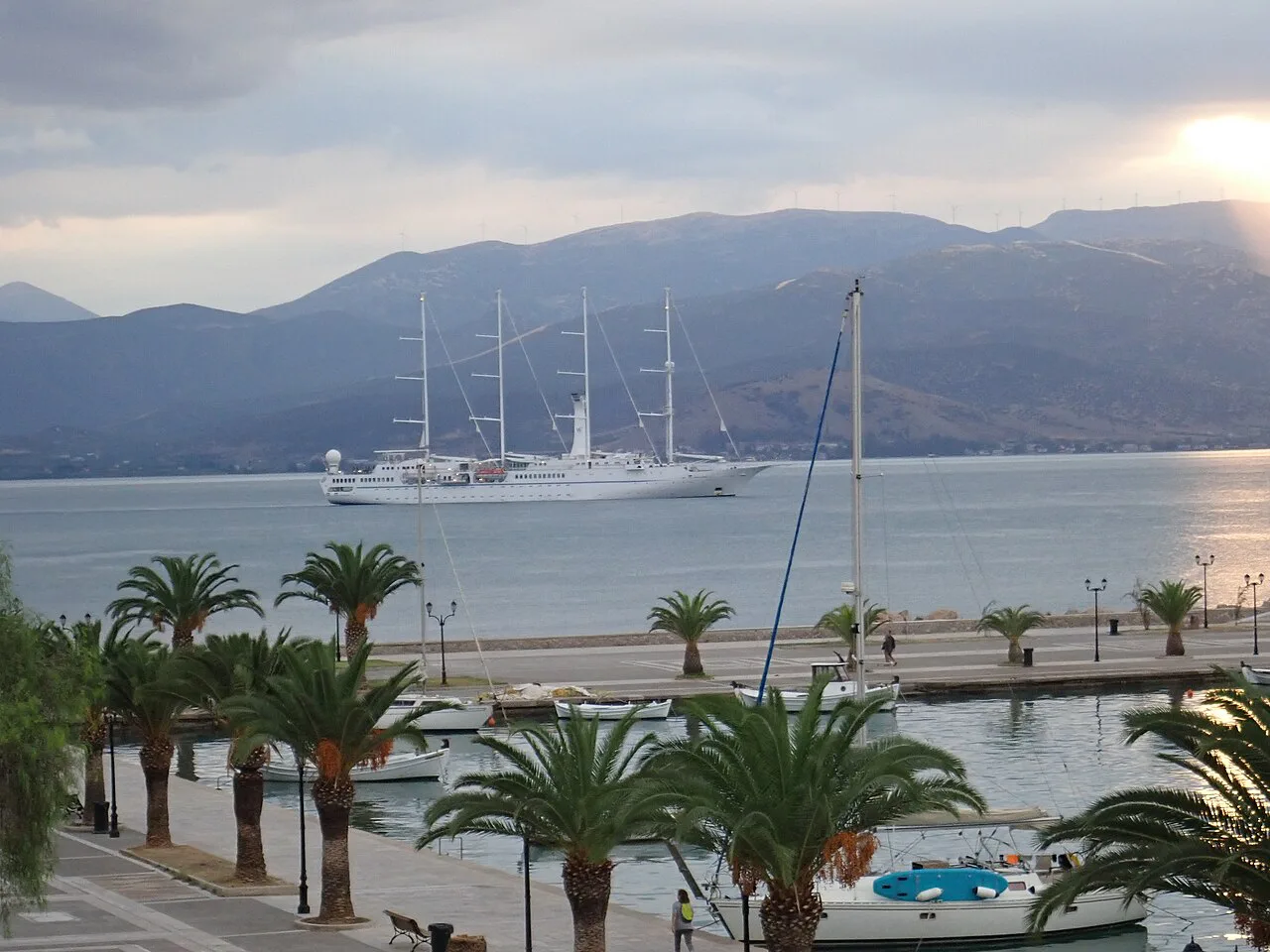
Bourtzi, the fortress on its islet at the harbour entrance, has had a chequered life, including a spell as a hotel in the 1950s, and small boats run the short crossing from the port. Check whether it is open before counting on a landing, since its condition and access have been the subject of public concern.

Practical Details to Check Before Visiting
Published museum hours change, so confirm them before you build a day around them: the Greece Is survey of Nafplio's museums listed the Archaeological Museum as open 08:00 to 15:00 and closed on Mondays, but that information dates from 2016 and should be treated as a guide rather than a promise. Check the museum's own listing or the local tourist office for current times and ticket prices.
The same caution applies to the smaller collections: the Greece Is article gives weekday and Sunday timings for the Peloponnesian Folklore Foundation at 1 Vas. Alexandrou and for the National Gallery annex on Sidiras Merarhias street. If a particular museum matters to you, check the published schedule for your dates before setting out.
Where to Eat Around the Square
The cafe-restaurants on the square sell position above all: you pay for the plane tree, the facades and the passing crowd, and the food is best treated as a light lunch or a coffee stop. For better value, walk a few streets back from the square into the lanes, where the tavernas serve the same Greek staples without the view premium.
Order at the square for a Greek coffee or a freddo espresso rather than a full meal, and save the sit-down lunch for the back streets.
Seasonal Note
Syntagma Square is a year-round urban space, so unlike the island restaurants that close roughly from November to April, it does not shut for the season. Plan around museum hours rather than seasons, and expect the square to be quieter outside the summer months.
Plan Your Visit
Treat Syntagma Square as the fixed point of a Nafplio day: arrive on foot through the Great Road, walk the facades and the former mosque that became the first parliament, then decide between a coffee on the square and a proper hour in the museum. If you are still weighing up where to base yourself, our guide to Nafplio Neighborhoods breaks down the areas around the old town.
Build the rest of the day around distance rather than minutes: the harbour squares and Bourtzi sit on the seaward side, Akronafplia and the Palamidi climb on the inland side. Confirm museum times before you go, since the published schedules are the one variable that can undo a carefully planned morning.
Frequently Asked Questions
Is Syntagma Square in Nafplio the same as the Syntagma Square in Athens?
No. They share a name but not a place: Nafplio's square is a paved space at the centre of the old town in the Peloponnese, ringed by Ottoman and neoclassical buildings and anchored by the Archaeological Museum. The Athens square is the large capital-city plaza in front of the parliament building, so check which one a guidebook or map is referring to.
What is there to see on Syntagma Square?
The square is best read as an ensemble: the plane tree beside the Archaeological Museum, the former mosque of Aga Pasha that housed the first Hellenic Parliament, the houses associated with the revolutionary leaders Nikitaras and Kolokotronis, and the surrounding early neoclassical facades. Cafes along the edges provide the natural place to sit and take it in.
How long should I spend at Syntagma Square?
A quarter of an hour covers the square and its buildings if you are walking through, while the Archaeological Museum on the square warrants an hour or more on its own. Pair the quick version with a waterfront walk in the evening, or start at the museum and finish on the square.
Is the Archaeological Museum on Syntagma Square?
Yes. It occupies a building at the main square, built as a Venetian warehouse in 1713 and later used as barracks before reopening as a museum after renovation. Its collection runs from prehistory to the Bronze Age and includes the bronze body armour from Dendra on the second floor.
What is within walking distance of Syntagma Square?
Akronafplia lies on the rocky peninsula closest to the square, the Land Gate sits at the old town's inland edge, and the harbour squares and Bourtzi are on the seaward side. Palamidi rises above the town and is a climb rather than a flat walk.
Do I need to book tickets for Syntagma Square?
No. The square is an open public space with no entrance and no ticket; only the museums and monuments around it keep fixed hours. Check current museum schedules and ticket prices before setting out.
Why was Nafplio the capital of Greece?
Nafplio served as the first capital of modern Greece, and the square's buildings, including the mosque that hosted the first Hellenic Parliament and the chieftains' houses, survive from that period. That is why a small provincial square carries this density of national history.
What should I eat near Syntagma Square?
The square's cafe-restaurants are best used for coffee or a light lunch, with the price reflecting the view and the passing crowd. For a sit-down meal, walk a few streets back into the lanes, where tavernas serve Greek staples without the view premium.