What to Eat in Santorini: Local Dishes and Where
What to eat in Santorini, from fava and tomatokeftedes to Santorinian salad, plus which villages serve them and how to balance view dinners with cheap gyros.
On this page
Santorini runs on two eating economies. One is the sunset table facing the caldera, where you pay for the view as much as the plate; the other is the village taverna or the gyros counter, where volcanic-soil vegetables and grilled meat carry the meal at a fraction of the cost. Planning a day around one view dinner and two simpler meals is the most reliable way to eat well here without blowing the budget.
What separates Santorinian cooking from a generic Greek menu is the produce grown in ash and pumice: small cherry tomatoes, white eggplant, capers and caper leaves, fava beans and a local cucumber that hosts apparently insist guests try. The rest of the island's food map is ordinary Greek repertoire done with varying ambition. Use this guide to match dishes to villages and to decide when the view is worth the premium.
The Santorini Pantry: What Grows Here and Why It Changes the Menu
Santorini's soil is volcanic, windy and dry, and the crops that survive it are the ones cooks build dishes around. Look for cherry tomatoes, white eggplant, capers and caper leaves, sun-dried tomato, fava beans and fresh soft cheese on menus, plus the local cucumber that one visitor's villa host treated as the island's signature bite. These ingredients appear in salads, purées and fried fritters rather than as side notes.
The practical consequence is that a Santorinian salad tastes different from the mainland version because the toppings change, not just the name. If you only have time to chase one local ingredient, make it fava: a yellow split pea purée served with olive oil, onion and sometimes capers, and the dish most closely tied to the island's pantry. Order it as a shared starter so the table can compare it with the tomato-based dishes.
Dishes to Order First: Salad, Fritters, Fava and Stuffed Vegetables
Start with the distinction travelers most often miss: a horiatiki salata is the standard Greek salad of tomato, cucumber, onion, olives and feta, while a Santorinian salad reworks it with local ingredients. One writer's takeaway version combined tomato, caper, caper leaves, sun-dried tomato, fresh soft cheese, lettuce, rocket, olives and a balsamic-honey vinaigrette. Order both if the table is large enough, and use the comparison to judge how serious the kitchen is about local produce.
Tomatokeftedes are tomato fritters, the Santorini answer to a vegetable starter, and they suit the island's small, intensely flavored tomatoes. Gemista means peppers and tomatoes stuffed with rice and herbs, a filling main that often costs less than a seafood plate. Fava, described above, rounds out a starter trio that lets you eat locally without ordering the most expensive item on the menu.
Seafood: Calamari, Mussels, Sardines and Red Snapper
Seafood pricing on Santorini tracks preparation as much as species. Simply fried calamari or grilled sardines sit at the affordable end, while a composed red snapper plate with parsnip purée, mussels and a fish broth lands near the top; one diner paid 37 dollars for that dish at Catch Bar in Oia in early 2023. Read the menu description before ordering: the more components listed, the more you are paying for kitchen work rather than fish alone.
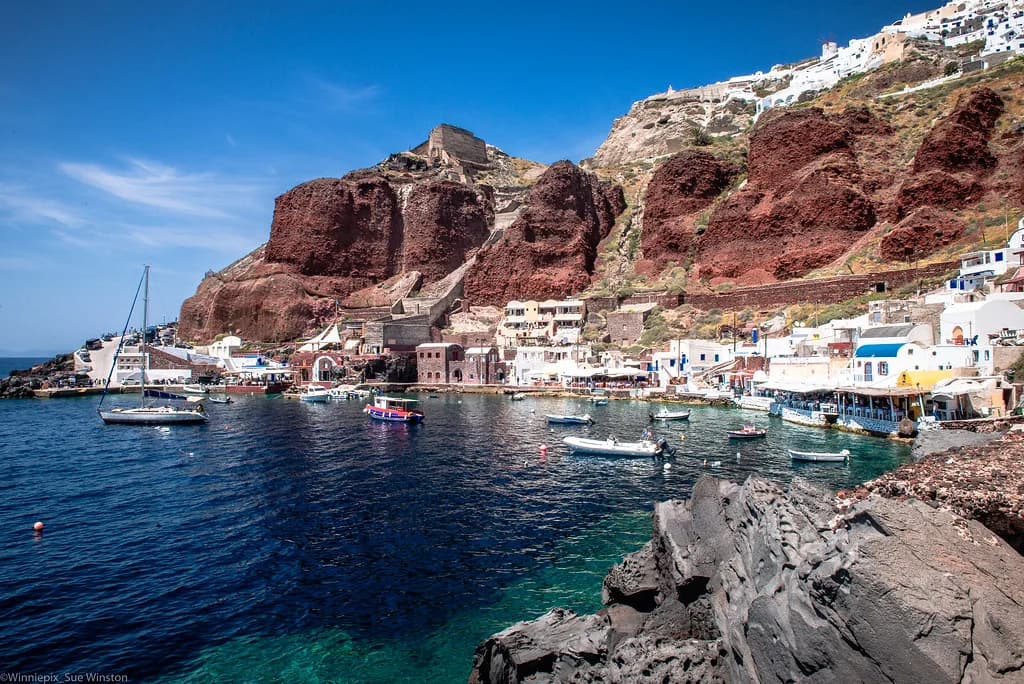
A bowl of mussels is a useful middle option, substantial enough to share as a light meal and usually priced well below a whole fish. At Ammoudi Fish Tavern below Oia, one visitor highlighted lightly fried sardines, scallop carpaccio and shrimp with fennel, all reached after descending several hundred stairs to the water. Budget for the taxi back up as part of the evening.
Grill and Street Food: Gyros and Souvlaki as Budget Ballast
Gyros is meat cooked on a vertical rotisserie and wrapped with pita, tomato, onion and tzatziki; souvlaki is skewered grilled meat, often chicken, served the same way or on a plate. They are the cheapest filling meal on the island and the reason a view dinner does not have to define the whole trip. One traveler ate a gyro for lunch on the Fira-to-Oia hike and another after a morning volcano tour, paying 13 dollars and 7 dollars respectively in early 2023.
In Fira, Lucky's is named as an inexpensive spot for gyros and souvlaki, with a souvlaki plate the recommendation. Treat these figures as one writer's early-2023 experience rather than current prices, and check the board outside before committing. The trade-off is simple: no caldera view, but a lunch that costs less than a single glass of wine at a rooftop bar.
Breakfast, Pastries and After-Meal Sweets
Breakfast in Santorini splits between villa groceries, hotel spreads and garden-patio brunch. Pelican Kipos in Fira, about a five-minute walk from one visitor's villa, serves brunch in a plant-filled courtyard with live piano music, and the same kitchen turns out a Santorinian salad for takeaway. If you are staying in a cave house with a terrace, a supermarket run for fruit and bread is the cheapest start to the day.
Greek tavernas often bring a free dessert at the end of a meal, and on Santorini that can mean warm donuts in a honey glaze. For a sit-down pastry stop, Manos in Fira is recommended for meletini, a small filled pastry sweet. In Oia, Lolita's Gelato is the cold option on a hot walk, which makes it a useful filler between sightseeing stops.
Spanakopita, the phyllo pie usually filled with spinach and feta, appears on Santorini menus in sweet-leaning versions with honey and pistachios at some bakeries. It is a snack rather than a meal, and a good one to carry on the Fira-to-Oia walk, which runs about 6.5 miles along the caldera rim and takes two to three hours at a photo-stopping pace.
What to Drink: Assyrtiko, Mastiha and Greek Beer
Assyrtiko is Santorini's signature white grape, a dry wine grown in the island's volcanic soil, and it appears on nearly every serious list. Order it by the glass if you want to control cost, because bottle and glass prices diverge sharply at view restaurants; one diner at Catch Bar assumed a 26-dollar Assyrtiko was a small bottle and discovered it was per glass. Ask the price before the pour.
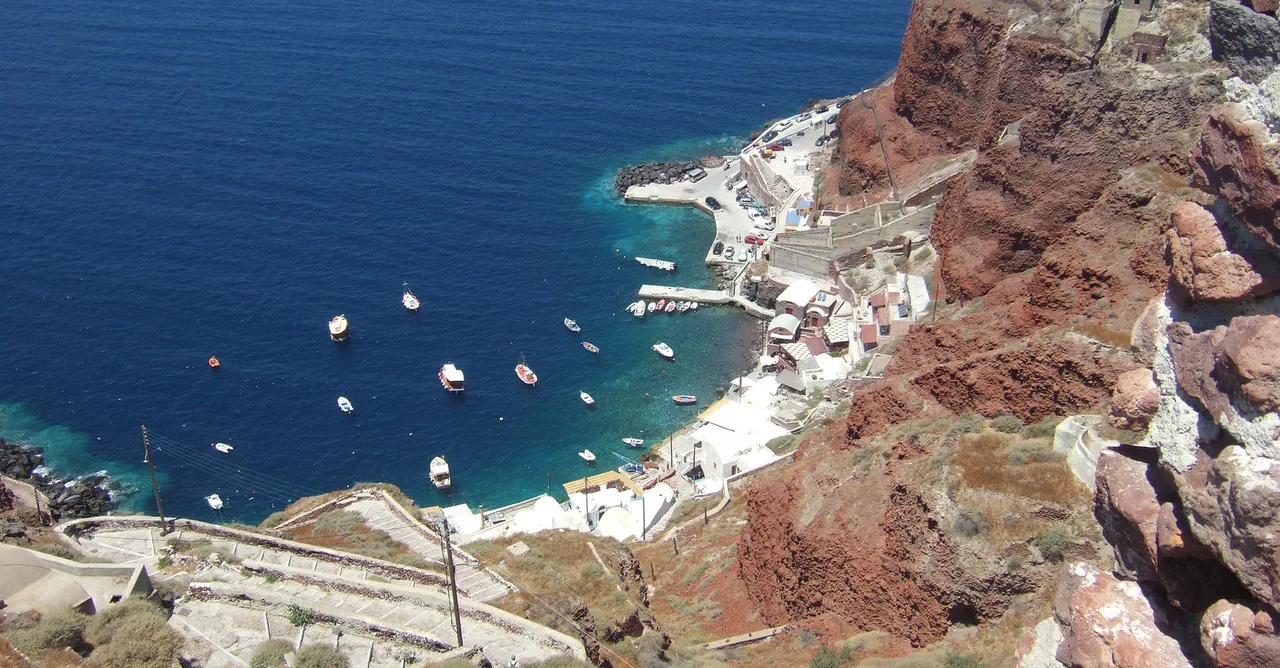
Mastiha is a liqueur flavored with resin from mastic trees grown on Chios, served cold as a digestif or mixed into cocktails; at Kapari Wine Restaurant in Imerovigli it arrives with lemon sorbet and mint. Greek beers such as Mythos, Blue Monkey and Yellow Donkey turn up on bar lists and are a cheaper way to sit with a view than a wine list. None of these needs explaining to staff, but asking what is local usually improves the answer.
Where to Eat by Village: Fira, Oia, Imerovigli, Akrotiri and Pyrgos
Fira concentrates the choices: Pelican Kipos for a courtyard brunch, Argo for caldera views, Rastoni for a casual lunch of Greek salad and kebabs, and Lucky's for cheap gyros. Metaxi Mas sits a short taxi ride outside town and is described as serving the Greek greatest hits in a garden setting with resident cats. If you want the fuller restaurant list for the capital, the best restaurants in fira santorini guide sorts them by setting and price level.
Oia is the upscale end, with Catch Bar's west-facing roof deck and Ammoudi Fish Tavern at the bottom of the stairs by the water. Between them sit gelato, cafes and the crowded sunset terraces. The best restaurants in oia santorini page covers the caldera-facing tables in more depth, including which ones take reservations.
Imerovigli, between Fira and Oia, is where Kapari Wine Restaurant sits at one of the island's highest points, an easy sunset perch with a herb-crusted lamb that one writer singles out. Akrotiri, near the excavated Bronze Age town, has Theofanis, a lunch stop recommended after touring the ruins. Pyrgos, the oldest village, has Kantouni among its small cluster of tables, and Taverna El Greco is described as one of the few places open all year, though you should confirm that directly before relying on it out of season.
Beyond the caldera villages, Kamari and the beach resorts run their own taverna strips with easier parking and lower prices. If you are based on the east coast, the best restaurants in kamari santorini guide is a better starting point than crossing the island for dinner. Wherever you land, pair the meal with nearby sights from the things to do in santorini list so lunch does not eat the whole afternoon.
The Sunset-Table Problem: Booking, No-Shows and the View Premium
Caldera-view tables in Fira and Oia are booked weeks or months ahead in high season, and the premium is real: one diner's bill at Catch Bar reached 158 dollars for two with tax and tip, mostly for a peaceful roof deck at sunset. The food was good but the view was the purchase. Decide in advance whether you are paying for the plate or the position.
If you have not booked, one traveler's approach was to visit restaurants about an hour before sunset and ask about no-shows, which landed a caldera table at Argo in Fira. This is a gamble, not a system, and it fails on busy nights. Sunset Restaurants in Santorini maps the alternatives if you would rather reserve ahead than improvise.
A middle path is the rooftop bar rather than the dining room: V Lounge above the Panorama Boutique hotel pours cocktails with unobstructed sea views, and you can eat simply elsewhere before or after. You pay for drinks instead of a tasting menu and still get the light. For the wider comparison of view dining versus village value, the best restaurants in santorini overview is the place to cross-check.
Budget Shape: How to Balance One Splurge With Everyday Meals
One traveler's Santorini average came to about 25 dollars per meal against 13 dollars in Crete, showing how quickly view dining lifts the daily total. The fix is structural rather than frugal: one view dinner, gyros or a shared salad at lunch, and supermarket fruit and bread for breakfast. That pattern keeps the splurge meaningful instead of routine.
Treat all quoted figures as dated examples from early 2023 and check the menu board or ask about glass prices before ordering. Restaurants on Santorini do not publish stable prices across seasons, and a view table can double a bill without any change to the food. A cooking class is another way to spend on food deliberately rather than accidentally; a Santorini cooking class typically includes a market or garden visit and a meal you make yourself.
Practical Logistics: Walking, Stairs and Finding Addresses
Fira has no conventional street addresses, so restaurants are found by landmarks and winding pedestrian lanes rather than by map pin. Some places, including Athenian House, publish a video showing the approach, and that is worth watching before a booked dinner. Allow extra time to find any caldera-side table, because the last hundred meters are usually stairs.
The walk from Fira to Oia follows the caldera rim for roughly 6.5 miles with little shade, loose rock in places and a couple of hours or more of walking. Plan lunch at the far end, or carry a gyro, and do not schedule a sunset dinner at the same end of the island on the same day. Water, a hat and an early start matter more than any restaurant choice.
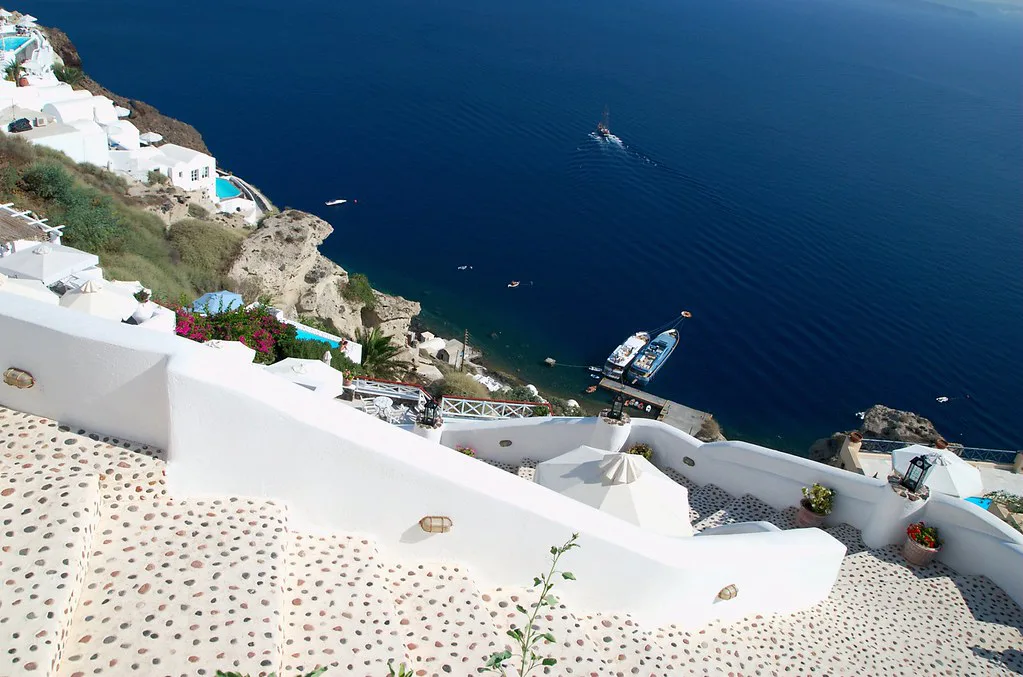
Ammoudi Bay sits at the bottom of several hundred stairs below Oia, and restaurants there will call a taxi for the return to Fira after dinner. That is fine for a sunset meal but poor for a tight schedule. Read the stairs as part of the reservation decision, not an afterthought.
Seasonal Opening: Winter Closures and What to Confirm
Many island restaurants operate seasonally, closing roughly from November to April, and Santorini is no exception outside the main villages. One visitor's host named Taverna El Greco as a rare year-round option in Fira, which is a useful clue rather than a guarantee. If you are traveling in the shoulder months, ask the specific restaurant about its opening dates before building a day around it.
The end of April is described as cooler and noticeably less crowded, with locals bracing for the summer influx. That makes spring a good window for caldera tables without the worst reservation pressure, provided you accept that some kitchens may still be on winter schedules. Check opening dates directly rather than trusting a listing.
Build a Day Around One View Meal
The workable pattern on Santorini is one meal with a view, one meal in a village square, and one meal assembled from a bakery or supermarket. Spend the view budget where the light matters, at sunset in Fira, Oia or Imerovigli, and use gyros, fava, tomatokeftedes and shared seafood plates for the rest. That structure keeps the food interesting and the bill predictable.
Santorini cooking overlaps with the wider Greek repertoire, so the island makes more sense if you already know your horiatiki from your horta. Read the traditional greek food guide before you go, and use the Santorini Attractions: 7 Visitor Guides hub to slot meals between ruins, beaches and the caldera walk. Confirm winter openings and glass prices directly with each restaurant, since neither stays fixed.
Frequently Asked Questions
What food is Santorini known for?
Santorini is known for produce grown in volcanic soil: cherry tomatoes, white eggplant, capers and caper leaves, fava beans and a local cucumber. On menus that translates into fava purée, tomatokeftedes (tomato fritters), Santorinian salad, gemista (stuffed peppers and tomatoes) and simply prepared seafood. Assyrtiko, the island's dry white wine, is the drink most closely tied to the place.
What is a Santorinian salad and how is it different from a Greek salad?
A standard horiatiki is tomato, cucumber, onion, olives and feta. A Santorinian salad reworks it with local ingredients such as capers, caper leaves, sun-dried tomato, fresh soft cheese, rocket and a balsamic-honey vinaigrette. Order both to compare, and expect the Santorinian version to cost a little more because of the local produce.
Where can I eat cheaply in Santorini?
Gyros and souvlaki counters are the cheapest filling option, with Lucky's in Fira named as an inexpensive spot. Supermarkets and bakeries cover breakfast and picnic lunches, and shared starters such as fava and tomatokeftedes cost less than seafood mains. Keep one view dinner and build the rest of the day around village and back-street meals.
Where do locals eat in Santorini?
Pyrgos, with its small cluster of tables including Kantouni, and year-round places such as Taverna El Greco in Fira are where residents are more likely to be found than on the caldera terraces. Village tavernas away from the sunset strip generally offer better value. Confirm winter opening directly, since many restaurants close for the season.
What do people eat for breakfast in Santorini?
Breakfast splits between villa groceries, hotel spreads and garden-patio brunch. Pelican Kipos in Fira serves brunch in a courtyard with live piano music, and supermarkets cover the self-catering option. Bakeries selling spanakopita and pastries fill the gap between an early start and a late lunch.
Is it worth paying for a sunset-view table in Santorini?
It depends on whether you are buying the plate or the position. Caldera tables in Fira and Oia carry a substantial premium, and one diner's bill at Catch Bar reached 158 dollars for two. Book ahead for a special occasion, or try the walk-in no-show approach about an hour before sunset as a gamble rather than a plan.
Which Santorini restaurants are in Oia, Fira and Imerovigli?
Oia has Catch Bar on its west-facing roof deck and Ammoudi Fish Tavern down at the water. Fira has Pelican Kipos, Argo, Rastoni and Lucky's, with Metaxi Mas a short taxi ride outside town. Imerovigli has Kapari Wine Restaurant, and Akrotiri has Theofanis near the ruins.
What wine should I order in Santorini?
Order Assyrtiko, the island's dry white grape grown in volcanic soil, by the glass if you want to control cost. Ask the price before the pour, because bottle and glass prices diverge sharply at view restaurants. Mastiha liqueur and Greek beers such as Mythos are cheaper ways to sit with a view.
Sources
Notes for eating well in Greece
Optional updates to our guides.
You might also like
Continue reading
More guides you'll find useful