Best Restaurants in Santorini: Where to Eat by Area
Plan meals in Santorini with named restaurants by area, dishes to order, view-versus-value trade-offs and booking advice for sunset and caldera tables.
On this page
The most useful decision in Santorini is not which restaurant is best, but which part of the island you want to eat in. A caldera-rim table in Oia, a back-street taverna in Fira and a harbour grill below the cliffs all deliver different meals at different costs, and the gap between them is wider than the gap between two restaurants on the same street.
This guide groups named restaurants by area and access, then explains the dishes and drinks that appear on their menus, the trade-offs between view and value, and what to ask for when booking a sunset table. Distances are described by area rather than precise timings, and menu prices are left to each restaurant, since they change seasonally.
Why Santorini Restaurants Split by Location
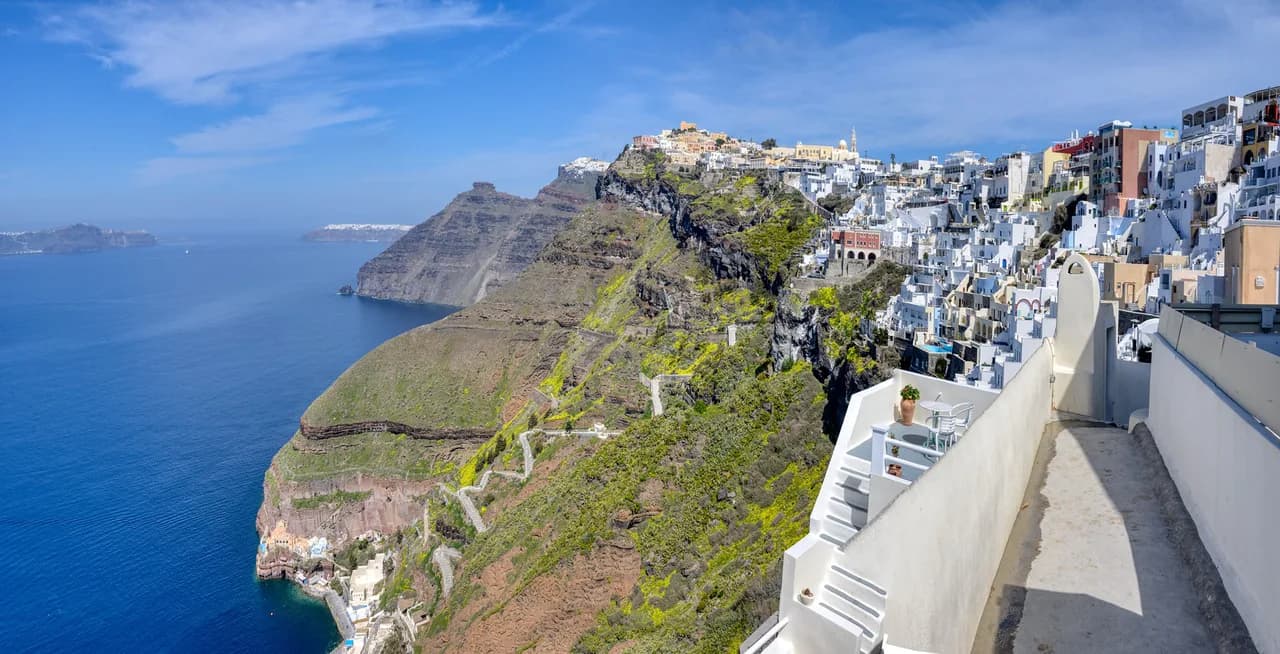
Santorini's eating geography follows its shape: a crescent of cliff-top villages along the caldera in the west, beach and marina areas in the south and east, and inland villages on the gentler slopes. Caldera towns such as Fira, Firostefani, Imerovigli and Oia carry the heaviest foot traffic and the highest view premiums, while places such as Pyrgos and Exo Gonia sit away from the rim and attract diners for the kitchen rather than the panorama.
Cruise passengers arriving in numbers can jam Fira's narrow lanes in the afternoon, which makes a late lunch in a caldera village a different experience from an early one. If your priority is a relaxed table, consider eating your main meal inland or at a harbour and treating the caldera rim as a drinks-and-sunset stop rather than a full dinner.
A car or organised transfer widens your options considerably, because inland restaurants and marina tavernas are awkward to reach on foot from the cliff villages. Before you commit to a view table, work out how you will get home after dark, as cliff paths and steps are slow going at night.
Caldera-View Dining in Oia and Imerovigli
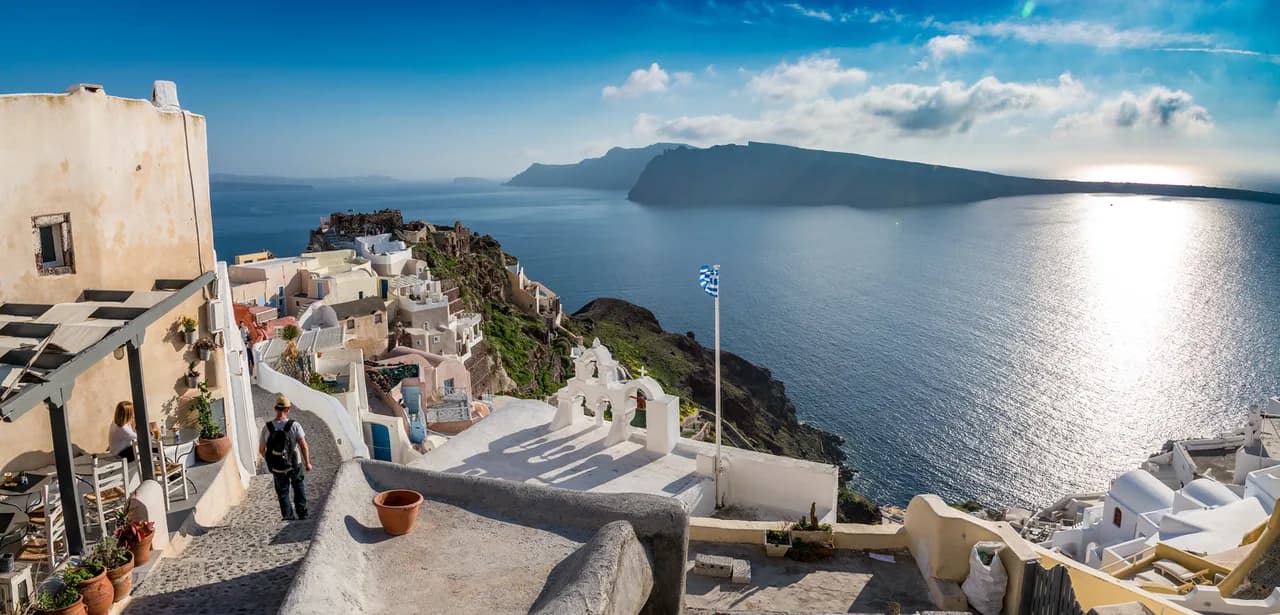
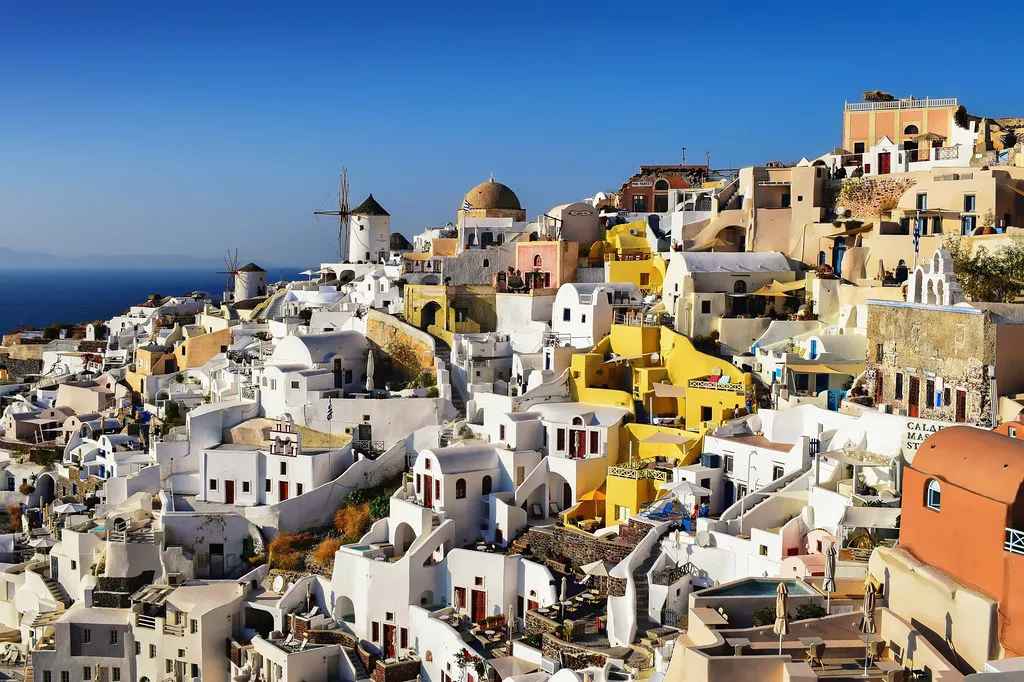
Oia's caldera edge concentrates terrace restaurants with sunset outlooks, and booking advice matters more here than anywhere else on the island. Ambrosia, on the church square in Oia, is described as a small, intimate terrace where a reservation is advisable for a table for two at sunset, with local dishes given a slightly more refined treatment than in the village's rustic tavernas.
Also in Oia, Apisithia is a cliff-top terrace for a casual lunch with a caldera view, positioned next to some of the village's better shopping. Its menu leans on flatbread with dips and seafood platters, and a waiter's suggested platter was reported as good value, which makes it a reasonable compromise if you want a view without a long, formal dinner.
At the top of the price scale, Petra at Canaves Oia Suites occupies a tiny balcony by the pool and serves Greek and Mediterranean cooking with dishes such as lobster with orzo pasta. Its handful of tables suits a celebration, and it is described as the pricier end of Santorini dining, so treat it as the splurge rather than a default evening.
Imerovigli sits between Fira and Oia and is home to Kapari Wine Restaurant, which the source notes as one of the highest points on the island and a strong sunset spot. It is part of a resort that serves a multi-course Mediterranean menu to non-residents, so confirm availability as a non-staying guest before you build an evening around it.
For a caldera walk between villages and more context on the viewpoints along the rim, including Skaros Rock, plan your meal around the walking rather than the other way round. Dining earlier also keeps you clear of the sunset rush on the narrow paths.
Fira and Firostefani: Central, Busy and Easier to Book
Fira is the island's transport and nightlife hub, so its restaurants see a constant turnover of diners and are generally less reliant on one sitting at sunset. Rastoni, in the heart of Fira, is described as a casual but refined lunch stop with caldera views and a menu of Greek salad and kebabs, a combination that suits a midday break between errands and buses.
A short walk from the centre, Kokkalo sits away from the main tourist fray with large windows over the eastern terrain and a menu built on local produce. Reported dishes include tomato fritters, fava topped with grilled octopus, feta-stuffed sausage and dakos salad, and the kitchen also runs cooking sessions for guests who want to learn the dishes.
Firostefani, on the caldera path just north of Fira, has a calmer village feel and a handful of view cafés. Volkan on the Rocks is noted for speciality coffee, brunch plates and caldera views, and it also screens outdoor films, which makes it a flexible choice for a morning or a light evening rather than a full dinner.
If you want to learn the local repertoire before you eat your way around the island, a Santorini cooking class can be paired with a Fira base, since the town is the most convenient starting point for pickups. That said, book classes and view tables for the same evening only if the timings genuinely fit.
Pyrgos and Exo Gonia: Inland Villages for Food-First Meals
Inland villages trade the caldera panorama for quieter streets and kitchens that draw diners on purpose. Selene in Pyrgos Kallistis is an upscale, creative restaurant with a dozen tables and a terrace, known for modern Greek cooking that reworks island ingredients; the same business runs a simpler, less expensive taverna downstairs for guests who want Greek classics such as grilled octopus and moussaka.
Selene is a genuine splurge: a meal of two starters, a main, a dessert, water, coffee and two glasses of wine was reported at more than 140 euros for two, which puts it in European fine-dining territory. Note that this is a single reported bill, not a typical price, and the restaurant's current menu and pricing should be confirmed directly. If that figure is outside your budget, the downstairs taverna is the obvious alternative.
Exo Gonia, on the slopes below Pyrgos, is home to Metaxi Mas, which mixes Cretan and Santorini dishes and is busy enough that reservations are described as essential. Diners park at the church in Agios Charalambos and walk a short way down the hill, which is easier than hunting for space on the village lanes. If you are weighing this inland, food-led style of dinner against a similar setup elsewhere in Greece, the best restaurants in Chania follow the same logic of eating away from the waterfront crowds.
Expect Cretan touches on the table: dakos, a barley rusk topped with tomato, cheese and olive oil, and raki, a clear grape spirit offered as a welcome. Portions are described as generous, which makes these inland tavernas a better value proposition than rim-side restaurants if you are feeding a group.
Harbour Tables: Ammoudi Bay and Vlychada Marina
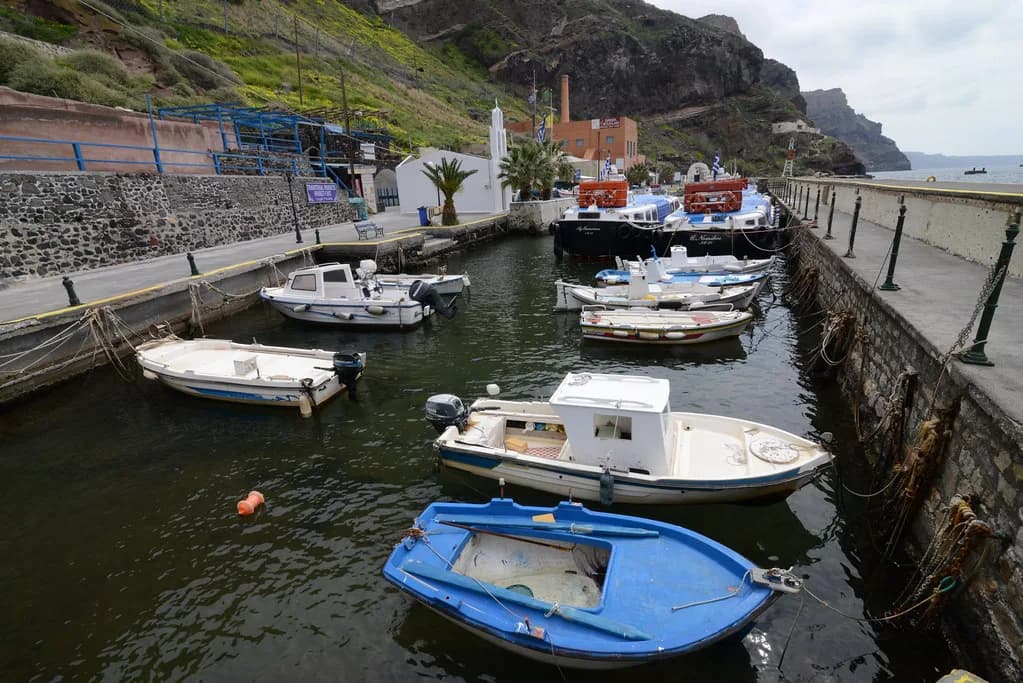
Eating at sea level is a different proposition from eating on the rim, and the two best-known harbour settings sit at opposite ends of the island. Below Oia, Ammoudi Bay holds a cluster of tavernas including Dimitris Ammoudi Taverna, where tables sit close to the water facing red cliffs and the sunset behind Thirasia; request a front-row table when you book.
Reaching Ammoudi involves a steep descent of more than 200 uneven steps, which the source describes as slippery and poorly suited to flip-flops or a heavy camera bag. A return transfer arranged by the taverna is the practical choice for the climb back up, and one reported shared shuttle cost 10 euros per person, a fee worth confirming when you book.
Dimitris serves the Santorini seafood repertoire: tomato fritters, saganaki, dakos and fresh fish, plus local Donkey Beer from Santorini Brewing Company. The trade-off is straightforward, since you are paying for the water-level setting as much as the cooking, so book it as an experience meal rather than an everyday one.
In the south, To Psaraki overlooks Vlychada Marina and has been open since 2009, with a menu of seafood meze: sea bass ceviche, tarama, grilled octopus, paprika-flavoured bonito and white aubergine baked with tomato and feta. It is described as affordable for the setting, and asking for a table overlooking the harbour when reserving is the simplest way to get the most from it.
Both harbours reward a car or a booked transfer, because neither is a short stroll from a cliff village. If you are staying in Kamari or Perissa, a southern marina dinner is easier to reach than Ammoudi, while Oia guests have the opposite calculation.
Souvlaki, Bakeries and Dessert Stops for Cheap Meals
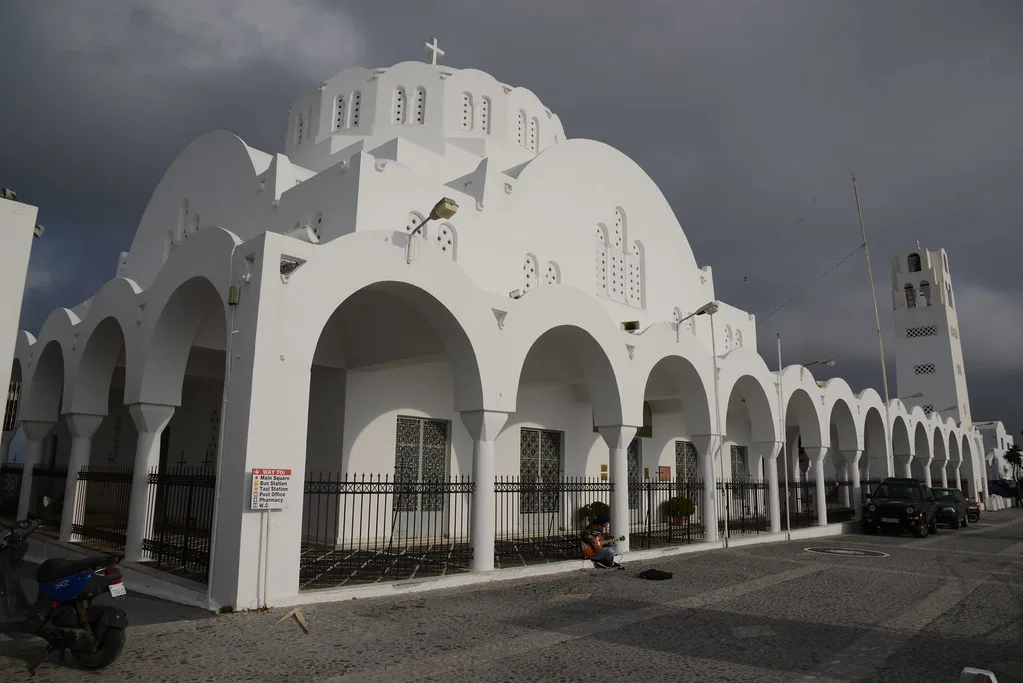
Not every meal needs a view or a reservation, and Santorini's cheap eats are concentrated in the towns where people actually live and work. Souvlaki shops such as Pitogyros and Lucky's Souvlakis are the fallback for a quick wrap of grilled meat, tomato, onion, chips and tzatziki, and they make a sensible lunch when you are moving between areas.
Bakeries such as Sborwnos and The Family Bakery cover breakfast and picnic supplies, from spanakopita, a spinach and feta filo pie, to bread for a beach day. Buying pastries early is a practical way to eat well before a ferry or a long walk, since bakery stock thins out as the morning goes on and exact hours vary by branch.
For something cold, Lolita's Gelato in Oia is noted for using fresh milk and no artificial colours, which makes it a reliable stop on a hot walk through the village. Treat these addresses as starting points rather than a fixed list, since small shops on the island open, close and change hands.
Dishes to Order and What They Are
Fava is a purée of yellow split peas served with olive oil and often capers or onion, and it appears across Santorini menus as a starter to share. Tomato fritters, called tomatokeftedes, are patties of grated tomato, herbs and flour fried until crisp, and they are the island's signature meze; order both with bread and you have the makings of a light lunch.
Dakos is a Cretan barley rusk softened with grated tomato and topped with cheese, oregano and olive oil, and it turns up on Santorini menus alongside local dishes. Saganaki is fried cheese, usually served in a small pan with a squeeze of lemon, while meze simply means small plates meant for sharing rather than a set course.
Fresh fish is priced by weight at harbour tavernas, so ask for the day's catch and the price per kilo before ordering rather than assuming a plate price. White aubergine baked with tomato and feta, tarama, a whipped fish roe dip, and grilled octopus are all common seafood-adjacent starters that let a table sample widely.
Drinks Explained: Raki, Mastiha, Assyrtiko and Local Beer
Raki is a clear grape spirit often poured as a complimentary welcome at tavernas, and mastiha is a sweet liqueur flavoured with the resin of the mastic tree grown on Chios. A mastiha cocktail mixed with lemon sorbet and mint appears at Kapari in Imerovigli, so it is worth trying in a long drink rather than neat if the spirit is new to you.
Assyrtiko is Santorini's best-known white grape, producing dry, mineral wines that pair well with seafood and tomato dishes; the island's volcanic soil is the reason the variety is associated so strongly with it. Local beer is also worth trying, with Donkey Beer from Santorini Brewing Company appearing on taverna lists around the island.
At Selene, wine by the glass is offered from selected bottles at 20% of the bottle price, which is unusual and worth clarifying with staff before you order. If you prefer a fixed drinks budget, ask for the house wine by the carafe, as many tavernas serve it that way.
View Versus Value: Three Trade-Offs Before You Book
The first trade-off is caldera rim against inland village. Rim tables in Oia and Imerovigli charge for the panorama, while Pyrgos and Exo Gonia restaurants put more of your money on the plate, at the cost of a taxi or a drive home in the dark.
The second is harbour against high street. An Ammoudi table puts you at the water but demands the steps and possibly a paid shuttle back up, whereas a town restaurant lets you walk home. The third is splurge against frequency: one memorable fine-dining dinner at Selene or Petra can cost as much as several casual meals, so decide whether your budget buys one occasion or a week of good eating.
A workable compromise is to spend on one view meal and balance it with souvlaki, bakery lunches and inland tavernas for the rest of the trip. That pattern also gives you a reason to move around the island rather than eating in the same village every night.
Booking Sunset Tables: What to Ask For
Sunset is the busiest sitting on the caldera, so request a specific table type rather than a time: front row at a harbour taverna, terrace edge at a cliff restaurant, or a window table in town. The source on Ammoudi notes that asking for a view table when reserving is the practical step, and the same applies at small terraces such as Ambrosia, where a reservation is advisable.
Arrive before the sun drops so you are seated and settled, and ask whether the kitchen serves a full menu or a shortened one at that hour. For harbour tavernas, confirm the return transfer at the same time you book, and ask where the pick-up point is.
Inland restaurants such as Metaxi Mas also fill daily, so reservations are not only a sunset matter. If you are travelling as a large group or need a specific seating, book earlier rather than relying on a walk-in.
Seasonal Opening and Off-Season Reality
Santorini's restaurant year is not uniform, and the general pattern is that many places shut for the winter and reopen in spring. One source advises calling ahead to check closing dates if you travel in the off-season, noting that some restaurants close as early as mid-October. That is a general caution rather than a calendar for any single restaurant.
Selene, for example, is described as offering a nightly à la carte menu during the tourist season and closing from mid-October until spring, so check directly before planning a trip around it. Weather also affects terrace service, as an outdoor table can be lost to rain even in shoulder season, so have a covered fallback in mind.
Practical Logistics: Steps, Transfers and Getting Between Areas
Santorini's geography makes travel times deceptive: cliff villages look close on a map but are linked by winding roads and pedestrian-only lanes. A car or a booked transfer is the realistic way to combine an inland dinner with a caldera hotel, and parking near busy villages fills quickly in high season.
Wear shoes with grip for any descent to a harbour or along a cliff path, and keep valuables light if you are navigating steps after dark. The Ammoudi path is the clearest example of why a transfer back up is worth arranging in advance rather than improvising at the end of the meal.
A Two-Day Eating Plan Around One Splurge Meal
Day one: start with bakery pastries, spend midday at a harbour taverna such as To Psaraki in the south, then keep the evening simple with souvlaki or meze in Fira. Day two: take a light lunch of fava and tomato fritters, then put the splurge dinner at Selene or a caldera terrace in the evening, when the view carries the occasion and you have time to enjoy it.
This structure keeps one big booking at the centre of the trip while leaving room for cheap, flexible meals around it, which matters when the weather or a late ferry changes your plans. Reserve the splurge and the sunset table first, then fill the other meals in by area once you know where you are staying.
Plan Your Santorini Table by Area
Decide first whether you are paying for a view, a kitchen, or a cheap and quick meal, then pick the area that delivers it: Oia and Imerovigli for caldera terraces, Fira and Firostefani for central convenience, Pyrgos and Exo Gonia for food-led dinners, and the harbours for a sea-level occasion. Book the sunset table and any difficult transfer before you leave home, and leave the rest of the trip loose enough to follow your appetite.
One final check on seasonal opening is worth building into your planning, since many restaurants close for winter and dates vary by business. Confirm directly with the restaurant before you commit a special evening to it.
Explore more Santorini sauna guides
Frequently Asked Questions
Where can I eat cheaply in Santorini?
Souvlaki shops such as Pitogyros and Lucky's Souvlakis, bakeries such as Sborwnos and The Family Bakery, and inland tavernas in villages like Exo Gonia are the most practical lower-cost options. Order fava, tomato fritters or dakos as shared starters to keep a taverna meal simpler; menus on site show current prices.
Do Santorini restaurants close in winter?
Many do, and the general pattern is a shutdown through the coldest months with a spring reopening. Some restaurants close as early as mid-October, and Selene in Pyrgos is described as closing from mid-October until spring. Dates vary by business, so contact the restaurant directly before planning a trip around it.
Which Santorini restaurants have caldera views?
On the caldera side, Ambrosia and Apisithia in Oia, Petra at Canaves Oia Suites, Kapari Wine Restaurant in Imerovigli, Rastoni and Volkan on the Rocks in and near Fira all have sea or caldera outlooks. Below Oia, the Ammoudi Bay tavernas including Dimitris look out at red cliffs and the sunset behind Thirasia.
When should I book a sunset table in Santorini?
Book as early as your plans allow, and ask for a specific table position: front row at a harbour taverna, terrace edge at a cliff restaurant, or a window table in town. Small terraces such as Ambrosia are described as needing a reservation, and inland places like Metaxi Mas fill daily, so do not rely on a walk-in at sunset.
Is there a Michelin-starred restaurant in Santorini?
Selene in Pyrgos is described as an award-winning restaurant whose bill sits in European fine-dining territory, but no Michelin star is confirmed for it or any other Santorini restaurant in the sources here. Check the Michelin Guide directly if that status matters to your booking.
Sources
Notes for eating well in Greece
Optional updates to our guides.
You might also like
Continue reading
More guides you'll find useful