Santorini Sunset Guide: Where to Watch and When to Arrive
Santorini sunset times shift by roughly an hour at the October clock change. Plan where to watch in Oia, Fira, Imerovigli and Akrotiri, and when to arrive.
On this page
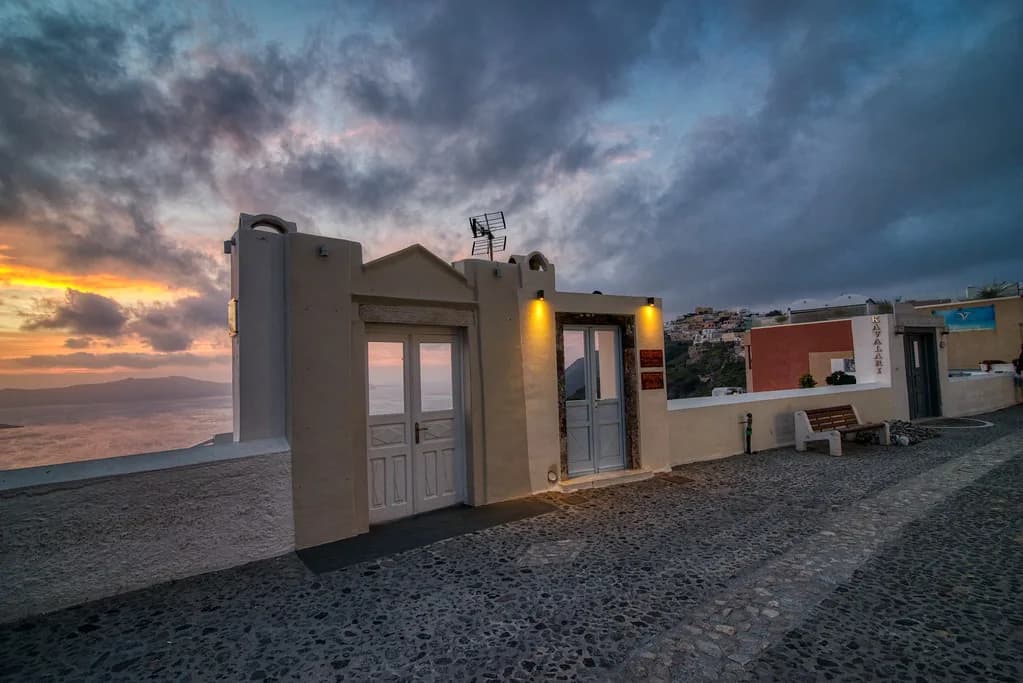
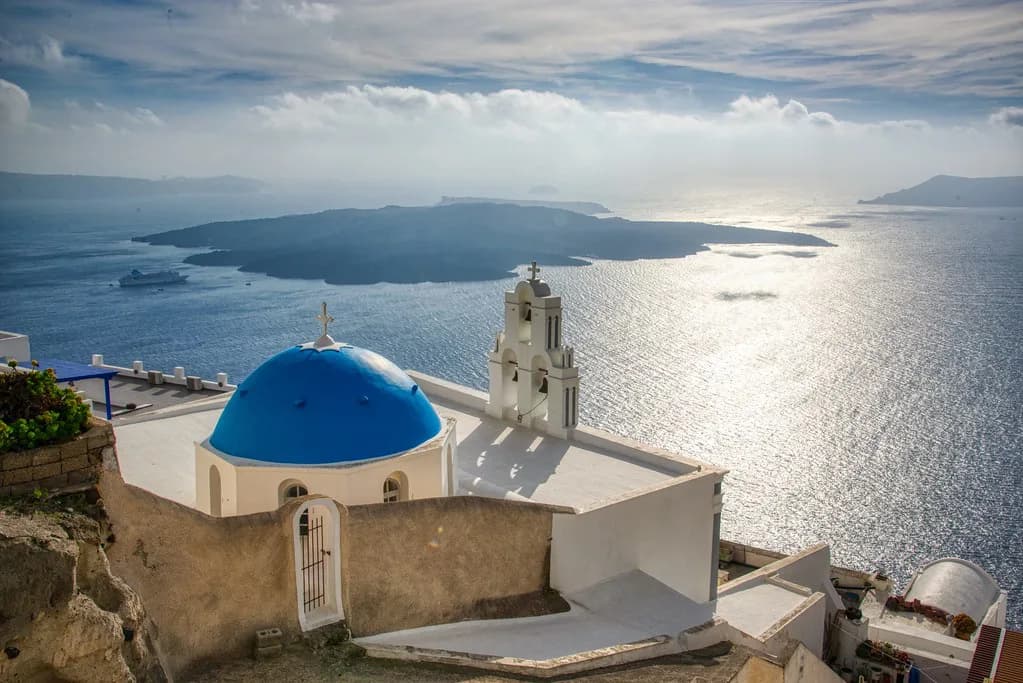
Santorini's sunset is famous for a simple geographic reason: the caldera rim faces west, so villages such as Oia and Fira look straight across the water at the sinking sun. The show also has a schedule that rewards planning, because the light before and after the sun touches the horizon lasts far longer than the sunset moment itself. This guide covers where to stand or sit, how early to arrive, and how the clock change and season reshape the whole evening.
Treat it as a timing decision first and a location decision second. Arrival lead times differ sharply between a busy castle viewpoint and a hotel rooftop, and a table booked on the wrong side of the October clock change can mean arriving after the colour has gone. Verify exact times for your date on the Santorini sunrise and sunset tables the morning of, since sunset moves by a minute or two each day.
Why the Santorini Sunset Draws Crowds, and What the Caldera View Adds
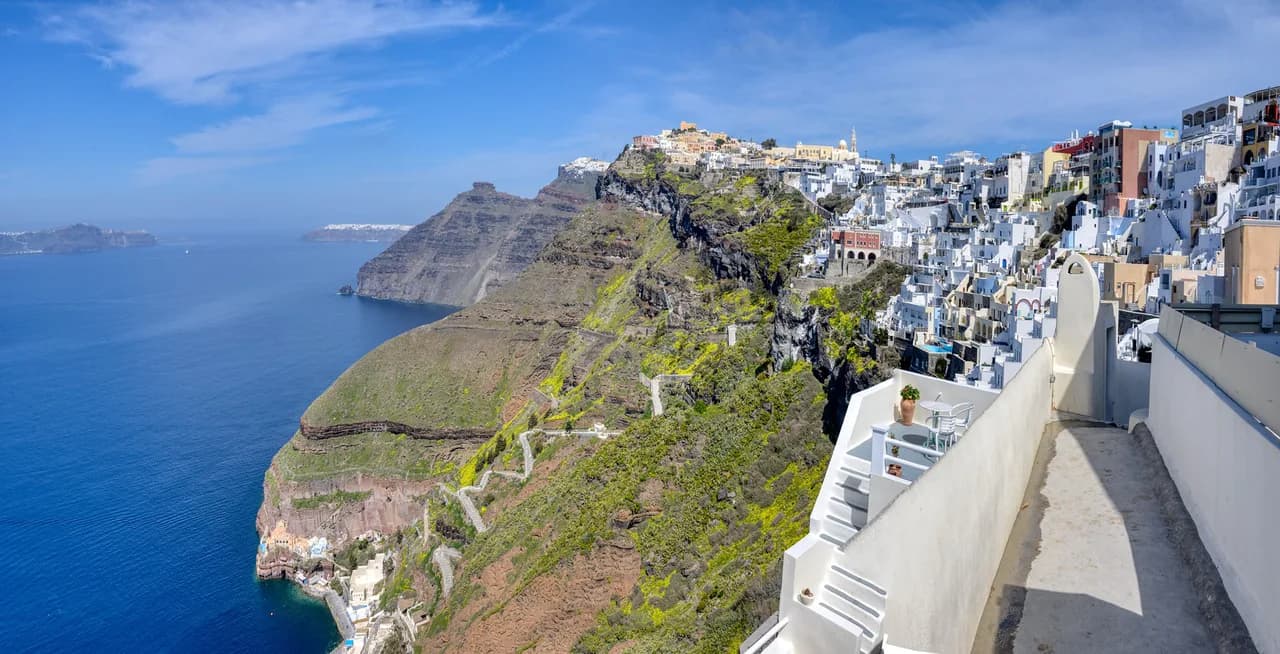
The appeal is not the sun alone but the geometry around it. The caldera is a drowned volcanic basin, and the villages on its western rim sit on cliffs that face the open horizon, so the sun drops behind water rather than behind hills. That is why crowds gather along Oia's cliff paths and rooftops rather than scattering evenly across the island.
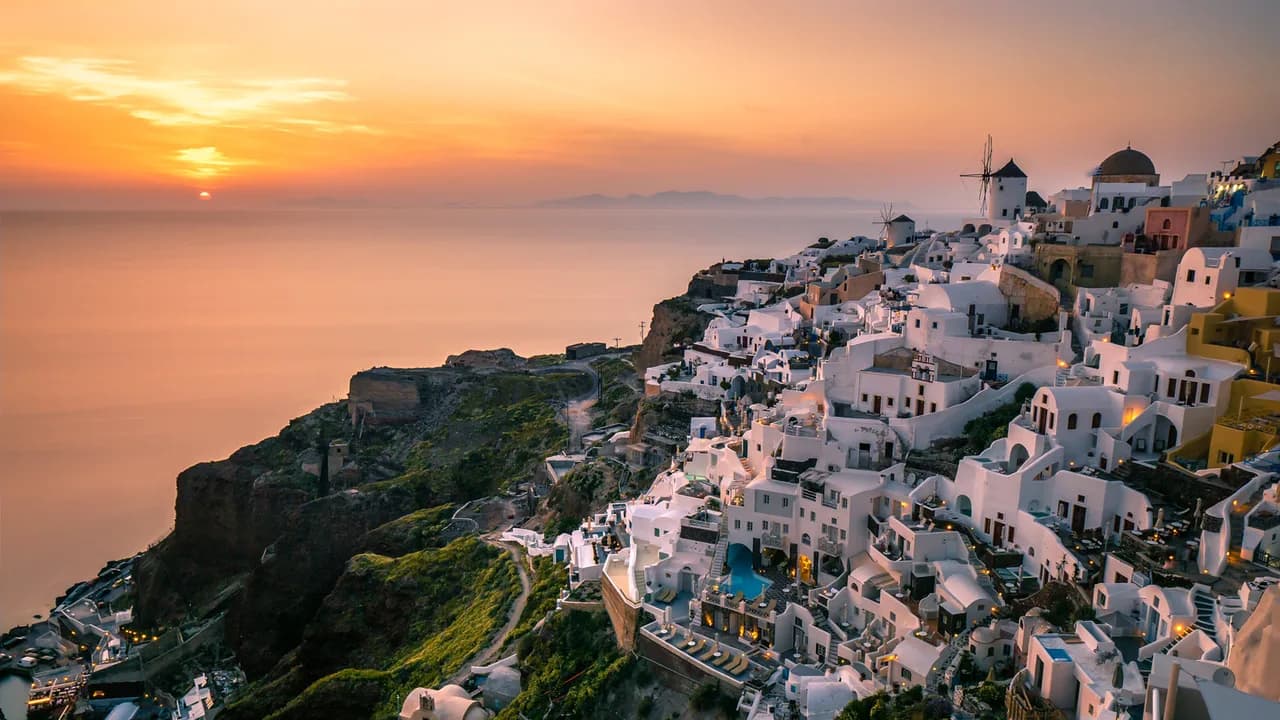
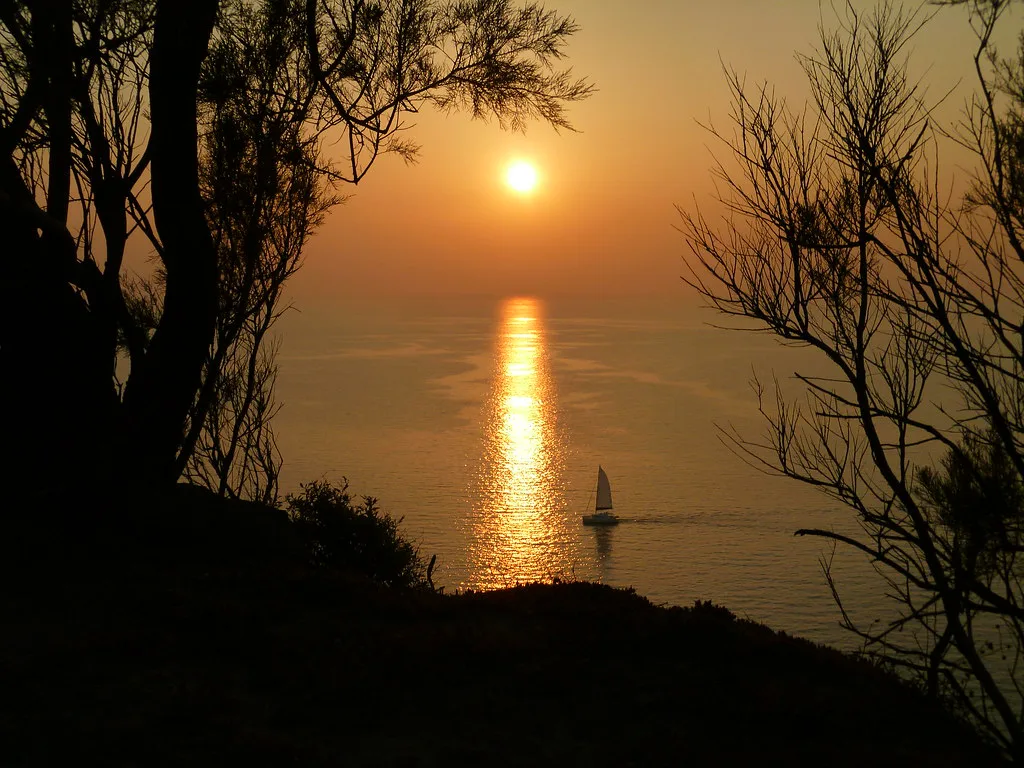
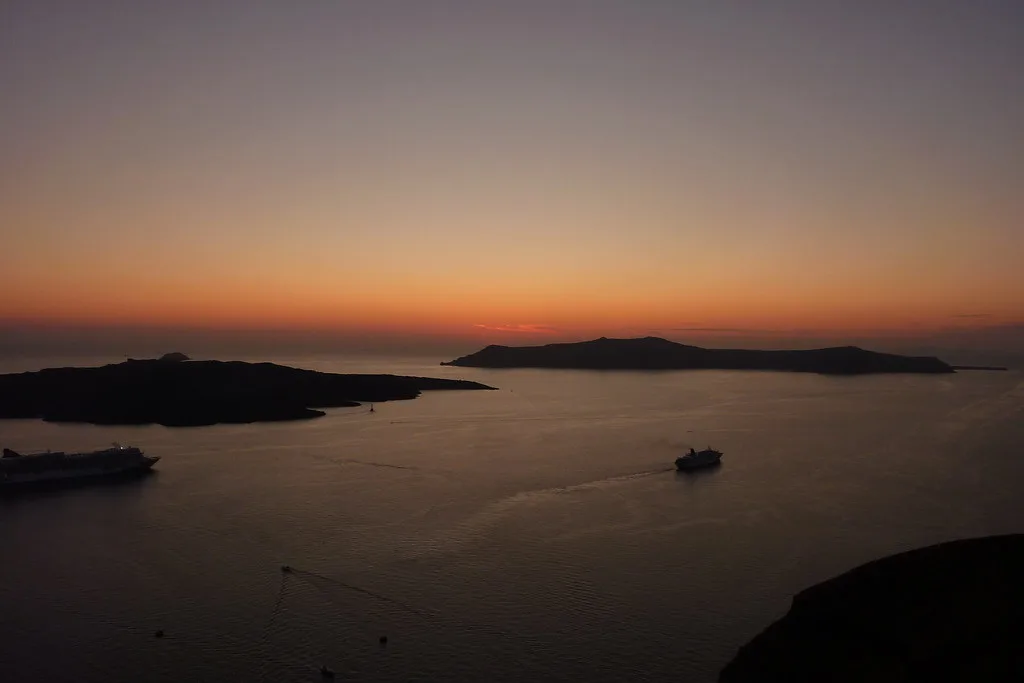
The colour people come for runs well beyond the moment of sunset. In Santorini the gold-to-rose shift on the caldera walls develops over roughly half an hour before the sun reaches the horizon, with another fifteen to twenty minutes of colour afterwards, which is why an early departure misses the best of it. Photographers often rate the afterglow above the sunset itself, so the practical advice is to stay put once the sun disappears rather than joining the exit rush.
Crowds concentrate at the most photographed spots, and cruise-ship days make Oia noticeably busier at dusk. If a quieter evening matters more than the classic postcard framing, shoulder-season months and inland viewpoints both relieve the pressure without giving up the light. The trade-off is real: the caldera rim gives the view, while elevation inland gives space and easier access.
How the Sunset Is Timed: Golden Hour, Sunset Proper, Afterglow and Blue Hour
Published sunset time means the moment the upper edge of the sun touches the horizon, and it lasts only about four minutes. Around it sits a longer sequence: late golden hour from roughly 60 to 30 minutes before, a deepening sky in the final half hour, then afterglow with pinks and magentas for 5 to 25 minutes afterwards. Blue hour follows, roughly 20 to 45 minutes after sunset, when village lights come on against a deep blue sky.
For planning, the golden hour starts about an hour before the listed time, which is when terraces fill and the light becomes flattering. Build the evening backwards from there: if you want to be seated as the sky turns, be at your table before the golden hour rather than at the nominal sunset minute. Many Oia restaurants work to the rule of seating guests about 45 minutes before sunset so they are settled with a drink as the colour begins.
Exact times vary by date, so use a daily calculator rather than a monthly average when the margin matters. The tables for Santorini give the current figure for any date, and checking on the morning of your evening takes a minute. Set your arrival and booking times from that figure rather than from a rounded figure remembered from a guide.
Sunset Times by Month on Santorini, and What the Numbers Mean for Dinner Plans
Santorini's sunset ranges from about 17:05 in early December to about 20:41 in late June, a spread of more than three and a half hours across the year. Peak summer evenings in June and July sit between roughly 20:26 and 20:41, while November through January brings the earliest light, between about 17:05 and 17:45. Those figures are the framework for deciding whether dinner comes before or after the light.
Spring and autumn sit in the middle and shift quickly. May runs from about 20:07 to 20:31, September from about 19:48 down to 19:05, and October from 19:03 on the first to 18:32 on 24 October before the clocks change. Because the shift is gradual, a trip at the start and end of a month can feel like two different evenings. Compare these ranges with your own dates before you fix a reservation time.
The practical consequence is that a late-summer dinner naturally starts around 21:00, while a November dinner that begins at 19:00 is already well after dark. Winter visitors can be at the caldera around 16:30, watch the show, and sit down to eat soon after the light has gone. Plan the meal around the light rather than the other way round, and the evening needs no rushing.
The October Clock Change: Why Sunset Jumps About an Hour Earlier on 25 October 2026
Greece leaves summer time on the last Sunday of October, which falls on 25 October in 2026. Sunset drops from roughly 18:32 on 24 October to about 17:31 the following day, an overnight jump of about an hour that catches travellers who booked on the old clock. If your trip spans that weekend, move any sunset booking in the final week an hour earlier than you first planned.
The same pattern reverses in spring, when daylight saving begins on the last Sunday of March and sunset suddenly appears an hour later. Neither change affects the weather, only the clock, so the light you experience depends entirely on which side of the change date you are on. Confirm the current change dates and the daily time for your stay before locking in a dinner reservation.
This is one of the few planning errors that is easy to prevent and annoying to discover on the night. Put the clock-change date in your itinerary before you book anything timed, and mention it when reserving: a restaurant seating guests for sunset will understand the request. The rule applies to ferries and tours as well, so treat the whole evening, not just the table, as an hour earlier.
Oia: The Classic Caldera View, the Castle, and How Far Ahead to Arrive
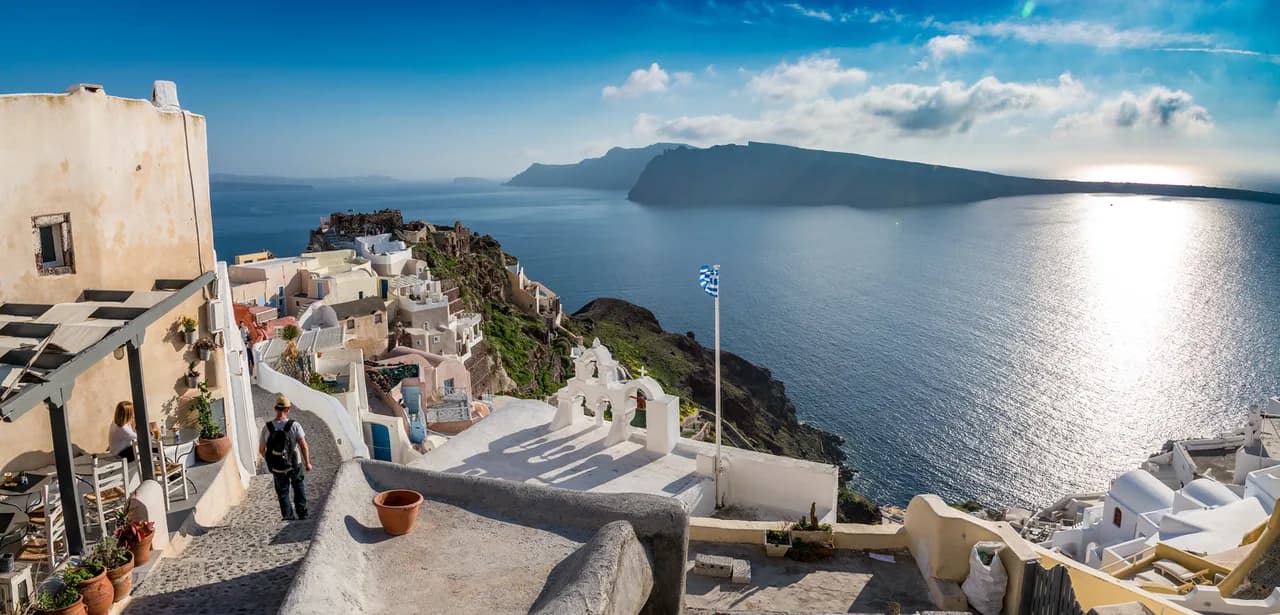
Oia is the village most associated with the Santorini sunset, and its cliffside paths, rooftops and terraces all face the caldera. The castle ruins are the most contested viewpoint, with crowds building to shoulder-to-shoulder levels well before the light peaks in summer. Because Oia looks more directly west than other villages, the sun drops behind the headland in the most photogenic way.
Arrival lead times in Oia are longer than anywhere else on the island. Visiting guides suggest leaving Fira by around 17:45 in June and July for the castle, and allowing 60 to 90 minutes of lead time at caldera spots in peak season for a good position. For a calmer version of the same village, out-of-season visits and a rooftop or terrace seat shift the experience from standing in a crowd to sitting through the light. Watching the Sunset in Oia, Santorini covers the village's viewpoints and paths in more detail.
Sunset time itself is identical across the island: Oia and Fira are only about 11 kilometres apart on the same rim, so the sun sets within seconds of the same moment in both. What differs is the angle and the crowd, not the clock. If you are weighing villages, Oia trades convenience for the classic composition.
Fira: The Easiest Sunset Base, with Rooftop and Terrace Options
Fira, the island's main town, sits on the same caldera rim and offers the same sunset time with far less trekking. A rooftop in town is a five-minute walk from most central accommodation, which makes it the lowest-effort option for anyone staying in the capital. That convenience matters on a short trip or a late arrival day.
The trade-off is that Fira's view looks along the caldera rather than straight down it, and the town's rooftops vary in how much of the horizon they actually show. Ask specifically whether a terrace faces west and what stands between it and the water before booking. Some hotels keep a shared rooftop open all day with drinks at sunset, which lets you watch the light and still make a 21:00 dinner reservation in summer.
Fira also functions as the transport base for the rest of the island, so an evening there avoids a late drive back from Oia. For a wider look at what else the island offers beyond the dusk hour, Santorini Attractions covers the sights that pair with an evening on the rim.
Imerovigli and Skaros Rock: The Caldera Path Walk and Its Trade-offs
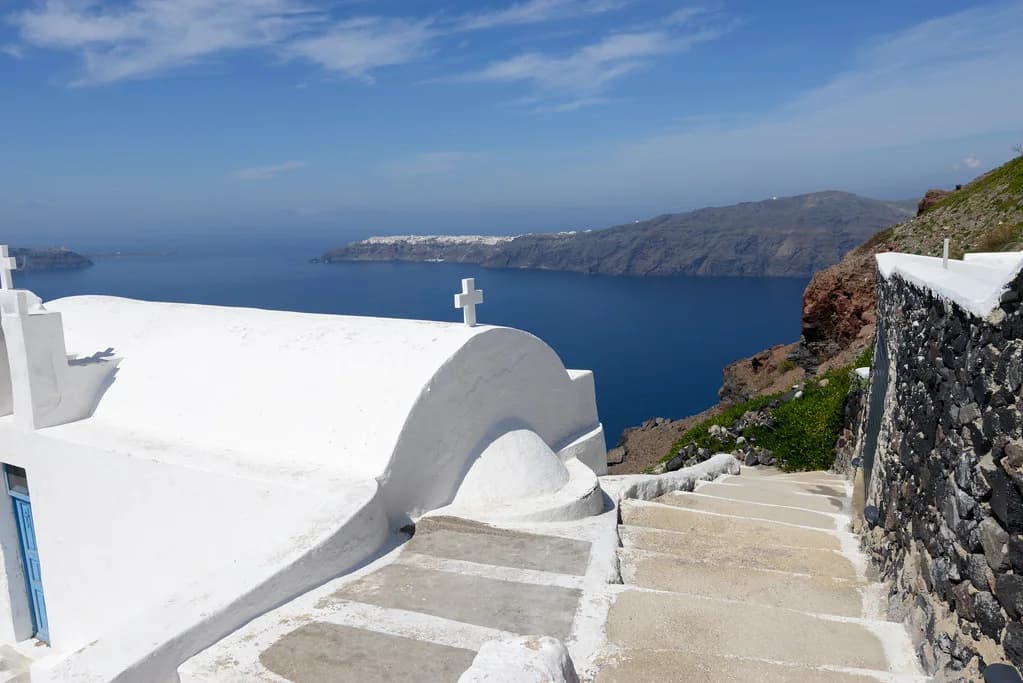
Imerovigli sits on the highest part of the caldera rim between Fira and Oia, and Skaros Rock juts out below it on a promontory with open water on three sides. The caldera path connects Fira to Imerovigli on foot, a walk of roughly twenty minutes from the capital, which makes this the best option for combining exercise with the view. In peak summer, leaving Fira around 19:00 puts you in position comfortably.
The trade-off is effort against crowd. Skaros involves a descent and climb on rough paths, and the reward is a quieter foreground with the caldera behind you. Imerovigli's terraces and viewpoints fill more slowly than Oia's castle, so the same sunset arrives with fewer elbows. Check footing and bring a layer, because the wind picks up in the last half hour before the sun drops.
Pyrgos Castle: Inland Elevation Versus the Caldera Rim
Pyrgos is an inland village climbing a hill, crowned by a castle ruin, and it offers elevation rather than a caldera-edge position. The view looks over the island and out to sea rather than straight down the cliff, which is a different photograph from the classic Oia frame. In return, the crowds are lighter and the approach is simpler: a drive or bus of about twenty minutes from Fira, then a climb on foot.
Lead time here is much shorter than on the rim. Around 30 minutes is enough at Pyrgos, compared with 60 to 90 for Oia in summer, and leaving Fira by about 18:30 in peak season allows for the drive and the hill. The trade-off is that you lose the caldera's reflection of light on the cliffs, so choose Pyrgos for space and a wider island view rather than for the postcard.
Akrotiri Lighthouse: The Southern Tip, Parking Pressure, and Drive Times from Fira
The lighthouse at Akrotiri occupies the southern tip of the island, with an open western horizon and nothing between you and the sea. It is roughly a 30-minute drive from Fira, and parking is tight, so arriving early is about securing a space as much as a view. In peak summer, leaving Fira around 19:00 is a sensible target.
The reward is a clean horizon and a sense of space that the villages cannot match, but the site lacks the amenities of a town. Bring a layer and expect to stand rather than sit, because there are no terraces here. The southern location also means a longer return drive after dark, which matters if you plan dinner back in Fira.
Nearby spots reward a longer southern afternoon. The archaeological site at Akrotiri and the west-facing cliffs at Vlychada Beach both sit within a short drive, and Vlychada's cliffs glow in the late light. Pairing the two makes the trip south worthwhile rather than a single errand.
Watching from Low Ground: Ammoudi Bay and West-Facing Beaches
Ammoudi Bay sits directly below Oia and is reached on foot by descending about 278 steps from the village. The perspective is unusual: you look up at the caldera walls and across the water rather than down from the rim, and the sunset arrives at eye level. Leaving Fira around 19:15 in peak summer accounts for the journey and the descent.
The catch is the climb back up after dark, which is steep and unlit in places, so a torch and comfortable shoes matter. Some travellers take a taxi back to the top instead. Ammoudi Bay is covered alongside other coastal viewpoints in the santorini photo spots guide, which maps the locations that reward a camera.
West-facing beaches offer a similar low-angle alternative with more room to spread out. Vlychada, with its sculpted cliffs, is the strongest option for an evening, while the south coast's quieter stretches suit anyone staying near Akrotiri. Check access roads and lighting before committing, since beach car parks are not always lit after dusk.
Sunset Cruises and When a Captain Chooses the Spot for You
A caldera cruise removes the question of crowds entirely, because the captain picks the position and you watch from the water. The trade-off is control: you cannot move to a better angle, and the timing follows the sailing schedule rather than your own. Boarding times and routes vary by company and season, so confirm the itinerary and the expected sunset window directly with the cruise company when you reserve.
Cruises also solve the walk-back problem at low-ground viewpoints, since the boat returns you to a port rather than leaving you at the base of a cliff. They suit travellers who would rather not navigate cliff paths after dark, and they are often the easiest way to see the caldera walls lit from the water. Check what is included and whether the departure aligns with the sunset time for your date, since the clock change shifts everything by an hour.
Booking a Sunset Table: How Far Ahead, and How to Time the Reservation
In peak season, terraces with caldera views fill weeks in advance, so reserve as early as your plans allow rather than on arrival. The key decision is seating time, not just the restaurant: aim to be seated about 45 minutes before sunset so the golden hour happens at your table. Too early and you finish before the colour arrives; too late and you miss it.
When you book, describe what you want in practical terms. Ask whether the table faces west and what lies between it and the horizon, because not every terrace in Oia or Fira looks out over open water. For a calmer version, choose April, May, September or October, when the same light comes with fewer diners and easier reservations.
Food and wine fit the timing rather than driving it. A glass of Assyrtiko, Santorini's dry white grape, is the local pour to look for while the sky changes, and a multi-course menu paced across the hour before sunset works well. Confirm the seating policy and any time limit on the table when you reserve, since a tight slot can undercut the plan.
Choosing Your Trade-off: View Versus Value, Caldera Edge Versus Back Street
The caldera edge commands the premium because the view is the product, and a back-street table in the same village usually costs less for the same food. That is the core trade-off on Santorini: pay for the horizon, or eat well one street inland and walk to a free viewpoint afterwards. Neither choice is wrong, but mixing them up leads to disappointment.
A workable compromise is to split the evening: book a modest table away from the rim, then move to a public viewpoint for the light. Fira's rooftops, the caldera path and Imerovigli's open spots all allow this without a reservation. Restaurants publish their own menus and seating policies, and prices vary by season and venue, so check the current menu directly rather than relying on secondhand figures.
Reservation policies, deposits and cancellation terms differ by venue and are not uniform across the island. Confirm the terms when booking and ask what happens if the weather turns, since a cloudy horizon can flatten the colour entirely. Judging the sky, not just the clock, is part of the decision.
What to Wear and Bring for an Evening on the Caldera Rim
Even in August, the wind picks up in the last half hour before sunset, and caldera-edge spots cool quickly once the sun drops. Bring a light layer regardless of the daytime temperature, and wear shoes that handle uneven steps if you are heading to Skaros, Ammoudi or the castle ruins. Cliff paths are not adapted for smooth soles.
A torch or phone light helps on descents and unlit car parks after blue hour, especially at Ammoudi and the lighthouse. If you are photographing, remember the best colour often comes 15 to 25 minutes after the sun disappears, so plan to stay rather than leave with the crowd. A small amount of patience is the main equipment requirement.
Winter Sunsets: Earlier Light, Closed Caldera-Edge Restaurants, Fewer Ferries
Winter brings the earliest sunsets of the year, and a very different island. The general pattern is that many caldera-edge restaurants close for the season, so the sunset-table plan that works in summer may have no equivalent in January, and some hotels shut too. Build the evening around what is actually open rather than presuming summer options will still be running.
Ferries also run less often in winter, which affects island-hopping plans built around a Santorini stop. The upside is space: viewpoints that are packed in July are quiet, and cloud cover can add colour to the sky. Check opening dates for specific businesses and ferry schedules with the ferry companies before booking a winter trip, since both vary year to year.
Plan Your Visit
The Santorini sunset rewards a plan built around light rather than a single reservation. Pick your viewpoint by the trade-off you want, set your arrival time from the lead times above, and check the exact sunset for your date the morning of. If your trip crosses 25 October, move the whole evening an hour earlier and confirm the booking on the new clock.
For the wider island context, from archaeological sites to beaches, Santorini Attractions: 7 Visitor Guides links the sights that fit around an evening on the rim. Elsewhere in Greece, the same planning logic applies to the Mykonos Sunset Spots and Where to Watch the Sunset in Chania, where harbour views and old-town rooftops replace the caldera. Check current opening details for any venue you plan around, since seasonal closures and hours change.
Explore more Santorini sauna guides
Frequently Asked Questions
What time is sunset in Santorini in October?
Sunset runs from about 19:03 on 1 October to about 18:32 on 24 October, then drops to roughly 17:31 on 25 October when the clocks go back. The exact minute shifts daily, so check a daily sun calculator for your date and confirm the current daylight-saving change date before booking a table.
How early should I arrive for sunset in Oia?
In June and July, allow 60 to 90 minutes of lead time at caldera spots and leave Fira by around 17:45 for the castle. In shoulder season, less is needed. The golden hour starts about an hour before the listed sunset time, so aim to be settled before then.
Is sunset better in Oia or Fira?
The sunset time is identical in both villages, within seconds, because they sit on the same caldera rim about 11 kilometres apart. Oia looks more directly west and draws the crowds; Fira is easier to reach and has rooftop options. Choose Oia for the classic composition and Fira for convenience.
Can you watch the sunset in Santorini in winter?
Yes, and it comes early, before dark, from November to January. The catch is that many caldera-edge restaurants close for the season and ferries run less often, so check which businesses and routes are operating before building an evening around a specific table.
Where can I watch the sunset without a restaurant reservation?
Public viewpoints work well: the castle ruins in Oia, rooftops and lanes in Fira, the caldera path to Imerovigli and Skaros Rock, Pyrgos Castle, and the lighthouse at Akrotiri. Each has different arrival lead times, from about 30 minutes at Pyrgos to 60 to 90 minutes at Oia in summer.
What time should I book a sunset dinner?
Aim to be seated about 45 minutes before sunset so the golden hour happens at your table. In peak season, terraces with caldera views fill weeks in advance, so reserve early and ask whether the table actually faces west before confirming.
Sources
Notes for eating well in Greece
Optional updates to our guides.
You might also like
Continue reading
More guides you'll find useful