
Pyrgos Santorini: A Practical Guide to Pyrgos Kallistis

Pyrgos Kallistis sits in the middle of Santorini, on the hillside below the Profitis Ilias monastery, and it is the island's highest village. Unlike Fira and Oia, it has no caldera edge and no caldera views; what it offers instead is a compact traditional settlement built around a hilltop castle, quieter lanes, and panoramas that take in much of the island rather than one slice of the lagoon. For travelers basing themselves in the caldera villages, Pyrgos works best as a half-day detour or an evening destination.
This guide stays with the village itself: where it is, how the bus and taxi approach work, how the climb through the castle quarter unfolds, and where to eat, drink or taste wine at either end of the hill. It also flags what Pyrgos does not have, so you can plan around it rather than be surprised. Volatile details such as bus fares, tasting prices and opening hours are changing facts, so check them with operators shortly before you go.
What and Where Pyrgos Kallistis Is
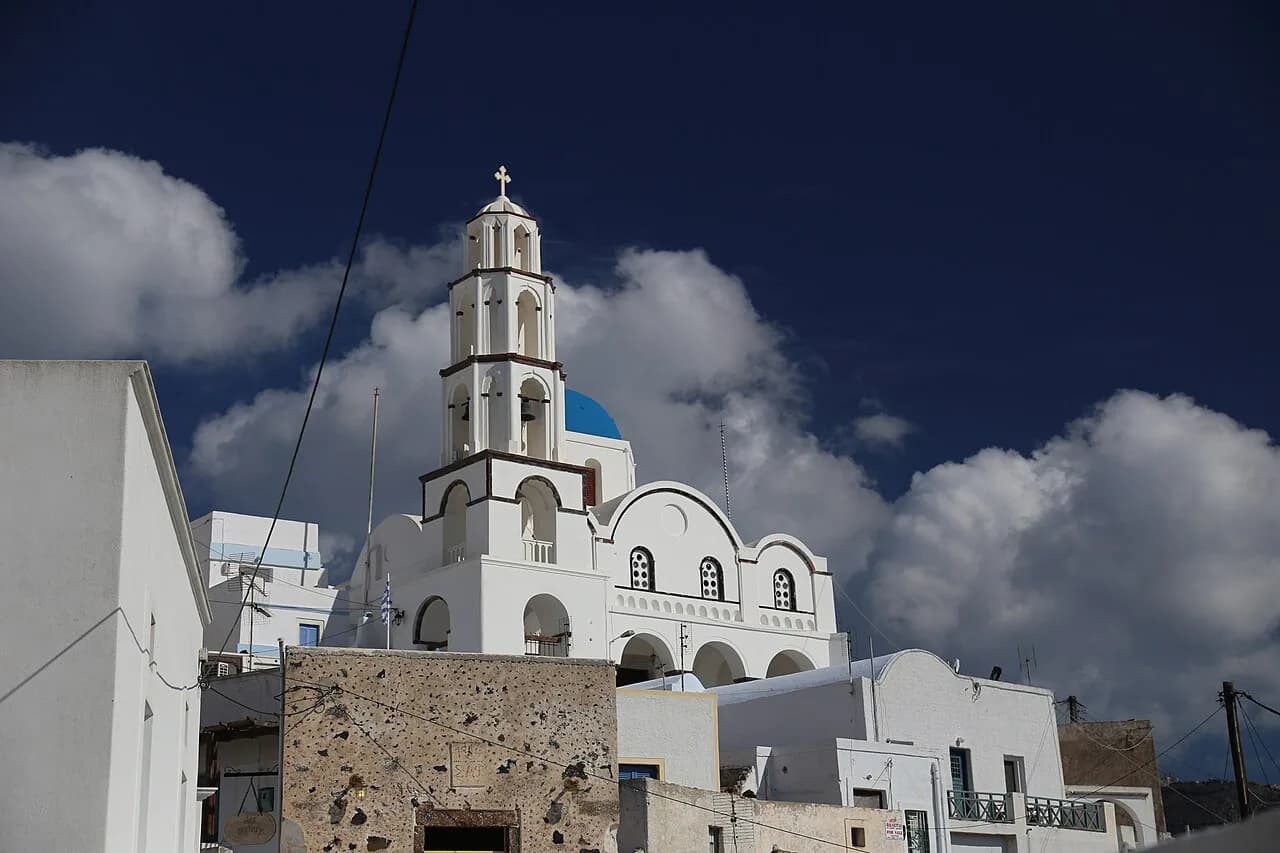
Pyrgos Kallistis, often shortened to Pyrgos, lies in central Santorini at the foot of Profitis Ilias, the island's highest point. The village is built in a spiral around a hill crowned by the Kasteli, a Venetian-era castle quarter, and it is consistently described as the tallest village on Santorini. That elevation is the whole point of a visit: from the upper lanes you look across the island in several directions rather than out over the caldera.
The castle quarter itself is the landmark that defines the place, with the village climbing the slope below it rather than spreading along a shore. Santorini's historic sites tend to sit on high, defensible ground, and Pyrgos follows that pattern closely enough that the hill is the address. If you are comparing where to base yourself, the island's area guides help you weigh a hill village against a coastal one, and the Santorini Neighborhoods guide breaks down how each area differs.
Because it sits inland, Pyrgos is not a beach base and has no waterfront of its own. Travelers who want sea access usually look toward Perissa or Kamari on the east coast, both a short drive or bus ride away, while Pyrgos appeals to those who prefer a traditional village setting and easier access to the island's wineries.
Why Go: Fewer Crowds and a Maze of Lanes
The main trade-off is simple: Pyrgos gives up the caldera view in exchange for calm. Fira and Oia concentrate the cruise crowds, the sunset traffic and the caldera-edge hotels, while Pyrgos keeps a working-village feel, with whitewashed houses, blue-domed churches and alleys that twist for a reason. The layout was designed to break the strong winter winds and to confuse intruders, which explains why the streets feel like a maze and why following one path rather than cutting across is the easiest way to orient yourself.
Architecturally, the village holds its own against the famous caldera towns, and the absence of a view corridor means the alleys themselves become the attraction. Allow time simply to wander; the reward is quiet corners and church facades that in Oia would be shoulder-to-shoulder with photographers.
Getting There from Fira: Bus, Taxi or Your Own Wheels
The local KTEL bus from Fira is the simplest approach, taking roughly fifteen minutes and dropping passengers at the bottom of the hill near the village centre and main square. That stop is where the climb begins, so plan footwear and time accordingly. Schedules change with the season, so confirm departure times at the Fira bus station or with KTEL Santorini on the day rather than relying on an old timetable.
By taxi or rented car you reach the same lower edge of the village, but private vehicles cannot enter the traditional core, so you park and continue on foot. The walk from the bus stop to the top is a genuine climb through stepped lanes, not a flat stroll, and it is the single most important thing to know before you set out. Travelers with limited mobility or heavy bags should treat the upper village as a destination reached slowly or skip the summit.
Walking the Village: The Kasteli Castle Quarter
The heart of the visit is the Kasteli, the castle quarter at the top of the hill, whose ruins and surrounding lanes form the most atmospheric part of Pyrgos. There is no formal ticketed route through it; you walk up through the settlement, pass churches and courtyards, and reach the summit area where the old fortifications and viewpoints sit. Budget at least an hour for the climb plus wandering, and longer if you stop for photographs or a drink at the top.
Many visitors combine Pyrgos with a look at the island's other heights. The archaeological site at Akrotiri covers a town buried by volcanic ash, and Ancient Thera spreads across the ridge of Mesa Vouno above Kamari. Either makes a telling contrast with a medieval fortress village where the defences, not the houses, came first.
The Top of the Hill: Holy Mary Church and the Viewpoint
At the highest level of the village stands the Holy Mary Church of Pyrgos, close to the summit cafe. Its door is often open so visitors can step inside and see the Orthodox paintings, and its patio is laid with pebbles brought from the island's beaches. Treat it as a working church: keep voices low, cover shoulders, and step back out if a service is under way.
Immediately beside the church, Franco's Cafe occupies one of the highest practical perches in the village, with classical music playing and a sweeping outlook. It is a cafe rather than a restaurant, which makes it a low-commitment stop for a coffee or a drink while you take in the view. In July, August and September it can fill up, so arriving well before sunset is the safer plan if a table with a view matters to you.
The summit viewpoints are the reason many people make the climb, and they work at any hour rather than only at dusk. Mid-morning light is clearer for photographs across the island, while late afternoon brings the softer tones. Either way, the return descent through the lanes takes longer than you expect, so keep a little daylight in hand.
Sunset at Pyrgos: Castle Ruins Versus Cafe Tables
Pyrgos offers a quieter alternative to the Oia sunset scrum, with the castle ruins and the hilltop cafes as the two main vantage points. The ruins give you open sky and space to move; a cafe table gives you a seat and a drink but ties you to one spot and possibly a minimum spend. Decide which matters more before you climb, because switching between them at the last minute is difficult once the upper lanes fill.
Booking advice is straightforward: for the hilltop cafes, arrive early rather than expect a reservation, particularly in the peak summer months when the village receives its heaviest visitor numbers. For a sit-down dinner with a view, contact the venue directly ahead of time and ask specifically for a sunset seating. Venues change their reservation policies, so confirm by phone or through the restaurant's own booking channel.
Coffee, Meze and Ouzo at Kantouni
At the bottom of the traditional village, Kantouni occupies one of the island's oldest kafeneio buildings, now run as a cafe and restaurant. A kafeneio is the traditional Greek coffee house, historically the village's social centre, and the format survives here with shaded outdoor tables under large trees. It is the natural first or last stop of a Pyrgos visit, and a good place to sit out the hottest part of the afternoon.
Order the way the format intended: a Greek coffee or a cold beer, and a few plates of meze, the small savoury dishes meant for sharing, with ouzo, the anise-flavoured spirit usually diluted with water. This is the value end of eating in Pyrgos, a counterweight to the view-driven venues higher up the hill. Menus and hours change with the season, so check the current offering before making it the centrepiece of a meal.
Wineries Around Pyrgos: Santo and Hadjidakis
Pyrgos sits in the middle of Santorini's wine country, and Santo Winery, just outside the village, is the headline option: it overlooks the caldera and the volcano and offers tasting flights of six or twelve wines accompanied by Greek nibbles. That view is precisely what the village itself lacks, which makes Santo a logical pairing with a Pyrgos walk. It gets busy in June through September, so book a tasting session in advance rather than turning up at peak time.
The trade-off is distance and focus. Hadjidakis Winery is roughly a twenty-minute walk from the Pyrgos bus stop, with no caldera panorama but a serious reputation for its wines, making it the better choice if the wine itself matters more than the view. Guided tasting tours that link several wineries are the practical answer for anyone who wants to drink without driving afterward, since the local bus does not serve the winery gates directly.
Eating with a View: Pyrgos Restaurant
Pyrgos Restaurant sits at the entrance to the village, with a large parking area outside and a broad outlook that takes in Oia and parts of the caldera lagoon. It is a full restaurant rather than a cafe, known locally as a wedding venue as much as a dining room, and it suits travelers who want a proper Greek meal with a panorama without climbing to the summit.
Because the setting is the draw, ask about seating and timing when you book, and expect the sunset hours to be the most requested. Menus and prices are set by the restaurant and change, so check them directly rather than relying on older reviews. If value matters more than the view, the village-bottom kafeneio is the more economical choice for a casual meal.
Cocktails at Capri
Capri, on the Profitis Ilias road, pairs signature cocktails with an elevated outlook, giving Pyrgos an evening option beyond the taverna table. It is a bar-restaurant rather than a cafe, so it works for a pre-dinner drink or a full evening, and its position makes it a comfortable alternative to fighting for space in Oia at sunset.
For a sunset table, contact the venue in advance through its own booking channel and ask for the earliest seating that catches the light; walk-ins should arrive well ahead of the hour rather than at it. Drinks prices and any minimum spend are set by the bar and change, so confirm them when you book. This is the view-over-value end of the Pyrgos evening, and worth it mainly if the panorama is the reason you came.
What Pyrgos Does Not Have
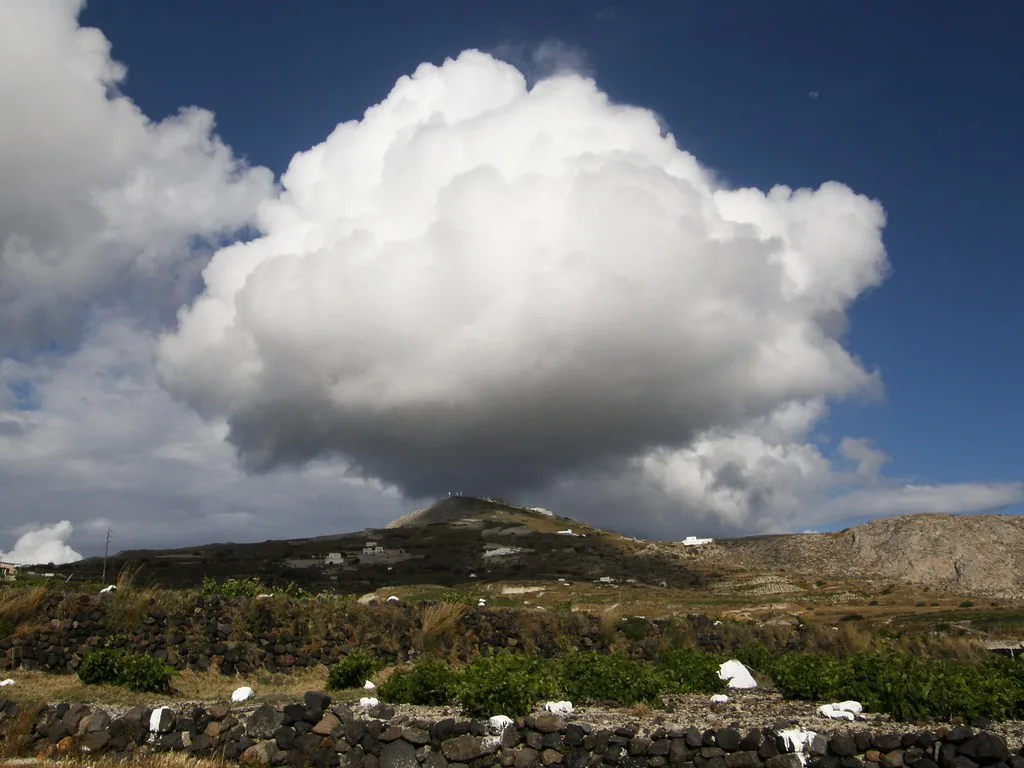
There is no beach in Pyrgos. The village is inland and elevated, and anyone wanting sand and sea needs to travel to the black-sand beaches at Perissa or Kamari on the east coast, reachable by a short drive or bus ride. Plan beach time as a separate half-day rather than something you fold into a village visit.
Nor does Pyrgos offer the caldera-edge sunset that defines Oia and Imerovigli. Its sunsets are broad and island-wide rather than framed by the lagoon, and travelers who specifically want the classic caldera shot should look at the caldera villages instead. If a fortress-to-fortress comparison helps you decide, the castle at Oia is the other obvious candidate.
Travelers weighing a different cliff walk can also look at Skaros Rock, the promontory below Imerovigli, which offers a coastal path rather than a hill village. It is a different kind of outing: exposed rock and sea views instead of tight lanes and a castle summit. The pair makes a useful contrast if you are choosing between an inland day and a coastal one.
How Much Time to Allow and When to Go
A half day covers the village comfortably: the bus from Fira, the climb through the Kasteli, the summit church and viewpoint, and a drink or a meze stop on the way down. Add a winery and you should plan a full day, particularly if you are joining a guided tasting that visits several estates. If a half day leaves you wanting more, the Santorini Neighborhoods guide shows which other areas are worth adding to the same trip. Rushing the climb defeats the purpose, because the lanes are the attraction.
Timing matters more than season here. Greek Easter brings a notable evening to Pyrgos, when the village is lit with candles on Good Friday, though the exact arrangements are set locally each year and worth confirming. In July, August and September, arrive early for sunset tables and expect the hilltop cafes to be busiest. Outside peak season the village is quieter and the climb more relaxed.
Nearby Options to Add On
Two add-ons fit naturally around a Pyrgos visit. The Profitis Ilias monastery at the island's highest point sits above the village and can be combined with the climb by travelers with a vehicle. On the east coast, Perissa and Kamari offer the black-sand beaches that Pyrgos itself does not. The wider island guide lists further options if you want to build a fuller day.
Plan Your Pyrgos Visit
Pyrgos Kallistis rewards travelers who accept the trade-off: no caldera view, but a real village, a genuine climb and a much calmer atmosphere than the famous coastal towns. Take the bus from Fira, wear shoes that handle steps, allow a half day at minimum and add a winery if wine is the reason you came. Book sunset tables ahead in peak months and confirm the latest bus times and venue details before you set out.
Explore more Santorini sauna guides
Frequently Asked Questions
Is Pyrgos Santorini worth visiting?
Yes, if you want a traditional hilltop village rather than a caldera view. Pyrgos Kallistis is the island's highest village, with a Venetian castle quarter, maze-like lanes and wide views across Santorini. It is quieter than Fira and Oia and pairs well with a winery visit nearby. Allow a half day, plus travel time from your base.
How do you get to Pyrgos from Fira?
Take the local KTEL bus from Fira, which drops passengers at the bottom of the hill near the village centre after roughly fifteen minutes. Taxis and rented cars reach the same lower edge, but private vehicles cannot enter the traditional village, so the final climb is on foot. Departure times are posted at the Fira bus station.
How long does the bus from Fira to Pyrgos take?
About fifteen minutes according to the published guide to the village. Schedules vary by season and by time of day, so check the timetable at the bus station in Fira.
Can you see the sunset from Pyrgos?
Yes, and it is a far quieter alternative to Oia. The castle ruins at the top of the village and the hilltop cafes both give open western views across the island. Arrive well before sunset in July, August and September, when the upper village is busiest, and book ahead if you want a restaurant table with a view.
Does Pyrgos have a beach?
No. Pyrgos is inland and elevated, so there is no beach in the village itself. The black-sand beaches at Perissa and Kamari on the east coast are a short drive or bus ride away and are best treated as a separate half-day rather than something folded into a village visit.
What is Pyrgos famous for?
Pyrgos Kallistis is known for being the highest village on Santorini, for its Venetian castle quarter known as the Kasteli, and for its position among the island's wineries, including Santo Winery just outside the village. Its maze-like lanes, blue-domed churches and quieter atmosphere away from the caldera crowds are the main draws.
Where can you eat and drink in Pyrgos?
Options range from the old kafeneio Kantouni at the bottom of the village, good for coffee, meze and ouzo, to Pyrgos Restaurant at the village entrance with broad views and parking. Hilltop Franco's Cafe works for a drink with a panorama, and Capri on the Profitis Ilias road serves cocktails. Menus, prices and hours change, so check current details with each venue.
Are there wineries near Pyrgos?
Yes. Santo Winery sits just outside the village and overlooks the caldera, offering tasting flights with Greek nibbles, while Hadjidakis Winery is about a twenty-minute walk from the Pyrgos bus stop. Guided tasting tours are the practical choice if you want to visit several without driving afterward, since the local bus does not serve the winery gates directly.