
Skaros Rock: Visiting the Venetian Fortress Above Imerovigli

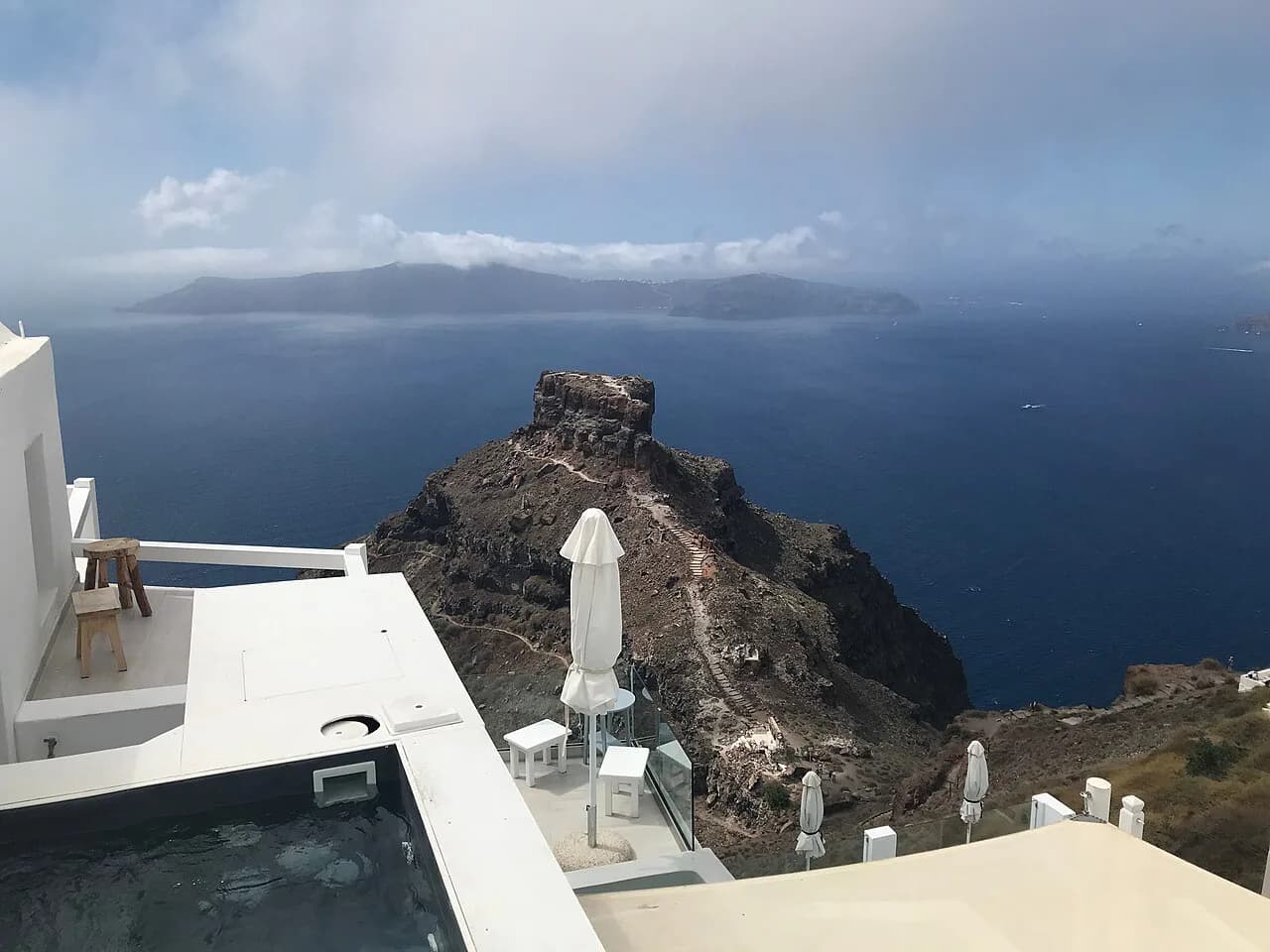
Skaros Rock is the dark, blunt headland that pushes out into the caldera just in front of Imerovigli, on the rim of the Santorini cliff. It is not only a viewpoint: it was the site of a walled settlement and castle, Epano Kastro, and the ruins of that community still sit on and around the rock. The walk is short in distance but demanding in stairs, so it rewards people who plan the route rather than wandering down and improvising.
What Skaros Rock Is
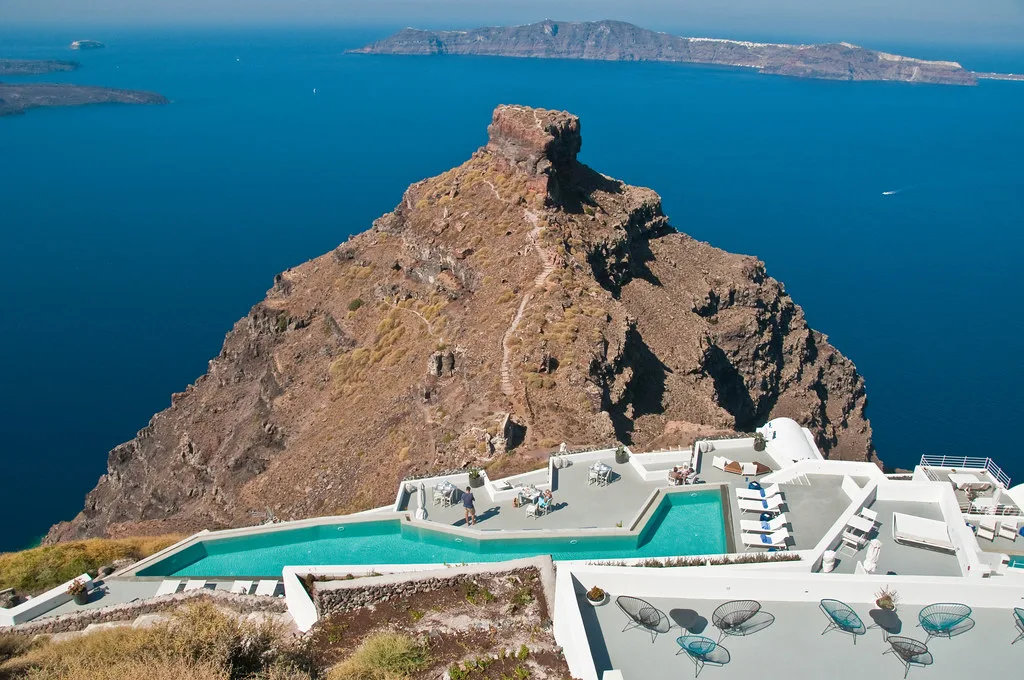
Skaros is a rocky promontory jutting into the sea directly in front of Imerovigli village, and it is counted among the symbols of Santorini. Its position on the caldera edge means the walk down gives wide views over the water and back up to the white village on the cliff. What many visitors do not realise is that the rock itself is an archaeological and architectural site, not just a photo stop.
The castle at the top was known as Epano Kastro, meaning Upper Castle, and also as La Roka. A whole settlement, the Kasteli of Skaros, was built around and below it, with roughly 200 houses according to historical accounts. At the summit a large bell was hung to warn inhabitants of pirate raids, which gives a sense of how exposed this cliff-edge community was.
Where It Is and How to Get There
The walk starts in Imerovigli, at the church of Agios Georgios. The path to Skaros begins a few metres beyond the church, so the easiest plan is to find the church first and then look for the top of the wide cement stairs. There is no separate address to navigate to; treat the church as the landmark.
Imerovigli sits on the caldera ridge between Fira and Oia, and the rock lies to the west of the village, protruding into the sea. Because the village is the access point, the practical questions are about parking, buses and taxis in Imerovigli rather than at the rock itself. The rock is a short but tricky hike from the village, which is a fair summary of the terrain.
The History in Brief
The original castle was built in the later Byzantine years by the Venetian Giacomo Barozzi, and the settlement around it grew into a densely populated Catholic community. According to the historical account, Skaros served as the capital of Santorini until the 18th century, although people had begun leaving at the start of the 17th century. That framing matters: the ruins you pass are the remains of a seat of local power, not a single fort.
Earthquakes in the 17th, early 18th and 19th centuries caused considerable damage at Skaros and the surrounding area, and Venetian noble families began to leave after the eruptions of 1707 to 1711. Wealthy Roman Catholic residents moved their households to Fira over time. By the time an archaeologist visited in 1836, the site had already been empty for years, which explains why so little stands today.
The Walk Step by Step
From the top of the stairs above Agios Georgios, the route descends on wide cement steps, which makes the going straightforward at first. After a few minutes you reach a small chapel, Agios Ioannis Katiforis, whose name refers to the one that goes downhill; it is a natural pause and a good place for photographs. Keep an eye out for it, because it is easy to pass while watching the caldera.
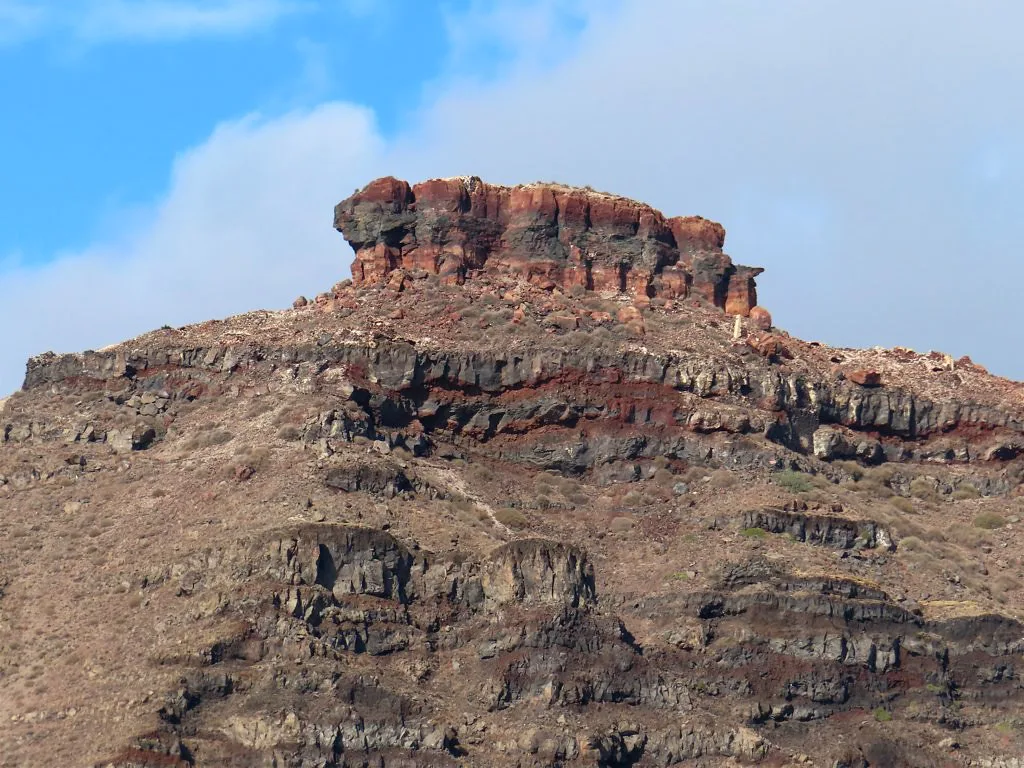
The stairs then run along red and black volcanic rock, past ruins attached to the cliff face and old cave houses cut into the stone, known as hyposkafa. Near the end of the stairs you reach a cluster of deserted houses built from the same red and black volcanic stone. This is where the route splits, and where you should decide deliberately rather than simply following whoever is ahead of you.
One path runs straight ahead and climbs to the tip of the rock, passing the remains of buildings on the way up. The other branches to the left and loops around the rock about 20 metres below the tip. The published advice is to do both, starting with the easier climb to the top and then returning for the side path, which is narrow and harder to spot.
The Two Paths Compared
The climb to the summit is the more obvious option and the better first choice, since it follows the line of the old settlement and needs less route-finding. Expect ruined walls and cave houses rather than a standing castle, and treat loose stone underfoot as normal for the site. Views open up in both directions, back towards Imerovigli and out across the caldera.
The side loop is the harder but more atmospheric route, ending at the chapel of Theoskepasti, a small white church standing alone on the rock. The path is very narrow and difficult to pick out, so it suits walkers who are comfortable on uneven ground and paying close attention. The chapel of Agios Ioannis Apokefalistheis, on the north side of the rock, is a separate church from the Katiforis chapel on the descent, and it is worth knowing the difference when reading about the site.
How Long and How Hard
Distances are short: about 0.64 km from the start to the church and about 0.53 km from the start to the top of the rock. The published estimate is 40 minutes at minimum and one hour at most, depending on hiking experience. Those figures assume you keep moving, so add time for photographs, the chapels and the views.
Effort should be measured in steps, not kilometres. There are roughly 300 steps down to the base of Skaros and about 200 more to reach Theoskepasti, and every one of them has to be climbed again on the return. The descent is the easy half; the way back up is what most people underestimate, especially in the middle of the day.
What to Wear and Bring
Trainers or hiking shoes are the sensible choice, since much of the route is stairs and rough volcanic rock. A hat or scarf, sunglasses and sun cream are worth packing even for a short outing, and a torch is useful if you walk in the afternoon and might return near dusk. Bring one or two bottles of water per person, and a camera if you want the caldera shots.
Tickets, Hours and Closures
Skaros Rock is open ground rather than a staffed museum or ticketed site, so plan your visit around daylight and conditions rather than a fixed schedule. For up-to-date access details, check with the municipality of Thira or the Imerovigli community before a visit if access matters to your day, particularly outside the main season. Because the site consists of ruins and chapels on open rock, conditions and any temporary restrictions can change with weather and foot traffic.
Safety and Etiquette
The route includes loose volcanic rock, narrow sections and many steps, so walk within your comfort level and turn back if the side path feels uncertain. The chapels on the rock are active places of worship, which means quiet and respectful behaviour, and modest clothing if you step inside. Wind on the caldera edge is a real factor, so keep hold of hats and anything light.
Who Skaros Suits and Who Should Skip It
Skaros is a good match for walkers who enjoy ruins and big coastal views, and for anyone who wants to understand Santorini's fortified past rather than only its beaches and sunset spots. The trade-off is clear: a short walk with a big payoff on the way down, and a tiring climb back up. People uneasy on steep, uneven steps, or travelling with anyone who cannot manage 300 stairs, should treat the upper viewpoint near Imerovigli as the sensible alternative.
If the remains of a fortified hilltop village are the appeal, comparing Skaros with Pyrgos Kallistis is worthwhile, since the two show different stages of the island's castle history. To place Imerovigli and the rock alongside the island's other cliff villages, the guide to Santorini Neighborhoods covers each area in turn. Travellers also use Skaros as one stop among broader things to do in Santorini, but it works better as a focused half-morning than as a quick detour.
What Else Is Nearby
Imerovigli itself is the obvious companion to the walk, with caldera-view dining and the cliff-edge path that runs toward Fira and Oia in either direction. After the stairs, a slow lunch in the village is a more realistic plan than another hike. If you want to stay closer to the rock's history, the archaeological site at Akrotiri Archaeological Site, Santorini covers a different and much older chapter of the island.
Those who enjoy the hilltop ruins at Skaros often add Ancient Thera, Santorini, on the ridge of Mesa Vouno, or the Museum of Prehistoric Thera in Fira for the finds from the Akrotiri excavations. Both ask for their own travel time and are not walkable from Imerovigli at the end of a stair-heavy morning. Treat Skaros as the anchor of the day and choose one of the others only if you still have energy.
Plan Your Skaros Rock Visit
The formula for Skaros is simple: start from the church of Agios Georgios in Imerovigli, descend at an easy pace, visit the summit before the narrow side path, and keep enough energy for the climb back. Carry water, wear shoes with grip, and set off earlier rather than later in the day. The walk is short, but the stairs are what you will remember.
Before you go, confirm access conditions and any local advice through the municipality or your accommodation in Imerovigli, since no fixed visitor information is published for the site. If you want the castle story without the stairs, Oia Castle gives a contrasting fortified viewpoint on the northern end of the island, best combined with a day in Oia rather than with Skaros, and the Castle of Agios Nikolaos is another fortress stop worth weighing if you have already visited Oia.
Explore more Santorini sauna guides
Frequently Asked Questions
How long does the Skaros Rock hike take?
Published figures give 40 minutes at minimum and one hour at most from the start in Imerovigli, depending on hiking experience. The route is about 0.64 km to the church and 0.53 km to the top of the rock, so most of the time is spent on stairs and pauses rather than distance.
Is the Skaros Rock walk difficult?
It is short but not trivial. There are roughly 300 steps down to the base of the rock and about 200 more to reach the chapel of Theoskepasti, all of which must be climbed again, and the side path is narrow with loose volcanic rock. Walkers who are steady on uneven steps should cope; anyone with balance or knee trouble should stop at the viewpoint in Imerovigli.
Where does the Skaros Rock path start in Imerovigli?
The path begins at the church of Agios Georgios in Imerovigli, a few metres beyond the church. Look for the top of the wide cement stairs, which mark the start of the descent towards the rock.
Can you go inside the ruins on Skaros Rock?
The ruins are open remains of houses, walls and cave houses rather than a roofed monument, and there is no published interior to enter. The chapels on the rock are active places of worship, so visitors should be quiet and respectful if they approach them.
Is Skaros Rock free to visit?
No ticket price or booking rule has been published for the site, so there is nothing to reserve in advance based on current information. Confirm locally with the municipality or your accommodation before relying on that, especially outside the main season.
What should I wear to walk to Skaros Rock?
Trainers or hiking shoes, sunglasses, a hat or scarf and sun cream, plus one or two bottles of water per person. A torch is useful for an afternoon walk that may finish near dusk, and a camera is worth the weight for the caldera views.
What is the chapel below Skaros Rock?
The white chapel reached by the narrow side loop is Theoskepasti, which stands alone on the rock. It is different from Agios Ioannis Katiforis on the descent path and from Agios Ioannis Apokefalistheis on the north side of the rock.