
Museum of Prehistoric Thera: A Visitor's Guide to Fira's Akrotiri Finds

The Museum of Prehistoric Thera is the Fira museum that holds material from Akrotiri, the Bronze Age settlement on the south of Santorini buried by volcanic ash. Its collection covers the island's prehistoric period rather than the later classical city, which is why it is often the more rewarding stop for travellers heading to the excavation itself. This guide keeps to that one museum: where it sits, what the rooms contain, how much time to give it and what to see nearby.
Quick orientation: what the Museum of Prehistoric Thera is
This is a compact archaeological museum built around finds from prehistoric Thera, the island's Bronze Age phase, with Akrotiri as its centrepiece. The objects date to the Aegean Bronze Age, so expect Cycladic pottery, tools, everyday objects and wall paintings rather than marble statues from the classical Greek world. If you have already read about the Akrotiri Archaeological Site, Santorini, the museum is the place where the portable finds and fresco material are actually displayed. For the practical details, see the Santorini guide.
The distinction matters when you plan your days. The excavated town at Akrotiri gives you streets, houses and the sense of a buried settlement, while the museum gives you the objects and paintings recovered from it, seen up close and under glass. Travellers with limited time sometimes choose one or the other; seeing both, in either order, gives the fuller picture.
Where it is in Fira, and how to get there
The museum sits in Fira, Santorini's main town on the caldera rim, and visitor descriptions place it near the town's bus terminal. That landmark reference is more useful than a street name: if you arrive by bus, you are already a short walk away, and if you arrive on foot from the caldera-side lanes, you are climbing inland and slightly uphill. Fira is small enough that most addresses in the centre are reachable on foot, but the lanes are stepped and uneven, so allow a few extra minutes rather than cutting it fine. If you are still deciding where to sleep, our Santorini Neighborhoods guide compares Fira with the rest of the island.
Local buses run to the Fira terminal from across the island, which makes the museum a natural stop on a day when you are already in town for errands, views or a meal. Cruise passengers tend to arrive in bursts via the cable car and tender boats, and airport transfers usually drop at hotels rather than the centre, so build in walking time from wherever you are set down. Ferry arrivals at Athinios port are further out and require a bus or taxi up to Fira.
What is inside: the Akrotiri excavation finds
The core of the collection is material from the Akrotiri excavation, the Bronze Age town preserved under volcanic layers on the island's southern coast. Because the settlement was abandoned and sealed by ash, its contents give an unusually detailed view of daily life, storage, craft and trade in the Aegean world of the second millennium BCE. The museum gathers these finds in one place, which is what makes it worth an hour of anyone's day even when the site itself is closed or crowded.
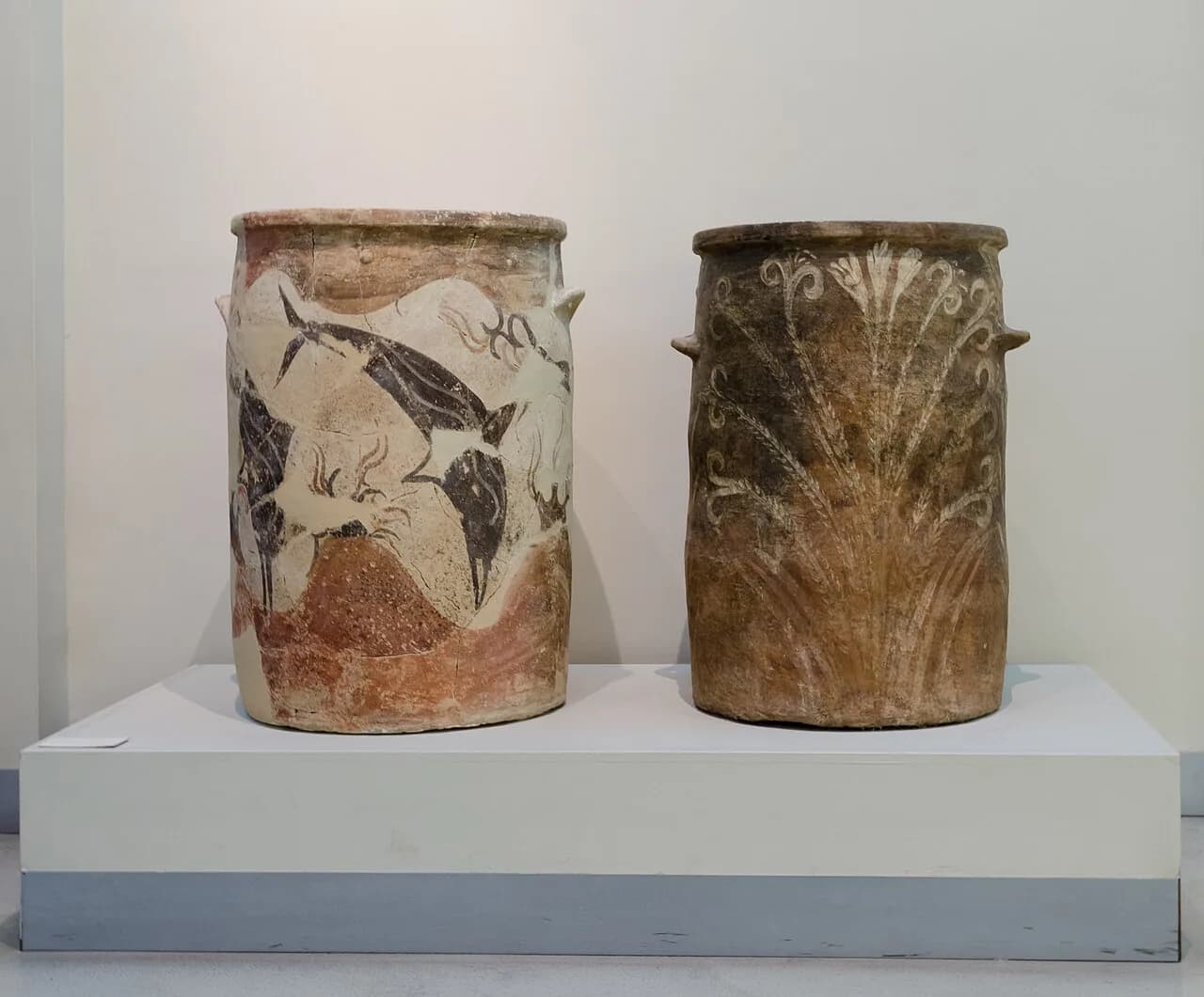
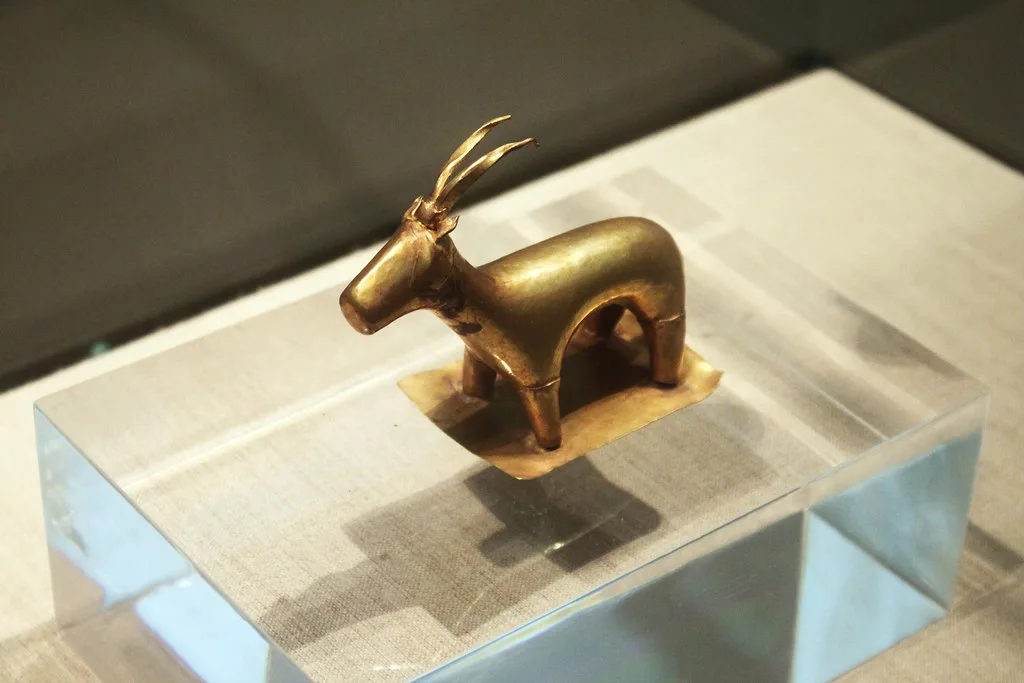
Look for the ordinary pieces as carefully as the famous ones: storage jars, cups, tools and small objects that show how households functioned and what came in from other islands and further afield. The trade material is the quiet highlight, because it explains why a Cycladic town had contacts across the Aegean. Read the labels for find spots and dates where they are given, as they tie each object back to a room or street at Akrotiri.
The frescoes: how to read the wall paintings
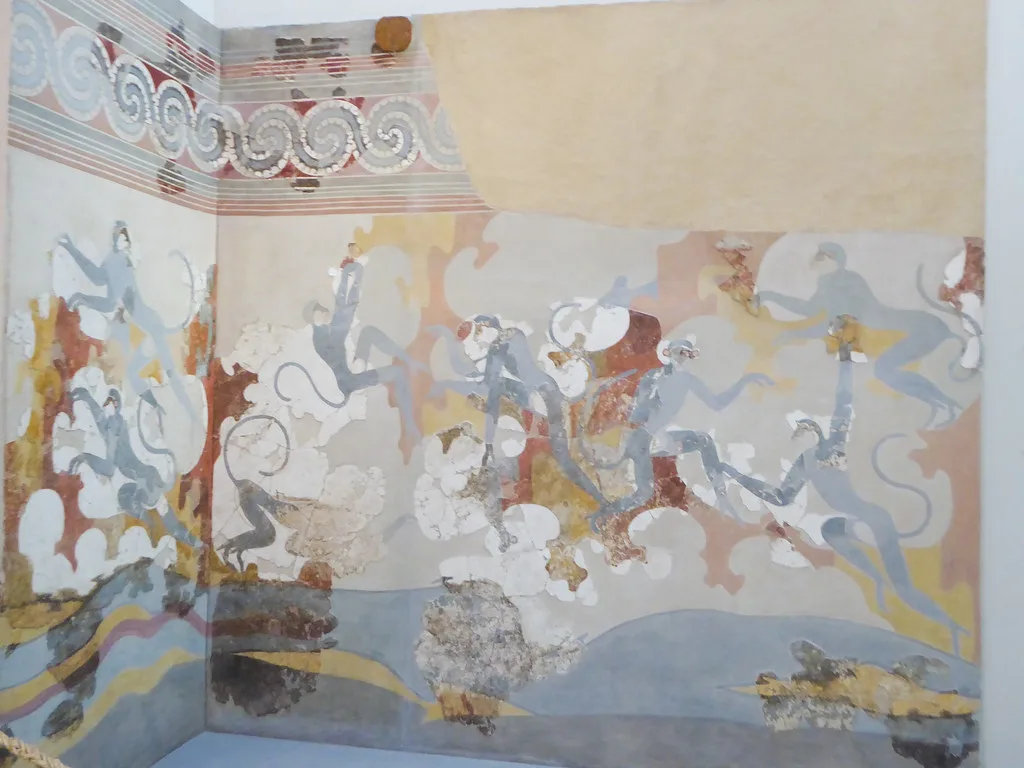
The wall paintings are the reason many people come. At least one Bronze Age fresco from Akrotiri, dated to roughly the seventeenth century BCE, depicts quadrupeds and is displayed at the Museum of Prehistoric Thera, so animal processions and landscape scenes are part of what you should expect rather than isolated portrait panels. Frescoes here are fragments reassembled on panels, so look at the joins and the plain plaster between painted areas; they tell you how much of each scene survived.
Give the fresco room unhurried time and read the panels before looking at the paintings themselves. The figures are not decoration for its own sake: animals, plants and human processions carried meaning about status, ritual or the natural world, and the labels usually flag the building where each piece was found. Whether particular pieces are on display on your date is a museum matter, so ask at the desk or check ahead if a specific fresco is your reason for visiting.
Pottery, tools and everyday objects
Beyond the paintings, the cases of pottery reward slow reading. Shapes change over time and across the Aegean, so a sequence of cups, jugs and storage vessels works as a rough clock for the site, and the decoration shows influences coming from Crete and other islands. Tools and small finds fill in the working life of the town: what people made, stored, weighed and traded.
This is also where the museum separates itself from Fira's other collection. Ancient Thera, Santorini, the classical city on Mesa Vouno, is a different story in a different place, and its material belongs to the later Greek period. If your interest is the Bronze Age and the eruption, stay with this museum; if you want the classical town, plan that separately.
How much time to allow
The collection is small, but it is dense, and the fresco material alone deserves more than a glance. A realistic budget is around an hour for a careful pass, or ninety minutes if you read the labels and linger in the painted rooms; forty-five minutes is enough only if you are skimming. Because the museum is compact, an hour here fits easily between a morning at the excavation and an afternoon in town.
Pacing advice: start with the frescoes while your attention is fresh, then work through the pottery and small finds, and finish with the labels that explain the excavation itself. If you are visiting Akrotiri afterwards, the museum is the better orientation and you will recognise objects in context at the site. The reverse order works too, but the site's scale can overwhelm the objects without the museum's explanation.
Tickets, opening hours and closures
Opening hours, ticket prices and closure days change with the season and with any refurbishment, and the museum does not publish a schedule that this guide can confirm for your dates. Check the Greek Ministry of Culture site and the museum's own notices before you set out, especially outside the summer months, when hours commonly shorten.
If you are planning around a specific fresco or a school group visit, phone or email ahead rather than relying on a third-party listing, which may lag behind actual changes. Travellers who arrive expecting a fixed pattern are the ones most often caught out.
Pairing it with the Archaeological Museum of Thera
Fira has a second museum, the Archaeological Museum of Thera, and visitors often see both because they sit in the same town and cover different periods. The Archaeological Museum of Thera holds finds from the island's historic era, including the classical city, so it complements rather than duplicates the prehistoric collection. If you have time for one, choose by period: Bronze Age and Akrotiri here, later Greek and Roman material there.
Seeing both on the same day is manageable because each is small, but do them in the order that matches your interest and leave a walk and a drink between them. The two museums are close enough in central Fira that the transfer is a short stroll.
Nearby after your visit
The bus terminal is the practical anchor: from there you can head back to Oia Castle, Santorini, or down to the south of the island without crossing town again. The caldera-side lanes are a short walk the other way, with the views and the crowds that come with them. For a quieter hour, Pyrgos Kallistis sits inland on higher ground and is reached by bus or car.
For a meal, the choice is between the caldera-facing tables, where you pay for the view, and the back streets a few minutes inland, where the same island cooking usually costs less. Menus in central Fira run to grilled fish, tomato fritters made with the island's small tomatoes, fava, a purée of yellow split peas, and white aubergine. Ask what is in season and what is local before ordering fish sold by weight.
Practical tips before you go
Groups and cruise-ship excursions arrive in waves, so the calmest windows tend to be early in the day and late afternoon. Check the photography rules at the entrance: flash is normally restricted in museum galleries, and some rooms may be signed differently. If frescoes are your priority, go straight to those rooms before the tour groups fill them.
Wear shoes that cope with Fira's steps, carry water in summer, and keep a paper or offline copy of the museum's address in case your phone signal drops in the lanes. Ask at your hotel about current bus times to the terminal, since schedules shift between seasons.
What to check before you go
Confirm two things in advance: the day's opening hours and whether any part of the collection is closed for works. Both change without much notice, and both affect whether the trip is worth it for you. The museum's own notices and the ministry's listings are the places to look, not old reviews.
Plan Your Visit
The Museum of Prehistoric Thera is the right stop if you want to understand Akrotiri before or after seeing the excavation, and it suits a short, focused visit rather than a whole afternoon. Build it into a Fira day: arrive by bus, give the frescoes and pottery an hour, then walk down to the caldera lanes or inland for a meal away from the view premium.
Before you go, check the current hours and ticket arrangements with the museum or the culture ministry, since neither is fixed across the year. With those confirmed, the rest is simple: the bus terminal is your landmark, the fresco room is your first stop, and the town is on your doorstep.
Explore more Santorini sauna guides
Frequently Asked Questions
What can you see at the Museum of Prehistoric Thera?
Bronze Age finds from Akrotiri, including pottery, tools and everyday objects, and wall paintings. At least one fresco from Akrotiri, dated to around the seventeenth century BCE and showing quadrupeds, is displayed there. Because displays can change, ask at the desk if you are coming for a particular piece.
Where is the Museum of Prehistoric Thera located in Fira?
It is in central Fira, Santorini, and visitor descriptions place it near the town's bus terminal. That makes it easy to reach on foot from the centre or directly from a local bus.
How long does it take to visit the Museum of Prehistoric Thera?
About an hour covers the collection at a steady pace, and ninety minutes lets you read the labels and spend time with the frescoes. The museum is small, so the risk is rushing the painted rooms rather than running out of things to see.
Should I visit the museum before or after Akrotiri?
Either order works, but the museum first gives you the objects and explanations that make the excavated town easier to read. If you go to the site first, the museum then puts the finds in context.
What is the difference between the Museum of Prehistoric Thera and the Archaeological Museum of Thera?
The Museum of Prehistoric Thera covers the island's Bronze Age, centred on Akrotiri. The Archaeological Museum of Thera holds material from the later historic period, including the classical city, so the two complement each other.
How do I get to the Museum of Prehistoric Thera?
Local buses run to the Fira bus terminal, which is close to the museum. From the caldera-side lanes it is a short but uphill walk through stepped streets, so allow extra time.
Are opening hours and tickets fixed all year?
No. Hours and ticket arrangements change with the season and with any refurbishment, so check the museum's notices or the Greek Ministry of Culture site before you travel rather than relying on an old listing.